
We use cookies on our website to give you an improved browser experience. View our Privacy Policy for more information. Please make your selection to opt in or out of ALL cookies here: Accept or Decline
A discharge line can look uncomplicated: hose, pump, and outlet. Yet the connection between them often determines whether a transfer runs smoothly or becomes a maintenance issue. A well-chosen Discharge Hose Coupler must match the hose diameter, working pressure, fluid, temperature, and connection style. Small mismatches matter. A coupling that fits on the bench may loosen under vibration or prove awkward to inspect in the field. For example, a dusty worksite, frequent hose movement, or repeated cleaning may affect which seal and body material make sense.
For global buyers, the “best” option is not one universal product. It is the coupler whose documented specifications fit the actual system and operating conditions. Compare materials such as aluminum, stainless steel, or engineered polymers only after checking chemical compatibility and expected wear. Review sealing design, locking method, flow requirements, and available replacement parts. Look closely at handling, too. Gloves, limited clearance, and hurried changeovers affect usability. Ask suppliers for clear data sheets, test information, and traceable product details; then confirm that ratings apply to the complete assembly, not just one component. Regional connection preferences and documentation needs can also differ, so verify them with the project team and supplier. This guide examines practical checks, common trade-offs, and questions worth asking before purchase. No checklist removes every uncertainty. Real installations can surprise even experienced buyers, and that is a reason to verify—not guess.
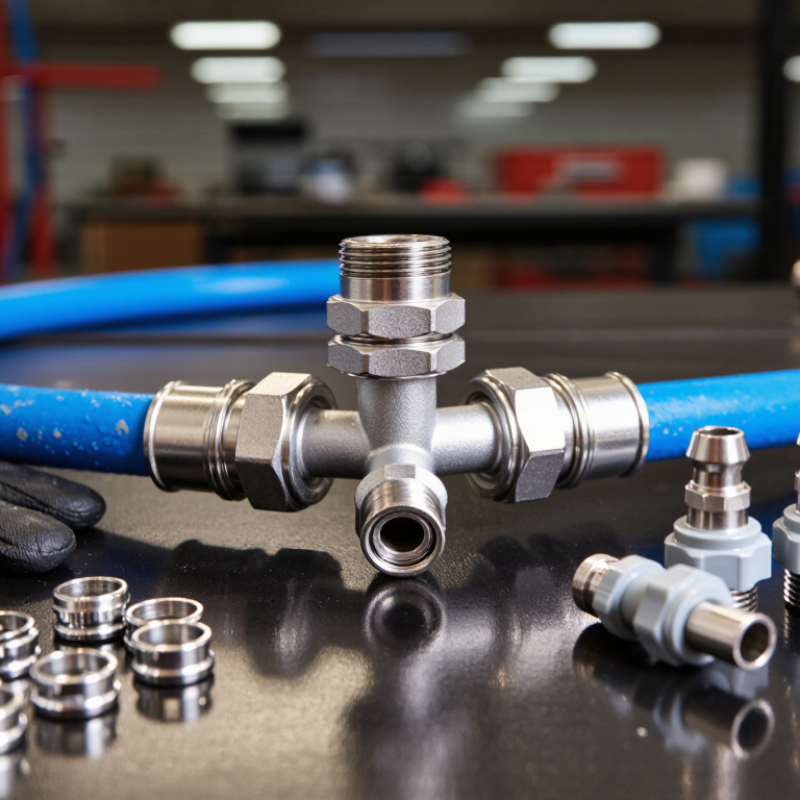
A discharge hose coupler is a fitting that connects a hose to a pump, pipe, tank, or another hose. It creates a joined path for moving water or other compatible fluids. Couplers may use threaded ends, cam-and-groove arms, or other connection styles. The two mating parts must match. A familiar-looking fitting can still have the wrong thread or diameter.
Small details matter. Before ordering, measure the hose’s inside diameter and identify its end fitting. Check the fluid, operating pressure, temperature, and exposure conditions against the coupler’s material and rating. Also inspect the gasket and sealing surface; a nicked gasket can cause leaks even when the fitting appears secure. The system’s pressure limit is governed by its lowest-rated component.
To connect a coupler, make sure the hose end is clean and undamaged. Fit the correct gasket or seal, then align the mating ends without forcing them. Tighten threaded connections as specified, or close the locking arms evenly on a compatible cam-and-groove fitting. Secure the hose with a suitable clamp where required. Check for movement and leaks during a controlled test. Still, this check is not foolproof; re-inspect connections after use, especially when hoses are moved or exposed to vibration.
| Coupler Type | How It Connects | Common Applications | Key Selection Checks | Practical Advantage |
|---|---|---|---|---|
| Cam-and-groove (camlock) | A grooved adapter fits into a coupler; cam arms close over the adapter to compress a gasket. No tools are normally needed for the coupling action. | Water transfer, general industrial liquids, and temporary hose connections where the service and applicable rules permit. | Confirm size, compatible camlock part style, material, gasket compatibility, temperature, and the manufacturer’s pressure limits. | Quick connection and disconnection for frequent hose changes. |
| Threaded hose coupling | Mating male and female threads are screwed together. Sealing may use a gasket, an O-ring, or a suitable thread-sealing method, depending on the design. | Fixed or semi-permanent connections to pumps, manifolds, and pipework. | Match thread standard and size; check whether threads are parallel or tapered and identify the intended sealing method. | Widely used connection style with many available hose-tail and pipe-end configurations. |
| Flanged hose connection | Two flanges are aligned and bolted together, usually with a gasket between their faces. | Larger-diameter discharge lines, pumps, and installations requiring a bolted connection. | Match flange standard, nominal size, pressure class, facing, bolt pattern, gasket, and hose movement requirements. | Provides a bolted connection that can be suited to larger pipe and hose assemblies. |
| Grooved coupling | A housing engages grooves at the pipe or fitting ends and compresses a gasket around the joint. | Compatible grooved piping systems and some industrial water-discharge installations. | Check groove dimensions, coupling and gasket compatibility, operating conditions, and whether the hose-end fitting is designed for this system. | Allows a mechanically joined connection that can be assembled without welding. |
| Hose-tail (barbed) fitting with clamp | The hose is pushed over a ribbed or barbed tail and secured with a clamp or another specified retention method. | Connecting a flexible hose to a pump, pipe, or separate coupling where the fitting is suitable for the hose construction. | Match hose inside diameter and wall construction; use the specified clamp and verify pressure, temperature, and pull-off resistance. | Creates a direct hose-end connection with a relatively simple assembly process. |
| Universal selection checks | A discharge hose coupler is the fitting used to connect a hose end to another hose, pump, pipe, or equipment connection. The assembled joint depends on compatible mating parts and an appropriate seal. | Verify fluid compatibility, hose and fitting sizes, working pressure, temperature range, connection standard, gasket material, and any local or application-specific requirements. The complete assembly is limited by its lowest-rated component. | A correctly matched coupler helps create a secure, serviceable connection; inspect seals and retention parts before use. | |
Key Components, Materials, and Coupling Mechanisms
Choosing a discharge hose coupler starts with fit and operating conditions, not appearance. Match the coupler’s size to the hose’s inside diameter, then check the working pressure and temperature range. A gasket seals the connection; a clamp or ferrule secures the hose. These parts deserve attention. A sound coupler can still leak if its gasket is worn or mismatched. Confirm that the rating applies to the complete assembly, including the hose and fittings.
Material choice depends on the conveyed liquid, exposure, and handling needs. Stainless steel offers strong corrosion resistance in many settings, while aluminum is lighter and may suit mobile equipment. Polypropylene can work for some compatible fluids, but temperature and pressure limits matter. Check chemical compatibility with reliable technical data. For the connection, cam-and-groove couplings allow quick assembly, while threaded fittings provide a secured connection when correctly matched. They are not interchangeable by appearance alone. Standards and dimensions vary, so verify both ends before ordering.
Tips: Inspect the gasket for cuts, remove grit from sealing faces, and test the assembled line under controlled conditions. Keep a spare gasket nearby. It is a small detail, but one that is easy to overlook.
2026 Best Discharge Hose Coupler for Global Buyers?
How to Match Coupler Size, Pressure Rating, and Hose Type
A coupler must match the hose’s actual inside diameter, not its outside diameter. Measure the bore at a clean, round section; a crushed or worn end can give a misleading reading. Then check the fitting standard and sealing method. Similar-looking parts may use different threads or locking profiles. For pressure, compare the coupler’s working-pressure rating with the hose and pump ratings. Use the lowest-rated component as the system limit, and allow for pressure surges during startup or valve closure. UNESCO’s 2024 World Water Development Report notes that agriculture accounts for about 70% of global freshwater withdrawals. That scale makes reliable fluid-transfer components important, but it does not make every hose suitable for every job.
Match the material to the fluid, temperature, and site conditions. A lightweight PVC hose may suit water transfer, while abrasive slurry can call for a reinforced, abrasion-resistant construction. Check whether the hose is designed for discharge, not suction; the wrong construction may soften, kink, or fail. Field checks matter. Look for cracked gasket faces, loose clamps, and corrosion before operation. I would not assume a larger coupler automatically means better flow; undersized hose, bends, and restrictions still create losses.
Tips: Confirm diameter, connection standard, working pressure, and fluid compatibility on the hose and coupler datasheets. Keep the seal clean and seat it evenly. If the data conflict, pause and verify with the supplier or a qualified engineer. Small mismatches can become costly.
How to use this chart: Match the coupler’s nominal size to the hose’s nominal inside diameter. Inch-to-millimeter values are exact unit conversions; confirm the hose and coupler’s actual fit and connection style before ordering. Check the pressure ratings for the specific hose and coupler, and never exceed the lower-rated component’s limit. Hose material and construction must also suit the fluid, temperature, and application.
A discharge hose coupler is not a universal fit. Requirements can vary by industry, destination, and the material being transferred. Before ordering, ask for the applicable standards, test records, and product documentation for the intended service. A certificate alone may not confirm that a specific coupling suits your hose or operating conditions. Check the document’s scope and confirm requirements with a qualified local inspector when necessary.
Measure the hose’s actual inside diameter, then confirm the coupling type, connection dimensions, gasket material, and thread or flange details. Small differences can cause leaks or difficult installation. Check chemical compatibility, operating temperature, and pressure. The assembly is limited by its lowest-rated component, not just the coupler. Leave room for pressure surges. A stronger-looking fitting is not proof of a safer setup.
Before use, verify that clamps and locking pins are correctly fitted, and inspect seals for cuts or flattening. Keep spare gaskets available, especially when equipment moves between sites. One detail is easy to miss: storage conditions can affect seals before the hose is used. Records help, but they cannot replace a careful fit check.
For 2026 applications, evaluate a discharge hose coupler as part of the complete hose assembly, not as a standalone fitting. Start with the fluid, operating temperature, and expected pressure range. Check the coupler’s stated working pressure against the hose rating and connection method. The lowest-rated component sets the practical limit. Fit matters. Measure the hose’s inside diameter and coupling dimensions; small mismatches can cause leaks or difficult installation. Ask how the seal works, and confirm the gasket material suits the liquid and cleaning routine.
Then assess retention under movement, vibration, and repeated connection cycles. A secure-looking latch is not proof; review test data and inspect sample assemblies under realistic conditions. Consider corrosion exposure, ultraviolet light, abrasion, and temperature swings at the actual site. Specify compatible materials, clear identification, and replacement parts that crews can source reliably. Pressure is not everything. A coupler may pass a bench check yet be awkward with gloves, muddy threads, or limited clearance. A practical trial should record leakage, connection time, and visible wear, while recognizing that one trial provides limited evidence. That caveat matters. Before purchase, request traceable specifications, installation guidance, and inspection intervals from the supplier.
We use cookies on our website to give you an improved browser experience. View our Privacy Policy for more information. Please make your selection to opt in or out of ALL cookies here: Accept or Decline
Do you consent to the use of ALL cookies?
901 2nd Court West
Birmingham, AL 35204
Sales: 866.481.4036
Logistics/Ops: 866.481.4036
2101 Dralle Road
University Park, IL 60466
Sales: 708.813.9070
Logistics/Ops: 708.235.4200
400 E. 13th Street
Little Rock, AR 72114
Sales: 866.760.5344
Logistics/Ops: 866.760.5344
225 Collins Road
Elkhart, IN 46515
Sales: 574.295.0214
Logistics/Ops: 574.607.4611
601 Berryman Pike
Tipton, IN 46072
Sales: 800.897.7591
Logistics/Ops: 800.897.7591
3900 Uvalda Street
Denver, CO 80239
Sales: 303.706.8000
Ops/Logistics: 303.576.8398
510 3rd Street E
Milan, IL 61264
Sales: 800.322.1052
Logistics/Ops: 800.322.1052
1660 E. Aurora
Des Moines, IA 50313
Sales: 800.671.1660
Logistics: 800.671.1660
86554 Gene Lasserre Blvd.
Yulee, FL 32097
Sales: 904.253.3060
Logistics/Ops: 904.225.3000
694 S.E. County Road 245
Lake City, FL 32025
Sales: 800.727.6706
Logistics/Ops: 386.752.7412
210 Neptune Road
Auburndale, FL 33823
Sales: 863.967.1131
Logistics/Ops: 863.777.9814
4601 McCoy Drive
Pensacola, FL 32503
Sales: 850.308.7030
Logistics/Ops: 850.434.5502
815 South 56th Street
Tampa, FL 33619
Sales: 813.302.1940
Logistics/Ops: 813.621.1352
200 Hosea Road
Lawrenceville, GA 30046
Sales: 770.953.7575
Logistics/Ops: 770.513.6000
Branch Product Guide
Branch Line Card
Moulding Offering
Cedar Offering
Column Offering
8173 Hwy. 165 North
Monroe, LA 71211
Sales: 800.256.4165
Logistics/Ops: 800.256.4165
508 Warren Avenue
Portland, ME 04103
Sales: 207.888.2331
Logistics/Ops: 207.797.6565
4300 Georgia Pacific Blvd.
Frederick, MD 21704
Sales: 301.798.7474
Logistics/Ops: 301.874.8000
419 Maple Street
Bellingham, MA 02019
Sales: 508.449.0535
Logistics/Ops: 508.966.5500
825 Buchanan Ave SW
Grand Rapids, MI 49507
Sales: 877.800.1180
Logistics/Ops: 616.278.0909
995 Pacific St. NW
Aitkin, MN 56431
Sales: 800.432.3727
Logistics/Ops: 218.212.7770
1102 Port Terminal Drive
Duluth, MN 55802
Sales: 800.951.9899
Logistics/Ops: 800.851.9899
9110 83rd Ave. North
Brooklyn Park, MN 55445
Sales: 763.425.0204
Logistics/Ops: 763.425.0204
910 E. Railroad Street
Long Beach, MS 39560
Sales: 866.535.4135
Logistics/Ops: 228.205.2400
1727 Warren Street
North Kansas City, MO 64116
Sales: 800.621.2611
Logistics/Ops: 800.621.2611
2123 North Golden
Springfield, MO 65803
Sales: 800.375.7891
Logistics/Ops: 800.375.7891
13860 Corp. Woods Trail
Bridgeton, MO 63044
Sales: 314.209.0800
Logistics/Ops: 314.209.0800
1109 South 19th Street
Omaha, NE 68108
Sales: 800.489.6637
Logistics/Ops: 800.489.6637
1 Luger Road
Denville, NJ 07834
Sales: 973-339-3539
Logistics/Ops: 973.625.1461
3720 Jeffrey Blvd.
Blasdell, NY 14219
Sales: 716.235.5989
Logistics/Ops: 716.825.6557
319 Yaphank Ave.
Yaphank, NY 11980
Sales: 631.358.5714
Logistics/Ops: 631.924.7401
3300 Parkside Drive
Charlotte, NC 28208
Sales: 800.839.2588
Logistics/Ops: 704.394.3172
1712 East D Street
Butner, NC 27509
Sales: 984.389.8200
Logistics/Ops: 919.575.3700
128 Foothills Drive
Statesville, NC 28687
Sales: 800.222.1414
Logistics/Ops: 704.394.3172
550 Munroe Falls Rd.
Tallmadge, OH 44278
Sales: 330.357.4506
Logistics/Ops: 330.794.1141
10347 Toebben Dr.
Independence, KY 41051
Sales: 859.298.3926
Logistics/Ops: 859.746.2250
450 N. MacArthur
Oklahoma City, OK 73127
Sales: 800.375.6025
Logistics/Ops: 800.375.6025
1680 North Aspen
Broken Arrow, OK 74012
Sales: 918.272.2212
Logistics/Ops: 918.272.2212
522 Bridge Street
Hunker, PA 15639
Sales: 878.217.2001
Logistics/Ops: 724.925.7285
4290 Atlanta Street
Charleston, SC 29418
Sales: 843.371.1420
Logistics/Ops: 843.554.8192
1040 S. Industrial Dr.
Erwin, TN 37650
Sales: 423.641.1005
Logistics/Ops: 423.742.5911
4287 Pilot Drive
Memphis, TN 38118
Sales: 901.365.2101
Logistics/Ops: 901.365.2101
700 Myatt Drive
Madison, TN 37115
Sales: 615.327.9547
Logistics/Ops: 629.777.4949
4747 Mark IV Parkway
Fort Worth, TX 76106
Sales: 866.323.5117
Logistics/Ops: 817.625.9091
6990 Market Avenue
El Paso, TX 79915
Sales: 915.778.6356
Logistics/Ops: 915.265.7200
2502 Wilson Road
Harlingen, TX 78552
Sales: 800.580.6711
Logistics/Ops: 800.580.6711
10,000 North Loop East
Houston, TX 77029
Sales: 713.921.1977
Logistics/Ops: 713.675.3544
702 East 44th St.
Lubbock, TX 79404
Sales: 866.454.6010
Logistics/Ops: 866.454.6010
535 N. WW White Road
San Antonio, TX 78219
Sales: 800.284.0488
Logistics/Ops: 210.333.8112
142 Pine Haven Shores Rd.
Shelburne, VT 05482
Sales: 802.800.2540
Logistics/Ops: 802.985.2512
4700 Bethlehem Road,
Richmond, VA 23230
Sales: 804.201.2400
Logistics/Ops: 804.342.1161
4516 N Barker Road
Spokane Valley, WA 99027
Phone: 509.892.9420
Toll free: 800.728.6157
8365 N. 76th Street
Milwaukee, WI 53223
Sales: 800.356.9245
Logistics/Ops: 800.356.9245
312 S. Chester Street
Sparta, WI 54656
Sales: 800.362.5864
Logistics/Ops: 800.362.5864
899 Grossman Drive
Schofield, WI 54476
Sales: 800.472.0017
Logistics/Ops: 800.472.0017
