
We use cookies on our website to give you an improved browser experience. View our Privacy Policy for more information. Please make your selection to opt in or out of ALL cookies here: Accept or Decline
Choosing the right check valve is rarely a simple catalogue decision. Flow direction, pressure, temperature, fluid cleanliness, installation space, and maintenance access all change the answer. A swing check valve may suit a water pipeline, while a dual-plate design can reduce weight and closing distance. Lift, piston, wafer, spring-loaded, and diaphragm options each solve different operating problems.
Valve engineer and author Philip L. Skousen offers a useful principle: “Valve selection begins with understanding the service, not choosing a familiar design.” That idea guides this overview of the 2026 top check valve types for global buyers. The discussion connects practical field experience with engineering requirements, including pressure-drop control, reverse-flow prevention, sealing performance, material compatibility, and tested cycle life.
Small details matter. A poorly supported valve may vibrate inside a crowded pipe rack. A wrong elastomer can harden after repeated exposure to heat or chemicals. An oversized body may appear safer, yet it can increase cost and create unstable low-flow operation. Not every popular model deserves the same ranking.
This guide compares leading check valve designs for water treatment, oil and gas, power generation, chemical processing, HVAC, and general industrial service. It also considers documentation, inspection records, international purchasing expectations, and supplier reliability. Buyers should still verify each selection against project specifications and applicable standards. No universal winner exists.
The best choice is service-specific. Sometimes, the obvious option fails.
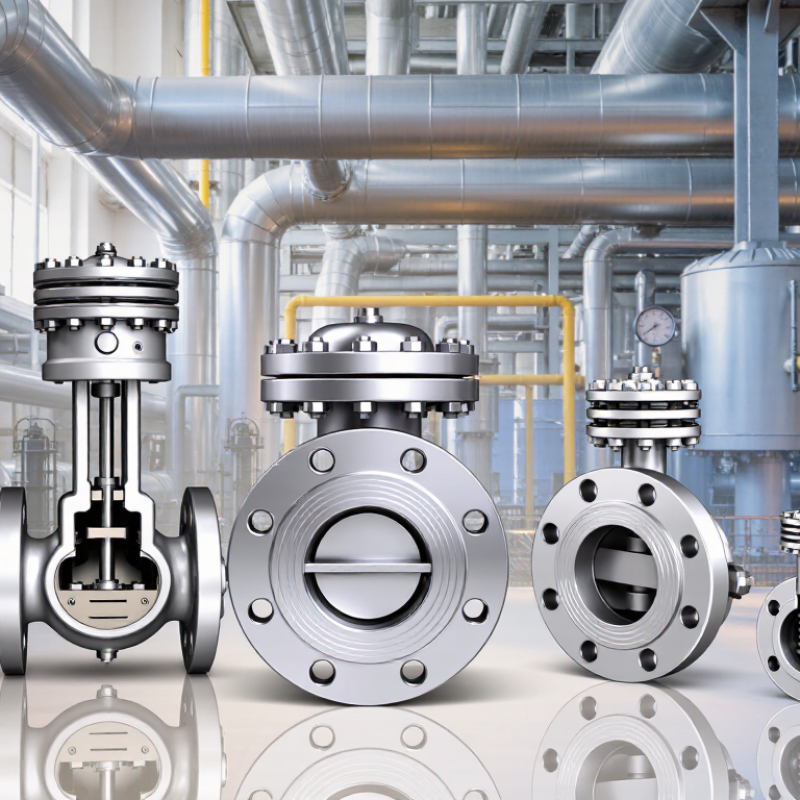
A check valve prevents unwanted reverse flow in pipelines, pumps, compressors, and process equipment. It opens when upstream pressure exceeds downstream pressure and the valve’s cracking pressure. When flow reverses, the closing element moves against its seat. This action limits backflow, contamination, and pump damage.
The main components are the body, seat, disc or ball, hinge or spring, cover, and gasket. A swing check valve uses a hinged disc, while a lift valve moves vertically. Wafer and dual-plate designs often save installation space. Spring-loaded inline valves can close quickly, but rapid closure may create water hammer. Small details matter.
According to the MarketsandMarkets 2024 industrial valves analysis, the global market is projected to grow at roughly 5% annually through the decade. That growth reflects wider investment in water treatment, energy, chemical processing, and manufacturing infrastructure. The report does not make every application identical. Selection still depends on fluid, pressure, temperature, flow direction, and installation position.
Engineers commonly review API 6D, ASME B16.34, and ISO 5208 requirements during specification and testing. Field experience also shows a less comfortable truth: an oversized check valve may chatter under low flow. A perfect datasheet cannot correct poor sizing. Inspect the seat, hinge, spring, and gasket during maintenance. Test closure performance under realistic operating conditions, not only clean workshop conditions.
| Check Valve Type | Purpose and Typical Service | Operating Principle | Main Components | Flow and Pressure Characteristics | Key Advantages | Important Limitations | Common Applications |
|---|---|---|---|---|---|---|---|
| Swing Check Valve | Prevents reverse flow in pipelines where steady, mostly horizontal flow is expected. | A hinged disc swings open with forward flow and returns toward the seat when flow stops or reverses. | Body, hinge, disc, hinge pin, seat, cover, and optional lever-and-weight or dashpot. | Generally low pressure loss at suitable flow velocity; may slam if reverse flow develops before the disc closes. | Simple construction, broad size range, and good capacity for water and clean liquids. | Can be sensitive to pulsating flow, installation orientation, and excessive flow velocity. | Water transmission, wastewater, fire-protection piping, cooling-water systems, and general process lines. |
| Lift Check Valve | Controls backflow in clean liquid, steam, gas, and process piping, particularly where reliable guided closure is required. | A piston or disc moves vertically from the seat when inlet pressure exceeds outlet pressure and closes when the pressure differential reverses. | Body, guided disc or piston, seat, spring in spring-loaded designs, cover, and guide arrangement. | Usually higher pressure drop than a swing design because flow changes direction inside the body; fast closure is possible with a spring. | Good shutoff control, compact travel, and suitability for higher-pressure services. | Normally requires a suitable flow direction and is less tolerant of dirty or heavily contaminated media. | Steam systems, compressed air, gas processing, boiler piping, and high-pressure process lines. |
| Wafer Dual-Plate Check Valve | Provides non-return protection where low weight, short face-to-face length, and space efficiency are important. | Two spring-loaded plates pivot on a central hinge or shaft and open under forward flow. | Wafer body, two plates, hinge pins, central shaft, springs, seat, and sealing elements. | Lower inertia and generally quicker closure than a large swing disc; pressure loss depends on plate design and flow velocity. | Lightweight, compact, economical in large sizes, and suitable for installation between flanges. | Requires correct flange alignment; spring and plate mechanisms may be unsuitable for abrasive or highly fouling media. | Water, HVAC, seawater, fire-protection systems, chemical piping, and utility services. |
| Tilting-Disc Check Valve | Reduces flow disturbance and closure shock in large-diameter, high-capacity pipeline systems. | An eccentrically mounted disc tilts around a pivot, requiring less travel than a conventional swing disc. | Body, pivot shaft, tilting disc, seat ring, bearings, cover, and optional hydraulic or counterweight closing device. | High flow capacity with relatively low pressure loss; closure behavior can be controlled to reduce water hammer. | Fast response, reduced slam potential, and good performance in large pipelines. | More complex and costly than basic swing designs; requires correct sizing and maintenance of pivot components. | Large water pipelines, pump discharge lines, power stations, and industrial circulation systems. |
| Piston Check Valve | Offers guided non-return control and improved damping for high-pressure liquid, steam, and process services. | A piston or plug moves axially inside a chamber; pressure differential opens it and reverse pressure closes it against the seat. | Body, piston, guide, seat, damping chamber, spring where fitted, cover, and sealing rings. | Stable closure and effective damping; pressure drop can be relatively high because of the guided internal passage. | Good resistance to rapid cycling and reduced tendency to chatter when properly sized. | Not ideal for dirty media; internal clearances and seals require suitable material selection and maintenance. | Refineries, petrochemical plants, steam systems, compressor discharge lines, and high-pressure process piping. |
| Diaphragm Check Valve | Prevents reverse flow while isolating the operating mechanism from corrosive, sterile, or contamination-sensitive media. | A flexible diaphragm deflects under forward pressure and returns to the seat when pressure falls or reverses. | Body, flexible diaphragm, seat, retainer, bonnet or cover, and optional support components. | Moderate flow capacity; pressure loss and cracking pressure vary significantly with diaphragm material and design. | No exposed stem packing, low contamination risk, and strong corrosion resistance when compatible materials are used. | Diaphragm fatigue, temperature limits, and material compatibility must be carefully evaluated. | Chemical dosing, pharmaceutical processing, sanitary systems, corrosive fluids, and laboratory equipment. |
| Ball Check Valve | Provides simple backflow prevention in liquid systems, especially where the medium may contain suspended solids. | A ball lifts away from the seat during forward flow and settles onto the seat when flow reverses. | Body, spherical ball, seat, cover, and optional guide or cage. | Typically moderate pressure loss; full-port designs can reduce clogging and improve solids handling. | Compact, self-cleaning in many services, and available with resilient or metal seating. | May require a minimum flow velocity to open fully; ball wear can occur in abrasive or high-cycle service. | Wastewater, slurry handling, pump systems, drainage, sewage, and low-to-medium pressure liquid lines. |
| Foot Valve | Maintains pump priming by preventing liquid from draining back through the suction line; often includes a strainer. | The valve opens when the pump creates suction and closes when the pump stops or flow reverses. | Valve body, disc, ball or poppet, seat, spring where fitted, inlet strainer, and connection assembly. | Adds suction-side pressure loss; the strainer must be sized to avoid excessive restriction and cavitation risk. | Combines non-return protection and debris screening at the suction pipe inlet. | Strainer blockage can reduce pump inlet pressure; access for cleaning should be considered during installation. | Well pumps, irrigation, water-transfer systems, tanks, chemical feed systems, and suction-lift installations. |
2026 Top Check Valve Types for Global Buyers
How Check Valves Are Classified by Design and Flow Direction
Check valves allow fluid to move forward and block reverse flow. Their classification starts with internal design and the path taken by the fluid. Swing check valves use a hinged disc and suit larger, steady pipelines. Lift check valves move a piston or disc vertically, offering reliable shutoff under higher pressure. Wafer and dual-plate designs are thinner, lighter, and easier to install between flanges. Space matters.
Axial and inline check valves guide flow through a straight body, reducing turbulence and pressure loss. Spring-loaded models close quickly when forward velocity falls, which can limit water hammer in pump discharge lines. Ball and diaphragm check valves use different closing elements, making them useful for dirty fluids or sensitive process systems. The correct choice depends on viscosity, temperature, pressure, installation angle, and required cracking pressure.
Grand View Research estimated the global industrial valves market at about USD 78.7 billion in 2023, with continued growth expected through 2030. MarketsandMarkets also identifies water, wastewater, oil, gas, and chemical processing as major demand areas for check valves. These figures describe broad valve activity, not every check-valve shipment. That distinction matters. Buyers should verify test standards, reverse-flow performance, and maintenance access with actual operating data. A valve that looks efficient on paper may still slam shut in a short pipeline. Field conditions are less tidy.
2026 Top Check Valve Types for Global Buyers
Top Check Valve Types for Different Industrial Applications
Check valve selection depends on fluid, pressure, temperature, and installation space. In water-treatment lines, swing check valves handle steady flow with modest pressure loss. Their hinged disc needs enough space to close safely. A lift check valve suits clean, high-pressure service. Its guided disc responds well in compact piping, but dirty fluids may cause sticking.
Wafer dual-plate check valves work well in chemical plants and large cooling systems. Their short face-to-face length saves space between flanges. They also reduce installation weight. For vertical pipelines, spring-assisted designs can limit reverse flow and water hammer. That detail matters near pumps. Ball check valves perform effectively with wastewater, slurries, and viscous media. Their smooth closing action helps manage solids, though poor sizing can increase pressure loss.
Diaphragm check valves are useful in hygienic processing and corrosive applications. They isolate internal springs from the process fluid. Food, pharmaceutical, and specialty chemical systems often require cleanable materials and documented surface finishes. Global buyers should verify pressure ratings against applicable standards, such as API, ASME, or EN requirements. Material certificates and factory testing add practical confidence. A familiar mistake is choosing by pipe size alone. I have seen oversized valves chatter during low flow. No valve is perfect. Review maintenance access, expected cycling, and failure consequences before approving the design.
2026 Top Check Valve Types for Global Buyers
Material, Pressure, Temperature, and Connection Selection Factors
Choosing a check valve begins with the fluid, not the catalogue photograph. Carbon steel suits many dry, non-corrosive services. Stainless steel performs better with chloride-bearing water and aggressive cleaning fluids. Ductile iron can reduce cost in utility lines, but it needs careful corrosion protection. I have seen premature failures caused by compatible-looking materials that reacted with the process fluid.
Pressure selection requires more than reading the normal operating value. Check the maximum working pressure, pump-shutdown surge, and possible water hammer. A valve rated for 10 bar may not tolerate repeated transient spikes. Spring-loaded, swing, lift, and dual-plate designs respond differently to flow speed and installation direction. Slow-closing designs can reduce shock. Not always.
Temperature changes both sealing and body performance. Confirm the continuous temperature, startup temperature, and emergency exposure. Elastomer seats may harden near their limits. Metal seats handle heat better, but leakage expectations can differ. Connection type also matters. Flanged ends simplify maintenance on larger pipelines, while threaded ends suit smaller services. Wafer designs save space, but adjacent flange alignment must be accurate.
Before approval, request material certificates, pressure-test records, flow-direction markings, and dimensional drawings. Check whether the connection standard matches the local piping system. A clean datasheet is useful, yet it cannot replace installation experience. I would also confirm spare-seat availability and inspection access. These details are easy to overlook. That mistake becomes expensive underground.
2026 Top Check Valve Types for Global Buyers
Global buyers should match the check valve type to flow behavior, installation space, and maintenance access. Swing check valves suit steady horizontal pipelines. Lift, wafer dual-plate, and spring-loaded designs support compact layouts. Selection should follow the process medium, pressure class, temperature, and backflow risk.
Standards must be verified, not simply listed on a quotation. Ask whether testing follows API 598, ISO 5208, or the project’s specified standard. Confirm pressure ratings against ASME B16.34 or applicable EN requirements. For European projects, review PED obligations and CE documentation. UK projects may require UKCA-related evidence. Request material certificates, usually EN 10204 3.1, for pressure-retaining parts. Certificates should identify heat numbers and match the valve body.
Details matter.
Supplier evaluation needs more than a low unit price. Check manufacturing drawings, inspection plans, hydrostatic test records, and calibration dates. Ask for sample reports before placing a large order. Review production capacity, export packing, spare-part support, and response time for technical questions. An independent inspection can verify marking, dimensions, coating, and test results before shipment. Paperwork can look complete while traceability remains weak. That risk is easy to underestimate. A practical checklist helps, but it is never perfect. Recheck unusual materials, unclear certificates, and any pressure rating that seems unusually attractive.
Indicative pressure ranges commonly specified for industrial check valve designs. Actual limits depend on materials, temperature, end connections, pressure class, and the applicable product standard.
Spring-loaded lift, piston, and axial nozzle designs are often selected for higher-pressure or fast-response service, while swing and wafer dual-plate valves are widely used in general process, water, and pipeline applications. Buyers should verify pressure-temperature ratings, leakage requirements, material traceability, and testing against API 6D, API 594, EN 12334, ISO 5208, or EN 12266-1 where applicable.
We use cookies on our website to give you an improved browser experience. View our Privacy Policy for more information. Please make your selection to opt in or out of ALL cookies here: Accept or Decline
Do you consent to the use of ALL cookies?
901 2nd Court West
Birmingham, AL 35204
Sales: 866.481.4036
Logistics/Ops: 866.481.4036
2101 Dralle Road
University Park, IL 60466
Sales: 708.813.9070
Logistics/Ops: 708.235.4200
400 E. 13th Street
Little Rock, AR 72114
Sales: 866.760.5344
Logistics/Ops: 866.760.5344
225 Collins Road
Elkhart, IN 46515
Sales: 574.295.0214
Logistics/Ops: 574.607.4611
601 Berryman Pike
Tipton, IN 46072
Sales: 800.897.7591
Logistics/Ops: 800.897.7591
3900 Uvalda Street
Denver, CO 80239
Sales: 303.706.8000
Ops/Logistics: 303.576.8398
510 3rd Street E
Milan, IL 61264
Sales: 800.322.1052
Logistics/Ops: 800.322.1052
1660 E. Aurora
Des Moines, IA 50313
Sales: 800.671.1660
Logistics: 800.671.1660
86554 Gene Lasserre Blvd.
Yulee, FL 32097
Sales: 904.253.3060
Logistics/Ops: 904.225.3000
694 S.E. County Road 245
Lake City, FL 32025
Sales: 800.727.6706
Logistics/Ops: 386.752.7412
210 Neptune Road
Auburndale, FL 33823
Sales: 863.967.1131
Logistics/Ops: 863.777.9814
4601 McCoy Drive
Pensacola, FL 32503
Sales: 850.308.7030
Logistics/Ops: 850.434.5502
815 South 56th Street
Tampa, FL 33619
Sales: 813.302.1940
Logistics/Ops: 813.621.1352
200 Hosea Road
Lawrenceville, GA 30046
Sales: 770.953.7575
Logistics/Ops: 770.513.6000
Branch Product Guide
Branch Line Card
Moulding Offering
Cedar Offering
Column Offering
8173 Hwy. 165 North
Monroe, LA 71211
Sales: 800.256.4165
Logistics/Ops: 800.256.4165
508 Warren Avenue
Portland, ME 04103
Sales: 207.888.2331
Logistics/Ops: 207.797.6565
4300 Georgia Pacific Blvd.
Frederick, MD 21704
Sales: 301.798.7474
Logistics/Ops: 301.874.8000
419 Maple Street
Bellingham, MA 02019
Sales: 508.449.0535
Logistics/Ops: 508.966.5500
825 Buchanan Ave SW
Grand Rapids, MI 49507
Sales: 877.800.1180
Logistics/Ops: 616.278.0909
995 Pacific St. NW
Aitkin, MN 56431
Sales: 800.432.3727
Logistics/Ops: 218.212.7770
1102 Port Terminal Drive
Duluth, MN 55802
Sales: 800.951.9899
Logistics/Ops: 800.851.9899
9110 83rd Ave. North
Brooklyn Park, MN 55445
Sales: 763.425.0204
Logistics/Ops: 763.425.0204
910 E. Railroad Street
Long Beach, MS 39560
Sales: 866.535.4135
Logistics/Ops: 228.205.2400
1727 Warren Street
North Kansas City, MO 64116
Sales: 800.621.2611
Logistics/Ops: 800.621.2611
2123 North Golden
Springfield, MO 65803
Sales: 800.375.7891
Logistics/Ops: 800.375.7891
13860 Corp. Woods Trail
Bridgeton, MO 63044
Sales: 314.209.0800
Logistics/Ops: 314.209.0800
1109 South 19th Street
Omaha, NE 68108
Sales: 800.489.6637
Logistics/Ops: 800.489.6637
1 Luger Road
Denville, NJ 07834
Sales: 973-339-3539
Logistics/Ops: 973.625.1461
3720 Jeffrey Blvd.
Blasdell, NY 14219
Sales: 716.235.5989
Logistics/Ops: 716.825.6557
319 Yaphank Ave.
Yaphank, NY 11980
Sales: 631.358.5714
Logistics/Ops: 631.924.7401
3300 Parkside Drive
Charlotte, NC 28208
Sales: 800.839.2588
Logistics/Ops: 704.394.3172
1712 East D Street
Butner, NC 27509
Sales: 984.389.8200
Logistics/Ops: 919.575.3700
128 Foothills Drive
Statesville, NC 28687
Sales: 800.222.1414
Logistics/Ops: 704.394.3172
550 Munroe Falls Rd.
Tallmadge, OH 44278
Sales: 330.357.4506
Logistics/Ops: 330.794.1141
10347 Toebben Dr.
Independence, KY 41051
Sales: 859.298.3926
Logistics/Ops: 859.746.2250
450 N. MacArthur
Oklahoma City, OK 73127
Sales: 800.375.6025
Logistics/Ops: 800.375.6025
1680 North Aspen
Broken Arrow, OK 74012
Sales: 918.272.2212
Logistics/Ops: 918.272.2212
522 Bridge Street
Hunker, PA 15639
Sales: 878.217.2001
Logistics/Ops: 724.925.7285
4290 Atlanta Street
Charleston, SC 29418
Sales: 843.371.1420
Logistics/Ops: 843.554.8192
1040 S. Industrial Dr.
Erwin, TN 37650
Sales: 423.641.1005
Logistics/Ops: 423.742.5911
4287 Pilot Drive
Memphis, TN 38118
Sales: 901.365.2101
Logistics/Ops: 901.365.2101
700 Myatt Drive
Madison, TN 37115
Sales: 615.327.9547
Logistics/Ops: 629.777.4949
4747 Mark IV Parkway
Fort Worth, TX 76106
Sales: 866.323.5117
Logistics/Ops: 817.625.9091
6990 Market Avenue
El Paso, TX 79915
Sales: 915.778.6356
Logistics/Ops: 915.265.7200
2502 Wilson Road
Harlingen, TX 78552
Sales: 800.580.6711
Logistics/Ops: 800.580.6711
10,000 North Loop East
Houston, TX 77029
Sales: 713.921.1977
Logistics/Ops: 713.675.3544
702 East 44th St.
Lubbock, TX 79404
Sales: 866.454.6010
Logistics/Ops: 866.454.6010
535 N. WW White Road
San Antonio, TX 78219
Sales: 800.284.0488
Logistics/Ops: 210.333.8112
142 Pine Haven Shores Rd.
Shelburne, VT 05482
Sales: 802.800.2540
Logistics/Ops: 802.985.2512
4700 Bethlehem Road,
Richmond, VA 23230
Sales: 804.201.2400
Logistics/Ops: 804.342.1161
4516 N Barker Road
Spokane Valley, WA 99027
Phone: 509.892.9420
Toll free: 800.728.6157
8365 N. 76th Street
Milwaukee, WI 53223
Sales: 800.356.9245
Logistics/Ops: 800.356.9245
312 S. Chester Street
Sparta, WI 54656
Sales: 800.362.5864
Logistics/Ops: 800.362.5864
899 Grossman Drive
Schofield, WI 54476
Sales: 800.472.0017
Logistics/Ops: 800.472.0017
