
We use cookies on our website to give you an improved browser experience. View our Privacy Policy for more information. Please make your selection to opt in or out of ALL cookies here: Accept or Decline
Choosing the right Fast Drying Epoxy Resin in 2026 requires more than comparing cure times. Global buyers must examine viscosity, working life, bond strength, heat resistance, and storage stability. A resin that gels in five minutes may still need several hours before handling. That difference matters.
Dr. Robert D. Adams, a respected adhesive-joint researcher, states, “Cure speed must serve the joint, not replace sound design.” His view reflects a practical reality. Fast-curing systems can improve production flow, especially for electronics potting, automotive repairs, flooring, and small composite parts. Yet rapid reaction can also increase exotherm, shrinkage, trapped air, and uneven curing. Small details matter. A warm workshop may shorten open time unexpectedly.
This guide examines major Fast Drying Epoxy Resin types for international purchasing teams. These include two-component room-temperature systems, heat-accelerated formulations, UV-assisted epoxies, and modified low-temperature grades. Each type suits different equipment, climates, and production targets. Buyers should request technical data sheets, safety information, batch traceability, and independent test results. Supplier claims deserve verification.
A simple trial can reveal more than a brochure. Measure mixing accuracy, gel time, tack-free time, hardness development, and adhesion after humidity exposure. Test it on the real substrate, not only on polished laboratory panels. Some recommendations may remain imperfect because resin performance depends on formulation, surface preparation, temperature, and operator skill. That uncertainty should be documented, not hidden.
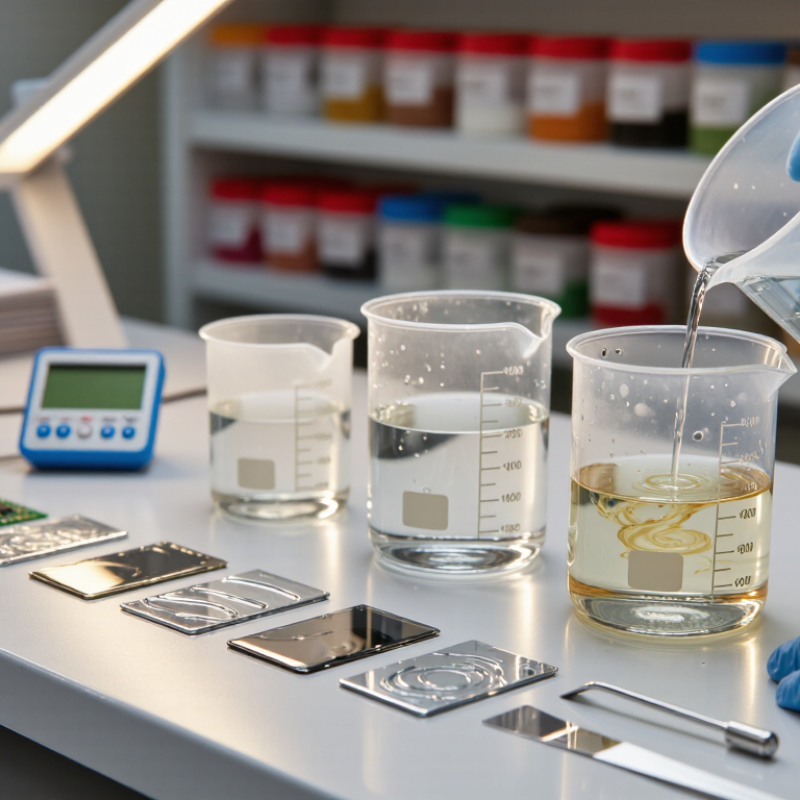
Fast-drying epoxy resin is a two-component thermoset material that cures through a chemical reaction. Unlike paint, it does not simply lose water. Resin and hardener react after mixing, creating cross-linked molecular structures. Heat is generated during this process. Fast is relative. A formulation may feel firm quickly but remain chemically under-cured inside.
Cure speed is measured through several practical checkpoints. Pot life records how long the mixed resin remains workable. Gel time shows when the material begins losing flow. Tack-free time indicates when the surface no longer feels sticky. Handling and demolding times show when parts can be moved safely. Final cure requires deeper testing, such as hardness, tensile strength, or heat resistance. These values are not interchangeable. Testing should state the mix ratio, sample size, temperature, and humidity. A result at 23°C may change sharply in a cold warehouse.
Global buyers should request test data under controlled conditions, not rely only on “rapid cure” wording. Ask whether timing starts at mixing or application. Also check viscosity, exotherm, shelf life, and the recommended working thickness. Thick pours can cure faster at the center because heat accumulates, yet they may develop bubbles or internal stress. A practical lesson is often missed: faster is not always better. Very short pot life can increase waste and mixing errors. Small mistakes matter. Cure claims also deserve review when production conditions differ from laboratory tests.
2026 Top Fast Drying Epoxy Resin Types for Global Buyers
Main Types of Fast-Drying Epoxy Resin for Different Applications
Two-part rapid-cure epoxy is common for repairs, assembly, and small structural bonding. Resin and hardener react after accurate mixing. Some formulas reach handling strength within five minutes. Full strength may require 24 hours. Buyers should check pot life, shear strength, and temperature resistance before ordering.
For clear craft pieces, low-viscosity fast-curing epoxy can flow around dried flowers, wood grains, and small metal details. It reduces trapped bubbles when poured in thin layers. However, quick curing also shortens working time. That can frustrate inexperienced users. Large castings may overheat, yellow, or cure unevenly. A small test batch is wiser.
UV-curable epoxy suits thin coatings, electronic protection, and rapid surface repairs. It hardens under suitable ultraviolet light, often within minutes. Light penetration remains a practical limitation. Dark pigments and deep sections may stay soft underneath. Heat-cure epoxy is another option for electronic components and high-performance parts. It offers controlled curing and strong adhesion, but requires an oven or heated fixture.
For outdoor equipment, buyers should compare water absorption, UV stability, and low-temperature flexibility. Fast does not always mean better. A resin that cures too quickly may bond poorly to dusty or oily surfaces. In field testing, I would record mixing ratio, room temperature, cure time, and failure pattern. These details reveal more than a supplier’s headline claim. Always follow the technical data sheet and use suitable ventilation and protective equipment.
2026 Top Fast Drying Epoxy Resin Types for Global Buyers
Fast-curing epoxy formulations do not deliver the same performance. Amine-based systems usually reach handling strength quickly at room temperature. Mercaptan-accelerated systems cure even faster, sometimes within minutes. Their working life is shorter, and strong exotherm can develop in thick sections. Cycloaliphatic amines often improve surface hardness and color stability, but cold-weather curing may slow down.
The difference becomes visible on the workbench. A 100-gram pour may remain clear and manageable, while a deeper casting can heat rapidly and crack. Faster gel time also reduces adjustment time during assembly. This matters for electrical potting, repair compounds, and industrial bonding. ASTM D2471 gel-time testing helps compare formulations, but it does not predict every field result. Humidity, filler loading, and substrate temperature still matter.
Market data supports continued demand for epoxy materials. Grand View Research estimated the global epoxy resin market at about USD 12.09 billion in 2023, with a projected 6.2% CAGR from 2024 to 2030. That growth does not mean every fast-cure product suits global buyers. Buyers should request viscosity, pot life, Shore hardness, glass-transition temperature, and full-cure data. A supplier’s “five-minute cure” may describe surface set, not structural performance. That distinction is easy to miss. I would also repeat testing after storage and transport, because real conditions rarely match the laboratory sheet.
Key performance differences among fast-curing epoxy formulations. Values show representative mid-range performance under typical laboratory conditions.
Ambient-cure systems are measured at approximately 23°C, while the heat-accelerated formulation is measured after curing at approximately 60°C. Actual results vary with mix ratio, substrate, film thickness, humidity, and curing temperature.
For global purchasing, select fast-drying epoxy resin by application, not by cure-speed claims alone. Grand View Research valued the global epoxy resin market at approximately USD 12.6 billion in 2023, with continued growth expected through 2030. This expansion increases pressure on buyers to compare technical evidence carefully. Speed is not everything.
Two-component room-temperature systems suit general bonding and repair. Low-temperature formulations help warehouses and outdoor projects. UV-assisted epoxy systems can cure faster, but they need suitable light exposure and may perform poorly in shaded joints. For electronics or coatings, compare viscosity, pot life, gel time, final hardness, glass-transition temperature, and exotherm. A five-minute cure may create excessive heat in a thick section.
MarketsandMarkets identifies construction, transportation, and electrical applications as major epoxy demand sectors. These uses require different performance priorities. Request technical data sheets, safety data sheets, batch certificates, and independent test results. Check tensile strength, lap-shear adhesion, water resistance, and thermal cycling results. Do not rely on a single laboratory value. I would also test samples after climate-controlled storage and long-distance transport. That step is often skipped, and it can expose separation or shortened working time. For international purchasing, confirm GHS labeling, applicable chemical registration, restricted-substance requirements, packaging stability, and shelf life. A practical comparison matrix prevents price from becoming the only decision factor.
A practical comparison of common fast-curing epoxy resin systems for international sourcing and project selection.
| Resin Type | Typical Working Time at 23°C | Typical Demolding or Handling Time | Typical Viscosity | Recommended Applications | Key Advantages | Main Purchasing Considerations |
|---|---|---|---|---|---|---|
| Fast-Cure Two-Part Epoxy Adhesive | 3–10 minutes | 15–60 minutes for handling; full cure commonly 24 hours | Usually 5,000–50,000 mPa·s, depending on gel or paste format | Small repairs, metal bonding, electronics assembly, fixtures, and general maintenance | Rapid positioning and high bond strength on many rigid substrates | Confirm mix ratio, nozzle or cartridge format, open time, bond-gap tolerance, and packaging shelf life |
| Fast-Curing Casting Epoxy | 10–30 minutes | 12–48 hours, depending on casting thickness and exotherm control | Approximately 300–2,000 mPa·s | Prototypes, encapsulation, decorative castings, tooling inserts, and small molds | Good flow, surface appearance, and faster turnaround than deep-pour systems | Check maximum recommended pour depth, peak exotherm, bubble release, shrinkage, and color stability |
| Rapid-Cure Laminating Epoxy | 15–40 minutes | 2–8 hours for light handling; post-cure may be required for final properties | Approximately 400–1,500 mPa·s | Fiberglass, carbon-fiber, and aramid-fiber composite repairs or small components | Useful for short production cycles and strong fiber wet-out | Request fiber-wet-out data, glass-transition temperature, tensile properties, and cure schedule |
| Fast-Cure Floor and Concrete Coating Epoxy | 20–45 minutes | Foot traffic commonly after 6–12 hours; vehicle traffic often after 24–72 hours | Approximately 500–3,000 mPa·s | Warehouses, workshops, garages, utility rooms, and light industrial floors | Abrasion resistance, chemical resistance, and reduced project downtime | Verify substrate moisture limits, surface-preparation requirements, slip resistance, and recoat window |
| UV-Accelerated Fast-Cure Epoxy | Seconds to several minutes under suitable UV exposure | Seconds to minutes for thin, exposed layers; shaded areas may remain uncured | Commonly 100–2,000 mPa·s | Electronic protection, small transparent parts, jewelry, spot repairs, and precision assembly | Very short cure cycles and on-demand production control | Confirm lamp wavelength, irradiance, optical penetration, yellowing resistance, and shadowed-area cure |
| Fast-Cure Electrical Encapsulation Epoxy | 10–30 minutes | 4–24 hours, depending on component size and thermal conditions | Approximately 500–5,000 mPa·s | Sensors, connectors, small transformers, circuit protection, and electronic modules | Electrical insulation, environmental protection, and rapid assembly flow | Ask for dielectric strength, volume resistivity, thermal conductivity, moisture resistance, and low-stress data |
| Fast-Cure Repair and Patching Epoxy Putty | 5–15 minutes | 1–4 hours for shaping or light handling; full cure often within 24 hours | Non-flowing paste or kneadable solid | Pipe repairs, equipment maintenance, gap filling, fixtures, and irregular surfaces | Works on vertical surfaces and fills larger gaps without sagging | Evaluate adhesion to wet or oily surfaces, machinability, operating temperature, and water resistance |
2026 Top Fast Drying Epoxy Resin Types for Global Buyers
Storage and handling decide whether fast-drying epoxy performs as expected. Keep resin and hardener sealed, upright, and away from sunlight. A stable room temperature near 15–25°C is commonly recommended, but every buyer should follow the product SDS. Moisture, dust, and repeated temperature changes can shorten usable life. The 2023 U.S. Bureau of Labor Statistics report recorded more than 50,000 workplace skin disease cases, showing why direct contact deserves serious attention. Epoxy sensitization may develop slowly. That risk is easy to underestimate.
Before use, inspect the lot number, expiry date, seal, color, and viscosity. Do not use material with crystals, separation, unusual odor, or a swollen container. Test a small batch first. ASTM D2471 provides a recognized method for evaluating gel time and exothermic behavior in reactive systems. A fast cure can generate surprising heat, especially in deep pours or large mixing cups. I have seen a “normal” batch cure unevenly after careless measuring. The mistake was small. The rework was not.
Tips: Wear chemical-resistant gloves, eye protection, and suitable ventilation. Measure by weight when the technical data sheet requires it. Mix slowly, scrape the container walls, and record temperature, ratio, and working time. Keep contaminated tools away from stored components. If the test cure looks cloudy or remains tacky, stop and investigate before production.
We use cookies on our website to give you an improved browser experience. View our Privacy Policy for more information. Please make your selection to opt in or out of ALL cookies here: Accept or Decline
Do you consent to the use of ALL cookies?
901 2nd Court West
Birmingham, AL 35204
Sales: 866.481.4036
Logistics/Ops: 866.481.4036
2101 Dralle Road
University Park, IL 60466
Sales: 708.813.9070
Logistics/Ops: 708.235.4200
400 E. 13th Street
Little Rock, AR 72114
Sales: 866.760.5344
Logistics/Ops: 866.760.5344
225 Collins Road
Elkhart, IN 46515
Sales: 574.295.0214
Logistics/Ops: 574.607.4611
601 Berryman Pike
Tipton, IN 46072
Sales: 800.897.7591
Logistics/Ops: 800.897.7591
3900 Uvalda Street
Denver, CO 80239
Sales: 303.706.8000
Ops/Logistics: 303.576.8398
510 3rd Street E
Milan, IL 61264
Sales: 800.322.1052
Logistics/Ops: 800.322.1052
1660 E. Aurora
Des Moines, IA 50313
Sales: 800.671.1660
Logistics: 800.671.1660
86554 Gene Lasserre Blvd.
Yulee, FL 32097
Sales: 904.253.3060
Logistics/Ops: 904.225.3000
694 S.E. County Road 245
Lake City, FL 32025
Sales: 800.727.6706
Logistics/Ops: 386.752.7412
210 Neptune Road
Auburndale, FL 33823
Sales: 863.967.1131
Logistics/Ops: 863.777.9814
4601 McCoy Drive
Pensacola, FL 32503
Sales: 850.308.7030
Logistics/Ops: 850.434.5502
815 South 56th Street
Tampa, FL 33619
Sales: 813.302.1940
Logistics/Ops: 813.621.1352
200 Hosea Road
Lawrenceville, GA 30046
Sales: 770.953.7575
Logistics/Ops: 770.513.6000
Branch Product Guide
Branch Line Card
Moulding Offering
Cedar Offering
Column Offering
8173 Hwy. 165 North
Monroe, LA 71211
Sales: 800.256.4165
Logistics/Ops: 800.256.4165
508 Warren Avenue
Portland, ME 04103
Sales: 207.888.2331
Logistics/Ops: 207.797.6565
4300 Georgia Pacific Blvd.
Frederick, MD 21704
Sales: 301.798.7474
Logistics/Ops: 301.874.8000
419 Maple Street
Bellingham, MA 02019
Sales: 508.449.0535
Logistics/Ops: 508.966.5500
825 Buchanan Ave SW
Grand Rapids, MI 49507
Sales: 877.800.1180
Logistics/Ops: 616.278.0909
995 Pacific St. NW
Aitkin, MN 56431
Sales: 800.432.3727
Logistics/Ops: 218.212.7770
1102 Port Terminal Drive
Duluth, MN 55802
Sales: 800.951.9899
Logistics/Ops: 800.851.9899
9110 83rd Ave. North
Brooklyn Park, MN 55445
Sales: 763.425.0204
Logistics/Ops: 763.425.0204
910 E. Railroad Street
Long Beach, MS 39560
Sales: 866.535.4135
Logistics/Ops: 228.205.2400
1727 Warren Street
North Kansas City, MO 64116
Sales: 800.621.2611
Logistics/Ops: 800.621.2611
2123 North Golden
Springfield, MO 65803
Sales: 800.375.7891
Logistics/Ops: 800.375.7891
13860 Corp. Woods Trail
Bridgeton, MO 63044
Sales: 314.209.0800
Logistics/Ops: 314.209.0800
1109 South 19th Street
Omaha, NE 68108
Sales: 800.489.6637
Logistics/Ops: 800.489.6637
1 Luger Road
Denville, NJ 07834
Sales: 973-339-3539
Logistics/Ops: 973.625.1461
3720 Jeffrey Blvd.
Blasdell, NY 14219
Sales: 716.235.5989
Logistics/Ops: 716.825.6557
319 Yaphank Ave.
Yaphank, NY 11980
Sales: 631.358.5714
Logistics/Ops: 631.924.7401
3300 Parkside Drive
Charlotte, NC 28208
Sales: 800.839.2588
Logistics/Ops: 704.394.3172
1712 East D Street
Butner, NC 27509
Sales: 984.389.8200
Logistics/Ops: 919.575.3700
128 Foothills Drive
Statesville, NC 28687
Sales: 800.222.1414
Logistics/Ops: 704.394.3172
550 Munroe Falls Rd.
Tallmadge, OH 44278
Sales: 330.357.4506
Logistics/Ops: 330.794.1141
10347 Toebben Dr.
Independence, KY 41051
Sales: 859.298.3926
Logistics/Ops: 859.746.2250
450 N. MacArthur
Oklahoma City, OK 73127
Sales: 800.375.6025
Logistics/Ops: 800.375.6025
1680 North Aspen
Broken Arrow, OK 74012
Sales: 918.272.2212
Logistics/Ops: 918.272.2212
522 Bridge Street
Hunker, PA 15639
Sales: 878.217.2001
Logistics/Ops: 724.925.7285
4290 Atlanta Street
Charleston, SC 29418
Sales: 843.371.1420
Logistics/Ops: 843.554.8192
1040 S. Industrial Dr.
Erwin, TN 37650
Sales: 423.641.1005
Logistics/Ops: 423.742.5911
4287 Pilot Drive
Memphis, TN 38118
Sales: 901.365.2101
Logistics/Ops: 901.365.2101
700 Myatt Drive
Madison, TN 37115
Sales: 615.327.9547
Logistics/Ops: 629.777.4949
4747 Mark IV Parkway
Fort Worth, TX 76106
Sales: 866.323.5117
Logistics/Ops: 817.625.9091
6990 Market Avenue
El Paso, TX 79915
Sales: 915.778.6356
Logistics/Ops: 915.265.7200
2502 Wilson Road
Harlingen, TX 78552
Sales: 800.580.6711
Logistics/Ops: 800.580.6711
10,000 North Loop East
Houston, TX 77029
Sales: 713.921.1977
Logistics/Ops: 713.675.3544
702 East 44th St.
Lubbock, TX 79404
Sales: 866.454.6010
Logistics/Ops: 866.454.6010
535 N. WW White Road
San Antonio, TX 78219
Sales: 800.284.0488
Logistics/Ops: 210.333.8112
142 Pine Haven Shores Rd.
Shelburne, VT 05482
Sales: 802.800.2540
Logistics/Ops: 802.985.2512
4700 Bethlehem Road,
Richmond, VA 23230
Sales: 804.201.2400
Logistics/Ops: 804.342.1161
4516 N Barker Road
Spokane Valley, WA 99027
Phone: 509.892.9420
Toll free: 800.728.6157
8365 N. 76th Street
Milwaukee, WI 53223
Sales: 800.356.9245
Logistics/Ops: 800.356.9245
312 S. Chester Street
Sparta, WI 54656
Sales: 800.362.5864
Logistics/Ops: 800.362.5864
899 Grossman Drive
Schofield, WI 54476
Sales: 800.472.0017
Logistics/Ops: 800.472.0017
