
We use cookies on our website to give you an improved browser experience. View our Privacy Policy for more information. Please make your selection to opt in or out of ALL cookies here: Accept or Decline
Choosing a Steel Wire Rod Manufacturer requires more than comparing annual output or advertised prices. Global buyers need evidence of stable chemistry, controlled cooling, surface quality, and dependable shipment planning. A bright coil can still hide inconsistent tensile performance.
The World Steel Association reported approximately 1.88 billion tonnes of crude steel production in 2024. That scale shows steel’s importance, but it also reveals intense competition among producers. Steel wire rod sits at a critical stage between billet casting and finished wire. Small variations in carbon, manganese, sulfur, or diameter can affect drawing efficiency, welding strength, and final product reliability. The OECD Steel Market Developments reports also highlight continuing pressure from excess capacity, trade uncertainty, and uneven regional demand. Buyers should therefore examine verified mill data, not attractive brochures.
Edwin Basson, Director General of the World Steel Association, has stated, “Steel is essential to modern life, and its production must become more sustainable.” His observation applies directly to wire rod sourcing. A responsible supplier should demonstrate energy management, emissions reporting, traceability, and credible quality systems. ISO 9001 certification helps, but it is not the whole answer. Factory audits still matter. So do recent test certificates, loading photographs, and customer references.
This 2026 guide evaluates leading manufacturers through practical buyer criteria. These include product consistency, export experience, technical support, lead time, packaging, and responsible production. Some rankings remain debatable. Market data changes quickly. That is why every buyer should confirm current capacity, specifications, and delivery terms before signing a contract.
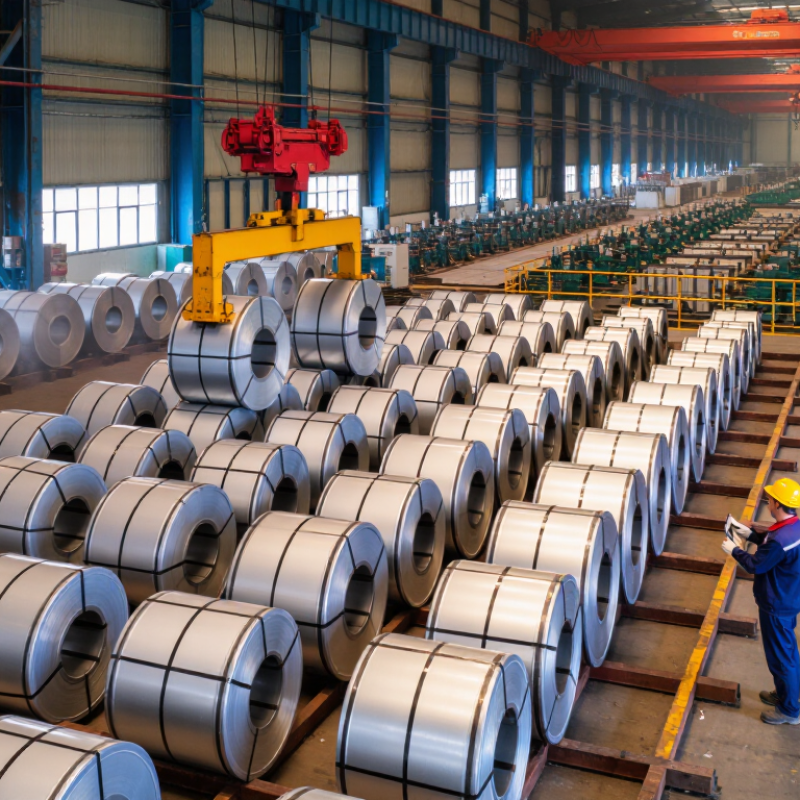
What Steel Wire Rod Is and Why Global Buyers Need It
Steel wire rod is a hot-rolled, semi-finished steel product supplied in coils. Its round cross-section and continuous length make it suitable for drawing into finer wire. Buyers use it for fasteners, welded mesh, springs, cables, nails, and reinforcement products.
The right grade depends on the final process. Low-carbon rod supports easy forming and welding. Higher-carbon grades offer improved strength for springs and demanding mechanical parts. Diameter, surface condition, chemical composition, tensile strength, and coil weight all affect production results. A reliable supplier should provide mill test certificates, dimensional records, and traceable heat numbers. Independent inspection can add confidence before shipment.
Small details matter.
In practical sourcing, buyers should compare more than price. Uneven surfaces may increase die wear during drawing. Excessive scale can create cleaning problems. Incorrect coil weight can also disrupt handling equipment and storage plans. A polished specification sheet is not enough. I have seen purchasing teams approve material without checking the customer’s drawing tolerance. That mistake can become expensive later. Requirements should be confirmed with production engineers, not only sales staff.
Tips: Define grade, diameter, tolerance, coil weight, and end use before requesting quotations. Ask for recent test data and packaging photographs. Confirm rust protection for the planned transport route. Keep a sample for comparison when repeat orders are expected. One overlooked detail can affect an entire batch.
2026 Top Steel Wire Rod Manufacturers for Global Buyers
Evaluating a steel wire rod manufacturer requires more than comparing quotations. Check chemical consistency, tensile strength, surface quality, coil weight, and dimensional tolerance. The World Steel Association reported 1.88 billion tonnes of crude steel production in 2024. This scale makes supplier discipline more important, not less. Ask for recent mill test certificates, heat numbers, and independent inspection records. Traceability should reach the furnace batch.
Production capability also matters. Confirm monthly capacity, rolling-mill equipment, annealing options, packaging methods, and shipment history. A supplier may promise fast delivery, but port congestion and raw material disruptions can change the schedule. Review at least twelve months of on-time delivery data. The International Energy Agency reports that steelmaking creates about 7% to 9% of global energy-related emissions. Request energy data, scrap usage, and emissions targets, but treat vague claims carefully. Sustainability language is not evidence.
Tips: Compare three sample coils, not only paperwork. Test diameter at several points. Inspect rust, edge damage, and winding tension. Ask how rejected coils are handled. A low price can still be expensive. No scorecard is perfect; even experienced buyers can overlook small chemistry variations. Recheck critical grades through a qualified laboratory before approving large orders. Choose suppliers with clear corrective-action records, stable export documentation, and technical staff who answer precise questions.
Leading steel wire rod manufacturers in 2026 are competing on more than furnace capacity. Global buyers now inspect chemistry control, rolling stability, delivery discipline, and technical support. Experienced purchasing teams ask for mill certificates, heat numbers, dimensional tolerances, and test methods before signing contracts. A reliable producer should explain how billets are sourced, how coils are cooled, and how defects are screened. These details matter when rod enters tire cord, fasteners, welding wire, or construction mesh. Small variations can become costly during drawing.
Tips: Compare suppliers using the same specification sheet. Check carbon range, tensile strength, surface condition, coil weight, and packing design. Request recent test records, not only brochures. Confirm production capacity for your required grade and monthly volume. Ask about port routes and contingency planning. A factory may quote an attractive price, yet weak shipment planning can stop a production line. Visiting a plant can reveal housekeeping and process discipline, although one visit never proves everything.
The strongest manufacturers combine metallurgical expertise with transparent communication. They discuss nonconformity procedures instead of hiding them. They also support trial orders, sampling, and corrective action reports. In 2026, digital traceability is becoming useful for repeated imports and regulated applications. Still, software cannot replace physical testing. Buyers should review samples with an independent laboratory when risk is high. Some evaluations remain imperfect, and my own preference is to record every assumption. That habit exposes gaps early and prevents confident but careless decisions.
2026 Top Steel Wire Rod Manufacturers for Global Buyers
Global buyers should assess wire rod by grade, standard, and documented consistency, not price alone. The World Steel Association reported 1.88 billion tonnes of crude steel production in 2024. That scale highlights the need for traceable quality across international supply chains. Common carbon grades support fasteners, mesh, welding wire, and cold heading applications. Low-alloy grades serve higher-strength components. Stainless grades resist corrosion in demanding environments.
Standards matter. ASTM A510/A510M covers general carbon and alloy wire rods, while ISO 16120 addresses non-alloy steel wire rod for wire manufacturing. EN 10016 remains widely referenced in European purchasing. Buyers should request heat numbers, chemical analysis, tensile results, and dimensional records. Small differences matter. A 0.1-millimeter variation can affect drawing performance and tool wear.
Customization may include diameters, coil weights, surface condition, decarburization limits, and controlled cooling. Manufacturers can also adjust carbon ranges, residual elements, packaging, and delivery documentation. The OECD’s latest steel outlook continues to emphasize overcapacity and uneven demand, making supplier verification increasingly important. However, standards alone do not guarantee smooth processing. Actual drawing trials may expose issues that certificates miss. A practical specification should include end use, drawing passes, lubrication method, and acceptable defect limits. That detail is often overlooked.
| Product Family | Representative Grades | Common International Standards | Typical Diameter Range | Key Product Characteristics | Customization Options | Typical End Uses |
|---|---|---|---|---|---|---|
| Low-Carbon Steel Wire Rod | SAE 1006, SAE 1008, SAE 1010, SAE 1018, SAE 1022; C4D–C22D | ASTM A510/A510M SAE J403 EN 10016-1/-2 ISO 16120 | Approximately 5.5–25 mm; larger sizes may be available by mill capability | Good ductility, weldability, cold-forming performance, and suitability for drawing. Typical carbon content is generally below 0.25%, depending on grade. | Diameter and dimensional tolerance, controlled chemistry, pickled or mechanically descaled surface, drawing-quality surface, coil weight, coil ID/OD, and reduced residual elements. | Nails, mesh, fencing, general-purpose wire, fasteners, wire products, and cold-drawn wire. |
| Cold-Heading and Cold-Forming Rod | SAE 1006–1022, 10B21, 10B33; C4C, C8C, C10C, C15C | EN 10263-1/-2 ASTM A510/A510M SAE J403 ISO 16120 | Approximately 5.5–22 mm for common fastener feedstock | Low inclusion level, consistent spheroidized-annealing response, controlled surface quality, and high deformability for heading and extrusion. | Phosphorus and sulfur limits, boron addition, aluminum-killed chemistry, controlled decarburization depth, spheroidizing-annealing suitability, and surface-defect limits. | Bolts, screws, rivets, nuts, automotive fasteners, clips, and cold-extruded components. |
| High-Carbon Steel Wire Rod | SAE 1070, SAE 1080, SAE 1084, SAE 1090; C66D–C92D; SWRH72A–SWRH82B | EN 10016-1/-2 ISO 16120 JIS G3506 SAE J403 | Approximately 5.5–16 mm for many tire-cord, spring, and high-strength wire applications | High tensile potential, controlled pearlitic structure, good patenting response, and suitability for heavy drawing reductions. | Carbon range, manganese level, non-metallic inclusion control, patenting suitability, controlled segregation, tight ovality, and surface-quality requirements. | Steel cord, bead wire, saw wire, high-strength rope wire, mattress wire, piano wire, and prestressing wire feedstock. |
| Spring Steel Wire Rod | SAE 1070–1090, SAE 5160, SAE 9254; 51CrV4; 55Cr3 | EN 10089 EN 10270-1 SAE J404 ISO 16120 | Approximately 5.5–20 mm, subject to grade and downstream process | High fatigue resistance, controlled hardenability, reliable heat-treatment response, and resistance to decarburization. | Alloy additions such as chromium, silicon, manganese, or vanadium; hardenability limits; inclusion rating; surface conditioning; and customized coil dimensions. | Automotive springs, suspension components, agricultural springs, mechanical springs, and high-stress wire products. |
| Alloy and Quenched-and-Tempered Steel Rod | SAE 4130, SAE 4140, SAE 4145; 34CrMo4; 42CrMo4 | EN 10083-3 SAE J404 ASTM A29/A29M | Approximately 6–25 mm for common wire-rod and conversion applications | Higher strength and hardenability than plain-carbon grades, with controlled alloy chemistry for heat treatment and mechanical performance. | Alloy chemistry, restricted-element limits, spheroidizing-annealing response, center segregation control, ultrasonic testing, surface conditioning, and heat-treatment condition. | High-strength fasteners, mechanical parts, oilfield components, automotive parts, and cold-forged or machined products. |
| Microalloyed Steel Wire Rod | Vanadium-, niobium-, or titanium-microalloyed carbon-manganese grades; application-specific HSLA grades | EN 10016 ISO 16120 ASTM A510/A510M Customer specification | Approximately 5.5–25 mm | Enhanced yield strength and grain refinement with reduced reliance on conventional heat treatment, depending on chemistry and processing route. | Microalloy content, controlled rolling temperature, accelerated cooling, ferrite-pearlite or bainitic structure, grain-size targets, and mechanical-property windows. | High-strength fasteners, automotive wire products, structural wire, reinforcement-related products, and engineered components. |
| Welding Wire Rod Feedstock | Low-carbon manganese-silicon grades for solid welding wire; chemistry selected for ER70S-type classifications | AWS A5.18/A5.18M ISO 14341 EN 10264-1 ASTM A510/A510M | Commonly 5.5–16 mm before drawing and surface treatment | Clean steel, stable drawing performance, controlled copper and residual elements, and chemistry designed for consistent weld-metal properties. | Manganese and silicon levels, copper coating compatibility, surface cleanliness, drawing reduction plan, coil weight, and welding-classification chemistry. | Gas-metal arc welding wire, submerged-arc welding wire, fabricated steel structures, machinery, shipbuilding, and pressure equipment. |
| Stainless Steel Wire Rod | 304/304L, 316/316L, 321, 410, 430, and other austenitic, ferritic, and martensitic grades | ASTM A493/A493M EN 10088-3 ISO 16143 JIS G4308 | Approximately 5.5–25 mm, depending on grade and finishing route | Corrosion resistance, controlled surface condition, and grade-specific formability or heat-treatment response. | Low-carbon or stabilized grades, solution-annealed condition, bright or pickled surface, magnetic-property control, diameter tolerance, and corrosion-performance requirements. | Fasteners, welding wire, springs, wire mesh, medical and food-processing components, marine equipment, and architectural products. |
| Tire Cord and Steel Cord Feedstock | High-carbon pearlitic grades, commonly within approximately 0.70–0.95% carbon ranges | ISO 16120 EN 10016 Customer tire-cord specification | Commonly 5.5–6.5 mm for downstream multi-stage drawing | Very low inclusion content, narrow chemistry range, fine pearlitic structure, excellent drawability, and tight surface-quality control. | Carbon and manganese limits, restricted phosphorus and sulfur, inclusion-size limits, controlled segregation, decarburization limits, and specialized coil packaging. | Passenger-car tire cord, truck and bus tire cord, bead wire, hose reinforcement, and conveyor-belt reinforcement. |
| Prestressing and High-Tensile Wire Feedstock | High-carbon pearlitic grades selected for prestressing wire or strand production | EN 10016 ISO 16120 EN 10138 ASTM A510/A510M | Approximately 5.5–13 mm for common downstream drawing operations | High tensile-strength potential, uniform microstructure, low surface-defect frequency, and reliable response to drawing and stabilization. | Strength class, relaxation-performance targets, inclusion control, decarburization limits, ovality, coil weight, and traceability requirements. | Prestressing wire, prestressed concrete strand, bridge components, railway sleepers, and precast concrete products. |
For global buyers, choosing a steel wire rod manufacturer in 2026 requires more than comparing price lists. Start with end use, diameter tolerance, carbon range, surface condition, and required drawing performance. Ask suppliers for recent mill certificates, heat numbers, tensile results, and dimensional records. Those documents should match the physical coil labels. Traceability matters at the warehouse, not only in a sales folder. Details expose risk.
Quality control should combine supplier evidence with independent checks. Request a pre-shipment inspection covering coil weight, rust, winding, welds, packaging, and marking. For critical orders, test samples through an accredited laboratory near the destination market. Check chemical composition and tensile strength against the purchase specification. A factory visit can reveal storage problems, poor moisture protection, or overloaded production lines. Do not rely on polished samples. They may hide inconsistency.
Supplier selection also depends on communication and logistics. Compare response times, production capacity, minimum order quantities, lead-time history, export documents, and port options. Confirm how the supplier handles claims, replacement coils, and unexpected delays. A written quality agreement reduces disputes, but it cannot replace consistent inspection. Lower prices can reflect real efficiency, or weaker controls. That distinction deserves evidence. Buyers should score suppliers across quality, reliability, technical support, and total landed cost. Even a strong audit is only a snapshot. Recheck performance after the first shipment, especially when steel grades, seasons, or production teams change.
We use cookies on our website to give you an improved browser experience. View our Privacy Policy for more information. Please make your selection to opt in or out of ALL cookies here: Accept or Decline
Do you consent to the use of ALL cookies?
901 2nd Court West
Birmingham, AL 35204
Sales: 866.481.4036
Logistics/Ops: 866.481.4036
2101 Dralle Road
University Park, IL 60466
Sales: 708.813.9070
Logistics/Ops: 708.235.4200
400 E. 13th Street
Little Rock, AR 72114
Sales: 866.760.5344
Logistics/Ops: 866.760.5344
225 Collins Road
Elkhart, IN 46515
Sales: 574.295.0214
Logistics/Ops: 574.607.4611
601 Berryman Pike
Tipton, IN 46072
Sales: 800.897.7591
Logistics/Ops: 800.897.7591
3900 Uvalda Street
Denver, CO 80239
Sales: 303.706.8000
Ops/Logistics: 303.576.8398
510 3rd Street E
Milan, IL 61264
Sales: 800.322.1052
Logistics/Ops: 800.322.1052
1660 E. Aurora
Des Moines, IA 50313
Sales: 800.671.1660
Logistics: 800.671.1660
86554 Gene Lasserre Blvd.
Yulee, FL 32097
Sales: 904.253.3060
Logistics/Ops: 904.225.3000
694 S.E. County Road 245
Lake City, FL 32025
Sales: 800.727.6706
Logistics/Ops: 386.752.7412
210 Neptune Road
Auburndale, FL 33823
Sales: 863.967.1131
Logistics/Ops: 863.777.9814
4601 McCoy Drive
Pensacola, FL 32503
Sales: 850.308.7030
Logistics/Ops: 850.434.5502
815 South 56th Street
Tampa, FL 33619
Sales: 813.302.1940
Logistics/Ops: 813.621.1352
200 Hosea Road
Lawrenceville, GA 30046
Sales: 770.953.7575
Logistics/Ops: 770.513.6000
Branch Product Guide
Branch Line Card
Moulding Offering
Cedar Offering
Column Offering
8173 Hwy. 165 North
Monroe, LA 71211
Sales: 800.256.4165
Logistics/Ops: 800.256.4165
508 Warren Avenue
Portland, ME 04103
Sales: 207.888.2331
Logistics/Ops: 207.797.6565
4300 Georgia Pacific Blvd.
Frederick, MD 21704
Sales: 301.798.7474
Logistics/Ops: 301.874.8000
419 Maple Street
Bellingham, MA 02019
Sales: 508.449.0535
Logistics/Ops: 508.966.5500
825 Buchanan Ave SW
Grand Rapids, MI 49507
Sales: 877.800.1180
Logistics/Ops: 616.278.0909
995 Pacific St. NW
Aitkin, MN 56431
Sales: 800.432.3727
Logistics/Ops: 218.212.7770
1102 Port Terminal Drive
Duluth, MN 55802
Sales: 800.951.9899
Logistics/Ops: 800.851.9899
9110 83rd Ave. North
Brooklyn Park, MN 55445
Sales: 763.425.0204
Logistics/Ops: 763.425.0204
910 E. Railroad Street
Long Beach, MS 39560
Sales: 866.535.4135
Logistics/Ops: 228.205.2400
1727 Warren Street
North Kansas City, MO 64116
Sales: 800.621.2611
Logistics/Ops: 800.621.2611
2123 North Golden
Springfield, MO 65803
Sales: 800.375.7891
Logistics/Ops: 800.375.7891
13860 Corp. Woods Trail
Bridgeton, MO 63044
Sales: 314.209.0800
Logistics/Ops: 314.209.0800
1109 South 19th Street
Omaha, NE 68108
Sales: 800.489.6637
Logistics/Ops: 800.489.6637
1 Luger Road
Denville, NJ 07834
Sales: 973-339-3539
Logistics/Ops: 973.625.1461
3720 Jeffrey Blvd.
Blasdell, NY 14219
Sales: 716.235.5989
Logistics/Ops: 716.825.6557
319 Yaphank Ave.
Yaphank, NY 11980
Sales: 631.358.5714
Logistics/Ops: 631.924.7401
3300 Parkside Drive
Charlotte, NC 28208
Sales: 800.839.2588
Logistics/Ops: 704.394.3172
1712 East D Street
Butner, NC 27509
Sales: 984.389.8200
Logistics/Ops: 919.575.3700
128 Foothills Drive
Statesville, NC 28687
Sales: 800.222.1414
Logistics/Ops: 704.394.3172
550 Munroe Falls Rd.
Tallmadge, OH 44278
Sales: 330.357.4506
Logistics/Ops: 330.794.1141
10347 Toebben Dr.
Independence, KY 41051
Sales: 859.298.3926
Logistics/Ops: 859.746.2250
450 N. MacArthur
Oklahoma City, OK 73127
Sales: 800.375.6025
Logistics/Ops: 800.375.6025
1680 North Aspen
Broken Arrow, OK 74012
Sales: 918.272.2212
Logistics/Ops: 918.272.2212
522 Bridge Street
Hunker, PA 15639
Sales: 878.217.2001
Logistics/Ops: 724.925.7285
4290 Atlanta Street
Charleston, SC 29418
Sales: 843.371.1420
Logistics/Ops: 843.554.8192
1040 S. Industrial Dr.
Erwin, TN 37650
Sales: 423.641.1005
Logistics/Ops: 423.742.5911
4287 Pilot Drive
Memphis, TN 38118
Sales: 901.365.2101
Logistics/Ops: 901.365.2101
700 Myatt Drive
Madison, TN 37115
Sales: 615.327.9547
Logistics/Ops: 629.777.4949
4747 Mark IV Parkway
Fort Worth, TX 76106
Sales: 866.323.5117
Logistics/Ops: 817.625.9091
6990 Market Avenue
El Paso, TX 79915
Sales: 915.778.6356
Logistics/Ops: 915.265.7200
2502 Wilson Road
Harlingen, TX 78552
Sales: 800.580.6711
Logistics/Ops: 800.580.6711
10,000 North Loop East
Houston, TX 77029
Sales: 713.921.1977
Logistics/Ops: 713.675.3544
702 East 44th St.
Lubbock, TX 79404
Sales: 866.454.6010
Logistics/Ops: 866.454.6010
535 N. WW White Road
San Antonio, TX 78219
Sales: 800.284.0488
Logistics/Ops: 210.333.8112
142 Pine Haven Shores Rd.
Shelburne, VT 05482
Sales: 802.800.2540
Logistics/Ops: 802.985.2512
4700 Bethlehem Road,
Richmond, VA 23230
Sales: 804.201.2400
Logistics/Ops: 804.342.1161
4516 N Barker Road
Spokane Valley, WA 99027
Phone: 509.892.9420
Toll free: 800.728.6157
8365 N. 76th Street
Milwaukee, WI 53223
Sales: 800.356.9245
Logistics/Ops: 800.356.9245
312 S. Chester Street
Sparta, WI 54656
Sales: 800.362.5864
Logistics/Ops: 800.362.5864
899 Grossman Drive
Schofield, WI 54476
Sales: 800.472.0017
Logistics/Ops: 800.472.0017
