How to Build Effective Solutions for Everyday Challenges?
In today's fast-paced world, building solutions for everyday challenges is essential. Every day presents unique difficulties that require thoughtful approaches. From managing conflicting schedules to handling unexpected events, we often face problems that demand creative thinking. These challenges can feel overwhelming at times, prompting us to question our abilities.
Effective problem-solving starts with understanding these obstacles. It involves recognizing the underlying issues that contribute to our daily stresses. Building solutions is not just about immediate fixes; it’s about developing lasting methods that foster resilience. For instance, instead of just juggling tasks, consider prioritizing activities based on urgency and importance. Such shifts can lead to more manageable routines.
Remember, no solution is perfect. Every approach carries its own flaws. Reflecting on past experiences can help us refine our strategies. Embracing imperfection often leads to growth. Ultimately, the journey of building solutions is ongoing. Each challenge we encounter teaches us something new and valuable.

Identifying Common Everyday Challenges and Their Impact
In today's fast-paced world, everyday challenges are all around us. According to a recent report by the American Psychological Association, 61% of adults cite stress as a major concern affecting their lives. This stress can stem from work, personal relationships, or even financial issues. Identifying these challenges is the first step toward effective solutions.
Many individuals feel overwhelmed. For instance, time management issues often lead to reduced productivity. Workers who struggle with organization can lose up to two hours a day. Creating a structured schedule allows for clearer priorities. Tips for staying organized include starting each day with a to-do list. Break tasks into smaller steps to prevent feeling swamped.
Another common issue is financial strain. The National Endowment for Financial Education found that 70% of adults feel anxious about their financial future. To combat this, establishing a monthly budget can be beneficial. Track expenses to identify unnecessary spending. This simple practice encourages mindfulness about financial choices. Reflecting on these challenges allows for personal growth and better decision-making in the long run.
Assessing Your Resources and Capabilities for Problem-Solving
When addressing everyday challenges, assessing resources and capabilities is essential. Industry reports indicate that 65% of organizations struggle to optimize their existing resources effectively. Understanding what you have at your disposal—time, skills, and financial assets—can help you tackle problems more efficiently.
Many people overlook their personal strengths. A recent study revealed that 70% of individuals underestimate their capabilities. This lack of self-awareness can hinder effective problem-solving. By conducting a simple SWOT analysis—identifying your strengths, weaknesses, opportunities, and threats—you can gain clarity. Focus on what skills you possess and how they can be utilized in overcoming obstacles.
Despite this, it’s crucial to recognize that not all resources are equal. For instance, a lack of time can lead to rushed solutions and suboptimal outcomes. Moreover, emotional resilience plays a role too. Many overlook their mental health when facing challenges, which may lead to burnout. Striking a balance between fully utilizing available resources and acknowledging limitations is key. Implementing a realistic approach ensures you build effective solutions while also allowing for self-reflection and growth.
Developing Creative and Practical Solutions to Address Challenges
Everyday challenges often require innovative thinking. It is essential to understand the problem deeply. Take a moment to reflect on the situation. Ask yourself what the root cause is. This clarity helps in finding effective solutions.
Consider brainstorming with others. Diverse viewpoints bring new ideas. One might see a solution where others see a roadblock. Keep an open mind during discussions. Even a seemingly silly idea can spark a breakthrough. Creativity thrives in a non-judgmental space.
After developing ideas, test them out. Implementation can reveal flaws and areas for improvement. Don't be afraid of failure; it is a part of the process. Each mistake teaches valuable lessons. Embrace the unpredictability of solutions; they are rarely perfect the first time. Learning and adapting is key to overcoming challenges effectively.
Implementing and Testing Your Solutions for Effectiveness
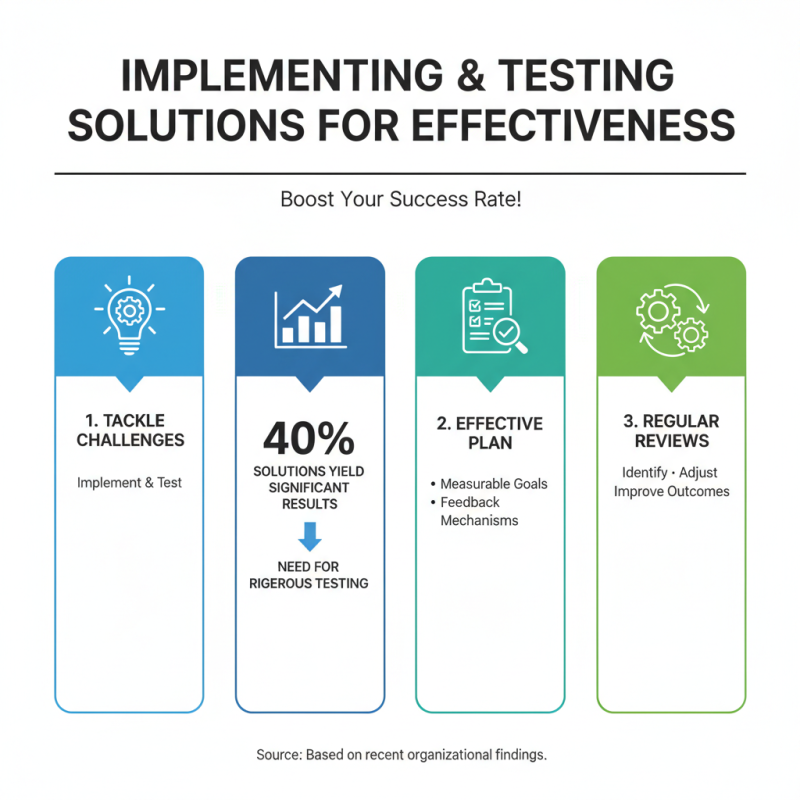
When tackling everyday challenges, implementing and testing solutions is crucial for effectiveness. Many organizations find that only 40% of their solutions yield significant results. This finding emphasizes the importance of rigorous testing. An effective plan should include measurable goals and feedback mechanisms. Regular reviews help identify what works and what doesn’t, allowing for adjustments that improve outcomes.
Real-world examples reveal that small changes can lead to big impacts. A study by the Project Management Institute showed that companies optimizing their testing processes improve project success rates by 33%. This suggests that careful planning and evaluation elevate the chances of achieving desired results. Keep in mind, however, that not every solution will be successful. It’s essential to learn from failures rather than ignoring them.
Incorporating user feedback can enhance a solution's relevance. Engaging your audience may uncover hidden challenges. Analysis of user data can reveal trends that are not apparent at first glance. Each iteration provides insights that inform future strategies, creating a cycle of improvement. Embrace failure as a teacher, and adapt your solutions accordingly.
Evaluating Outcomes and Adjusting Your Approach for Improvement
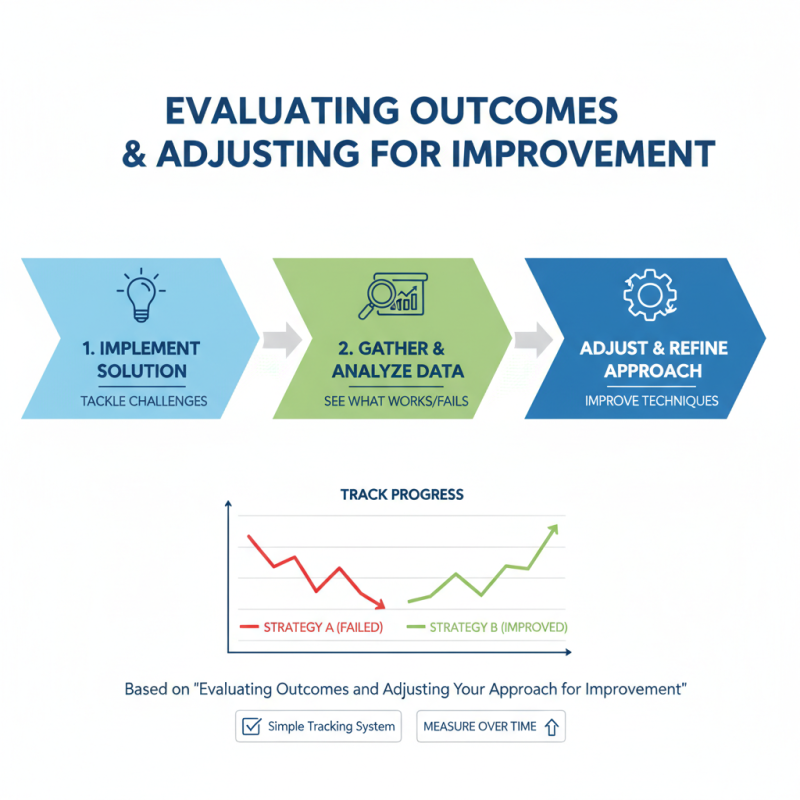
When tackling everyday challenges, evaluating your outcomes regularly is crucial. Each solution you implement yields data. Analyzing this data helps you see what works and what doesn’t. For instance, if a time management strategy fails to yield results, it may be time to rethink your techniques. Create a simple tracking system to measure your progress over time.
Adjusting your approach based on outcomes can be a learning experience. It's essential to embrace discomfort and uncertainty during this process. Reflecting on your setbacks can reveal valuable insights. Consider journaling your thoughts to identify patterns. Sometimes, the solutions we choose lack the right context or resources. A minor tweak can lead to significant improvements.
Continuous improvement is a journey, not a destination. You might find that a solution works in principle but fails in execution. Learn from feedback, both from yourself and others. Be open to evolving your methods. It's about creating a cycle of evaluation, adjustment, and growth. Admitting when something isn’t working is part of this dynamic process.