
We use cookies on our website to give you an improved browser experience. View our Privacy Policy for more information. Please make your selection to opt in or out of ALL cookies here: Accept or Decline
Global buyers need more than a low quoted price when selecting a Carbon Seamless Pipe Manufacturer. They need consistent chemistry, verified dimensions, and dependable delivery across borders. The World Steel Association reported approximately 1.89 billion tonnes of crude steel production in 2023, showing the scale of the industrial supply chain behind modern infrastructure. Yet scale alone does not prove quality.
Seamless carbon steel pipes support oil and gas lines, pressure systems, boilers, and structural projects. Their reliability depends on steelmaking, piercing, heat treatment, testing, and accurate documentation. The IEA identifies iron and steel production as responsible for roughly 7% to 9% of global energy-related carbon dioxide emissions. This pressure is changing buyer expectations. Responsible manufacturers now need stronger process control, material efficiency, and clearer environmental reporting.
A capable Carbon Seamless Pipe Manufacturer should work with recognized standards, such as ASTM, ASME, API, or EN specifications, according to project requirements. Buyers should review mill certificates, heat-number traceability, ultrasonic testing records, hydrostatic results, and inspection procedures. A pipe may look flawless under warehouse lighting. Its real performance appears under pressure, temperature, and time.
Experience matters here.
The OECD’s Steel Market Developments reports also highlight continuing uncertainty in global steel demand, trade, and production costs. Therefore, dependable sourcing requires technical judgment, not attractive catalog language. No supplier is perfect. Certificates can contain errors, delivery estimates can shift, and specifications may be misunderstood. A trustworthy manufacturer acknowledges these risks, communicates early, and corrects weaknesses with evidence. This guide examines the practical capabilities, quality systems, export readiness, and sustainability signals that distinguish a reliable global supplier from an ordinary pipe vendor.
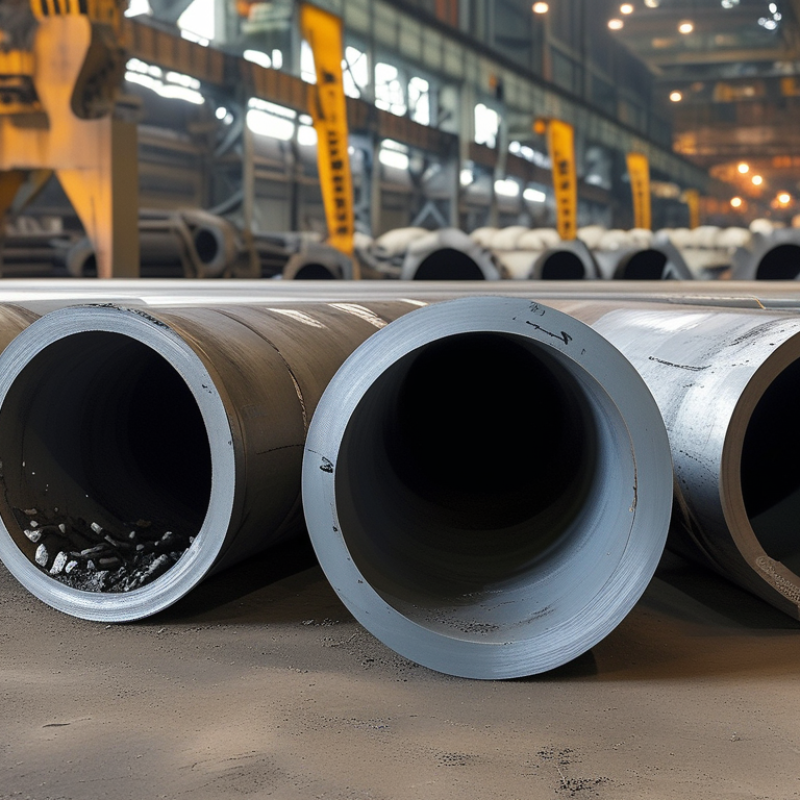
A top carbon seamless pipe manufacturer is more than a factory with large furnaces. It is a technical partner that controls steel chemistry, piercing, rolling, heat treatment, testing, and documentation. Seamless pipe contains no welded seam, making process discipline especially important for pressure service. The World Steel Association reported 1.89 billion tonnes of crude steel production in 2023. That scale shows the industry’s capacity, but it does not prove product reliability.
The manufacturer’s role begins with correct material selection. Carbon grades must match pressure, temperature, corrosion exposure, and connection requirements. Production teams should verify chemistry through heat certificates and confirm dimensions with calibrated instruments. Hydrostatic testing, ultrasonic inspection, and tensile testing provide practical evidence. Applicable requirements may include ASTM, ASME, API, or EN standards, depending on the project. International trade data also shows how widely steel products move across borders, increasing the need for traceability and consistent export documentation.
Quality is never perfectly simple. A certificate can be accurate yet incomplete. Therefore, experienced manufacturers keep heat numbers connected to each pipe bundle, inspection record, and shipment document. The best teams also explain limitations honestly, including tolerances, coating needs, and delivery risks. That honesty matters. World Steel Association statistics show strong global steel output, but buyers still need process evidence, not production volume alone. A top supplier listens to site conditions, checks assumptions, and corrects mistakes before installation begins.
| Evaluation Dimension | Reference Data or Requirement | What a Top Manufacturer Should Provide | Importance for Global Buyers |
|---|---|---|---|
| Product Definition | Carbon seamless pipe is produced from a solid steel billet or round bar and formed without a longitudinal weld seam. | Clear product specifications covering outside diameter, wall thickness, length, steel grade, manufacturing process, and end finish. | Helps purchasers select pipe suitable for pressure, temperature, mechanical-load, and installation requirements. |
| Common Product Standards | ASTM A106 covers seamless carbon steel pipe for high-temperature service; ASTM A53 includes seamless and welded steel pipe; API 5L covers line pipe requirements. | Manufacturing, testing, marking, and documentation aligned with the standard specified in the purchase order. | Standards provide a common technical basis for international procurement, inspection, and acceptance. |
| Typical Carbon Steel Grades | Examples include ASTM A106 Grade B, ASTM A53 Grade B, and API 5L Grade B. Exact chemistry and mechanical limits depend on the applicable standard. | Grade selection based on design pressure, operating temperature, fluid type, welding needs, and applicable codes. | Correct grade selection reduces risks related to strength, toughness, corrosion, and service failure. |
| Manufacturing Route | Typical processes include billet heating, piercing, elongation, sizing, heat treatment, straightening, cutting, and finishing. | Controlled process parameters, traceability from billet to finished pipe, and documented heat-treatment records where required. | Process control supports dimensional consistency, mechanical performance, and repeatable quality across production lots. |
| Dimensional Control | Key measurements include outside diameter, wall thickness, length, ovality, straightness, and end squareness. | Calibrated measuring equipment, inspection records, and tolerances stated according to the selected product standard. | Accurate dimensions support fit-up, flange or threaded connections, fabrication, and field installation. |
| Mechanical Properties | Typical verification includes yield strength, tensile strength, and elongation; required values vary by grade and standard. | Heat or batch-level test results issued in a material test certificate when required by the contract. | Confirms that the pipe can withstand the specified design and operating loads. |
| Chemical Composition | Carbon, manganese, phosphorus, sulfur, and other specified elements are controlled according to the applicable grade. | Heat analysis and, where required, product analysis with traceable test results. | Supports weldability, strength, ductility, and compliance with project specifications. |
| Non-Destructive Testing | Hydrostatic testing and/or approved non-destructive examination may be required depending on the standard and purchase order. | Documented test procedures, calibrated equipment, qualified personnel, and test reports linked to pipe identification. | Improves confidence in pressure integrity and helps detect relevant discontinuities before shipment. |
| Surface and End Finish | Options may include plain ends, beveled ends, threaded ends, grooved ends, or protective coatings when specified. | End preparation, surface condition, caps, marking, and coating requirements matched to the installation method. | Reduces site modification, protects pipe ends, and improves installation efficiency. |
| Traceability | Traceability normally links each pipe or bundle to a heat number, grade, size, standard, and inspection record. | Permanent or durable marking and a complete document trail from raw material through final inspection. | Supports audits, claims management, regulatory review, and long-term asset documentation. |
| Quality Documentation | Common documents include commercial invoice, packing list, certificate of origin, material test certificate, inspection report, and test records. | Accurate, consistent, and shipment-specific documentation prepared in the buyer's required format. | Facilitates customs clearance, third-party inspection, payment processing, and project approval. |
| Typical Applications | Oil and gas transmission, steam and process piping, boilers, heat exchangers, structural supports, and general industrial service. | Application-specific recommendations based on pressure, temperature, fluid, joining method, and applicable design code. | Ensures the selected pipe is appropriate for the intended operating environment. |
| Export Packaging | Common measures include steel or textile bundling, end protection, moisture protection, and seaworthy packing. | Packaging designed for handling, container or break-bulk transport, storage, and destination-country requirements. | Minimizes damage, corrosion, identification loss, and delays during international transportation. |
| Role in Global Supply | A top manufacturer coordinates engineering, production, inspection, documentation, packaging, and delivery. | Acts as a technical and supply-chain partner rather than only a pipe seller. | Reduces procurement complexity, improves project predictability, and supports compliance across different markets. |
A reliable carbon seamless pipe begins with controlled raw material. Common grades use carbon steel with manganese and silicon for strength and workability. Sulfur and phosphorus require careful control because excess levels can reduce toughness and weldability. For demanding service, small alloy additions may improve hardenability and temperature performance.
Manufacturing usually starts with a round steel billet. The billet is heated evenly before rotary piercing creates the hollow shell. Hot rolling then reduces wall thickness and improves dimensional consistency. After cooling, the pipe may receive heat treatment, straightening, sizing, and end finishing. Every stage leaves evidence. Grain structure matters.
Inspection should match the pipe’s intended service. Chemistry testing confirms the grade. Tensile and impact tests evaluate mechanical behavior. Ultrasonic examination can reveal internal discontinuities, while hydrostatic testing checks pressure resistance. Wall thickness measurements remain essential, especially near the ends. Small variations can affect installation.
Production is never perfectly simple. A smooth surface does not prove internal quality. Likewise, high strength alone may create forming difficulties. Experienced manufacturers review furnace temperature, piercing alignment, and cooling speed together. They also preserve traceability from billet to finished pipe. This approach supports consistent supply for global buyers, although process improvements still require honest review.
Reliable carbon seamless pipes begin with a clear inspection plan. Experienced suppliers review the buyer’s specification, service temperature, pressure, dimensions, and applicable standards before production. Common references include ASTM, ASME, API, and EN requirements. The correct standard depends on the project, not on habit.
Each heat should carry traceable records. Chemical analysis confirms carbon, manganese, sulfur, phosphorus, and alloy content. Tensile testing measures strength and elongation, while hardness testing helps identify abnormal material conditions. Hydrostatic testing checks pressure resistance. Ultrasonic testing can reveal internal discontinuities that visual inspection may miss.
Small details matter. Inspectors verify outside diameter, wall thickness, straightness, end preparation, and surface condition with calibrated tools. Heat numbers should remain visible from raw material to final packing. Mill test certificates must match the physical pipes, not merely repeat a template. A third-party witness can strengthen confidence, especially for unfamiliar suppliers or critical projects.
Paperwork can look perfect.
In practice, testing is never completely immune to error.
Sampling may be too limited, equipment may drift, and rushed inspections can overlook local defects. Buyers should request calibration records, test procedures, acceptance criteria, and clear nonconformance handling. Photos of markings and bundles also help during receiving inspection. A strong supplier accepts questions and documents inconvenient findings instead of hiding them.
Top Carbon Seamless Pipe Manufacturer for Global Buyers
Product Selection Factors for Different Industrial Applications
Selecting a carbon seamless pipe starts with the working conditions, not the catalogue image. In oil, gas, and process plants, pressure and temperature determine wall thickness, grade, and connection design. A pipe exposed to hot steam needs different performance from one carrying cooled water. Measure operating pressure carefully. Small errors can affect safety and service life.
Fluid chemistry also matters. Moisture, chlorides, and acidic compounds may accelerate internal corrosion. For structural supports, impact resistance and dimensional accuracy often matter more than high-pressure performance. Check outside diameter, wall thickness, length tolerance, and required forming method. Welding, bending, and machining can change the suitable grade.
Testing provides practical confidence. Review chemical analysis, tensile results, hydrostatic testing, and non-destructive inspection records. Traceable heat numbers help connect each pipe to its production data. That detail matters during installation and later maintenance. Standards should match the project’s destination and application, but paperwork alone is not enough.
Field experience reveals missed details. Storage under rain can damage otherwise acceptable material. This is often overlooked. Protective caps, raised supports, and dry handling reduce contamination and surface damage. A careful supplier should discuss these conditions before production. However, no selection process is flawless; unusual fluids, unstable temperatures, or rushed measurements may expose assumptions that need review.
Choosing a top carbon seamless pipe manufacturer requires more than comparing unit prices. Global buyers need evidence of stable production, accurate documentation, and responsive communication. Experienced suppliers should explain how billets, piercing, heat treatment, and sizing are controlled. Their technical team must understand pressure, temperature, corrosion, and installation conditions. Small process gaps can become costly field problems.
Compliance begins with the project specification. Confirm the required grade, outside diameter, wall thickness, length, and applicable standards. Request material test certificates, heat numbers, dimensional reports, and non-destructive testing records. Traceability should connect each pipe to its production batch. It should not stop at a stamped marking. Export documents, packing lists, certificates of origin, and inspection records must match the shipment. Moisture-resistant wrapping and strong end protection also matter during long sea transport.
Buyer evaluation should include production capacity, inspection equipment, lead-time history, and complaint handling. Ask for sample records, not only general promises. Verify whether an independent inspector can witness testing when the project requires it. A supplier may offer an attractive price but provide weak follow-up after delivery. That risk deserves attention. Even careful buyers sometimes overlook packaging or document differences between batches. We have seen specifications change late, creating avoidable delays. A clear approval process helps, but it cannot replace practical questioning. Evaluate the factory, the paperwork, and the people behind both.
Minimum specified tensile strength by widely used carbon seamless pipe specifications
Tensile-strength requirements are one practical screening factor for global buyers evaluating carbon seamless pipe suppliers. The values shown are minimum specified tensile strengths from commonly referenced ASTM, API, and EN standards. Final purchasing decisions should also verify dimensions, wall thickness, heat treatment, chemical composition, inspection records, traceability, and applicable compliance documentation.
Reference standards: ASTM A106 Grade B, ASTM A53 Grade B, ASTM A333 Grade 6, API 5L Grade B, and EN 10216-2 P265GH. Values may vary by product edition, grade, thickness, and delivery condition.
We use cookies on our website to give you an improved browser experience. View our Privacy Policy for more information. Please make your selection to opt in or out of ALL cookies here: Accept or Decline
Do you consent to the use of ALL cookies?
901 2nd Court West
Birmingham, AL 35204
Sales: 866.481.4036
Logistics/Ops: 866.481.4036
2101 Dralle Road
University Park, IL 60466
Sales: 708.813.9070
Logistics/Ops: 708.235.4200
400 E. 13th Street
Little Rock, AR 72114
Sales: 866.760.5344
Logistics/Ops: 866.760.5344
225 Collins Road
Elkhart, IN 46515
Sales: 574.295.0214
Logistics/Ops: 574.607.4611
601 Berryman Pike
Tipton, IN 46072
Sales: 800.897.7591
Logistics/Ops: 800.897.7591
3900 Uvalda Street
Denver, CO 80239
Sales: 303.706.8000
Ops/Logistics: 303.576.8398
510 3rd Street E
Milan, IL 61264
Sales: 800.322.1052
Logistics/Ops: 800.322.1052
1660 E. Aurora
Des Moines, IA 50313
Sales: 800.671.1660
Logistics: 800.671.1660
86554 Gene Lasserre Blvd.
Yulee, FL 32097
Sales: 904.253.3060
Logistics/Ops: 904.225.3000
694 S.E. County Road 245
Lake City, FL 32025
Sales: 800.727.6706
Logistics/Ops: 386.752.7412
210 Neptune Road
Auburndale, FL 33823
Sales: 863.967.1131
Logistics/Ops: 863.777.9814
4601 McCoy Drive
Pensacola, FL 32503
Sales: 850.308.7030
Logistics/Ops: 850.434.5502
815 South 56th Street
Tampa, FL 33619
Sales: 813.302.1940
Logistics/Ops: 813.621.1352
200 Hosea Road
Lawrenceville, GA 30046
Sales: 770.953.7575
Logistics/Ops: 770.513.6000
Branch Product Guide
Branch Line Card
Moulding Offering
Cedar Offering
Column Offering
8173 Hwy. 165 North
Monroe, LA 71211
Sales: 800.256.4165
Logistics/Ops: 800.256.4165
508 Warren Avenue
Portland, ME 04103
Sales: 207.888.2331
Logistics/Ops: 207.797.6565
4300 Georgia Pacific Blvd.
Frederick, MD 21704
Sales: 301.798.7474
Logistics/Ops: 301.874.8000
419 Maple Street
Bellingham, MA 02019
Sales: 508.449.0535
Logistics/Ops: 508.966.5500
825 Buchanan Ave SW
Grand Rapids, MI 49507
Sales: 877.800.1180
Logistics/Ops: 616.278.0909
995 Pacific St. NW
Aitkin, MN 56431
Sales: 800.432.3727
Logistics/Ops: 218.212.7770
1102 Port Terminal Drive
Duluth, MN 55802
Sales: 800.951.9899
Logistics/Ops: 800.851.9899
9110 83rd Ave. North
Brooklyn Park, MN 55445
Sales: 763.425.0204
Logistics/Ops: 763.425.0204
910 E. Railroad Street
Long Beach, MS 39560
Sales: 866.535.4135
Logistics/Ops: 228.205.2400
1727 Warren Street
North Kansas City, MO 64116
Sales: 800.621.2611
Logistics/Ops: 800.621.2611
2123 North Golden
Springfield, MO 65803
Sales: 800.375.7891
Logistics/Ops: 800.375.7891
13860 Corp. Woods Trail
Bridgeton, MO 63044
Sales: 314.209.0800
Logistics/Ops: 314.209.0800
1109 South 19th Street
Omaha, NE 68108
Sales: 800.489.6637
Logistics/Ops: 800.489.6637
1 Luger Road
Denville, NJ 07834
Sales: 973-339-3539
Logistics/Ops: 973.625.1461
3720 Jeffrey Blvd.
Blasdell, NY 14219
Sales: 716.235.5989
Logistics/Ops: 716.825.6557
319 Yaphank Ave.
Yaphank, NY 11980
Sales: 631.358.5714
Logistics/Ops: 631.924.7401
3300 Parkside Drive
Charlotte, NC 28208
Sales: 800.839.2588
Logistics/Ops: 704.394.3172
1712 East D Street
Butner, NC 27509
Sales: 984.389.8200
Logistics/Ops: 919.575.3700
128 Foothills Drive
Statesville, NC 28687
Sales: 800.222.1414
Logistics/Ops: 704.394.3172
550 Munroe Falls Rd.
Tallmadge, OH 44278
Sales: 330.357.4506
Logistics/Ops: 330.794.1141
10347 Toebben Dr.
Independence, KY 41051
Sales: 859.298.3926
Logistics/Ops: 859.746.2250
450 N. MacArthur
Oklahoma City, OK 73127
Sales: 800.375.6025
Logistics/Ops: 800.375.6025
1680 North Aspen
Broken Arrow, OK 74012
Sales: 918.272.2212
Logistics/Ops: 918.272.2212
522 Bridge Street
Hunker, PA 15639
Sales: 878.217.2001
Logistics/Ops: 724.925.7285
4290 Atlanta Street
Charleston, SC 29418
Sales: 843.371.1420
Logistics/Ops: 843.554.8192
1040 S. Industrial Dr.
Erwin, TN 37650
Sales: 423.641.1005
Logistics/Ops: 423.742.5911
4287 Pilot Drive
Memphis, TN 38118
Sales: 901.365.2101
Logistics/Ops: 901.365.2101
700 Myatt Drive
Madison, TN 37115
Sales: 615.327.9547
Logistics/Ops: 629.777.4949
4747 Mark IV Parkway
Fort Worth, TX 76106
Sales: 866.323.5117
Logistics/Ops: 817.625.9091
6990 Market Avenue
El Paso, TX 79915
Sales: 915.778.6356
Logistics/Ops: 915.265.7200
2502 Wilson Road
Harlingen, TX 78552
Sales: 800.580.6711
Logistics/Ops: 800.580.6711
10,000 North Loop East
Houston, TX 77029
Sales: 713.921.1977
Logistics/Ops: 713.675.3544
702 East 44th St.
Lubbock, TX 79404
Sales: 866.454.6010
Logistics/Ops: 866.454.6010
535 N. WW White Road
San Antonio, TX 78219
Sales: 800.284.0488
Logistics/Ops: 210.333.8112
142 Pine Haven Shores Rd.
Shelburne, VT 05482
Sales: 802.800.2540
Logistics/Ops: 802.985.2512
4700 Bethlehem Road,
Richmond, VA 23230
Sales: 804.201.2400
Logistics/Ops: 804.342.1161
4516 N Barker Road
Spokane Valley, WA 99027
Phone: 509.892.9420
Toll free: 800.728.6157
8365 N. 76th Street
Milwaukee, WI 53223
Sales: 800.356.9245
Logistics/Ops: 800.356.9245
312 S. Chester Street
Sparta, WI 54656
Sales: 800.362.5864
Logistics/Ops: 800.362.5864
899 Grossman Drive
Schofield, WI 54476
Sales: 800.472.0017
Logistics/Ops: 800.472.0017
