
We use cookies on our website to give you an improved browser experience. View our Privacy Policy for more information. Please make your selection to opt in or out of ALL cookies here: Accept or Decline
Choosing a granite ruler for precision measurement requires more than comparing length, weight, and price. The right tool must match the measurement task, workshop conditions, and required tolerance. A granite ruler should provide a stable, wear-resistant edge that remains reliable during repeated layout and inspection work.
Experienced metrology professionals examine flatness, straightness, surface finish, and material grade before purchasing. Black granite often offers strong dimensional stability, while properly finished surfaces reduce unwanted contact variation. Check the manufacturer’s stated accuracy, inspection method, and calibration certificate. Traceable calibration records add confidence when measurements support quality decisions.
Size matters in practice. A 600-millimeter ruler may suit small components, but larger assemblies need greater reach. Storage also matters. A granite ruler can chip if it strikes a steel bench or falls from an exposed shelf. Keep it supported, clean, and away from sudden temperature changes.
Do not ignore handling comfort.
I have seen accurate tools perform poorly because users dragged them across dusty surfaces. That mistake creates scratches and inconsistent readings. A careful selection also considers edge geometry, protective packaging, and replacement availability. No ruler is perfect for every environment. The best choice balances accuracy, stability, usability, and documented quality.
Before ordering, compare the ruler’s tolerance with your actual measurement process. If the specification looks impressive but lacks test details, ask questions. A trusted supplier should explain calibration procedures and limitations clearly. Precision depends on the instrument, but also on how consistently people use it.
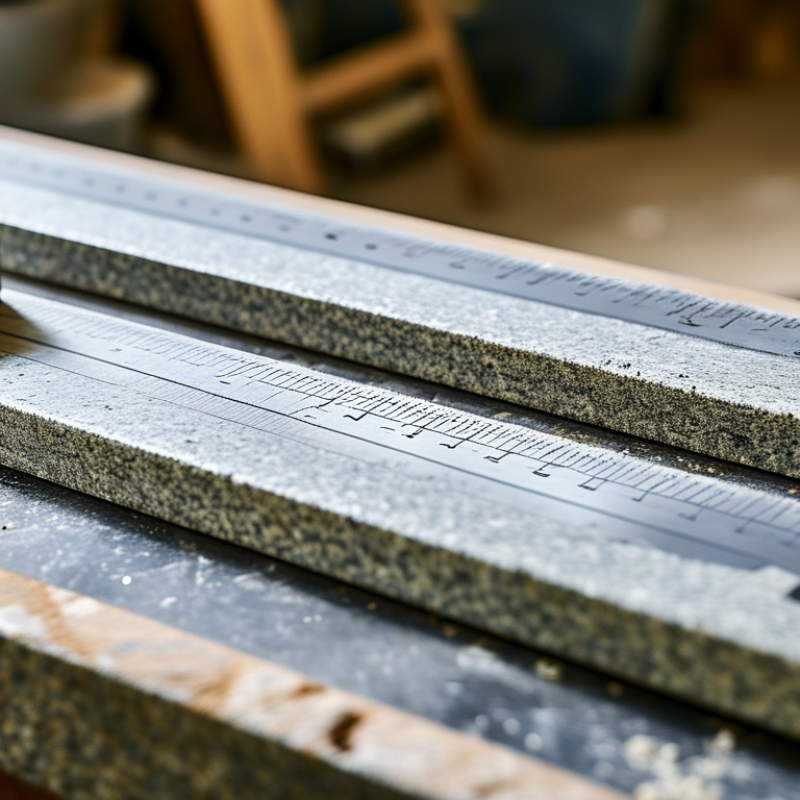
Choose the accuracy grade according to the task, not habit. ASME B89.3.7 explains how granite reference surfaces are specified, calibrated, and evaluated for flatness. ISO 8512-2 also addresses granite surface plates and their verification methods.
These standards highlight an important principle: the instrument’s tolerance must be smaller than the feature being inspected. NIST’s Engineering Statistics Handbook recommends reporting measurement uncertainty with the result.
A practical example is a 1,000-millimeter ruler checked against a certified straightness reference in a controlled room. The operator should clean both surfaces, avoid fingerprints, and allow thermal equilibration before testing. Small particles can create visible rocking and false readings.
Select a ruler with traceable calibration, a readable identification record, and a storage method that prevents edge damage. Calibration records should state the method, uncertainty, temperature, and date. Without those details, “high precision” remains only a sales phrase.
How to Choose a Granite Ruler for Precision Measurement
Choosing a granite ruler starts with the workpiece, not the catalog. Match its length to the largest feature you measure regularly. A 300 mm ruler suits small inspection parts and minimizes handling errors. A 600 mm ruler offers better reach, but demands stronger support and temperature control. Shorter is sometimes safer.
Accuracy must match the tolerance. If your part allows ±0.05 mm, a ruler with ±0.01 mm uncertainty may be practical. For tighter work, request calibration data, flatness results, and traceability. ASME B89.3.7-2013 defines grades and flatness requirements for granite inspection surfaces. It provides a useful reference, although a granite ruler still needs product-specific verification. ISO 1:2016 sets 20 °C as the standard reference temperature.
Temperature can quietly change your decision. Granite’s typical expansion is about 5–7 µm/m·°C. Using 6 µm/m·°C, a 600 mm ruler changes roughly 7 µm after a 2 °C shift. That matters near tight tolerances. Let the ruler and workpiece stabilize before measuring. Keep them away from sunlight, vents, and warm machinery. I once trusted a clean-looking setup too quickly. The reading drifted. NIST Technical Note 1297 recommends evaluating uncertainty sources instead of relying on one displayed value. Check edge straightness, graduation readability, support points, and calibration interval. A perfect size choice can still fail in an unstable room.
| Granite Ruler Length | Typical Cross-Section (Width × Thickness) | Typical Straightness Tolerance* | Approximate Mass Range | Recommended Measurement Work | Suitable Accuracy Level | Practical Selection Considerations |
|---|---|---|---|---|---|---|
| 300 mm | 50 × 30 mm | About 2–4 µm over the working length | 1.5–3 kg | Checking small machined surfaces, compact fixtures, tool edges, and short reference spans. | General inspection and comparison work where a short reference length is sufficient. | Easy to handle and store. The short span reduces sag and makes it practical for bench-top inspection. |
| 600 mm | 75 × 40 mm | About 3–6 µm over the working length | 5–9 kg | Routine inspection of medium-sized machine components, guideways, bases, and fabricated surfaces. | A versatile choice for general precision inspection. | Offers a useful balance between coverage, rigidity, portability, and storage requirements. |
| 900 mm | 75 × 50 mm | About 4–8 µm over the working length | 8–14 kg | Checking longer machined faces, rails, alignment surfaces, and medium-sized assembly components. | Suitable when the inspection area is too long for a 600 mm ruler. | Use adequate support points and lifting care. Longer rulers are more sensitive to handling and support conditions. |
| 1,000 mm | 100 × 60 mm | About 5–10 µm over the working length | 14–22 kg | Inspection of machine beds, long reference faces, linear guide mounting areas, and large fixtures. | Appropriate for precision work requiring broad surface coverage. | Choose a certified model with documented calibration data. A dedicated lifting method is recommended. |
| 1,500 mm | 100 × 75 mm | About 7–14 µm over the working length | 25–40 kg | Long machine bases, large fabrication assemblies, extended guideways, and structural alignment checks. | Best for large workpieces where a shorter ruler would require multiple setups. | Verify support points, temperature stability, and handling equipment before selecting this size. |
| 2,000 mm | 150 × 100 mm | About 10–20 µm over the working length | 55–85 kg | Large machine tools, long rails, heavy equipment bases, and production-line alignment work. | Use only when the larger coverage justifies the additional weight and handling complexity. | Requires stable support, controlled temperature, and suitable lifting equipment. Confirm the supplier’s certified tolerance. |
How to Choose a Granite Ruler for Precision Measurement
Granite quality directly affects measurement stability. Choose fine-grained stone with consistent density and minimal visible pores. Dark spots, chipped edges, or repaired areas deserve careful inspection. A high-quality ruler should resist wear, moisture changes, and small impacts during routine handling. It should also include a traceable inspection report from a qualified laboratory.
Flatness is the critical specification. Ask for the total flatness tolerance, not only a general accuracy statement. Place the ruler on a verified surface plate, then check several points with a certified gauge. Test the center, corners, and long edges. I once found a ruler that felt perfectly smooth but showed slight corner lift under measurement. That mistake reminded me to verify geometry, not appearance. Flatness can change after rough transport or poor storage.
Tips: Examine the surface under angled light. A uniform finish should feel consistent without ridges, waves, or deep grinding marks. Compare repeat measurements at different locations. Keep the ruler covered, clean it with a lint-free cloth, and avoid dragging metal parts across its face. Record inspection dates and results. Small records matter. Recheck calibration after relocation, because vibration and uneven support can distort readings. Surface finish is not merely cosmetic; it affects contact, visibility, and repeatability. A mirror-like surface may look impressive, yet controlled texture can sometimes provide better contact.
Comparison of representative engineering targets for granite ruler flatness and surface finish. Lower values indicate better measurement performance.
Selecting Features for Stability, Handling, and Maintenance
A granite ruler should remain steady during every measurement. Stability begins with a dense, finely finished granite body. Choose a ruler with verified flatness and clear inspection records. Its working edge should meet recognized metrology requirements. Place it on a rigid, clean bench, away from vibration and direct sunlight. Uneven support can create small gaps beneath the ruler. Those gaps may change readings more than expected. I once underestimated bench movement during a routine check. The result looked precise, but it was not reliable.
Handling also affects accuracy. Lift the ruler with both hands, especially when it is long or heavy. Never slide it across metal, dust, or rough surfaces. Carrying handles can improve control, but they should not touch the measuring edge. Check the edge before use. A tiny chip, oil film, or trapped particle can distort contact. For maintenance, wipe the surface with a soft, lint-free cloth after each session. Use a mild cleaner approved for precision stone. Avoid abrasive pads, strong acids, and sudden temperature changes. Let the ruler reach room temperature before demanding close readings.
Tips: Store it flat or on its designed supports. Keep it covered, but allow moisture to escape. Record cleaning dates and inspection results. Recheck calibration after impact, relocation, or unusual wear. These details seem minor. They prevent avoidable doubt.
When choosing a granite ruler, calibration evidence matters more than a polished appearance. Ask for a current calibration certificate with the ruler’s identification number, measured deviations, test method, and laboratory traceability. A certificate without measurement data is weak evidence. Check its date too. Granite is stable, but handling and temperature changes can still affect results.
During inspection, place the ruler on a clean, stable surface. Remove dust with a lint-free cloth, then check the working edge against a certified reference or optical measuring system. Look for chips, raised spots, stains, and uneven contact. A thin feeler gauge can reveal unwanted gaps. Repeat the check at several positions, not just the center. Record the findings. Small errors can become serious when measuring narrow tolerances.
Purchase decisions should match actual workshop needs. Confirm the required length, tolerance, resolution, edge design, protective case, and recalibration interval. A heavier ruler may resist movement, but it can be difficult to handle safely. A lower-priced option may seem practical, yet missing traceability creates hidden costs. I have seen tools pass a quick visual check and fail under repeated measurement. That experience changed my buying habit. I now request sample inspection data before payment, although I sometimes focus too much on certificates and overlook daily handling. The best choice balances verified accuracy, usable design, service support, and the skill of the person using it.
We use cookies on our website to give you an improved browser experience. View our Privacy Policy for more information. Please make your selection to opt in or out of ALL cookies here: Accept or Decline
Do you consent to the use of ALL cookies?
901 2nd Court West
Birmingham, AL 35204
Sales: 866.481.4036
Logistics/Ops: 866.481.4036
2101 Dralle Road
University Park, IL 60466
Sales: 708.813.9070
Logistics/Ops: 708.235.4200
400 E. 13th Street
Little Rock, AR 72114
Sales: 866.760.5344
Logistics/Ops: 866.760.5344
225 Collins Road
Elkhart, IN 46515
Sales: 574.295.0214
Logistics/Ops: 574.607.4611
601 Berryman Pike
Tipton, IN 46072
Sales: 800.897.7591
Logistics/Ops: 800.897.7591
3900 Uvalda Street
Denver, CO 80239
Sales: 303.706.8000
Ops/Logistics: 303.576.8398
510 3rd Street E
Milan, IL 61264
Sales: 800.322.1052
Logistics/Ops: 800.322.1052
1660 E. Aurora
Des Moines, IA 50313
Sales: 800.671.1660
Logistics: 800.671.1660
86554 Gene Lasserre Blvd.
Yulee, FL 32097
Sales: 904.253.3060
Logistics/Ops: 904.225.3000
694 S.E. County Road 245
Lake City, FL 32025
Sales: 800.727.6706
Logistics/Ops: 386.752.7412
210 Neptune Road
Auburndale, FL 33823
Sales: 863.967.1131
Logistics/Ops: 863.777.9814
4601 McCoy Drive
Pensacola, FL 32503
Sales: 850.308.7030
Logistics/Ops: 850.434.5502
815 South 56th Street
Tampa, FL 33619
Sales: 813.302.1940
Logistics/Ops: 813.621.1352
200 Hosea Road
Lawrenceville, GA 30046
Sales: 770.953.7575
Logistics/Ops: 770.513.6000
Branch Product Guide
Branch Line Card
Moulding Offering
Cedar Offering
Column Offering
8173 Hwy. 165 North
Monroe, LA 71211
Sales: 800.256.4165
Logistics/Ops: 800.256.4165
508 Warren Avenue
Portland, ME 04103
Sales: 207.888.2331
Logistics/Ops: 207.797.6565
4300 Georgia Pacific Blvd.
Frederick, MD 21704
Sales: 301.798.7474
Logistics/Ops: 301.874.8000
419 Maple Street
Bellingham, MA 02019
Sales: 508.449.0535
Logistics/Ops: 508.966.5500
825 Buchanan Ave SW
Grand Rapids, MI 49507
Sales: 877.800.1180
Logistics/Ops: 616.278.0909
995 Pacific St. NW
Aitkin, MN 56431
Sales: 800.432.3727
Logistics/Ops: 218.212.7770
1102 Port Terminal Drive
Duluth, MN 55802
Sales: 800.951.9899
Logistics/Ops: 800.851.9899
9110 83rd Ave. North
Brooklyn Park, MN 55445
Sales: 763.425.0204
Logistics/Ops: 763.425.0204
910 E. Railroad Street
Long Beach, MS 39560
Sales: 866.535.4135
Logistics/Ops: 228.205.2400
1727 Warren Street
North Kansas City, MO 64116
Sales: 800.621.2611
Logistics/Ops: 800.621.2611
2123 North Golden
Springfield, MO 65803
Sales: 800.375.7891
Logistics/Ops: 800.375.7891
13860 Corp. Woods Trail
Bridgeton, MO 63044
Sales: 314.209.0800
Logistics/Ops: 314.209.0800
1109 South 19th Street
Omaha, NE 68108
Sales: 800.489.6637
Logistics/Ops: 800.489.6637
1 Luger Road
Denville, NJ 07834
Sales: 973-339-3539
Logistics/Ops: 973.625.1461
3720 Jeffrey Blvd.
Blasdell, NY 14219
Sales: 716.235.5989
Logistics/Ops: 716.825.6557
319 Yaphank Ave.
Yaphank, NY 11980
Sales: 631.358.5714
Logistics/Ops: 631.924.7401
3300 Parkside Drive
Charlotte, NC 28208
Sales: 800.839.2588
Logistics/Ops: 704.394.3172
1712 East D Street
Butner, NC 27509
Sales: 984.389.8200
Logistics/Ops: 919.575.3700
128 Foothills Drive
Statesville, NC 28687
Sales: 800.222.1414
Logistics/Ops: 704.394.3172
550 Munroe Falls Rd.
Tallmadge, OH 44278
Sales: 330.357.4506
Logistics/Ops: 330.794.1141
10347 Toebben Dr.
Independence, KY 41051
Sales: 859.298.3926
Logistics/Ops: 859.746.2250
450 N. MacArthur
Oklahoma City, OK 73127
Sales: 800.375.6025
Logistics/Ops: 800.375.6025
1680 North Aspen
Broken Arrow, OK 74012
Sales: 918.272.2212
Logistics/Ops: 918.272.2212
522 Bridge Street
Hunker, PA 15639
Sales: 878.217.2001
Logistics/Ops: 724.925.7285
4290 Atlanta Street
Charleston, SC 29418
Sales: 843.371.1420
Logistics/Ops: 843.554.8192
1040 S. Industrial Dr.
Erwin, TN 37650
Sales: 423.641.1005
Logistics/Ops: 423.742.5911
4287 Pilot Drive
Memphis, TN 38118
Sales: 901.365.2101
Logistics/Ops: 901.365.2101
700 Myatt Drive
Madison, TN 37115
Sales: 615.327.9547
Logistics/Ops: 629.777.4949
4747 Mark IV Parkway
Fort Worth, TX 76106
Sales: 866.323.5117
Logistics/Ops: 817.625.9091
6990 Market Avenue
El Paso, TX 79915
Sales: 915.778.6356
Logistics/Ops: 915.265.7200
2502 Wilson Road
Harlingen, TX 78552
Sales: 800.580.6711
Logistics/Ops: 800.580.6711
10,000 North Loop East
Houston, TX 77029
Sales: 713.921.1977
Logistics/Ops: 713.675.3544
702 East 44th St.
Lubbock, TX 79404
Sales: 866.454.6010
Logistics/Ops: 866.454.6010
535 N. WW White Road
San Antonio, TX 78219
Sales: 800.284.0488
Logistics/Ops: 210.333.8112
142 Pine Haven Shores Rd.
Shelburne, VT 05482
Sales: 802.800.2540
Logistics/Ops: 802.985.2512
4700 Bethlehem Road,
Richmond, VA 23230
Sales: 804.201.2400
Logistics/Ops: 804.342.1161
4516 N Barker Road
Spokane Valley, WA 99027
Phone: 509.892.9420
Toll free: 800.728.6157
8365 N. 76th Street
Milwaukee, WI 53223
Sales: 800.356.9245
Logistics/Ops: 800.356.9245
312 S. Chester Street
Sparta, WI 54656
Sales: 800.362.5864
Logistics/Ops: 800.362.5864
899 Grossman Drive
Schofield, WI 54476
Sales: 800.472.0017
Logistics/Ops: 800.472.0017
