
We use cookies on our website to give you an improved browser experience. View our Privacy Policy for more information. Please make your selection to opt in or out of ALL cookies here: Accept or Decline
In 2026, choosing an Industrial Pipeline supplier is not just a price comparison. It is a decision about uptime, safety, and years of maintenance. A low quote may hide long lead times, unclear material grades, or weak traceability. Ask for material certificates, coating details, pressure ratings, welding procedures, and inspection records. Then check whether those documents match the pipe delivered to your site. A stamp is useful. A complete record is better. Piping-integrity expert George Antaki’s published work offers a practical lens for this decision. A fair, non-verbatim takeaway is: “Choose evidence over promises.”
This guide examines the checks that turn that principle into a supplier shortlist. We look at technical fit, manufacturing capacity, quality controls, delivery reliability, and after-sales support. Ask how the supplier handles a delayed shipment or a failed inspection. Request a sample quality dossier, not just a polished brochure. Examine one real project reference, including its scope and operating conditions. Details matter: a coating specification, a clear heat number, and a prompt answer can reveal more than a sales presentation. Still, no checklist removes every risk. I would not treat a perfect-looking datasheet as proof; that is an easy mistake to make. Compare documented claims with samples, records, and direct questions before committing.
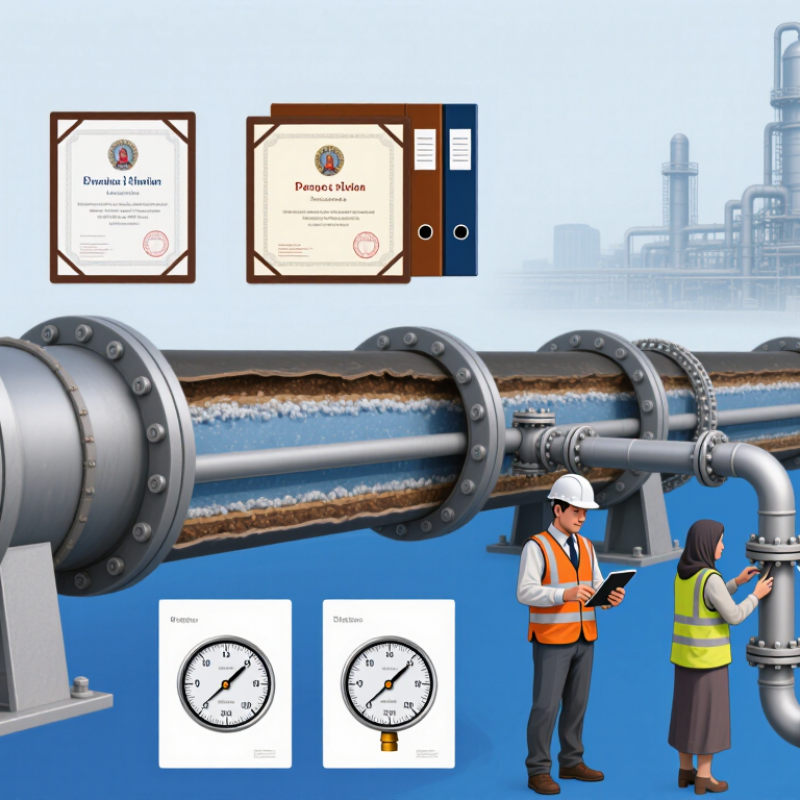
Before comparing suppliers, write down the actual service conditions—not just nominal pipe size. Specify the fluid, design pressure, normal and upset temperatures, flow rate, and expected pressure cycling. Include chemistry details such as chlorides, acidity, moisture, and suspended solids; a small abrasive load can change material and lining choices. Ask suppliers to explain how their proposed material, wall thickness, joints, and corrosion allowance match these conditions. If operating data is incomplete, say so. Guessing can become an expensive design assumption.
This matters for safety and emissions. The International Energy Agency’s Global Methane Tracker 2024 estimates that fossil-fuel operations released about 120 million tonnes of methane in 2023. That figure is not a measure of industrial pipeline leakage, but it reinforces why leak-tight joints and inspection access deserve attention. For each candidate, request documented pressure and temperature limits, material traceability, inspection records, and a clear account of applicable design codes. Check that the evidence covers the intended service, not merely a similar product.
Tips: Share one realistic operating scenario, including startup and shutdown conditions. Ask the supplier to identify the weakest point in its proposal. Their answer may reveal more than a polished specification sheet. Then verify the assumptions with your process and maintenance teams. Often overlooked.
When assessing an industrial pipeline supplier, look for evidence of experience with your pipe materials, diameters, pressure requirements, and service conditions. Ask how similar orders were handled, including nonstandard lengths or tight delivery windows. Specific examples are more useful than broad claims. Ask for evidence.
Capacity matters. Review current production schedules, equipment, storage space, and access to suitable raw materials. A supplier may quote a short lead time, but ask how it changes during peak demand or when specifications change. Confirm that inspection and packing can keep pace with production, not just that a factory has impressive machinery.
Quality certifications should match the products and processes being supplied. Check certificate scope, issuing body, expiry date, and whether the relevant facility is covered. Then compare the paperwork with inspection records, material traceability documents, and sample test reports. Not just paperwork. A certificate does not prove every shipment is defect-free, so agree on acceptance criteria and how nonconforming items will be handled. One detail buyers sometimes overlook is consistency between a quotation, technical datasheet, and final inspection plan. If those documents differ, pause and ask for clarification. It can feel slow, but that conversation may prevent a costly mismatch.
Suggested evaluation weights for comparing suppliers
These are suggested procurement weights, not industry survey results. Adjust them to fit project risk and requirements. Verify that each certificate is current and covers the supplier’s relevant facilities and processes; for example, API Specification 5L applies to line pipe.
Choosing an industrial pipeline supplier in 2026 starts with matching materials to the fluid, temperature, pressure, and site conditions. Carbon steel may suit many services, while stainless steel or lined pipe may better resist specific corrosive environments. Confirm that proposed grades meet the project’s applicable ASTM or ASME material specifications. For process piping, check whether ASME B31.3 applies to the system. Ask for material test reports, heat numbers, and inspection records tied to each delivered pipe length. Paperwork matters.
Traceability is more than a certificate in a folder. Heat numbers should remain legible after cutting, and records should connect pipe, fittings, welds, and test results. NACE International’s 2016 IMPACT study estimated corrosion costs at US$2.5 trillion annually, or 3.4% of global GDP. It also found that corrosion management could reduce costs by 15–35%. Those figures underline why coating, material selection, and inspection records deserve close review. A certificate alone is not proof of consistent production; ask how the supplier controls changes between batches.
Tips: Request a sample traceability pack before ordering. Check one heat number from mill certificate to pipe marking. Compare it with the inspection and test records. If any link is unclear, pause and ask for an explanation.
How to Choose an Industrial Pipeline Supplier in 2026?
Evaluate Lead Times, Technical Support, and Lifecycle Costs
A low quotation can hide expensive delays. Ask suppliers for current production capacity, realistic dispatch dates, and the time needed for inspections, coating, and transport. Request milestone updates, not just a promised delivery date. Check whether technical staff can review pressure, temperature, material, and connection requirements before manufacturing. A mismatch discovered at installation is costly. One detail often gets missed: confirm who resolves drawing changes and damaged shipments.
Compare total ownership costs, not purchase prices alone. The U.S. Department of Energy’s Improving Pumping System Performance sourcebook reports that pumping systems account for nearly 20% of global electricity demand, and can use 25–50% of energy in some industrial facilities. Pipeline choices affect flow resistance and pump demands, so ask for relevant pressure-drop data and maintenance guidance. Compare expected energy use, inspection needs, spare-part availability, and downtime over the planned service life. These are estimates, not guarantees; revisit them against actual site conditions.
Tips: Ask for a sample inspection record, documented material traceability, and a named technical contact. Have the supplier explain its lead-time assumptions in writing. Then compare two or three lifecycle scenarios, including one with delayed delivery or an unplanned repair. Small gaps matter.
Use this scorecard to compare shortlisted suppliers. Lead-time ranges below are indicative planning ranges, not guarantees; actual timing depends on material grade, diameter, wall thickness, quantity, certification requirements, production capacity, and destination. Confirm every commitment in a written quotation.
| Evaluation Area | What to Assess | Practical Benchmark or Planning Guide | Evidence to Request | Suggested Weight |
|---|---|---|---|---|
| Lead-time reliability | Quoted production time, dispatch date, transit time, and the supplier’s record of meeting promised dates. | For planning, stocked standard items may ship in roughly 1–3 weeks; made-to-order products often require about 4–12 weeks. Special alloys, large diameters, or custom production can take 8–20+ weeks. | Current production schedule, written delivery milestones, recent on-time delivery data, and agreed remedies or escalation steps for delays. | 20% |
| Technical support | Access to qualified staff for material selection, pressure and temperature requirements, dimensions, joining methods, and standards questions. | Set a buyer-defined response target, such as acknowledgement within one business day for routine questions and a clear escalation contact for urgent issues. | Named technical contact, documented response process, sample technical submittal, and examples of relevant application support. | 15% |
| Standards and traceability | Whether supplied pipe and fittings meet the project’s specified material, dimensional, testing, and documentation requirements. | Requirements should be matched to the project specification and applicable standards; there is no single certification set that fits every pipeline application. | Material test reports, heat or batch traceability, inspection records, certificates required by the project, and a documented nonconformance process. | 15% |
| Product and order fit | Availability of required grades, sizes, wall thicknesses, end connections, coatings, quantities, and packaging. | Check the exact bill of materials rather than relying on a general statement of product availability. Confirm minimum order quantities and partial-shipment rules. | Line-by-line quotation, dimensional data, product drawings where needed, stock confirmation, and written disclosure of substitutions. | 10% |
| Quality control | Inspection capability, process controls, defect handling, and consistency across repeat orders. | Inspection and testing should be defined by the purchase specification and risk level. Agree in advance on acceptance criteria and who pays for reinspection. | Quality-system documentation, inspection and test plan, sample inspection report, corrective-action process, and applicable third-party inspection options. | 10% |
| Delivered cost | Total landed cost, including product price, freight, insurance, duties or taxes where applicable, handling, and packaging. | Compare quotations on the same quantity, delivery location, shipping terms, currency, and quotation validity period; a lower unit price may not mean a lower delivered cost. | Itemized quotation, shipping assumptions, surcharges, payment terms, quote validity, and a clear statement of included and excluded costs. | 10% |
| Lifecycle cost | Expected cost over the project life, including installation, inspection, maintenance, downtime, replacement, and disposal where relevant. | Compare options using the same service life and operating assumptions. Consider corrosion exposure, operating conditions, accessibility, and the consequences of unplanned shutdowns. | Material and coating specifications, maintenance guidance, warranty terms, relevant operating references, and assumptions behind any service-life claims. | 10% |
| Logistics and packaging | Protection against transport damage, shipment visibility, export or site requirements, and ability to coordinate phased deliveries. | Confirm packaging suits the route, storage conditions, and unloading equipment. For critical schedules, request shipment tracking and milestone updates. | Packaging specification, shipping plan, tracking process, delivery appointment requirements, and procedure for damaged or short shipments. | 5% |
| Commercial and after-sales support | Clarity of warranty, claims handling, spare or replacement availability, and support after delivery. | Agree on warranty scope, claim notification period, documentation, and response ownership before purchase; terms vary by product and contract. | Written warranty, returns and claims procedure, contact route, and clear responsibilities for supplier, carrier, and buyer. | 5% |
Suggested comparison method: Rate each supplier from 1 (weak) to 5 (strong), multiply each rating by its suggested weight, and compare the weighted totals. For lifecycle cost, use a consistent model such as: purchase and delivery cost + installation cost + expected maintenance and inspection cost + expected downtime and replacement cost over the chosen analysis period. Treat estimates as project-specific and validate them against operating data and contract terms.
A supplier’s reference list is only a starting point. Ask for projects involving comparable pipe materials, diameters, operating pressures, and delivery conditions. Then contact past clients using independently verified details. Ask whether shipments arrived on schedule and whether test records matched the supplied batches. Ask for proof. I once treated a polished presentation as proof of capability; that was a mistake.
Review how the supplier controls quality and delivery risks. Look for traceable material certificates, documented inspection steps, and clear procedures for handling nonconforming pipe. If coatings or pressure tests matter to your project, ask who performs them and how results are recorded. Details matter. A practical check is to request a sample inspection report with sensitive project information removed. Vague answers may signal gaps, though they do not prove poor performance.
Put important expectations into the contract, not just meeting notes. Specify materials, dimensions, applicable standards, tolerances, inspection hold points, and required documentation. Define how changes, delays, rejected goods, and replacement costs will be handled. Confirm payment milestones, warranty coverage, and responsibility for transport damage. Have qualified procurement and technical reviewers examine the terms before signing. Even careful documents can miss a detail, so compare every clause with the actual project schedule and acceptance process.
We use cookies on our website to give you an improved browser experience. View our Privacy Policy for more information. Please make your selection to opt in or out of ALL cookies here: Accept or Decline
Do you consent to the use of ALL cookies?
901 2nd Court West
Birmingham, AL 35204
Sales: 866.481.4036
Logistics/Ops: 866.481.4036
2101 Dralle Road
University Park, IL 60466
Sales: 708.813.9070
Logistics/Ops: 708.235.4200
400 E. 13th Street
Little Rock, AR 72114
Sales: 866.760.5344
Logistics/Ops: 866.760.5344
225 Collins Road
Elkhart, IN 46515
Sales: 574.295.0214
Logistics/Ops: 574.607.4611
601 Berryman Pike
Tipton, IN 46072
Sales: 800.897.7591
Logistics/Ops: 800.897.7591
3900 Uvalda Street
Denver, CO 80239
Sales: 303.706.8000
Ops/Logistics: 303.576.8398
510 3rd Street E
Milan, IL 61264
Sales: 800.322.1052
Logistics/Ops: 800.322.1052
1660 E. Aurora
Des Moines, IA 50313
Sales: 800.671.1660
Logistics: 800.671.1660
86554 Gene Lasserre Blvd.
Yulee, FL 32097
Sales: 904.253.3060
Logistics/Ops: 904.225.3000
694 S.E. County Road 245
Lake City, FL 32025
Sales: 800.727.6706
Logistics/Ops: 386.752.7412
210 Neptune Road
Auburndale, FL 33823
Sales: 863.967.1131
Logistics/Ops: 863.777.9814
4601 McCoy Drive
Pensacola, FL 32503
Sales: 850.308.7030
Logistics/Ops: 850.434.5502
815 South 56th Street
Tampa, FL 33619
Sales: 813.302.1940
Logistics/Ops: 813.621.1352
200 Hosea Road
Lawrenceville, GA 30046
Sales: 770.953.7575
Logistics/Ops: 770.513.6000
Branch Product Guide
Branch Line Card
Moulding Offering
Cedar Offering
Column Offering
8173 Hwy. 165 North
Monroe, LA 71211
Sales: 800.256.4165
Logistics/Ops: 800.256.4165
508 Warren Avenue
Portland, ME 04103
Sales: 207.888.2331
Logistics/Ops: 207.797.6565
4300 Georgia Pacific Blvd.
Frederick, MD 21704
Sales: 301.798.7474
Logistics/Ops: 301.874.8000
419 Maple Street
Bellingham, MA 02019
Sales: 508.449.0535
Logistics/Ops: 508.966.5500
825 Buchanan Ave SW
Grand Rapids, MI 49507
Sales: 877.800.1180
Logistics/Ops: 616.278.0909
995 Pacific St. NW
Aitkin, MN 56431
Sales: 800.432.3727
Logistics/Ops: 218.212.7770
1102 Port Terminal Drive
Duluth, MN 55802
Sales: 800.951.9899
Logistics/Ops: 800.851.9899
9110 83rd Ave. North
Brooklyn Park, MN 55445
Sales: 763.425.0204
Logistics/Ops: 763.425.0204
910 E. Railroad Street
Long Beach, MS 39560
Sales: 866.535.4135
Logistics/Ops: 228.205.2400
1727 Warren Street
North Kansas City, MO 64116
Sales: 800.621.2611
Logistics/Ops: 800.621.2611
2123 North Golden
Springfield, MO 65803
Sales: 800.375.7891
Logistics/Ops: 800.375.7891
13860 Corp. Woods Trail
Bridgeton, MO 63044
Sales: 314.209.0800
Logistics/Ops: 314.209.0800
1109 South 19th Street
Omaha, NE 68108
Sales: 800.489.6637
Logistics/Ops: 800.489.6637
1 Luger Road
Denville, NJ 07834
Sales: 973-339-3539
Logistics/Ops: 973.625.1461
3720 Jeffrey Blvd.
Blasdell, NY 14219
Sales: 716.235.5989
Logistics/Ops: 716.825.6557
319 Yaphank Ave.
Yaphank, NY 11980
Sales: 631.358.5714
Logistics/Ops: 631.924.7401
3300 Parkside Drive
Charlotte, NC 28208
Sales: 800.839.2588
Logistics/Ops: 704.394.3172
1712 East D Street
Butner, NC 27509
Sales: 984.389.8200
Logistics/Ops: 919.575.3700
128 Foothills Drive
Statesville, NC 28687
Sales: 800.222.1414
Logistics/Ops: 704.394.3172
550 Munroe Falls Rd.
Tallmadge, OH 44278
Sales: 330.357.4506
Logistics/Ops: 330.794.1141
10347 Toebben Dr.
Independence, KY 41051
Sales: 859.298.3926
Logistics/Ops: 859.746.2250
450 N. MacArthur
Oklahoma City, OK 73127
Sales: 800.375.6025
Logistics/Ops: 800.375.6025
1680 North Aspen
Broken Arrow, OK 74012
Sales: 918.272.2212
Logistics/Ops: 918.272.2212
522 Bridge Street
Hunker, PA 15639
Sales: 878.217.2001
Logistics/Ops: 724.925.7285
4290 Atlanta Street
Charleston, SC 29418
Sales: 843.371.1420
Logistics/Ops: 843.554.8192
1040 S. Industrial Dr.
Erwin, TN 37650
Sales: 423.641.1005
Logistics/Ops: 423.742.5911
4287 Pilot Drive
Memphis, TN 38118
Sales: 901.365.2101
Logistics/Ops: 901.365.2101
700 Myatt Drive
Madison, TN 37115
Sales: 615.327.9547
Logistics/Ops: 629.777.4949
4747 Mark IV Parkway
Fort Worth, TX 76106
Sales: 866.323.5117
Logistics/Ops: 817.625.9091
6990 Market Avenue
El Paso, TX 79915
Sales: 915.778.6356
Logistics/Ops: 915.265.7200
2502 Wilson Road
Harlingen, TX 78552
Sales: 800.580.6711
Logistics/Ops: 800.580.6711
10,000 North Loop East
Houston, TX 77029
Sales: 713.921.1977
Logistics/Ops: 713.675.3544
702 East 44th St.
Lubbock, TX 79404
Sales: 866.454.6010
Logistics/Ops: 866.454.6010
535 N. WW White Road
San Antonio, TX 78219
Sales: 800.284.0488
Logistics/Ops: 210.333.8112
142 Pine Haven Shores Rd.
Shelburne, VT 05482
Sales: 802.800.2540
Logistics/Ops: 802.985.2512
4700 Bethlehem Road,
Richmond, VA 23230
Sales: 804.201.2400
Logistics/Ops: 804.342.1161
4516 N Barker Road
Spokane Valley, WA 99027
Phone: 509.892.9420
Toll free: 800.728.6157
8365 N. 76th Street
Milwaukee, WI 53223
Sales: 800.356.9245
Logistics/Ops: 800.356.9245
312 S. Chester Street
Sparta, WI 54656
Sales: 800.362.5864
Logistics/Ops: 800.362.5864
899 Grossman Drive
Schofield, WI 54476
Sales: 800.472.0017
Logistics/Ops: 800.472.0017
