
We use cookies on our website to give you an improved browser experience. View our Privacy Policy for more information. Please make your selection to opt in or out of ALL cookies here: Accept or Decline
Choosing Cuplock Scaffolding is not simply a matter of comparing prices or selecting the tallest frame. The right system must suit the work, the site, and the people using it. A façade repair, a compact interior fit-out, and a heavy-duty industrial job place different demands on a scaffold.
Safety data gives this decision real weight. OSHA scaffold safety materials have cited estimates of 4,500 scaffold-related injuries and 60 deaths annually in the United States. These are historical estimates, not a forecast for 2026. The U.S. Bureau of Labor Statistics’ 2023 Census of Fatal Occupational Injuries offers broader context on construction risks, but it does not measure Cuplock systems alone. Numbers need context.
For a practical selection, assess intended loads, platform height, bay dimensions, ground conditions, access needs, and how workers will erect and inspect the structure. Check that the supplier provides clear component specifications and load information. A qualified professional should verify the design for the planned configuration and local requirements. In the United States, OSHA’s scaffold standard, 29 CFR 1926.451, is one relevant reference; other jurisdictions have their own rules. A familiar connection system can make assembly more straightforward, but it does not remove the need for competent planning. That distinction is easy to overlook. This guide explains how to compare Cuplock Scaffolding options, ask suppliers useful questions, and match a system to your project without treating a catalogue rating as a complete safety plan.
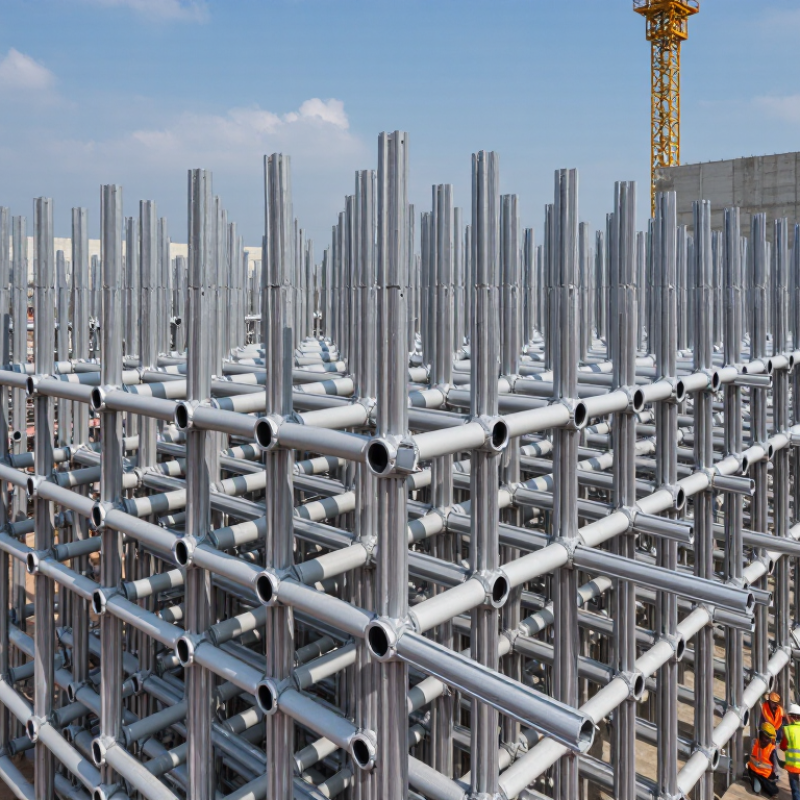
Cuplock scaffolding is a modular support system that connects vertical standards and horizontal ledgers with cup-shaped fittings. Its parts work together to create stable working lifts, but only when they are correctly matched and assembled. A standard is the upright tube, usually fitted with a fixed lower cup and a sliding upper cup. Ledger ends have metal blades that sit in the cups; lowering and turning the upper cup secures several connections at once. Simple, but not automatic.
Other components shape how the scaffold performs. Diagonal braces help resist sideways movement, while base jacks adjust the feet on uneven ground. U-head jacks at the top can support beams or formwork. Scaffold boards or other approved platforms provide the working surface. On site, check that cups move freely, blades are not bent, and tubes show no visible damage. A quick visual check matters.
Project conditions still matter. Ground firmness, lift height, intended loads, and access needs affect the required layout. It is easy to focus on the speed of the connections. That can be a mistake. Confirm component compatibility and follow a competent person’s design and assembly instructions; do not assume that parts from different systems fit safely just because they look similar.
Choosing cuplock scaffolding starts with the work, not the frame. Measure platform height, working length, and access points. List the trades, tools, and materials expected on each lift. A bricklayer carrying mortar tubs creates different demands from a painter with a light tool bag. Small details matter.
Estimate the combined weight of workers, equipment, and stored materials on each platform. Include concentrated loads, such as a stack of blocks in one area, rather than assuming weight will spread evenly. Compare these estimates with the scaffold system’s rated capacity and layout guidance. When loads are uncertain, ask a qualified scaffolding professional to check the design. Guessing is not a plan. Also consider how workers will move materials without crowding the platform.
Inspect the site before choosing bay lengths and base arrangements. Soft soil, paving edges, slopes, drains, and nearby excavation can affect support and stability. Check for overhead obstructions, vehicle routes, and space to install safe access. Wind exposure matters on open sites, especially when sheeting or netting is planned. A common planning mistake is treating site conditions as fixed. Rain can soften ground, and deliveries can block an access route. Recheck conditions before erection and whenever the work area changes.
2026 How to Choose Cuplock Scaffolding for Your Project?
Comparing Materials, Standards, and System Compatibility
Choosing cuplock scaffolding starts with the worksite, not a catalogue photo. Check the required platform height, bay lengths, expected loads, and ground conditions. Steel components are common, but their grade, wall thickness, weld quality, and corrosion protection matter. A galvanized finish can help resist rust, especially on damp or exposed sites. Ask for material specifications and inspection records, rather than relying on appearance alone. Shiny does not always mean sound.
Standards help you compare systems, but the applicable requirements depend on your location and project. Review current local rules and the supplier’s load tables, test documents, and assembly instructions. Compatibility deserves equal attention. Confirm that standards, ledgers, braces, and locking cups match in dimensions and connection design. Parts that look similar may not seat securely. Mixing systems can make inspection and load assessment harder; I have seen teams overlook this when replacing a single missing ledger.
Tips: Before ordering, lay out one typical bay on paper and check its dimensions against the work area. Ask a qualified scaffolding professional to review unusual loads or layouts. Keep a small list of approved component types on site. It may feel fussy. It can prevent costly guesswork when a part needs replacing.
Material density (approximate): carbon steel 7,850 kg/m³, aluminum alloy 2,700 kg/m³, and stainless steel 8,000 kg/m³. Lower density can reduce component weight, but density alone does not determine scaffold capacity or suitability. Check the system’s design documentation and applicable requirements, such as EN 12810/12811 or OSHA 29 CFR 1926 Subpart L. Standards compliance does not guarantee that components from different systems are interchangeable; verify cup spacing, ledger-end fit, load class, and compatibility with the supplier.
A cuplock layout should follow the work, not just the building outline. Mark the façade, corners, loading points, and ground changes before selecting bay lengths. Keep platforms close enough for the task, while leaving room for materials and safe movement. A narrow bay may fit a doorway but obstruct workers carrying tools. Small gaps matter. Check the proposed arrangement against the scaffold’s load capacity and have a competent person review site conditions.
Set the working height from the actual task. Measure from the platform to the work face, then allow room for workers to reach without standing on guardrails or improvised supports. As height increases, plan where the scaffold will be tied and how it will be inspected. OSHA estimates that 2.3 million construction workers regularly use scaffolds; proper protection could prevent about 4,500 injuries and 60 deaths each year (OSHA, “Scaffold Safety”). Those figures make access and stability planning more than paperwork.
Choose access based on how crews and materials will move. A stair tower suits frequent movement between levels; a secured ladder may suit lighter, occasional access when the design permits it. Keep the route clear of braces, stored tubes, and loose fittings. Recheck access after the scaffold changes. A plan can look clean on paper and still fail at a busy corner—so review it on site, not only at the desk.
A cuplock system is only as dependable as its components and the crew assembling it. Ask suppliers for material certificates, batch traceability, component dimensions, load tables, and system-specific erection instructions. Check sample standards and ledgers for bent ends, damaged cups, cracked welds, and inconsistent fit. Small defects matter. OSHA’s scaffolding safety material estimates that 2.3 million workers use scaffolds regularly, and that better protection could prevent 4,500 injuries and 50 deaths each year. That estimate is a reminder to assess supplier quality, not just compare unit prices.
Assembly details deserve equal scrutiny. Confirm that the design matches the intended height, bay spacing, platform loads, ties, and ground conditions; cuplock components are not automatically interchangeable across systems. During a sample build, check that cups lock fully, ledgers sit square, and bracing follows the approved instructions. A tidy-looking frame can still be wrong. In the United States, OSHA requires scaffold components to support their own weight and at least four times the maximum intended load. It also requires inspection by a competent person before each work shift and after events that could affect structural integrity. Record defects and repairs, and keep inspection records available on site. I would still question any checklist that records a pass without identifying who inspected the scaffold and when.
We use cookies on our website to give you an improved browser experience. View our Privacy Policy for more information. Please make your selection to opt in or out of ALL cookies here: Accept or Decline
Do you consent to the use of ALL cookies?
901 2nd Court West
Birmingham, AL 35204
Sales: 866.481.4036
Logistics/Ops: 866.481.4036
2101 Dralle Road
University Park, IL 60466
Sales: 708.813.9070
Logistics/Ops: 708.235.4200
400 E. 13th Street
Little Rock, AR 72114
Sales: 866.760.5344
Logistics/Ops: 866.760.5344
225 Collins Road
Elkhart, IN 46515
Sales: 574.295.0214
Logistics/Ops: 574.607.4611
601 Berryman Pike
Tipton, IN 46072
Sales: 800.897.7591
Logistics/Ops: 800.897.7591
3900 Uvalda Street
Denver, CO 80239
Sales: 303.706.8000
Ops/Logistics: 303.576.8398
510 3rd Street E
Milan, IL 61264
Sales: 800.322.1052
Logistics/Ops: 800.322.1052
1660 E. Aurora
Des Moines, IA 50313
Sales: 800.671.1660
Logistics: 800.671.1660
86554 Gene Lasserre Blvd.
Yulee, FL 32097
Sales: 904.253.3060
Logistics/Ops: 904.225.3000
694 S.E. County Road 245
Lake City, FL 32025
Sales: 800.727.6706
Logistics/Ops: 386.752.7412
210 Neptune Road
Auburndale, FL 33823
Sales: 863.967.1131
Logistics/Ops: 863.777.9814
4601 McCoy Drive
Pensacola, FL 32503
Sales: 850.308.7030
Logistics/Ops: 850.434.5502
815 South 56th Street
Tampa, FL 33619
Sales: 813.302.1940
Logistics/Ops: 813.621.1352
200 Hosea Road
Lawrenceville, GA 30046
Sales: 770.953.7575
Logistics/Ops: 770.513.6000
Branch Product Guide
Branch Line Card
Moulding Offering
Cedar Offering
Column Offering
8173 Hwy. 165 North
Monroe, LA 71211
Sales: 800.256.4165
Logistics/Ops: 800.256.4165
508 Warren Avenue
Portland, ME 04103
Sales: 207.888.2331
Logistics/Ops: 207.797.6565
4300 Georgia Pacific Blvd.
Frederick, MD 21704
Sales: 301.798.7474
Logistics/Ops: 301.874.8000
419 Maple Street
Bellingham, MA 02019
Sales: 508.449.0535
Logistics/Ops: 508.966.5500
825 Buchanan Ave SW
Grand Rapids, MI 49507
Sales: 877.800.1180
Logistics/Ops: 616.278.0909
995 Pacific St. NW
Aitkin, MN 56431
Sales: 800.432.3727
Logistics/Ops: 218.212.7770
1102 Port Terminal Drive
Duluth, MN 55802
Sales: 800.951.9899
Logistics/Ops: 800.851.9899
9110 83rd Ave. North
Brooklyn Park, MN 55445
Sales: 763.425.0204
Logistics/Ops: 763.425.0204
910 E. Railroad Street
Long Beach, MS 39560
Sales: 866.535.4135
Logistics/Ops: 228.205.2400
1727 Warren Street
North Kansas City, MO 64116
Sales: 800.621.2611
Logistics/Ops: 800.621.2611
2123 North Golden
Springfield, MO 65803
Sales: 800.375.7891
Logistics/Ops: 800.375.7891
13860 Corp. Woods Trail
Bridgeton, MO 63044
Sales: 314.209.0800
Logistics/Ops: 314.209.0800
1109 South 19th Street
Omaha, NE 68108
Sales: 800.489.6637
Logistics/Ops: 800.489.6637
1 Luger Road
Denville, NJ 07834
Sales: 973-339-3539
Logistics/Ops: 973.625.1461
3720 Jeffrey Blvd.
Blasdell, NY 14219
Sales: 716.235.5989
Logistics/Ops: 716.825.6557
319 Yaphank Ave.
Yaphank, NY 11980
Sales: 631.358.5714
Logistics/Ops: 631.924.7401
3300 Parkside Drive
Charlotte, NC 28208
Sales: 800.839.2588
Logistics/Ops: 704.394.3172
1712 East D Street
Butner, NC 27509
Sales: 984.389.8200
Logistics/Ops: 919.575.3700
128 Foothills Drive
Statesville, NC 28687
Sales: 800.222.1414
Logistics/Ops: 704.394.3172
550 Munroe Falls Rd.
Tallmadge, OH 44278
Sales: 330.357.4506
Logistics/Ops: 330.794.1141
10347 Toebben Dr.
Independence, KY 41051
Sales: 859.298.3926
Logistics/Ops: 859.746.2250
450 N. MacArthur
Oklahoma City, OK 73127
Sales: 800.375.6025
Logistics/Ops: 800.375.6025
1680 North Aspen
Broken Arrow, OK 74012
Sales: 918.272.2212
Logistics/Ops: 918.272.2212
522 Bridge Street
Hunker, PA 15639
Sales: 878.217.2001
Logistics/Ops: 724.925.7285
4290 Atlanta Street
Charleston, SC 29418
Sales: 843.371.1420
Logistics/Ops: 843.554.8192
1040 S. Industrial Dr.
Erwin, TN 37650
Sales: 423.641.1005
Logistics/Ops: 423.742.5911
4287 Pilot Drive
Memphis, TN 38118
Sales: 901.365.2101
Logistics/Ops: 901.365.2101
700 Myatt Drive
Madison, TN 37115
Sales: 615.327.9547
Logistics/Ops: 629.777.4949
4747 Mark IV Parkway
Fort Worth, TX 76106
Sales: 866.323.5117
Logistics/Ops: 817.625.9091
6990 Market Avenue
El Paso, TX 79915
Sales: 915.778.6356
Logistics/Ops: 915.265.7200
2502 Wilson Road
Harlingen, TX 78552
Sales: 800.580.6711
Logistics/Ops: 800.580.6711
10,000 North Loop East
Houston, TX 77029
Sales: 713.921.1977
Logistics/Ops: 713.675.3544
702 East 44th St.
Lubbock, TX 79404
Sales: 866.454.6010
Logistics/Ops: 866.454.6010
535 N. WW White Road
San Antonio, TX 78219
Sales: 800.284.0488
Logistics/Ops: 210.333.8112
142 Pine Haven Shores Rd.
Shelburne, VT 05482
Sales: 802.800.2540
Logistics/Ops: 802.985.2512
4700 Bethlehem Road,
Richmond, VA 23230
Sales: 804.201.2400
Logistics/Ops: 804.342.1161
4516 N Barker Road
Spokane Valley, WA 99027
Phone: 509.892.9420
Toll free: 800.728.6157
8365 N. 76th Street
Milwaukee, WI 53223
Sales: 800.356.9245
Logistics/Ops: 800.356.9245
312 S. Chester Street
Sparta, WI 54656
Sales: 800.362.5864
Logistics/Ops: 800.362.5864
899 Grossman Drive
Schofield, WI 54476
Sales: 800.472.0017
Logistics/Ops: 800.472.0017
