We use cookies on our website to give you an improved browser experience. View our Privacy Policy for more information. Please make your selection to opt in or out of ALL cookies here: Accept or Decline
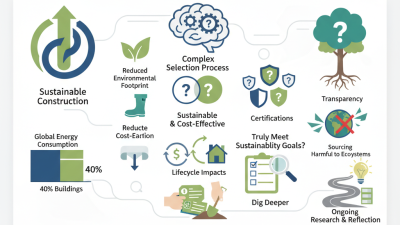
Choosing green building materials for global projects is not a simple shopping exercise. Climate, codes, transport, labor, durability, and local skills change the answer. The United Nations Environment Programme and GlobalABC reported this finding in the 2023 Global Status Report for Buildings and Construction. Buildings consumed 34% of global energy in 2022. They also created 37% of energy- and process-related emissions. Material selection is therefore a practical climate decision, not a decorative upgrade. Every wall carries impacts.
A credible assessment should examine the full life cycle. Product declarations, recycled content, responsibly sourced timber, recycled steel, low-carbon concrete, and local mineral products may support better choices. Labels are not enough. The IEA’s 2023 cement report identifies cement production as a major industrial emissions source. It highlights efficiency, alternative fuels, and lower-clinker technologies as important solutions. RICS’ Whole Life Carbon Assessment framework also recommends measuring upfront, operational, maintenance, and end-of-life carbon. Compare functional performance, not marketing claims. A cheaper material may require frequent replacement.
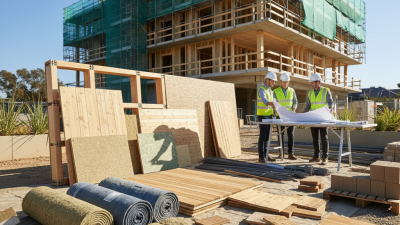
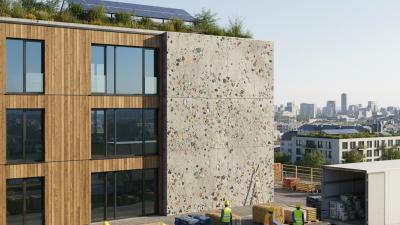
This guide presents a practical method for comparing green building materials across regions. It considers verified environmental data, water stress, fire safety, humidity, seismic conditions, and supply reliability. A bamboo panel may suit a tropical project, yet fail without treatment or skilled installation. That uncomfortable detail matters. Global consistency is useful, but local evidence should lead. Procurement teams should record assumptions, test samples, and revisit decisions when data remains incomplete. No material is automatically green. The strongest choice balances measured impact, service life, human health, and realistic construction practice.

Green building materials are products selected for lower life-cycle impacts, not simply materials labeled “eco-friendly.” They may reduce embodied carbon, energy use, water consumption, waste, or indoor pollution. The definition also includes durability, repairability, responsible sourcing, and safe disposal. A low-carbon material that fails after five years may create more waste than a durable alternative.
The 2023 Global Status Report for Buildings and Construction reported that buildings and construction produced 37% of global energy- and process-related carbon dioxide emissions. This figure explains why material choices matter beyond one project site. Environmental Product Declarations, based on life-cycle assessment standards such as ISO 14025 and EN 15804, help teams compare impacts more reliably. Still, declarations are not perfect. Boundaries, assumptions, and regional electricity data can change the result.
Global projects need local judgment. A material with strong recycled content may perform poorly if transported across oceans or installed by an inexperienced workforce. Teams should check climate suitability, local codes, maintenance skills, and end-of-life options. The International Energy Agency also identifies buildings as responsible for roughly 30% of global energy demand, making operational performance essential. In hot regions, reflective surfaces and efficient insulation may matter more than a small difference in factory emissions. In humid areas, moisture resistance can prevent early replacement. The practical answer is rarely the most fashionable material. It is the option supported by verified data, suitable design, and honest project review.
| Material Category | Typical Environmental Profile | Indicative Thermal Conductivity (W/m·K) |
Durability and Performance | Best-Fit Applications | Global Project Considerations | Main Selection Checks |
|---|---|---|---|---|---|---|
| Recycled-Content Steel | Highly recyclable and can contain substantial recycled scrap. Production emissions vary significantly according to the production route, electricity mix, and recycled content. | Approximately 50 | High structural strength, consistent quality, and long service life when protected against corrosion. | Structural frames, reinforcing bars, roofs, modular systems, and connection components. | Confirm local availability, recycled content, transport distance, corrosion protection, and the project-specific environmental product declaration. | Recycled content; global warming potential; durability coating; dismantling and reuse potential; EPD coverage. |
| Lower-Carbon Concrete | Can reduce embodied carbon by replacing part of Portland cement with supplementary cementitious materials or by optimizing mix design. Cement content remains the key emissions driver. | Approximately 1.4–2.9 | High compressive strength, fire resistance, thermal mass, and potentially long service life when correctly designed and maintained. | Foundations, slabs, cores, retaining structures, pavements, and other load-bearing elements. | Availability of suitable supplementary cementitious materials differs by region. Local standards, curing conditions, aggregate supply, and climate exposure must be checked. | Cement replacement percentage; compressive strength; curing requirements; service exposure class; mix-specific carbon data. |
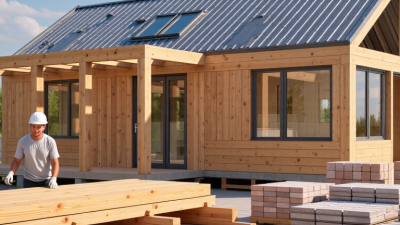
| Engineered Timber | Uses renewable biogenic material and can store biogenic carbon during the product life. Responsible forestry, adhesive content, moisture control, and end-of-life assumptions are important. | Approximately 0.10–0.20 | Good strength-to-weight ratio and prefabrication potential. Requires careful moisture, fire, pest, and connection design. | Beams, columns, floor panels, roof systems, walls, and hybrid structures. | Verify legal and sustainable wood sourcing, local fire codes, humidity conditions, transport impacts, and protection during construction. | Chain-of-custody evidence; moisture content; fire rating; adhesive emissions; structural grade; end-of-life scenario. |
| Cellulose Fibre Insulation | Usually made primarily from recycled paper fibre and generally has low embodied energy compared with many conventional insulation products. | Approximately 0.037–0.042 | Good thermal and acoustic performance. Requires appropriate moisture management, density control, and fire treatment. | Roof spaces, timber-frame walls, partitions, and retrofit cavity insulation. | Humidity, installation skill, fire regulations, pest control, and regional availability should be assessed before specification. | Thermal resistance; moisture response; fire classification; recycled fibre content; settlement risk; installation method. |
| Mineral Wool Insulation | Made from mineral raw materials and, in many products, recycled mineral content. Manufacturing is energy-intensive, but the material can provide long-term energy savings through insulation. | Approximately 0.032–0.045 | Non-combustible, dimensionally stable, moisture-resistant when correctly detailed, and effective for acoustic control. | External walls, roofs, floors, fire barriers, façades, and mechanical-service insulation. | Check local product standards, water exposure, installation protection, worker handling requirements, and transport distance. | Thermal resistance; fire performance; water repellence; recycled content; density; product-specific life-cycle data. |
| Rammed Earth or Stabilized Earth | Can use locally sourced soil and reduce transport impacts. Stabilized versions may include cement or lime, which increases embodied emissions. | Approximately 0.6–1.3 | High thermal mass and good durability in suitable climates. Structural capacity and water resistance depend strongly on soil composition and detailing. | Walls, interior thermal-mass elements, landscape structures, and low-rise buildings. | Use local soil testing, weather protection, seismic design, skilled labor assessment, and compliance with local building regulations. | Soil composition; stabilizer percentage; compressive strength; moisture protection; seismic suitability; local labor capability. |
| Recycled Glass Aggregate | Diverts post-consumer glass from disposal and can replace part of virgin aggregate in selected concrete, drainage, or landscaping applications. | Approximately 0.7–1.1 | Suitable for some non-structural and civil-engineering applications. Performance depends on grading, cleanliness, and compatibility with the binder. | Drainage layers, sub-base, landscaping, terrazzo, selected concrete mixes, and road applications. | Assess collection systems, contamination risk, crushing capacity, local specifications, and alkali–silica reaction requirements. | Particle grading; contamination level; replacement ratio; moisture behavior; structural approval; local supply distance. |
| Reclaimed Brick or Stone | Reuses existing material and can avoid some manufacturing impacts. Environmental benefits are strongest when reclaimed locally and installed with limited processing. | Approximately 0.6–1.3 | Potentially very durable, but condition, dimensional variation, frost resistance, and previous exposure must be evaluated. | Façades, paving, landscape walls, partitions, and restoration work. | Transport, cleaning, testing, matching dimensions, local heritage requirements, and availability of skilled installers can affect feasibility. | Structural condition; water absorption; frost resistance; testing records; cleaning energy; reuse and repair potential. |
| Low-Emission Finishes and Adhesives | Products with reduced volatile organic compound emissions can support healthier indoor environments. Environmental performance depends on formulation, coverage, and replacement frequency. | Not generally applicable | Performance varies by product. Correct substrate preparation and ventilation are essential for durability and indoor-air quality. | Paints, sealants, flooring adhesives, coatings, wall coverings, and interior fit-outs. | Check local chemical regulations, climate-related curing conditions, ventilation requirements, and language accessibility of safety documentation. | VOC emissions; durability; maintenance cycle; chemical restrictions; indoor-air certifications; installation ventilation. |
Note: The performance figures are indicative ranges for preliminary comparison. Final selection should be based on project-specific environmental product declarations, life-cycle assessment boundaries, local building codes, climate conditions, material availability, transport impacts, maintenance requirements, and end-of-life scenarios.
Green material selection begins with the project’s climate, not a product catalogue. In a humid coastal city, low water absorption and corrosion resistance may matter more than recycled content. On cold sites, thermal bridges, freeze-thaw cycles, and transport distances require separate checks. Climate changes everything. Use local weather data, soil reports, and exposure maps before comparing materials. These records turn broad sustainability claims into measurable design decisions.
Site conditions can overturn an otherwise sound specification. A wall system suited to dry inland conditions may trap moisture beside a shaded, wind-driven facade. Check drainage, sun exposure, groundwater, fire performance, acoustic needs, and installation access. Small errors matter. Consult qualified engineers and verify compliance with the project’s local building requirements. Independent testing, safety documentation, and environmental product declarations improve confidence, but paperwork is not proof of field performance.
Project priorities should shape the final choice. A school may need easy cleaning and low emissions, while a warehouse may prioritize impact resistance and rapid installation. Life-cycle cost should include replacement, maintenance, energy use, and disposal. Cheap is not durable. Material samples should be tested under realistic temperature, moisture, and handling conditions. I have seen teams overvalue recycled content and underestimate repair access. That assumption failed. Review the decision with designers, contractors, facility staff, and local authorities before ordering.
How to Choose Green Building Materials for Global Projects?
Environmental performance should start with life-cycle evidence, not attractive labels. UNEP’s 2023 Global Status Report says buildings consume 34% of global energy and produce 37% of energy and process-related emissions. Compare embodied carbon, recycled content, transport distance, and end-of-life options through Environmental Product Declarations. A material with lower factory emissions may perform poorly after long-distance shipping. Regional sourcing matters.
Health and durability deserve equal attention. Check volatile organic compound emissions, formaldehyde content, moisture resistance, and cleaning requirements. The World Health Organization links household air pollution to approximately 3.2 million premature deaths annually, although materials are only one contributing factor. Choose products that support ventilation and stable indoor conditions. For durability, review service-life studies, warranty evidence, climate exposure, and repairability. A cheap finish can become expensive after repeated replacement. I have seen recycled-content targets overshadow maintenance realities. That is a useful warning.
Tips: Request EPDs and laboratory test results. Compare whole-life cost, not purchase price. Test samples in local humidity and heat. Ask contractors about repair skills and spare-part availability. Use a scoring table with environmental, health, durability, and cost categories. The RICS Whole Life Carbon Assessment guidance recommends evaluating emissions across a project’s full life cycle. Yet predictions remain imperfect. Allow a small contingency for uncertain maintenance and regional price changes.
Choosing green building materials for global projects requires more than comparing recycled content. A material may perform well environmentally yet fail a regional safety requirement. Certification checks should begin with the certificate number, issuing body, scope, expiry date, and tested product. Confirm that the document covers the exact product, not merely the manufacturer’s product family. Environmental declarations, recycled-content records, and chain-of-custody documents should match the project specification.
Small details matter.
Trace the supply chain from the raw material to the jobsite. Request batch numbers, production locations, transport records, and declarations for adhesives or finishes. I have seen apparently complete submissions lose credibility because a supplier could not explain one subcontracted process. That gap may indicate poor control, or simply poor recordkeeping. Either way, investigate it before approval. Also check regional rules for fire resistance, structural performance, indoor emissions, water use, and waste handling. Requirements can differ between neighboring jurisdictions. Local testing may still be required, even when an international certificate appears valid. Review translated documents carefully, and ask an independent technical reviewer to confirm equivalence. Cost and delivery pressure can tempt teams to accept incomplete evidence. That choice often creates delays later. A practical compliance register should record each claim, document source, responsible party, review date, and unresolved question. Keep it current as specifications change. Mistakes are possible; concealed uncertainty is the greater risk.
How to Choose Green Building Materials for Global Projects?
Selecting Materials Through Life-Cycle and Risk-Based Evaluation
A green material is not automatically the safest project choice. Evaluate its full life cycle, from raw extraction to disposal. Measure embodied carbon, water use, transport distance, durability, and repair needs. A low-carbon product may require frequent replacement in humid climates. That hidden cycle can outweigh its original advantage.
On a recent regional project, our team compared recycled panels, local masonry, and certified timber. We reviewed environmental declarations, laboratory results, maintenance records, and supplier capacity. The panel had strong carbon data, but limited local repair options. Masonry travelled less than 100 kilometres and matched local skills. Timber performed well, yet moisture protection required careful detailing.
Risk deserves equal attention. Create a project-specific matrix covering fire, flooding, heat, corrosion, supply delays, and regulatory acceptance. Test critical materials independently when documentation is incomplete. Check whether local workers can install them correctly. A technically excellent product can fail through poor workmanship.
Our early transport estimates were too optimistic. Border delays changed the carbon calculation. That mistake mattered. Recalculate impacts using realistic routes, seasonal conditions, and replacement intervals. Compare expected service life, not purchase price alone. Engage local engineers, contractors, and facility managers before approval. Their experience often exposes risks that a spreadsheet misses.
The chart compares representative cradle-to-gate global warming potential ranges for common construction materials. Lower values generally indicate lower upfront embodied carbon, but final selection should also consider service life, local availability, transport distance, recycled content, health performance, certification quality, and supply-chain risk.
Indicative ranges synthesized from generic construction-material datasets and EN 15804-aligned environmental product declarations. Values vary by formulation, manufacturing energy, regional electricity mix, recycled content, and biogenic-carbon accounting. Timber values exclude temporary biogenic carbon storage.
We use cookies on our website to give you an improved browser experience. View our Privacy Policy for more information. Please make your selection to opt in or out of ALL cookies here: Accept or Decline
Do you consent to the use of ALL cookies?
901 2nd Court West
Birmingham, AL 35204
Sales: 866.481.4036
Logistics/Ops: 866.481.4036
2101 Dralle Road
University Park, IL 60466
Sales: 708.813.9070
Logistics/Ops: 708.235.4200
400 E. 13th Street
Little Rock, AR 72114
Sales: 866.760.5344
Logistics/Ops: 866.760.5344
225 Collins Road
Elkhart, IN 46515
Sales: 574.295.0214
Logistics/Ops: 574.607.4611
601 Berryman Pike
Tipton, IN 46072
Sales: 800.897.7591
Logistics/Ops: 800.897.7591
3900 Uvalda Street
Denver, CO 80239
Sales: 303.706.8000
Ops/Logistics: 303.576.8398
510 3rd Street E
Milan, IL 61264
Sales: 800.322.1052
Logistics/Ops: 800.322.1052
1660 E. Aurora
Des Moines, IA 50313
Sales: 800.671.1660
Logistics: 800.671.1660
86554 Gene Lasserre Blvd.
Yulee, FL 32097
Sales: 904.253.3060
Logistics/Ops: 904.225.3000
694 S.E. County Road 245
Lake City, FL 32025
Sales: 800.727.6706
Logistics/Ops: 386.752.7412
210 Neptune Road
Auburndale, FL 33823
Sales: 863.967.1131
Logistics/Ops: 863.777.9814
4601 McCoy Drive
Pensacola, FL 32503
Sales: 850.308.7030
Logistics/Ops: 850.434.5502
815 South 56th Street
Tampa, FL 33619
Sales: 813.302.1940
Logistics/Ops: 813.621.1352
200 Hosea Road
Lawrenceville, GA 30046
Sales: 770.953.7575
Logistics/Ops: 770.513.6000
Branch Product Guide
Branch Line Card
Moulding Offering
Cedar Offering
Column Offering
8173 Hwy. 165 North
Monroe, LA 71211
Sales: 800.256.4165
Logistics/Ops: 800.256.4165
508 Warren Avenue
Portland, ME 04103
Sales: 207.888.2331
Logistics/Ops: 207.797.6565
4300 Georgia Pacific Blvd.
Frederick, MD 21704
Sales: 301.798.7474
Logistics/Ops: 301.874.8000
419 Maple Street
Bellingham, MA 02019
Sales: 508.449.0535
Logistics/Ops: 508.966.5500
825 Buchanan Ave SW
Grand Rapids, MI 49507
Sales: 877.800.1180
Logistics/Ops: 616.278.0909
995 Pacific St. NW
Aitkin, MN 56431
Sales: 800.432.3727
Logistics/Ops: 218.212.7770
1102 Port Terminal Drive
Duluth, MN 55802
Sales: 800.951.9899
Logistics/Ops: 800.851.9899
9110 83rd Ave. North
Brooklyn Park, MN 55445
Sales: 763.425.0204
Logistics/Ops: 763.425.0204
910 E. Railroad Street
Long Beach, MS 39560
Sales: 866.535.4135
Logistics/Ops: 228.205.2400
1727 Warren Street
North Kansas City, MO 64116
Sales: 800.621.2611
Logistics/Ops: 800.621.2611
2123 North Golden
Springfield, MO 65803
Sales: 800.375.7891
Logistics/Ops: 800.375.7891
13860 Corp. Woods Trail
Bridgeton, MO 63044
Sales: 314.209.0800
Logistics/Ops: 314.209.0800
1109 South 19th Street
Omaha, NE 68108
Sales: 800.489.6637
Logistics/Ops: 800.489.6637
1 Luger Road
Denville, NJ 07834
Sales: 973-339-3539
Logistics/Ops: 973.625.1461
3720 Jeffrey Blvd.
Blasdell, NY 14219
Sales: 716.235.5989
Logistics/Ops: 716.825.6557
319 Yaphank Ave.
Yaphank, NY 11980
Sales: 631.358.5714
Logistics/Ops: 631.924.7401
3300 Parkside Drive
Charlotte, NC 28208
Sales: 800.839.2588
Logistics/Ops: 704.394.3172
1712 East D Street
Butner, NC 27509
Sales: 984.389.8200
Logistics/Ops: 919.575.3700
128 Foothills Drive
Statesville, NC 28687
Sales: 800.222.1414
Logistics/Ops: 704.394.3172
550 Munroe Falls Rd.
Tallmadge, OH 44278
Sales: 330.357.4506
Logistics/Ops: 330.794.1141
10347 Toebben Dr.
Independence, KY 41051
Sales: 859.298.3926
Logistics/Ops: 859.746.2250
450 N. MacArthur
Oklahoma City, OK 73127
Sales: 800.375.6025
Logistics/Ops: 800.375.6025
1680 North Aspen
Broken Arrow, OK 74012
Sales: 918.272.2212
Logistics/Ops: 918.272.2212
522 Bridge Street
Hunker, PA 15639
Sales: 878.217.2001
Logistics/Ops: 724.925.7285
4290 Atlanta Street
Charleston, SC 29418
Sales: 843.371.1420
Logistics/Ops: 843.554.8192
1040 S. Industrial Dr.
Erwin, TN 37650
Sales: 423.641.1005
Logistics/Ops: 423.742.5911
4287 Pilot Drive
Memphis, TN 38118
Sales: 901.365.2101
Logistics/Ops: 901.365.2101
700 Myatt Drive
Madison, TN 37115
Sales: 615.327.9547
Logistics/Ops: 629.777.4949
4747 Mark IV Parkway
Fort Worth, TX 76106
Sales: 866.323.5117
Logistics/Ops: 817.625.9091
6990 Market Avenue
El Paso, TX 79915
Sales: 915.778.6356
Logistics/Ops: 915.265.7200
2502 Wilson Road
Harlingen, TX 78552
Sales: 800.580.6711
Logistics/Ops: 800.580.6711
10,000 North Loop East
Houston, TX 77029
Sales: 713.921.1977
Logistics/Ops: 713.675.3544
702 East 44th St.
Lubbock, TX 79404
Sales: 866.454.6010
Logistics/Ops: 866.454.6010
535 N. WW White Road
San Antonio, TX 78219
Sales: 800.284.0488
Logistics/Ops: 210.333.8112
142 Pine Haven Shores Rd.
Shelburne, VT 05482
Sales: 802.800.2540
Logistics/Ops: 802.985.2512
4700 Bethlehem Road,
Richmond, VA 23230
Sales: 804.201.2400
Logistics/Ops: 804.342.1161
4516 N Barker Road
Spokane Valley, WA 99027
Phone: 509.892.9420
Toll free: 800.728.6157
8365 N. 76th Street
Milwaukee, WI 53223
Sales: 800.356.9245
Logistics/Ops: 800.356.9245
312 S. Chester Street
Sparta, WI 54656
Sales: 800.362.5864
Logistics/Ops: 800.362.5864
899 Grossman Drive
Schofield, WI 54476
Sales: 800.472.0017
Logistics/Ops: 800.472.0017