We use cookies on our website to give you an improved browser experience. View our Privacy Policy for more information. Please make your selection to opt in or out of ALL cookies here: Accept or Decline
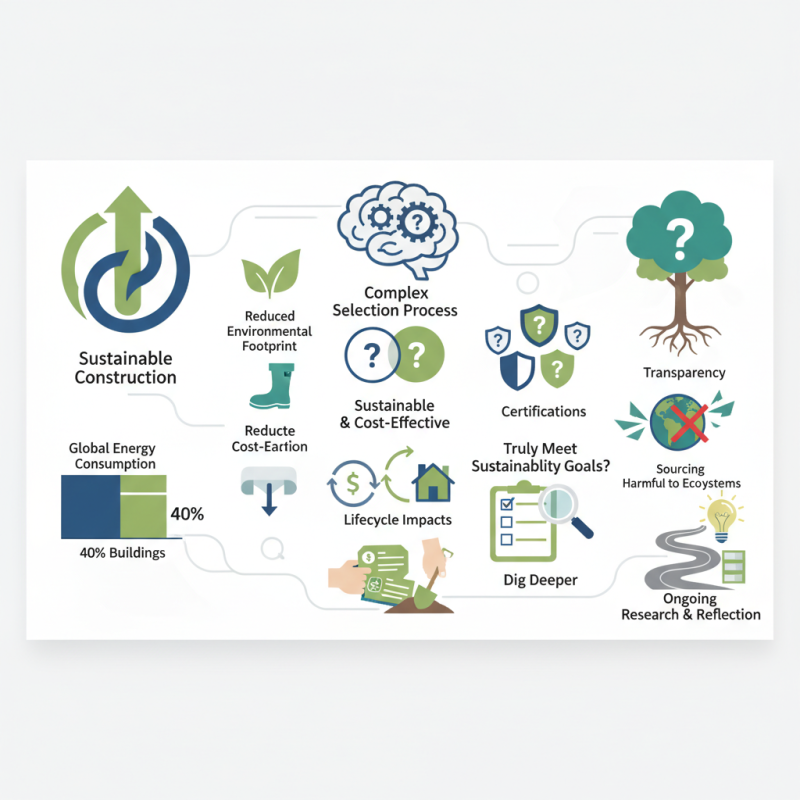
The choice of green building materials is crucial for sustainable construction. According to the U.S. Green Building Council, buildings account for about 40% of global energy consumption. Thus, selecting eco-friendly materials can significantly reduce the environmental footprint. Industry expert Dr. Emily Johnson states, “The right materials not only enhance sustainability but also improve the health of occupants.”
However, the process of selecting suitable green building materials is complex. Many builders struggle to find products that are both sustainable and cost-effective. Choices may rely heavily on certifications that can confuse decision-makers. It’s also vital to consider lifecycle impacts, not just upfront costs. We must question if all certified materials truly meet sustainability goals.
The industry continues to evolve, but challenges remain. Many materials marketed as "green" lack transparency. In some cases, the sourcing may harm local ecosystems. To ensure a truly sustainable approach, builders must dig deeper, beyond labels and marketing claims. The quest for optimal green building materials is ongoing, demanding a commitment to research and reflection.
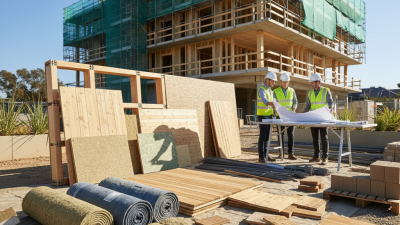
Green building materials are vital in modern construction. They reduce environmental impact and promote sustainability. These materials often have a lower carbon footprint and use less energy. For instance, reclaimed wood and recycled metals are excellent choices. They minimize waste and save resources. However, the sourcing of these materials can be complicated. Transparency is crucial, but not all suppliers provide clear information.
Choosing the right materials requires careful consideration. Look for certifications that indicate sustainability. Materials should be durable and require less maintenance. Affordability is essential, but we shouldn’t sacrifice the environment for cost. Some eco-friendly options may come with a higher initial price. We must reflect on the long-term benefits they bring.
It’s easy to overlook the importance of green materials. Many still rely on conventional options. These choices can contribute to pollution and resource depletion. Evaluating the life cycle of materials is important. Making informed decisions can lead to positive changes in construction practices. Small adjustments can collectively have a significant impact.
Choosing green building materials is crucial for sustainable construction. When identifying sustainable options, focus on renewable resources. Bamboo is a fantastic choice. It grows quickly and has a low environmental impact. Cork is another good material. It is harvested without harming the tree.
Consider the lifecycle of materials. Some may seem eco-friendly but have hidden environmental costs. Recycled content is essential. Look for materials that are made from recycled products. They can significantly reduce waste. Local sourcing also reduces transportation emissions. Materials from nearby suppliers are often better for the environment.
Think about durability as well. Short-lived materials can lead to waste. Quality matters; cheap options may not last long. Sometimes, less popular options could be better. Straw bales, for instance, can provide excellent insulation. Reflect on these choices. The right materials can make a real difference in eco-friendly projects.
This chart displays the sustainability scores of various eco-friendly building materials, illustrating how they rank in terms of sustainability. Understanding these scores can help in making informed choices in sustainable construction projects.
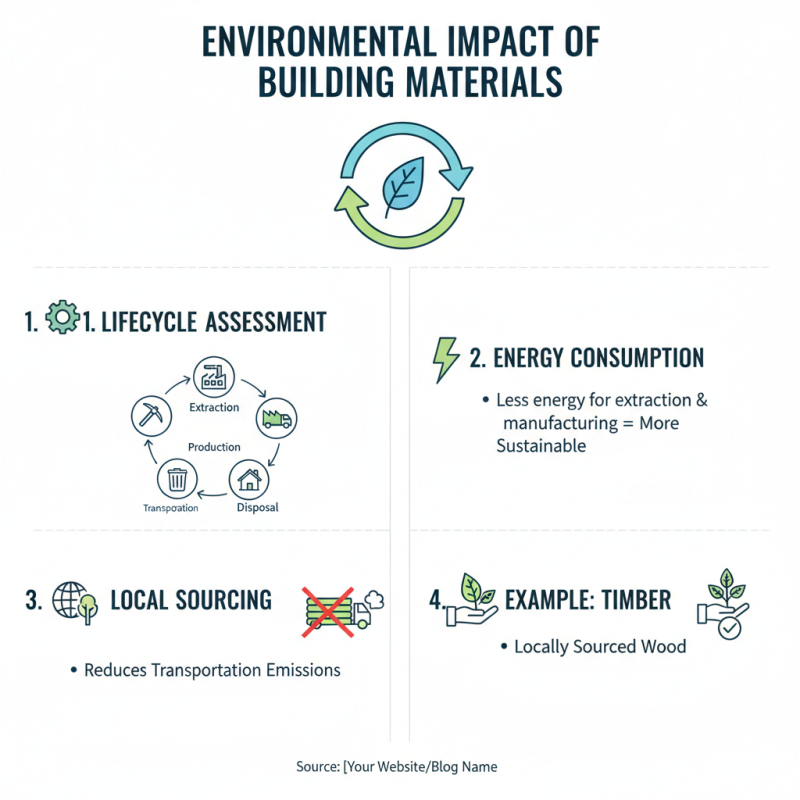
When evaluating the environmental impact of building materials, several factors must be considered. First, the lifecycle of each material plays a crucial role. This includes extraction, production, transportation, usage, and disposal. Materials that require less energy during extraction and manufacturing are typically more sustainable. For example, locally sourced timber can reduce transportation emissions significantly.
It's also important to assess the material's durability. Short-lived materials may need to be replaced frequently, increasing waste and resource consumption. Consider how materials perform in various weather conditions. Do they resist mold or pests? Such attributes can influence a building’s longevity and lifecycle footprint.
Additionally, look for certifications or environmental labels that can provide insights into performance and sustainability. However, not all certifications are equal. Some may lack stringent criteria. This can lead to confusion and misinterpretation. Continuously researching and questioning these labels is essential for making informed choices. The search for sustainable resources often uncovers compromises that require careful consideration.
When choosing green building materials, understanding standards and certifications is essential. These measures help ensure compliance with sustainability goals. Organizations offer various certifications to verify eco-friendly practices. Look for labels like LEED or BREEAM. They can guide you in selecting materials that meet environmental criteria.
Tips: Research the meaning of each certification. Not all labels are the same. Some are more credible than others. Check if the product has transparent sourcing practices. Watch for ambiguous claims that might mislead.
Consider sourcing locally. Local materials often have lower carbon footprints. Ensure they meet required standards. However, sometimes local products may not offer the best sustainability. Analyze their life cycle impact carefully. Balancing local and certified imports could be necessary. Engage with suppliers to understand their compliance. Clear communication is key.
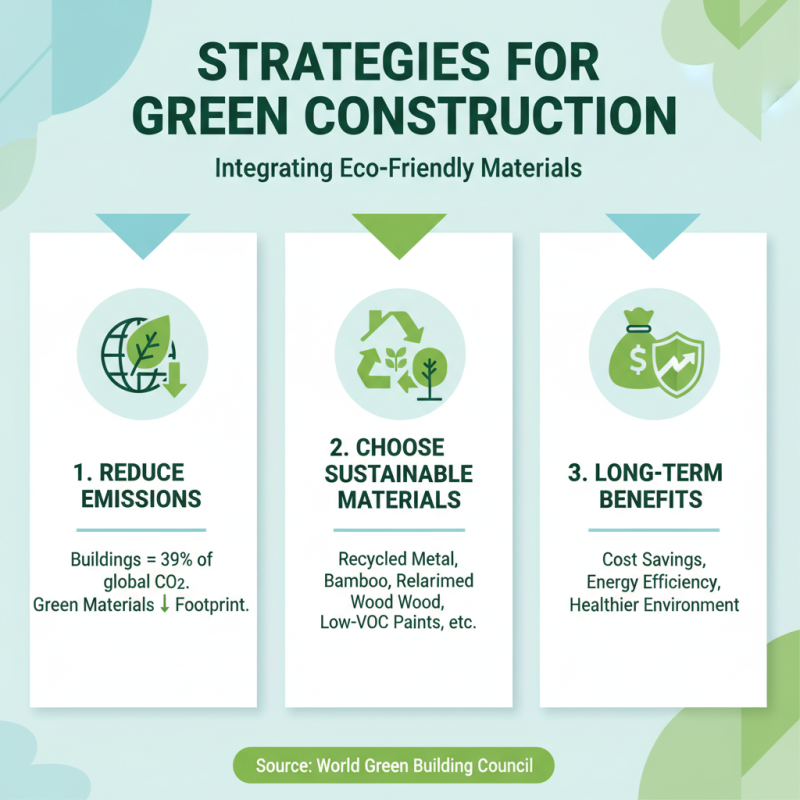
Choosing green building materials is essential for sustainable construction. Integrating these materials into your construction plan can significantly reduce environmental impact. A study by the World Green Building Council indicates that buildings contribute about 39% of global carbon emissions. Selecting eco-friendly materials helps lower these figures.
Tips for integrating green materials include evaluating local sourcing. Materials sourced nearby reduce transportation emissions. Research shows that locally sourced materials can decrease carbon footprints by as much as 30%. Consider using reclaimed or recycled materials. They use less energy to process and help divert waste from landfills.
It's important to assess the lifecycle impacts of materials. Some products may seem eco-friendly but have hidden environmental costs. Not all sustainable options are perfect. For instance, bamboo is often praised for its renewability. However, if harvested unsustainably, it can lead to deforestation. Always perform due diligence on material origins. This guarantees that choices truly align with sustainability goals.
We use cookies on our website to give you an improved browser experience. View our Privacy Policy for more information. Please make your selection to opt in or out of ALL cookies here: Accept or Decline
Do you consent to the use of ALL cookies?
901 2nd Court West
Birmingham, AL 35204
Sales: 866.481.4036
Logistics/Ops: 866.481.4036
2101 Dralle Road
University Park, IL 60466
Sales: 708.813.9070
Logistics/Ops: 708.235.4200
400 E. 13th Street
Little Rock, AR 72114
Sales: 866.760.5344
Logistics/Ops: 866.760.5344
225 Collins Road
Elkhart, IN 46515
Sales: 574.295.0214
Logistics/Ops: 574.607.4611
601 Berryman Pike
Tipton, IN 46072
Sales: 800.897.7591
Logistics/Ops: 800.897.7591
3900 Uvalda Street
Denver, CO 80239
Sales: 303.706.8000
Ops/Logistics: 303.576.8398
510 3rd Street E
Milan, IL 61264
Sales: 800.322.1052
Logistics/Ops: 800.322.1052
1660 E. Aurora
Des Moines, IA 50313
Sales: 800.671.1660
Logistics: 800.671.1660
86554 Gene Lasserre Blvd.
Yulee, FL 32097
Sales: 904.253.3060
Logistics/Ops: 904.225.3000
694 S.E. County Road 245
Lake City, FL 32025
Sales: 800.727.6706
Logistics/Ops: 386.752.7412
210 Neptune Road
Auburndale, FL 33823
Sales: 863.967.1131
Logistics/Ops: 863.777.9814
4601 McCoy Drive
Pensacola, FL 32503
Sales: 850.308.7030
Logistics/Ops: 850.434.5502
815 South 56th Street
Tampa, FL 33619
Sales: 813.302.1940
Logistics/Ops: 813.621.1352
200 Hosea Road
Lawrenceville, GA 30046
Sales: 770.953.7575
Logistics/Ops: 770.513.6000
Branch Product Guide
Branch Line Card
Moulding Offering
Cedar Offering
Column Offering
8173 Hwy. 165 North
Monroe, LA 71211
Sales: 800.256.4165
Logistics/Ops: 800.256.4165
508 Warren Avenue
Portland, ME 04103
Sales: 207.888.2331
Logistics/Ops: 207.797.6565
4300 Georgia Pacific Blvd.
Frederick, MD 21704
Sales: 301.798.7474
Logistics/Ops: 301.874.8000
419 Maple Street
Bellingham, MA 02019
Sales: 508.449.0535
Logistics/Ops: 508.966.5500
825 Buchanan Ave SW
Grand Rapids, MI 49507
Sales: 877.800.1180
Logistics/Ops: 616.278.0909
995 Pacific St. NW
Aitkin, MN 56431
Sales: 800.432.3727
Logistics/Ops: 218.212.7770
1102 Port Terminal Drive
Duluth, MN 55802
Sales: 800.951.9899
Logistics/Ops: 800.851.9899
9110 83rd Ave. North
Brooklyn Park, MN 55445
Sales: 763.425.0204
Logistics/Ops: 763.425.0204
910 E. Railroad Street
Long Beach, MS 39560
Sales: 866.535.4135
Logistics/Ops: 228.205.2400
1727 Warren Street
North Kansas City, MO 64116
Sales: 800.621.2611
Logistics/Ops: 800.621.2611
2123 North Golden
Springfield, MO 65803
Sales: 800.375.7891
Logistics/Ops: 800.375.7891
13860 Corp. Woods Trail
Bridgeton, MO 63044
Sales: 314.209.0800
Logistics/Ops: 314.209.0800
1109 South 19th Street
Omaha, NE 68108
Sales: 800.489.6637
Logistics/Ops: 800.489.6637
1 Luger Road
Denville, NJ 07834
Sales: 973-339-3539
Logistics/Ops: 973.625.1461
3720 Jeffrey Blvd.
Blasdell, NY 14219
Sales: 716.235.5989
Logistics/Ops: 716.825.6557
319 Yaphank Ave.
Yaphank, NY 11980
Sales: 631.358.5714
Logistics/Ops: 631.924.7401
3300 Parkside Drive
Charlotte, NC 28208
Sales: 800.839.2588
Logistics/Ops: 704.394.3172
1712 East D Street
Butner, NC 27509
Sales: 984.389.8200
Logistics/Ops: 919.575.3700
128 Foothills Drive
Statesville, NC 28687
Sales: 800.222.1414
Logistics/Ops: 704.394.3172
550 Munroe Falls Rd.
Tallmadge, OH 44278
Sales: 330.357.4506
Logistics/Ops: 330.794.1141
10347 Toebben Dr.
Independence, KY 41051
Sales: 859.298.3926
Logistics/Ops: 859.746.2250
450 N. MacArthur
Oklahoma City, OK 73127
Sales: 800.375.6025
Logistics/Ops: 800.375.6025
1680 North Aspen
Broken Arrow, OK 74012
Sales: 918.272.2212
Logistics/Ops: 918.272.2212
522 Bridge Street
Hunker, PA 15639
Sales: 878.217.2001
Logistics/Ops: 724.925.7285
4290 Atlanta Street
Charleston, SC 29418
Sales: 843.371.1420
Logistics/Ops: 843.554.8192
1040 S. Industrial Dr.
Erwin, TN 37650
Sales: 423.641.1005
Logistics/Ops: 423.742.5911
4287 Pilot Drive
Memphis, TN 38118
Sales: 901.365.2101
Logistics/Ops: 901.365.2101
700 Myatt Drive
Madison, TN 37115
Sales: 615.327.9547
Logistics/Ops: 629.777.4949
4747 Mark IV Parkway
Fort Worth, TX 76106
Sales: 866.323.5117
Logistics/Ops: 817.625.9091
6990 Market Avenue
El Paso, TX 79915
Sales: 915.778.6356
Logistics/Ops: 915.265.7200
2502 Wilson Road
Harlingen, TX 78552
Sales: 800.580.6711
Logistics/Ops: 800.580.6711
10,000 North Loop East
Houston, TX 77029
Sales: 713.921.1977
Logistics/Ops: 713.675.3544
702 East 44th St.
Lubbock, TX 79404
Sales: 866.454.6010
Logistics/Ops: 866.454.6010
535 N. WW White Road
San Antonio, TX 78219
Sales: 800.284.0488
Logistics/Ops: 210.333.8112
142 Pine Haven Shores Rd.
Shelburne, VT 05482
Sales: 802.800.2540
Logistics/Ops: 802.985.2512
4700 Bethlehem Road,
Richmond, VA 23230
Sales: 804.201.2400
Logistics/Ops: 804.342.1161
4516 N Barker Road
Spokane Valley, WA 99027
Phone: 509.892.9420
Toll free: 800.728.6157
8365 N. 76th Street
Milwaukee, WI 53223
Sales: 800.356.9245
Logistics/Ops: 800.356.9245
312 S. Chester Street
Sparta, WI 54656
Sales: 800.362.5864
Logistics/Ops: 800.362.5864
899 Grossman Drive
Schofield, WI 54476
Sales: 800.472.0017
Logistics/Ops: 800.472.0017