
We use cookies on our website to give you an improved browser experience. View our Privacy Policy for more information. Please make your selection to opt in or out of ALL cookies here: Accept or Decline
Choosing the right Dementia Clock in 2026 is not simply a matter of selecting the largest display. It involves understanding a person’s memory, vision, hearing, daily routines, and living environment. A clear clock may reduce confusion when morning and night become difficult to distinguish. However, the most advanced model may still fail if its controls are complicated or its screen creates glare.
This guide examines practical features through a caregiver-focused and evidence-informed lens. We will consider large day-and-date displays, automatic brightness adjustment, readable contrast, power backup, alarm settings, remote updates, and reliable connectivity. We will also discuss placement, because a clock hidden behind a lamp cannot support orientation. Advice from dementia specialists, occupational therapists, and experienced caregivers can help families make safer choices, but individual needs should remain central. A Dementia Clock can support routines, yet it cannot replace personal reassurance, clinical care, or a carefully planned daily schedule.
There is no perfect device.
Real homes are untidy. Batteries fail, Wi-Fi drops, and some users dislike unfamiliar screens. I have found that simplicity often matters more than a long feature list, although this is not true for every household. The best choice balances visible information, ease of use, privacy, durability, and cost. By comparing these details carefully, families can choose a clock that feels dependable rather than merely impressive.
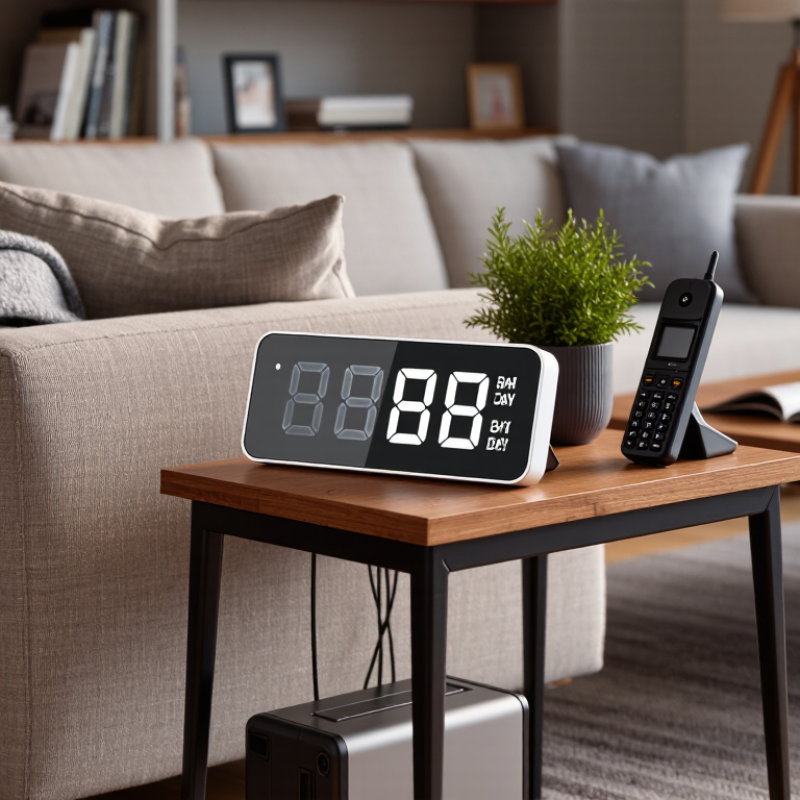
A dementia clock is a time display designed for people who may lose track of hours, dates, or daily routines. It usually shows the day, date, time, and part of the day in clear language. Some models use large characters, simple contrast, and gentle reminders. Unlike a standard clock, it answers a practical question: “What day is it?”
That answer can reduce repeated questions and ease confusion after waking. A person may see “Tuesday morning” beside a familiar bedroom window and connect the display with real life. Caregivers can also use it to support meals, appointments, rest, and visits. However, a clock cannot replace conversation or professional care. Dementia affects people differently.
Clarity matters more than decoration. Look for readable text, stable brightness, a reliable power supply, and settings that do not change accidentally. An easy-to-read display may help more than extra alarms. I once assumed the largest numbers were always best. They were not; glare made them uncomfortable for one older adult. Ask the user to view the clock from a chair, bed, and doorway. Check whether the wording feels natural to them. A useful clock should fit the person’s routine, eyesight, room lighting, and level of independence. Small tests matter.
A practical comparison of dementia clock types and the features that can support orientation, routine, and everyday independence.
| Clock Type | Main Display | Useful Dementia-Support Features | Best For | Potential Limitations | Typical Setup Difficulty |
|---|---|---|---|---|---|
| Basic Digital Dementia Clock | Large digital time display with day, date, and month | Clear calendar information, 12/24-hour format, high-contrast numbers | People who need simple orientation cues | Usually provides limited reminders and no remote monitoring | Low |
| Day-and-Night Clock | Time, date, weekday, and explicit day period such as morning or evening | Reduces confusion between daytime and nighttime; often uses large labels | People who frequently confuse morning, afternoon, and night | May not include medication alerts or appointment reminders | Low |
| Reminder Clock | Digital clock with scheduled text, sound, or visual alerts | Prompts for meals, medication, appointments, hydration, or bedtime routines | People who benefit from structured daily routines | Too many alerts can be distracting or confusing | Moderate |
| Talking Dementia Clock | Visual display combined with spoken time or reminder announcements | Audio guidance, adjustable volume, repeat announcements, reminder prompts | People with reduced vision or difficulty reading small text | Sound may disturb others; hearing ability affects usefulness | Moderate |
| Calendar Clock with Photo or Message Support | Time and calendar information with optional personalized messages or images | Familiar photos, simple routine messages, and visual orientation support | People who respond well to familiar visual cues | Personalization requires regular caregiver updates | Moderate |
| Connected or Smart Dementia Clock | Digital time and calendar display managed through an app or online connection | Remote updates, scheduled reminders, automatic time changes, and caregiver access | Families who need to manage reminders from another location | Requires power, internet or mobile connectivity, and privacy review | High |
| Evaluation Dimension | What to Look For | Why It Matters | Priority |
|---|---|---|---|
| Display Legibility | Large characters, strong contrast, uncluttered layout, and adjustable brightness | Makes the time and date easier to recognize from a normal viewing distance | Essential |
| Calendar Information | Full weekday, date, month, and year shown without abbreviations when possible | Supports orientation and reduces uncertainty about the current day | Essential |
| Automatic Time Adjustment | Automatic daylight-saving and leap-year adjustment, with an easy manual override | Prevents incorrect information that may disrupt routines | High |
| Power Backup | Battery backup or internal backup that preserves time during a power interruption | Maintains reliable orientation information during outages or accidental unplugging | High |
| Reminder Controls | Simple scheduling, repeat options, clear labels, and adjustable sound or visual alerts | Helps reinforce regular activities without creating unnecessary complexity | High |
| Ease of Use | Few buttons, clear menus, readable instructions, and settings that are hard to change accidentally | Reduces frustration for the user and setup time for caregivers | Essential |
| Placement and Viewing Angle | A stable design that can be read from the bed, chair, or main living area | The clock is only useful when it is visible and positioned at eye level | High |
| Privacy and Connectivity | Clear controls for accounts, notifications, remote access, and data sharing | Connected features should support care without exposing unnecessary personal information | High |
Note: A dementia clock is an orientation and routine-support tool, not a replacement for medical care, supervision, medication management, or an emergency response system.
How to Choose the Best Dementia Clock in 2026?
A dementia clock should show more than numbers. It should display the full day, date, and time of day in large, high-contrast text. “Morning” and “night” can be clearer than 08:00 or 20:00. The World Health Organization’s Global Status Report on Dementia estimates that over 55 million people live with dementia worldwide, with nearly 10 million new cases annually. This makes familiar, low-effort design increasingly important. Automatic daylight-saving adjustment and battery backup can prevent avoidable confusion during travel or power cuts.
Keep controls simple. A caregiver should set reminders without navigating crowded menus. Useful alerts may support meals, hydration, appointments, or medication routines, but the clock should not replace clinical advice. The Alzheimer’s Association 2024 Facts and Figures report estimates 6.9 million Americans aged 65 and older live with Alzheimer’s, while unpaid caregivers provide 18.4 billion hours of care. Quiet vibration, adjustable audio, and remote status checks may reduce repeated questions and caregiver pressure. Privacy settings matter too.
Test the clock in real life. A glossy screen may create glare near a window. A loud alarm may frighten someone at night. No clock is perfect. Observe whether the person can read it from a chair, hear it from another room, and recover after a wrong button press. That small test may reveal more than a long feature list.
Readability and simplicity become increasingly important with age. A dementia clock should provide a large, high-contrast display with the full day, date, and time, while avoiding unnecessary visual clutter. Clear day/night indicators, automatic brightness adjustment, reliable alarms, and easy caregiver setup can further support daily orientation.
The chart shows estimated Alzheimer's disease prevalence among U.S. adults aged 65 and older by age group. Source: Alzheimer's Association, 2025 Alzheimer's Disease Facts and Figures.
Choosing a dementia clock should begin with the person, not the product. Observe when confusion appears: mornings, evenings, or after naps. A clock showing the day, date, and time can support routines. However, too much information may create stress. Keep the display simple.
Consider eyesight, hearing, hand movement, and reading ability. Large, high-contrast numbers help people with reduced vision. Some may need a spoken time announcement, while others find sound disturbing. A 12-hour display may feel familiar, but a 24-hour format can reduce ambiguity. Test both when possible. Small details matter.
Placement also affects success. Put the clock near the bed or favorite chair, at eye level, and away from window glare. Check whether the person can see it without standing. Caregivers should confirm the time after power cuts and daylight-saving changes. Battery backup adds security, but it is not perfect. Batteries still need checking. A clock cannot replace reassurance, medical advice, or a consistent care routine. Review its usefulness after several days, because the first choice may be wrong.
How to Choose the Best Dementia Clock in 2026?
Choosing a dementia clock starts with the person, not the device. The World Health Organization reported that more than 55 million people live with dementia worldwide. Its 2021 global report also estimates nearly 10 million new cases annually. These figures underline a practical need: information must remain clear during confusion, fatigue, or poor lighting.
Compare displays by testing them from the bed, hallway, and dining chair. A large digital clock should show the full day, date, and time period, such as morning or evening. Analogue faces may feel familiar, but they can demand stronger visual processing. High-contrast characters usually help, while excessive brightness may disturb sleep. Colour coding sounds useful. It can also confuse.
Alert options need equal scrutiny. Voice reminders, scheduled prompts, and medication alerts may support routines. However, an alert is not proof that a task was completed. The Alzheimer’s Association’s 2024 Facts and Figures report identifies 11.2 million unpaid dementia caregivers in the United States. Shared alerts may reduce repeated checking, but caregivers still need a reliable follow-up plan.
Look for adjustable volume, simple settings, automatic time changes, and backup power. Test every alert with the actual user. Watch whether the person understands the message without coaching. A clock that looks advanced may fail this test. Privacy also matters, especially when connected features transmit activity data. Choose only necessary functions, and review them regularly.
A dementia clock should support daily orientation, not replace human care. The World Health Organization reports that more than 55 million people live with dementia worldwide, with nearly 10 million new cases each year. Choose a display showing the full day, date, and time in large, high-contrast text. Avoid crowded screens, flashing lights, and confusing abbreviations. A quiet alarm, battery backup, and visible power status can improve safety during outages.
Set up the clock with the person who will use it. Place it near the breakfast table or bedside, where daylight reduces glare. Confirm the correct time zone, language, date format, and alarm volume. Say, “It is Tuesday morning,” rather than testing memory. Keep instructions short. Check the clock after power cuts and seasonal time changes. A second person should review the settings, because small errors can create real confusion.
Use the clock alongside familiar routines, medication guidance, and professional care. It should not control doors, restrict movement, or replace supervision. The Alzheimer’s Association’s 2025 Facts and Figures report estimates that 7.2 million Americans aged 65 and older live with Alzheimer’s disease, highlighting the need for practical, person-centered support. Review the clock weekly for accuracy, readability, and distress. Ask whether the alarm feels helpful or intrusive. I would not assume one setting works forever. Dementia changes, and the device may need gentler reminders, fewer alerts, or removal after a safety review with a clinician or occupational therapist.
We use cookies on our website to give you an improved browser experience. View our Privacy Policy for more information. Please make your selection to opt in or out of ALL cookies here: Accept or Decline
Do you consent to the use of ALL cookies?
901 2nd Court West
Birmingham, AL 35204
Sales: 866.481.4036
Logistics/Ops: 866.481.4036
2101 Dralle Road
University Park, IL 60466
Sales: 708.813.9070
Logistics/Ops: 708.235.4200
400 E. 13th Street
Little Rock, AR 72114
Sales: 866.760.5344
Logistics/Ops: 866.760.5344
225 Collins Road
Elkhart, IN 46515
Sales: 574.295.0214
Logistics/Ops: 574.607.4611
601 Berryman Pike
Tipton, IN 46072
Sales: 800.897.7591
Logistics/Ops: 800.897.7591
3900 Uvalda Street
Denver, CO 80239
Sales: 303.706.8000
Ops/Logistics: 303.576.8398
510 3rd Street E
Milan, IL 61264
Sales: 800.322.1052
Logistics/Ops: 800.322.1052
1660 E. Aurora
Des Moines, IA 50313
Sales: 800.671.1660
Logistics: 800.671.1660
86554 Gene Lasserre Blvd.
Yulee, FL 32097
Sales: 904.253.3060
Logistics/Ops: 904.225.3000
694 S.E. County Road 245
Lake City, FL 32025
Sales: 800.727.6706
Logistics/Ops: 386.752.7412
210 Neptune Road
Auburndale, FL 33823
Sales: 863.967.1131
Logistics/Ops: 863.777.9814
4601 McCoy Drive
Pensacola, FL 32503
Sales: 850.308.7030
Logistics/Ops: 850.434.5502
815 South 56th Street
Tampa, FL 33619
Sales: 813.302.1940
Logistics/Ops: 813.621.1352
200 Hosea Road
Lawrenceville, GA 30046
Sales: 770.953.7575
Logistics/Ops: 770.513.6000
Branch Product Guide
Branch Line Card
Moulding Offering
Cedar Offering
Column Offering
8173 Hwy. 165 North
Monroe, LA 71211
Sales: 800.256.4165
Logistics/Ops: 800.256.4165
508 Warren Avenue
Portland, ME 04103
Sales: 207.888.2331
Logistics/Ops: 207.797.6565
4300 Georgia Pacific Blvd.
Frederick, MD 21704
Sales: 301.798.7474
Logistics/Ops: 301.874.8000
419 Maple Street
Bellingham, MA 02019
Sales: 508.449.0535
Logistics/Ops: 508.966.5500
825 Buchanan Ave SW
Grand Rapids, MI 49507
Sales: 877.800.1180
Logistics/Ops: 616.278.0909
995 Pacific St. NW
Aitkin, MN 56431
Sales: 800.432.3727
Logistics/Ops: 218.212.7770
1102 Port Terminal Drive
Duluth, MN 55802
Sales: 800.951.9899
Logistics/Ops: 800.851.9899
9110 83rd Ave. North
Brooklyn Park, MN 55445
Sales: 763.425.0204
Logistics/Ops: 763.425.0204
910 E. Railroad Street
Long Beach, MS 39560
Sales: 866.535.4135
Logistics/Ops: 228.205.2400
1727 Warren Street
North Kansas City, MO 64116
Sales: 800.621.2611
Logistics/Ops: 800.621.2611
2123 North Golden
Springfield, MO 65803
Sales: 800.375.7891
Logistics/Ops: 800.375.7891
13860 Corp. Woods Trail
Bridgeton, MO 63044
Sales: 314.209.0800
Logistics/Ops: 314.209.0800
1109 South 19th Street
Omaha, NE 68108
Sales: 800.489.6637
Logistics/Ops: 800.489.6637
1 Luger Road
Denville, NJ 07834
Sales: 973-339-3539
Logistics/Ops: 973.625.1461
3720 Jeffrey Blvd.
Blasdell, NY 14219
Sales: 716.235.5989
Logistics/Ops: 716.825.6557
319 Yaphank Ave.
Yaphank, NY 11980
Sales: 631.358.5714
Logistics/Ops: 631.924.7401
3300 Parkside Drive
Charlotte, NC 28208
Sales: 800.839.2588
Logistics/Ops: 704.394.3172
1712 East D Street
Butner, NC 27509
Sales: 984.389.8200
Logistics/Ops: 919.575.3700
128 Foothills Drive
Statesville, NC 28687
Sales: 800.222.1414
Logistics/Ops: 704.394.3172
550 Munroe Falls Rd.
Tallmadge, OH 44278
Sales: 330.357.4506
Logistics/Ops: 330.794.1141
10347 Toebben Dr.
Independence, KY 41051
Sales: 859.298.3926
Logistics/Ops: 859.746.2250
450 N. MacArthur
Oklahoma City, OK 73127
Sales: 800.375.6025
Logistics/Ops: 800.375.6025
1680 North Aspen
Broken Arrow, OK 74012
Sales: 918.272.2212
Logistics/Ops: 918.272.2212
522 Bridge Street
Hunker, PA 15639
Sales: 878.217.2001
Logistics/Ops: 724.925.7285
4290 Atlanta Street
Charleston, SC 29418
Sales: 843.371.1420
Logistics/Ops: 843.554.8192
1040 S. Industrial Dr.
Erwin, TN 37650
Sales: 423.641.1005
Logistics/Ops: 423.742.5911
4287 Pilot Drive
Memphis, TN 38118
Sales: 901.365.2101
Logistics/Ops: 901.365.2101
700 Myatt Drive
Madison, TN 37115
Sales: 615.327.9547
Logistics/Ops: 629.777.4949
4747 Mark IV Parkway
Fort Worth, TX 76106
Sales: 866.323.5117
Logistics/Ops: 817.625.9091
6990 Market Avenue
El Paso, TX 79915
Sales: 915.778.6356
Logistics/Ops: 915.265.7200
2502 Wilson Road
Harlingen, TX 78552
Sales: 800.580.6711
Logistics/Ops: 800.580.6711
10,000 North Loop East
Houston, TX 77029
Sales: 713.921.1977
Logistics/Ops: 713.675.3544
702 East 44th St.
Lubbock, TX 79404
Sales: 866.454.6010
Logistics/Ops: 866.454.6010
535 N. WW White Road
San Antonio, TX 78219
Sales: 800.284.0488
Logistics/Ops: 210.333.8112
142 Pine Haven Shores Rd.
Shelburne, VT 05482
Sales: 802.800.2540
Logistics/Ops: 802.985.2512
4700 Bethlehem Road,
Richmond, VA 23230
Sales: 804.201.2400
Logistics/Ops: 804.342.1161
4516 N Barker Road
Spokane Valley, WA 99027
Phone: 509.892.9420
Toll free: 800.728.6157
8365 N. 76th Street
Milwaukee, WI 53223
Sales: 800.356.9245
Logistics/Ops: 800.356.9245
312 S. Chester Street
Sparta, WI 54656
Sales: 800.362.5864
Logistics/Ops: 800.362.5864
899 Grossman Drive
Schofield, WI 54476
Sales: 800.472.0017
Logistics/Ops: 800.472.0017
