
We use cookies on our website to give you an improved browser experience. View our Privacy Policy for more information. Please make your selection to opt in or out of ALL cookies here: Accept or Decline
Choosing the best Exterior Wood Sheet in 2026 requires more than comparing prices, thicknesses, or attractive grain patterns. Outdoor wood faces rain, sunlight, insects, wind, and repeated temperature changes. A sheet that performs well beneath a roof may fail quickly on an exposed wall. The right decision begins with the project’s moisture level, structural load, ventilation, and expected service life.
Joe Lstiburek, a respected building-science expert, has often stated, “Water is the enemy of buildings.” His warning applies directly to Exterior Wood Sheet selection. Look for documented water resistance, suitable bonding, stable core construction, and clear installation guidance. Check whether the panel is designed for exterior exposure, not merely temporary weather protection. Also inspect the edges. Small gaps, unsealed cuts, and trapped water can cause swelling before the surface appears damaged.
Real projects teach uncomfortable lessons. A premium panel can still fail when flashing is missing. A cheaper sheet may perform acceptably when protected by generous eaves and careful sealing. That makes product choice only one part of the result. Manufacturer test data, certification, warranty language, and installer experience deserve equal attention. Claims can sound convincing.
In 2026, compare engineered wood sheets by exposure rating, dimensional stability, surface durability, environmental documentation, and maintenance needs. Consider the local climate, too. Coastal air, heavy snow, and intense ultraviolet light create different risks. No option is perfect. The best Exterior Wood Sheet is the one matched honestly to the building, the weather, and the workmanship available.
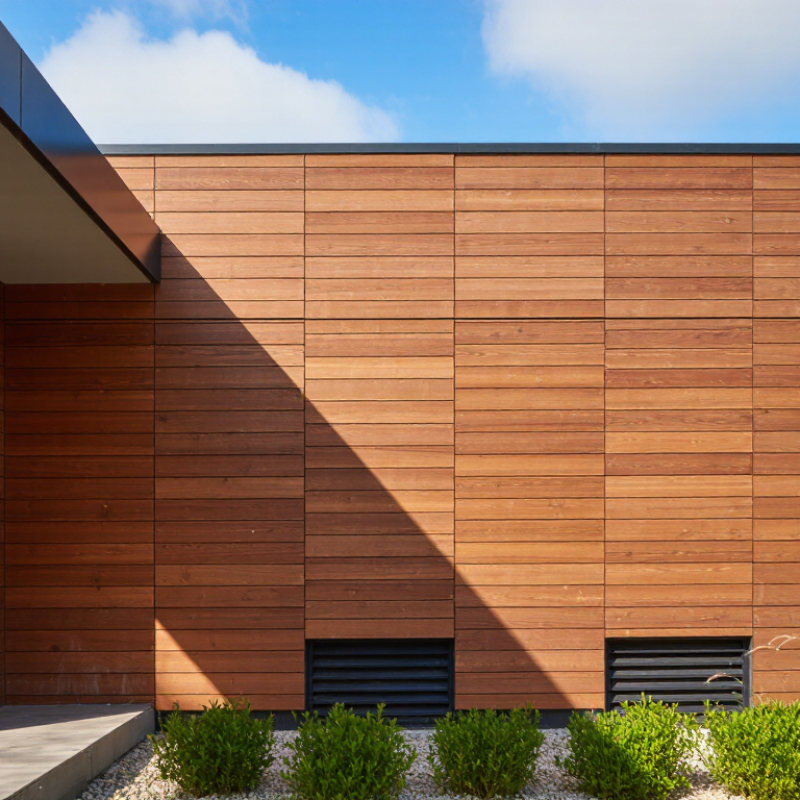
Choosing the best exterior wood sheet begins with identifying the sheet type, not the price. Exterior-grade plywood uses layered veneers, giving it good strength and relatively stable dimensions. It works well for wall cladding, soffits, and roof edges when properly sealed. However, exposed edges can absorb water quickly. I always inspect them before installation.
Oriented strand board, or OSB, is made from compressed wood strands and often offers consistent structural performance. It can be suitable for sheathing when its exposure rating matches the project. It is not permanently waterproof. Swollen edges reveal trouble. Treated plywood adds protection against decay, but treatment does not replace drainage, paint, or careful fastening. Marine-grade sheets resist water better, yet they may be unnecessary for ordinary exterior walls.
Core properties deserve close attention. Check thickness, panel span ratings, moisture resistance, surface quality, and edge condition. A 12-millimeter sheet may feel firm in a store but flex between widely spaced supports. That mistake is expensive. Leave the manufacturer’s recommended expansion gaps, especially in humid weather. Keep sheets raised above concrete, with airflow underneath. I have seen covered panels warp because “covered” was mistaken for “dry.” Inspect every panel for delamination, open knots, and crushed corners. One overlooked defect can become a visible failure after several rainy weeks.
| Exterior Wood Sheet Type | Relevant Classification or Standard | Typical Thickness | Core Properties | Moisture Performance | Structural Capability | Typical Exterior Applications | Important Limitations |
|---|---|---|---|---|---|---|---|
| Exterior Structural Plywood | EN 636-3 for exterior conditions; other regional structural plywood standards may apply | 9–25 mm | Cross-laminated veneers, good strength-to-weight ratio, relatively stable panels, clean cutting and fastening | Designed for exterior exposure when correctly manufactured and finished; exposed edges still require sealing | Suitable for many sheathing, bracing and panel applications when thickness, span and grade are correctly specified | Wall and roof sheathing, soffits, exterior cabinetry, doors and covered outdoor structures | Quality varies by veneer grade and face classification; it must not be assumed to resist insects or decay without preservative treatment |
| Marine Plywood | Often manufactured to marine plywood requirements such as BS 1088 or equivalent regional specifications | 6–25 mm | High-quality veneers, durable bonding, low core void content and good dimensional consistency | Very good resistance to repeated wetting when properly specified, sealed and maintained | Strong and stable, but design values must come from the product declaration or applicable structural standard | Boatbuilding, exposed joinery, high-quality outdoor furniture and demanding wet-area construction | Marine grade describes construction and bonding quality, not automatic resistance to termites, fungi or permanent immersion |
| Pressure-Treated Plywood | Must comply with the applicable treated-wood and structural plywood requirements in the installation region | 9–25 mm | Structural plywood with preservative chemicals introduced under pressure to improve biological durability | Better resistance to decay and insects than untreated panels, provided the treatment reaches the required retention and penetration | Can be structural if the untreated panel grade and treatment process are both approved for the intended use | Decking components, outdoor utility structures, landscaping, foundations and locations with increased decay risk | Cut edges and drilled areas may need field treatment; fasteners must be compatible with the preservative system |
| OSB/3 | EN 300, load-bearing boards for use in humid conditions | 9–22 mm | Engineered strands arranged in oriented layers; uniform panel structure and efficient material use | Suitable for humid service conditions, but not intended for unprotected, permanently wet exposure | Load-bearing in humid conditions when the declared span, thickness and edge-support requirements are followed | Roof decking, wall sheathing, floor substructure and protected exterior construction | Edges can swell after prolonged wetting; it requires adequate ventilation, drainage, joint gaps and weather protection |
| OSB/4 | EN 300, heavy-duty load-bearing boards for use in humid conditions | 12–25 mm | Higher mechanical performance than OSB/3, with oriented strands and strong directional properties | Performs in humid conditions but is not a substitute for a fully weatherproof exterior cladding system | High load-bearing capacity for demanding structural applications, subject to engineering design and product data | High-load roof and wall sheathing, platform floors and heavily loaded timber-frame assemblies | Usually heavier and more expensive than OSB/3; swelling and dimensional movement must still be controlled |
| Exterior-Grade MDF | Use only products specifically classified for exterior or severe-humidity service under the relevant local standard | 6–30 mm | Fine, smooth fiber surface; easy to machine, rout and paint; generally heavier than plywood | Special exterior formulations resist moisture better than standard MDF, but all faces and edges need a durable coating system | Generally non-structural unless a product is specifically tested and declared for structural use | Painted trim, signage, decorative panels, molded profiles and protected exterior furniture parts | Not suitable for structural sheathing by default; prolonged water exposure can still cause swelling and edge damage |
| Exterior-Grade Particleboard | Only use panels explicitly classified for exterior or severe-humidity conditions | 10–25 mm | Flat, economical engineered panel with relatively uniform surface and lower screw-holding performance than plywood | More vulnerable to edge swelling and loss of integrity than plywood when water enters the panel | Usually limited to non-structural or specifically engineered applications | Protected exterior cabinets, temporary installations and covered applications with complete surface sealing | Generally a poor choice for exposed cladding, wet ground contact or applications requiring high fastener strength |
Selection note: Always verify the panel’s declared service class, structural grade, thickness, formaldehyde class, preservative treatment, fire classification and installation instructions. “Exterior” does not mean that a wood sheet can remain permanently exposed to rain, standing water or ground contact without suitable detailing and protective finishes.
How to Choose the Best Exterior Wood Sheet in 2026?
Assessing Climate, Exposure, and Project-Specific Requirements
Exterior wood sheets should match the conditions around them, not just the drawing. In humid coastal areas, salt air and frequent rain can accelerate swelling, edge damage, and fastener corrosion. Choose a sheet rated for exterior exposure, with sealed edges and consistent bonding. In dry regions, strong sunlight may cause surface checking and uneven fading. A protective coating helps, but it needs regular inspection.
Think about how the panel will face weather. A south-facing wall receives harsher sunlight than a shaded northern wall. Roof overhangs reduce wetting. Open balconies do not. I usually inspect the site after rainfall, because drainage problems often reveal more than plans do. Water sitting near the lower edge is a warning. Small details matter.
Project use also changes the specification. A painted façade may need a smooth, stable face. A shed requires moisture tolerance and easy maintenance. Decorative screens need clean machining and enough thickness to resist bending. Check the manufacturer’s technical data, installation instructions, and local building requirements. Do not rely on appearance alone. I once selected a visually attractive panel without studying its edge treatment, and the lower corners deteriorated early. That mistake was avoidable. Leave room for maintenance, because real weather is rarely predictable.
Comparative screening of common sheet materials against climate moisture, UV exposure, structural use, and finishability.
Scores use a 1–5 comparative scale based on typical material characteristics. Exterior-bonded plywood is intended for repeated wetting, marine plywood is designed for demanding moisture exposure, and OSB/3 and OSB/4 are classified for humid conditions under EN 300. All wood sheets still require suitable sealing, detailing, and protection from prolonged direct weathering. Check the applicable local standard and product documentation before specification.
Exterior wood sheets must handle weight, rain, sunlight, and repeated temperature changes. Strength matters when sheets support roofing, cladding, or heavy wall fixtures. Look for consistent layers, tight bonding, and minimal voids along the edges. Thicker panels usually resist bending, but framing quality remains equally important. Moisture resistance is not waterproofing. Even exterior-rated plywood can swell when water sits on unsealed edges.
Durability depends on exposure, installation, and maintenance. On renovation projects, I have seen neglected cut edges deteriorate faster than the sheet surface. Seal every cut, drill hole, and exposed end before installation. Use corrosion-resistant fasteners and leave suitable drainage gaps behind the panels. A clean, dry surface also helps coatings adhere properly. No sheet stays perfect forever. I still underestimate how quickly splashback affects low wall sections.
Check the technical data sheet, not just the product label. Compare bending strength, panel thickness, bonding classification, and moisture performance. Hold a sample under light and inspect for gaps or uneven layers. Store sheets flat, raised above the ground, and protected from rain. Recheck painted surfaces each year, especially near gutters and windows. If the site faces strong coastal winds, ask a qualified professional to review the fixing pattern and local requirements.
Choosing an exterior wood sheet starts with standards, not appearance. Check its structural grade, thickness tolerance, and intended exposure rating. Requirements vary by region, so confirm local building guidance before ordering. Ask for test reports covering bending strength, bonding performance, and moisture resistance. Do not guess.
Treatment matters as much as the wood species. Sheets for exposed walls or roofing should resist decay, insects, and repeated wetting. Look for clearly stated preservative methods, treatment depth, and safe handling instructions.
Inspect the cut edges carefully. Unprotected edges can absorb water quickly, even when the face looks sealed. A small sample should feel firm, flat, and free from bubbling or open veneers.
Sustainability requires more than a green label. Check whether the timber comes from responsibly managed forests and whether the supplier can provide traceable certification documents. Consider service life, repairability, and disposal options. A durable sheet may create less waste than a cheaper replacement.
“ I once focused too heavily on price and overlooked uneven edges; installation took longer, and several pieces needed trimming. That mistake still influences my checks. Look for consistent layers, clean surfaces, and packaging that protects corners during delivery. Quality is visible in details, but documentation proves what the eyes cannot.
Choosing an exterior wood sheet in 2026 starts with total installed cost, not the lowest shelf price. A cheaper panel may require sealing, extra fasteners, or early replacement. Measure the wall area, then add about 10% for cutting waste. One 4-by-8-foot sheet covers 32 square feet before openings and trimming.
Moisture rating deserves careful attention. The USDA Forest Products Laboratory’s Wood Handbook reports approximately 12% equilibrium moisture content at 70°F and 65% relative humidity. Panels near wet ground or shaded walls can absorb more moisture.
Choose plywood or engineered sheathing specifically rated for permanent exterior exposure. The APA Engineered Wood Construction Guide warns that Exposure 1 panels are not intended for long-term weather exposure. That detail can prevent an expensive mistake.
Compare the delivered price, coating, transport, and labor. A heavier sheet may cost more to carry, yet reduce wall movement and repair risk. Ask for the panel grade, thickness, span rating, and installation instructions.
Keep receipts and record the batch information. It helps when defects appear later. I would not assume “water-resistant” means waterproof. That wording is often too vague.
A practical budget check is simple: price the sheet, protective treatment, waste, fasteners, and replacement risk together. Local humidity may change the best choice, even within the same budget.
We use cookies on our website to give you an improved browser experience. View our Privacy Policy for more information. Please make your selection to opt in or out of ALL cookies here: Accept or Decline
Do you consent to the use of ALL cookies?
901 2nd Court West
Birmingham, AL 35204
Sales: 866.481.4036
Logistics/Ops: 866.481.4036
2101 Dralle Road
University Park, IL 60466
Sales: 708.813.9070
Logistics/Ops: 708.235.4200
400 E. 13th Street
Little Rock, AR 72114
Sales: 866.760.5344
Logistics/Ops: 866.760.5344
225 Collins Road
Elkhart, IN 46515
Sales: 574.295.0214
Logistics/Ops: 574.607.4611
601 Berryman Pike
Tipton, IN 46072
Sales: 800.897.7591
Logistics/Ops: 800.897.7591
3900 Uvalda Street
Denver, CO 80239
Sales: 303.706.8000
Ops/Logistics: 303.576.8398
510 3rd Street E
Milan, IL 61264
Sales: 800.322.1052
Logistics/Ops: 800.322.1052
1660 E. Aurora
Des Moines, IA 50313
Sales: 800.671.1660
Logistics: 800.671.1660
86554 Gene Lasserre Blvd.
Yulee, FL 32097
Sales: 904.253.3060
Logistics/Ops: 904.225.3000
694 S.E. County Road 245
Lake City, FL 32025
Sales: 800.727.6706
Logistics/Ops: 386.752.7412
210 Neptune Road
Auburndale, FL 33823
Sales: 863.967.1131
Logistics/Ops: 863.777.9814
4601 McCoy Drive
Pensacola, FL 32503
Sales: 850.308.7030
Logistics/Ops: 850.434.5502
815 South 56th Street
Tampa, FL 33619
Sales: 813.302.1940
Logistics/Ops: 813.621.1352
200 Hosea Road
Lawrenceville, GA 30046
Sales: 770.953.7575
Logistics/Ops: 770.513.6000
Branch Product Guide
Branch Line Card
Moulding Offering
Cedar Offering
Column Offering
8173 Hwy. 165 North
Monroe, LA 71211
Sales: 800.256.4165
Logistics/Ops: 800.256.4165
508 Warren Avenue
Portland, ME 04103
Sales: 207.888.2331
Logistics/Ops: 207.797.6565
4300 Georgia Pacific Blvd.
Frederick, MD 21704
Sales: 301.798.7474
Logistics/Ops: 301.874.8000
419 Maple Street
Bellingham, MA 02019
Sales: 508.449.0535
Logistics/Ops: 508.966.5500
825 Buchanan Ave SW
Grand Rapids, MI 49507
Sales: 877.800.1180
Logistics/Ops: 616.278.0909
995 Pacific St. NW
Aitkin, MN 56431
Sales: 800.432.3727
Logistics/Ops: 218.212.7770
1102 Port Terminal Drive
Duluth, MN 55802
Sales: 800.951.9899
Logistics/Ops: 800.851.9899
9110 83rd Ave. North
Brooklyn Park, MN 55445
Sales: 763.425.0204
Logistics/Ops: 763.425.0204
910 E. Railroad Street
Long Beach, MS 39560
Sales: 866.535.4135
Logistics/Ops: 228.205.2400
1727 Warren Street
North Kansas City, MO 64116
Sales: 800.621.2611
Logistics/Ops: 800.621.2611
2123 North Golden
Springfield, MO 65803
Sales: 800.375.7891
Logistics/Ops: 800.375.7891
13860 Corp. Woods Trail
Bridgeton, MO 63044
Sales: 314.209.0800
Logistics/Ops: 314.209.0800
1109 South 19th Street
Omaha, NE 68108
Sales: 800.489.6637
Logistics/Ops: 800.489.6637
1 Luger Road
Denville, NJ 07834
Sales: 973-339-3539
Logistics/Ops: 973.625.1461
3720 Jeffrey Blvd.
Blasdell, NY 14219
Sales: 716.235.5989
Logistics/Ops: 716.825.6557
319 Yaphank Ave.
Yaphank, NY 11980
Sales: 631.358.5714
Logistics/Ops: 631.924.7401
3300 Parkside Drive
Charlotte, NC 28208
Sales: 800.839.2588
Logistics/Ops: 704.394.3172
1712 East D Street
Butner, NC 27509
Sales: 984.389.8200
Logistics/Ops: 919.575.3700
128 Foothills Drive
Statesville, NC 28687
Sales: 800.222.1414
Logistics/Ops: 704.394.3172
550 Munroe Falls Rd.
Tallmadge, OH 44278
Sales: 330.357.4506
Logistics/Ops: 330.794.1141
10347 Toebben Dr.
Independence, KY 41051
Sales: 859.298.3926
Logistics/Ops: 859.746.2250
450 N. MacArthur
Oklahoma City, OK 73127
Sales: 800.375.6025
Logistics/Ops: 800.375.6025
1680 North Aspen
Broken Arrow, OK 74012
Sales: 918.272.2212
Logistics/Ops: 918.272.2212
522 Bridge Street
Hunker, PA 15639
Sales: 878.217.2001
Logistics/Ops: 724.925.7285
4290 Atlanta Street
Charleston, SC 29418
Sales: 843.371.1420
Logistics/Ops: 843.554.8192
1040 S. Industrial Dr.
Erwin, TN 37650
Sales: 423.641.1005
Logistics/Ops: 423.742.5911
4287 Pilot Drive
Memphis, TN 38118
Sales: 901.365.2101
Logistics/Ops: 901.365.2101
700 Myatt Drive
Madison, TN 37115
Sales: 615.327.9547
Logistics/Ops: 629.777.4949
4747 Mark IV Parkway
Fort Worth, TX 76106
Sales: 866.323.5117
Logistics/Ops: 817.625.9091
6990 Market Avenue
El Paso, TX 79915
Sales: 915.778.6356
Logistics/Ops: 915.265.7200
2502 Wilson Road
Harlingen, TX 78552
Sales: 800.580.6711
Logistics/Ops: 800.580.6711
10,000 North Loop East
Houston, TX 77029
Sales: 713.921.1977
Logistics/Ops: 713.675.3544
702 East 44th St.
Lubbock, TX 79404
Sales: 866.454.6010
Logistics/Ops: 866.454.6010
535 N. WW White Road
San Antonio, TX 78219
Sales: 800.284.0488
Logistics/Ops: 210.333.8112
142 Pine Haven Shores Rd.
Shelburne, VT 05482
Sales: 802.800.2540
Logistics/Ops: 802.985.2512
4700 Bethlehem Road,
Richmond, VA 23230
Sales: 804.201.2400
Logistics/Ops: 804.342.1161
4516 N Barker Road
Spokane Valley, WA 99027
Phone: 509.892.9420
Toll free: 800.728.6157
8365 N. 76th Street
Milwaukee, WI 53223
Sales: 800.356.9245
Logistics/Ops: 800.356.9245
312 S. Chester Street
Sparta, WI 54656
Sales: 800.362.5864
Logistics/Ops: 800.362.5864
899 Grossman Drive
Schofield, WI 54476
Sales: 800.472.0017
Logistics/Ops: 800.472.0017
