
We use cookies on our website to give you an improved browser experience. View our Privacy Policy for more information. Please make your selection to opt in or out of ALL cookies here: Accept or Decline
Choosing scaffolding equipment in 2026 is not just a matter of comparing prices. The right system must suit the work, the site, and the people using it. A scaffold beside a brick façade faces different demands from one inside a busy warehouse. Small details matter: uneven ground, overhead obstructions, material loads, and how often workers need to move between levels.
Safety data gives this decision real weight. The U.S. Bureau of Labor Statistics’ Census of Fatal Occupational Injuries reported 1,069 construction deaths in 2022. OSHA’s review of that year’s data identified 395 construction fatalities involving falls, slips, or trips. These figures cover more than scaffold incidents, but they underline why access planning, stable foundations, guardrails, and competent inspection cannot be afterthoughts. A product label alone does not prove a setup is suitable.
This guide looks at practical selection factors: scaffold type, working height, load capacity, materials, site conditions, assembly needs, and maintenance. Check manufacturer documentation and have a qualified person assess the planned configuration. Requirements vary by task and location. No single scaffold fits every job. And a cheaper option may cost more in delays, repairs, or added controls. One honest limitation: even careful planning cannot remove every site risk. It can make those risks easier to recognize and manage.
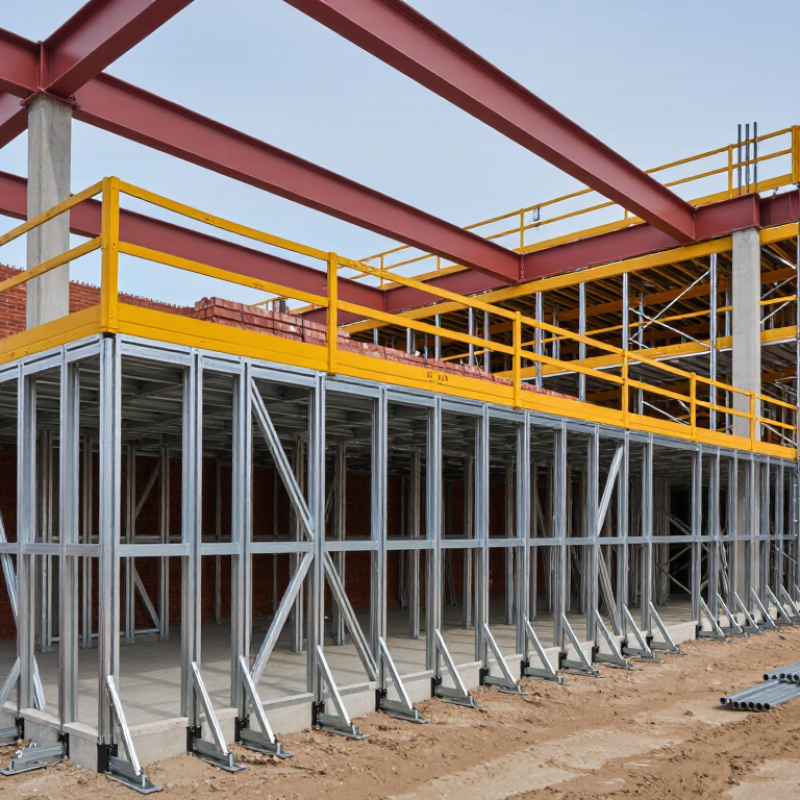
Before choosing scaffolding, define the work precisely. Record the platform height, work area, number of workers, and materials they will carry. A bricklaying crew needs a different platform capacity from a painter carrying light tools. Include the combined weight of people, equipment, and stored materials, then check that the system’s rated capacity covers it. Small details matter.
Next, inspect the actual site, not just the drawings. Note soft soil, sloped paving, drains, overhead obstructions, and narrow access routes. A loaded scaffold leg on a weak patch can settle unevenly. Then check the ground. Also consider wind exposure, rain, temperature, and how long the structure will remain in place. These conditions can affect stability and safe access. Have a qualified person assess the design, ties, foundations, and any planned changes.
One planning miss is easy to make: choosing equipment for the main task while overlooking how workers will reach it. Will they climb internally, move tools between levels, or pass materials through a restricted opening? These details shape the layout. I would revisit the plan after a site walk, because drawings rarely show every hose, doorway, or uneven slab. If the conditions change, pause and reassess rather than adapting the scaffold informally.
Choosing scaffolding starts with the work, not the equipment catalogue. Measure the working height, access route, ground conditions, and materials workers must carry. A narrow indoor repair may suit a mobile tower, while facade work often needs a longer, fixed platform. Check the required load rating against workers, tools, and stored materials.
Frame scaffolding is a practical option for repeated work along straightforward walls. System scaffolding offers more flexibility around corners, uneven elevations, and complex structures, but needs competent planning and assembly. Mobile towers move between nearby tasks on firm, level surfaces. Their convenience has limits: repositioning them with people or loose tools aboard can create serious hazards. Never assume a larger platform is automatically safer.
Suspended scaffolds can reach tall facades where ground-supported access is impractical, but they require suitable anchorage and careful inspection. That matters. Match the equipment to the task duration, site layout, and frequency of movement, then follow the manufacturer’s instructions and have a qualified person inspect the setup. I still find access planning easy to underestimate. A doorway, overhead obstruction, or soft patch of ground can change which scaffold is suitable. Check those details before delivery, not after the crew is waiting.
EN 12811 load classes provide a useful starting point for matching scaffold platforms to the work planned.
The chart shows the uniformly distributed platform load associated with each EN 12811 load class: class 1 is 0.75 kN/m², class 2 is 1.5 kN/m², class 3 is 2.0 kN/m², class 4 is 3.0 kN/m², class 5 is 4.5 kN/m², and class 6 is 6.0 kN/m². Choose a scaffold type and load class based on the task, materials, site conditions, and applicable regulations. These class values are not a substitute for checking the designed capacity of a specific scaffold.
Choosing scaffolding equipment in 2026 starts with the load it must safely support. Count workers, tools, stored materials, and the weight of the platform itself. Check the rated capacity in the equipment documentation, not just a sales description. Uneven loads and movement can add strain. Small details matter.
Material affects both handling and service life. Steel is sturdy but heavier to move; aluminum is lighter, though it still needs careful inspection for dents, cracks, or damaged joints. Consider site conditions, including moisture and frequent relocation. Corrosion or a bent frame can be easy to overlook in a busy work area. Inspect each component before use.
Compatibility deserves the same attention as capacity. Confirm that frames, braces, platforms, pins, and couplers are designed to work together. Matching dimensions alone does not prove a secure connection. Avoid combining parts when their specifications cannot be verified. Check the fit. A practical site review should compare the assembled setup with the manufacturer’s instructions and the actual ground conditions. Even a careful checklist can miss a loose pin or an unstable base, so pause and reassess whenever the setup changes.
| Selection Dimension | What to Check | Verified Guidance or Data | Practical Selection Tip |
|---|---|---|---|
| Required load capacity | Workers, tools, materials, stored items, and loads transferred to the platform | In the United States, OSHA requires each scaffold and scaffold component to support its own weight and at least four times the maximum intended load. This is a minimum regulatory requirement, not a substitute for a system’s rated capacity or engineering design. | Calculate the maximum intended load for each platform and bay. Confirm the permitted load from the applicable system documentation and do not exceed it. |
| Platform load class | Uniformly distributed platform load for systems classified under EN 12811-1 | EN 12811-1 load classes are: Class 1: 0.75 kN/m²; Class 2: 1.50 kN/m²; Class 3: 2.00 kN/m²; Class 4: 3.00 kN/m²; Class 5: 4.50 kN/m²; Class 6: 6.00 kN/m². | Choose a class that matches the planned work and materials. Check local requirements and the manufacturer’s instructions; a load class does not by itself confirm the capacity of every configuration. |
| Load distribution | Whether loads are spread across the platform or concentrated in one area | A uniformly distributed load rating does not automatically establish the safe capacity for a concentrated load, impact, hoist load, or load applied to one plank. | Keep materials within the specified storage area, avoid stacking heavy items in one spot, and get design guidance for concentrated, dynamic, or hoisted loads. |
| Frame and tube material | Steel or aluminum components, condition, corrosion protection, and system rating | Steel is generally heavier and commonly protected with paint, galvanizing, or another coating. Aluminum is generally lighter but has different strength and stiffness characteristics. Capacity depends on the complete component design, not material alone. | Compare documented system capacities, component weights, corrosion protection, and site conditions rather than assuming one material is always stronger or safer. |
| Platform material | Timber planks, metal decks, or prefabricated platform units | Platform strength depends on the product, span, support arrangement, condition, and applicable grading or product standard. Damaged, split, excessively worn, or altered platforms can be unsafe. | Use platforms intended for the scaffold system and specified span. Inspect before use and remove damaged or unapproved units from service. |
| System compatibility | Frames, braces, couplers, decks, guardrails, base components, and access parts | Components that look similar may have different dimensions, connection details, tolerances, or ratings. Mixing components from different systems can affect fit and structural performance. | Use components approved for the same system. Do not mix parts unless a qualified person confirms compatibility and the assembled scaffold is designed for the configuration. |
| Scaffold configuration | Height, bay length, lift spacing, ties, bracing, and support conditions | Capacity and stability depend on the assembled configuration and how the scaffold is supported, braced, and tied. A component rating alone does not establish the capacity of the complete structure. | Follow the system’s erection instructions and project design. Obtain qualified-person or engineering review where required, including for unusual heights or layouts. |
| Ground and base support | Soil or slab condition, sole boards, base plates, and settlement risk | Scaffold legs need firm, level support capable of carrying the imposed loads. Soft, sloped, excavated, or uneven ground can cause settlement or instability. | Assess the supporting surface, use suitable base plates and sole boards where required, and do not use unstable objects to level scaffold legs. |
| Access and fall protection | Safe access, guardrails, midrails, toe boards, and platform gaps | Applicable rules specify access and fall-protection requirements. For example, U.S. OSHA requirements vary by scaffold type and circumstances; there is no single rule that replaces checking the relevant regulation. | Plan access and edge protection before work begins. Verify that the selected system has the compatible components required by local regulations. |
| Weather and work environment | Wind exposure, rain, ice, temperature, chemicals, and nearby electrical hazards | Weather can affect footing, platform conditions, and scaffold stability. Conductive metal scaffolds also require careful clearance from energized power lines under applicable safety rules. | Follow site procedures and manufacturer limits, reassess conditions after severe weather, and maintain required electrical clearances. |
| Inspection and documentation | Inspection records, component identification, erection details, and load limits | Inspection and competent-person requirements depend on the jurisdiction and scaffold type. In the United States, OSHA requires scaffolds and scaffold components to be inspected for visible defects by a competent person before each work shift and after events that could affect structural integrity. | Keep assembly instructions and capacity information available at the site. Inspect before use, after relevant changes or events, and whenever damage or instability is suspected. |
Important: Load classes and regulatory requirements are not interchangeable. Confirm the applicable local standard, system documentation, scaffold configuration, and site-specific design before selecting or loading equipment.
When choosing scaffolding equipment in 2026, verify the rules for the country and worksite; requirements are not universal. In the United States, OSHA’s construction scaffold standard, 29 CFR 1926.451, generally requires scaffolds to support their own weight plus at least four times their maximum intended load. OSHA also requires fall protection for workers on scaffolds more than 10 feet above a lower level. Confirm that the selected system’s load rating, platform dimensions, guardrails, access, and compatible components suit the actual task.
Check the details on site. OSHA requires a competent person to inspect scaffolds before each work shift and after events that could affect their structural integrity. Look for secure base plates, locked wheels, fully seated pins, sound planking, and clear inspection records. OSHA’s scaffold-safety guidance estimates that scaffolding accidents cause about 4,500 injuries and 60 deaths each year. The figures are a reminder that small setup failures matter. Paperwork can look complete while one missing pin changes the risk.
Ask suppliers for current assembly instructions and load documentation, then compare them with the latest local requirements and project conditions. A scaffold near overhead lines, uneven ground, or changing weather may need additional controls. Don’t assume a familiar setup is safe. Have a qualified person review the assembled structure and workers’ fall-protection arrangements before use.
In 2026, choosing scaffolding equipment means looking beyond price and delivery speed. Ask suppliers for clear load ratings, compatible component lists, assembly instructions, and documented inspection procedures. Check that parts are traceable and replacement components are available. A supplier should answer technical questions plainly, not guess. Compare the proposed setup with the work height, ground conditions, and materials workers will carry. Details matter.
Assembly quality depends on the equipment and the people setting it up. Use trained workers and follow the manufacturer’s instructions and applicable local requirements. Before work begins, check that the base is firm and level, access is secure, and guardrails and ties are installed where required. A plank that rocks or a missing locking pin can be easy to overlook in a busy shift. Pause and correct it; do not improvise with mismatched parts.
Plan inspections before the scaffold arrives. A competent person should inspect it before use, at required intervals, and after changes or events that could affect stability, such as strong winds or an impact. Keep dated records of findings, repairs, and who approved the scaffold for use. Remove damaged components from service so they cannot drift back into the work area. Checklists help, though they are not a substitute for careful observation. Small gaps remain. A final walk-around often catches what paperwork misses.
We use cookies on our website to give you an improved browser experience. View our Privacy Policy for more information. Please make your selection to opt in or out of ALL cookies here: Accept or Decline
Do you consent to the use of ALL cookies?
901 2nd Court West
Birmingham, AL 35204
Sales: 866.481.4036
Logistics/Ops: 866.481.4036
2101 Dralle Road
University Park, IL 60466
Sales: 708.813.9070
Logistics/Ops: 708.235.4200
400 E. 13th Street
Little Rock, AR 72114
Sales: 866.760.5344
Logistics/Ops: 866.760.5344
225 Collins Road
Elkhart, IN 46515
Sales: 574.295.0214
Logistics/Ops: 574.607.4611
601 Berryman Pike
Tipton, IN 46072
Sales: 800.897.7591
Logistics/Ops: 800.897.7591
3900 Uvalda Street
Denver, CO 80239
Sales: 303.706.8000
Ops/Logistics: 303.576.8398
510 3rd Street E
Milan, IL 61264
Sales: 800.322.1052
Logistics/Ops: 800.322.1052
1660 E. Aurora
Des Moines, IA 50313
Sales: 800.671.1660
Logistics: 800.671.1660
86554 Gene Lasserre Blvd.
Yulee, FL 32097
Sales: 904.253.3060
Logistics/Ops: 904.225.3000
694 S.E. County Road 245
Lake City, FL 32025
Sales: 800.727.6706
Logistics/Ops: 386.752.7412
210 Neptune Road
Auburndale, FL 33823
Sales: 863.967.1131
Logistics/Ops: 863.777.9814
4601 McCoy Drive
Pensacola, FL 32503
Sales: 850.308.7030
Logistics/Ops: 850.434.5502
815 South 56th Street
Tampa, FL 33619
Sales: 813.302.1940
Logistics/Ops: 813.621.1352
200 Hosea Road
Lawrenceville, GA 30046
Sales: 770.953.7575
Logistics/Ops: 770.513.6000
Branch Product Guide
Branch Line Card
Moulding Offering
Cedar Offering
Column Offering
8173 Hwy. 165 North
Monroe, LA 71211
Sales: 800.256.4165
Logistics/Ops: 800.256.4165
508 Warren Avenue
Portland, ME 04103
Sales: 207.888.2331
Logistics/Ops: 207.797.6565
4300 Georgia Pacific Blvd.
Frederick, MD 21704
Sales: 301.798.7474
Logistics/Ops: 301.874.8000
419 Maple Street
Bellingham, MA 02019
Sales: 508.449.0535
Logistics/Ops: 508.966.5500
825 Buchanan Ave SW
Grand Rapids, MI 49507
Sales: 877.800.1180
Logistics/Ops: 616.278.0909
995 Pacific St. NW
Aitkin, MN 56431
Sales: 800.432.3727
Logistics/Ops: 218.212.7770
1102 Port Terminal Drive
Duluth, MN 55802
Sales: 800.951.9899
Logistics/Ops: 800.851.9899
9110 83rd Ave. North
Brooklyn Park, MN 55445
Sales: 763.425.0204
Logistics/Ops: 763.425.0204
910 E. Railroad Street
Long Beach, MS 39560
Sales: 866.535.4135
Logistics/Ops: 228.205.2400
1727 Warren Street
North Kansas City, MO 64116
Sales: 800.621.2611
Logistics/Ops: 800.621.2611
2123 North Golden
Springfield, MO 65803
Sales: 800.375.7891
Logistics/Ops: 800.375.7891
13860 Corp. Woods Trail
Bridgeton, MO 63044
Sales: 314.209.0800
Logistics/Ops: 314.209.0800
1109 South 19th Street
Omaha, NE 68108
Sales: 800.489.6637
Logistics/Ops: 800.489.6637
1 Luger Road
Denville, NJ 07834
Sales: 973-339-3539
Logistics/Ops: 973.625.1461
3720 Jeffrey Blvd.
Blasdell, NY 14219
Sales: 716.235.5989
Logistics/Ops: 716.825.6557
319 Yaphank Ave.
Yaphank, NY 11980
Sales: 631.358.5714
Logistics/Ops: 631.924.7401
3300 Parkside Drive
Charlotte, NC 28208
Sales: 800.839.2588
Logistics/Ops: 704.394.3172
1712 East D Street
Butner, NC 27509
Sales: 984.389.8200
Logistics/Ops: 919.575.3700
128 Foothills Drive
Statesville, NC 28687
Sales: 800.222.1414
Logistics/Ops: 704.394.3172
550 Munroe Falls Rd.
Tallmadge, OH 44278
Sales: 330.357.4506
Logistics/Ops: 330.794.1141
10347 Toebben Dr.
Independence, KY 41051
Sales: 859.298.3926
Logistics/Ops: 859.746.2250
450 N. MacArthur
Oklahoma City, OK 73127
Sales: 800.375.6025
Logistics/Ops: 800.375.6025
1680 North Aspen
Broken Arrow, OK 74012
Sales: 918.272.2212
Logistics/Ops: 918.272.2212
522 Bridge Street
Hunker, PA 15639
Sales: 878.217.2001
Logistics/Ops: 724.925.7285
4290 Atlanta Street
Charleston, SC 29418
Sales: 843.371.1420
Logistics/Ops: 843.554.8192
1040 S. Industrial Dr.
Erwin, TN 37650
Sales: 423.641.1005
Logistics/Ops: 423.742.5911
4287 Pilot Drive
Memphis, TN 38118
Sales: 901.365.2101
Logistics/Ops: 901.365.2101
700 Myatt Drive
Madison, TN 37115
Sales: 615.327.9547
Logistics/Ops: 629.777.4949
4747 Mark IV Parkway
Fort Worth, TX 76106
Sales: 866.323.5117
Logistics/Ops: 817.625.9091
6990 Market Avenue
El Paso, TX 79915
Sales: 915.778.6356
Logistics/Ops: 915.265.7200
2502 Wilson Road
Harlingen, TX 78552
Sales: 800.580.6711
Logistics/Ops: 800.580.6711
10,000 North Loop East
Houston, TX 77029
Sales: 713.921.1977
Logistics/Ops: 713.675.3544
702 East 44th St.
Lubbock, TX 79404
Sales: 866.454.6010
Logistics/Ops: 866.454.6010
535 N. WW White Road
San Antonio, TX 78219
Sales: 800.284.0488
Logistics/Ops: 210.333.8112
142 Pine Haven Shores Rd.
Shelburne, VT 05482
Sales: 802.800.2540
Logistics/Ops: 802.985.2512
4700 Bethlehem Road,
Richmond, VA 23230
Sales: 804.201.2400
Logistics/Ops: 804.342.1161
4516 N Barker Road
Spokane Valley, WA 99027
Phone: 509.892.9420
Toll free: 800.728.6157
8365 N. 76th Street
Milwaukee, WI 53223
Sales: 800.356.9245
Logistics/Ops: 800.356.9245
312 S. Chester Street
Sparta, WI 54656
Sales: 800.362.5864
Logistics/Ops: 800.362.5864
899 Grossman Drive
Schofield, WI 54476
Sales: 800.472.0017
Logistics/Ops: 800.472.0017
