
We use cookies on our website to give you an improved browser experience. View our Privacy Policy for more information. Please make your selection to opt in or out of ALL cookies here: Accept or Decline
Choosing Thermal Break Aluminum System Windows requires more than comparing frame color, glass thickness, or showroom appearance. The U.S. Department of Energy reports that windows can account for approximately 25–30% of residential heating and cooling energy use. This figure makes frame design a practical energy decision, not merely an architectural preference. A thermal break separates the interior and exterior aluminum sections with a low-conductivity polyamide barrier. It reduces conductive heat transfer and helps limit interior surface condensation.
Performance still depends on the complete window system. The frame, glazing, spacers, seals, drainage paths, and installation method must work together. National Fenestration Rating Council labels provide independently verified U-factor, solar heat gain coefficient, visible transmittance, and air-leakage information. These values allow fair comparisons between products. Lower U-factor generally indicates better insulation, while SHGC should match the climate, orientation, shading, and window size. Small details matter. A south-facing window in a hot climate may need different glass than a shaded northern elevation.
The International Energy Agency identifies buildings as responsible for roughly 30% of global final energy consumption, reinforcing the value of efficient building components. Yet no universal specification fits every project. That is the part many buying guides overlook. A high-performance frame cannot correct poor installation or unsuitable glass. Review tested performance data, thermal-bridge details, warranty terms, and local weather conditions before choosing. Ask for certification, not promises. Then examine how the window behaves at the sill, corner, and meeting rail. Real performance is often decided there.
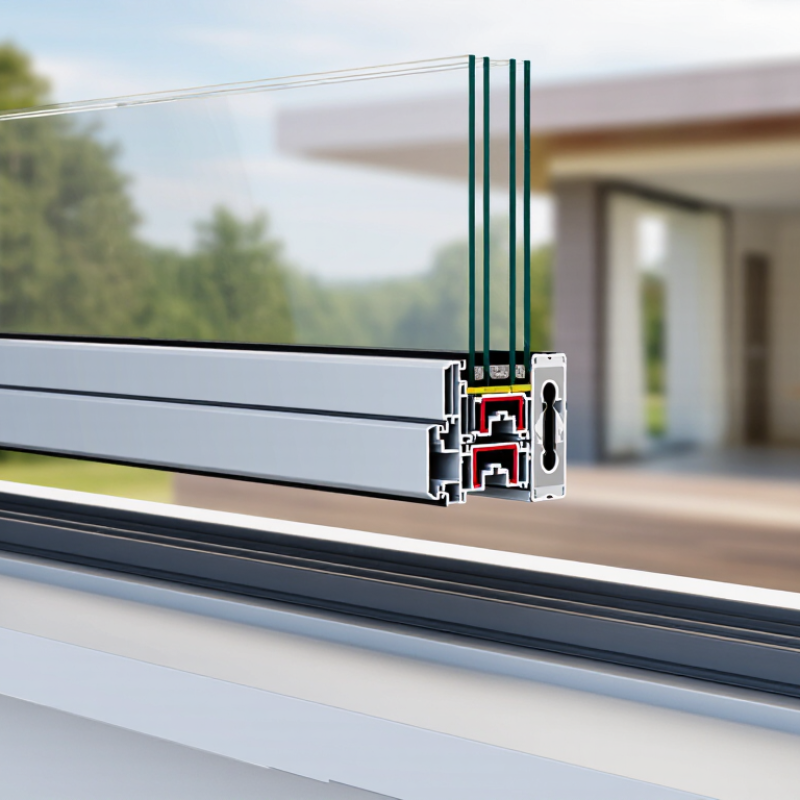
Understanding thermal break aluminum system windows starts with one detail: the metal frame is divided by an insulating polyamide strip. This barrier reduces direct heat flow through the aluminum. In a cold room, the inner frame should feel less icy near the glass edge. In a hot climate, it can limit heat entering around the sash. That difference is practical, not merely promotional. During site checks, I examine frame depth, gasket compression, corner joints, and drainage paths. A strong profile can still perform poorly when installation leaves small gaps. Air leakage is often the quiet problem.
When choosing a system, compare whole-window performance rather than aluminum thickness alone. Check U-value, air leakage, water resistance, and tested wind pressure. Lower U-values generally indicate better insulation, but the glass specification matters greatly. Double glazing may suit mild conditions. Low-emissivity coatings and gas-filled cavities can improve comfort in harsher climates. Ask for test reports, installation details, and maintenance guidance. Reliable documentation matters.
I once focused too much on frame appearance. That was a mistake. A slim profile looked elegant, yet its drainage design needed more attention. Check the sill after rain. Listen for rattling during strong wind. Also examine hardware adjustment access, because seals may need service over time. Thermal breaks help, but they cannot correct poor glass, careless fitting, or weak surrounding walls. Real performance depends on the complete opening.
| Selection Dimension | What to Check | Practical Reference Data | Recommended Choice |
|---|---|---|---|
| Thermal Break Material | Look for a continuous, mechanically secured insulating strip between the interior and exterior aluminum sections. | Polyamide is commonly used because its thermal conductivity is much lower than aluminum. Typical thermal-break widths are approximately 14–34 mm, depending on the system. | Choose a continuous thermal break sized for the project’s climate, window depth, and required U-factor. |
| Whole-Window U-Factor | Check the complete tested window, including frame, sash, spacer, glazing, and seals—not only the center-of-glass value. | A whole-window U-factor of about 1.4–2.0 W/m²·K is commonly considered a strong range for many energy-efficient designs. Lower values indicate better insulation. | Use the lowest practical U-factor that meets the local energy code and project budget. |
| Glazing Configuration | Compare single, double, or triple glazing, glass thickness, cavity width, coating, and gas filling. | Double glazing generally provides better insulation than single glazing. Triple glazing can reduce heat transfer further but adds weight, depth, and cost. | Use double glazing for many moderate climates; consider triple glazing for cold climates or highly insulated buildings. |
| Low-Emissivity Coating | Confirm the coating location and whether it is optimized for heating, cooling, or mixed climates. | Low-e coatings reduce infrared heat transfer while allowing visible daylight to pass through. Performance varies by coating type and glass arrangement. | Select a coating based on orientation, local solar exposure, heating demand, and cooling demand. |
| Solar Heat Gain Coefficient | Review SHGC on a scale from 0 to 1. It indicates the fraction of incident solar energy entering through the window. | Typical energy-efficient selections may fall around 0.25–0.40, but the ideal value depends strongly on climate and window orientation. | Choose a lower SHGC for hot, sunny exposures and a moderate or higher SHGC where useful winter solar gain is desired. |
| Air Leakage | Check the tested air-leakage rate for the complete operable window and the test pressure used. | Lower air leakage improves comfort and reduces uncontrolled energy loss. A project target of approximately 0.3–0.5 L/s·m² at 75 Pa is a useful high-performance reference. | Prioritize low leakage, continuous gaskets, reliable corner joints, and correctly installed perimeter seals. |
| Water Penetration Resistance | Review the water test pressure and confirm that the drainage paths, weep holes, gaskets, and sill design are properly detailed. | Required performance depends on building height, exposure, façade design, local rainfall, and wind-driven rain conditions. | Specify a tested water-resistance level suitable for the site rather than relying only on profile appearance. |
| Wind Load Capacity | Confirm design pressure, positive and negative pressure ratings, sash size limits, mullion strength, and anchoring requirements. | The required pressure is project-specific and depends on wind speed, building height, terrain, location, and exposure category. | Use project-calculated wind pressures and request structural calculations for large or high-level windows. |
| Frame Depth and Profile Design | Compare frame depth, glazing pocket, drainage design, reinforcement space, and compatibility with wall construction. | Deeper profiles can accommodate wider thermal breaks, thicker glazing, stronger reinforcement, and improved drainage. | Select a profile that matches the glass thickness, structural span, insulation zone, and installation method. |
| Spacer and Edge-of-Glass Design | Check whether the insulating-glass spacer is thermally improved and properly sealed. | Warm-edge spacers generally reduce edge heat loss and interior condensation risk compared with highly conductive metal spacers. | Use a compatible warm-edge spacer where condensation control and perimeter thermal performance are important. |
| Condensation Control | Evaluate interior surface temperatures, indoor humidity, exterior temperature, glazing, spacer, and frame geometry. | Thermal breaks reduce cold bridging, but they cannot eliminate condensation under all combinations of low outdoor temperature and high indoor humidity. | Use thermal modeling or condensation analysis for cold climates and high-humidity interiors. |
| Acoustic Performance | Check tested sound-insulation ratings and the complete assembly, including glass, frame, seals, and installation joints. | Many residential window assemblies achieve approximately 30–40 dB sound reduction, while the actual result depends mainly on glazing and airtightness. | Use laminated, asymmetric, or thicker insulating glass where traffic or urban noise is a concern. |
| Hardware and Operating Type | Compare casement, tilt-and-turn, sliding, fixed, and folding configurations for sealing, ventilation, size, and maintenance. | Compression-sealed operating types typically offer better air tightness than many sliding types, while sliding windows can provide convenient operation and space efficiency. | Choose the operating type according to ventilation needs, accessibility, weather exposure, and required air leakage. |
| Testing and Documentation | Request current test reports for thermal transmittance, air leakage, water resistance, wind pressure, and acoustic performance where applicable. | Test values are meaningful only when the tested size, glazing, configuration, and installation conditions match the proposed project. | Compare independently verified whole-window data and confirm that the tested assembly matches the final specification. |
| Installation Compatibility | Review sill flashing, perimeter insulation, air barriers, drainage, fasteners, tolerances, and interfaces with the wall system. | Poor installation can significantly reduce the thermal, air, and water performance measured in laboratory testing. | Select a system with clear installation details and coordinate the window with the building’s air, water, and thermal-control layers. |
| Maintenance and Service Life | Assess coating durability, gasket replacement, drainage cleaning, hardware adjustment, and availability of compatible spare parts. | Aluminum is durable and corrosion-resistant when properly finished, but seals, hardware, drainage paths, and moving components require periodic inspection. | Choose a system with accessible maintenance points, replaceable seals, and clear cleaning and service procedures. |
Note: The reference ranges are general design guidance. Final window performance should be selected from project-specific calculations, applicable energy codes, local climate conditions, and verified whole-window test data.
Choosing thermal break aluminum system windows starts with the building’s actual performance requirements. A comfortable office needs more than a slim frame and attractive finish. Check the local climate, window orientation, room use, and expected occupancy. South-facing glass may receive intense afternoon heat, while north-facing openings can lose warmth during winter.
Measure thermal performance through U-value, solar heat gain coefficient, and air-tightness ratings. A lower U-value generally means better insulation. However, one number never tells the complete story. Glass, spacers, seals, frame depth, and installation quality work together. Poor perimeter sealing can reduce the benefit of an excellent window system. It happens more often than many project teams expect.
Acoustic performance also matters near airports, traffic routes, or mechanical equipment. Request tested data from recognized laboratories, not only sales descriptions.
During site visits, inspect corner joints and drainage paths closely. Small gaps can create noticeable drafts and water problems.
Tips: Match the specification to each elevation instead of using one glass type everywhere. Confirm test conditions and product dimensions. Ask how the system performs after repeated opening cycles. Review condensation risk at room corners and around metal fixings. A mock-up can reveal issues early, although it adds time and cost. That trade-off may be worthwhile. Select installers with documented experience, clear inspection procedures, and reliable after-sales support. Performance should be verified on site, not simply promised on paper.
Frame design affects both comfort and performance. Casement windows usually seal tightly because their sashes press against the gasket. Sliding windows offer convenient operation, but their track design may allow more air leakage. Fixed panels provide strong insulation when ventilation is unnecessary. Check the frame’s thermal break carefully. A continuous polyamide strip should separate the inner and outer aluminum sections. Thin, interrupted, or poorly connected strips can create cold bridges. Small details matter.
Glass selection should match the room and local climate. Double glazing may suit moderate conditions, while triple glazing can improve comfort in colder areas. Low-emissivity coatings reduce heat transfer without making the room feel dark. Warm-edge spacers help limit condensation around the glass perimeter. Ask for U-value and solar heat gain data, not vague claims. My first assumption was that thicker glass always performed better. It did not. The spacer, coating, gas fill, and installation often changed the result more dramatically.
Tips: Inspect a corner sample before ordering. Look for clean thermal-break joints and firm gasket contact. Confirm whether the reported U-value covers the whole window, not only the glass. Consider orientation, too. South-facing windows may need solar control, while shaded rooms may benefit from higher light transmission. Request independent test records when possible. Even excellent frames can perform poorly after careless installation. I have seen small perimeter gaps cause noticeable drafts. That detail is easy to miss.
Installation details often decide whether a thermal break window performs as promised. The U.S. Department of Energy reports that windows can cause 25–30% of residential heating and cooling energy use. A small frame gap can waste more energy than expected. Check the sill pan, perimeter insulation, drainage paths, and interior air seal. ASTM E2112 provides recognized guidance for exterior window installation. Ask the installer to show the sealing sequence, not only the finished surface.
Certifications add measurable evidence. The NFRC label reports U-factor, solar heat gain coefficient, visible transmittance, and air leakage. Compare the tested values with your climate and building orientation. A low U-factor helps in cold weather, while a suitable SHGC can limit summer heat. Look for tested water resistance and structural performance under relevant standards. Factory certificates are useful, but they do not replace site inspection. I have seen attractive certificates fail to explain installation limits.
Maintenance should be planned before purchase. Inspect gaskets, drainage holes, corner joints, and hardware at least twice yearly. Remove dust from tracks with a soft brush, then check whether water exits freely. Do not drill extra holes into the thermal break frame. That mistake can interrupt drainage and reduce durability. The U.S. National Fenestration Rating Council also warns that ratings apply to specific product configurations. Replacing glass or hardware may change performance. Keep the original test documents and maintenance records. Small oversights become expensive.
Choosing a thermal break aluminum system window supplier requires more than comparing unit prices. Ask how the supplier controls aluminum profiles, polyamide strips, gaskets, glass, and hardware. A reliable supplier should provide traceable material records and current performance test reports. Check thermal transmittance, air leakage, water resistance, wind pressure, and acoustic data. These figures should match your climate and building design, not a generic catalogue.
Experience appears in details. Ask for project references with similar window sizes, exposure, and installation conditions. Review shop drawings, corner samples, drainage paths, and reinforcement methods before production. A technically capable supplier will explain tolerances and suggest practical changes when a design is risky. Request a clear schedule covering sampling, approval, fabrication, packing, delivery, and site support. Delays often begin with unclear approvals.
Evaluate total project value, not only the purchase order. Include freight, unloading, storage, installation labor, sealants, replacement parts, maintenance, and possible rework. A cheaper system may require extra site trimming or frequent adjustments. That saving may disappear. Ask about warranty scope, response time, spare hardware, and service after handover. Compare ten-year operating costs, although estimates remain imperfect. Real buildings behave differently. Leave room for uncertainty. The best supplier is not always the lowest bidder. It is the one that documents assumptions, accepts scrutiny, and controls risk from drawing to operation.
A supplier should be evaluated using a balanced, project-specific scorecard rather than initial price alone. The model below allocates 100 points across thermal performance, weather tightness, durability, installation quality, service capability, and long-term cost.
The weighting is a supplier-neutral planning framework. Confirm actual U-values, air leakage, water resistance, structural performance, warranties, and lifecycle costs against the project specification and applicable standards such as EN 12207, EN 12208, EN ISO 10077-1, or ASTM E283.
We use cookies on our website to give you an improved browser experience. View our Privacy Policy for more information. Please make your selection to opt in or out of ALL cookies here: Accept or Decline
Do you consent to the use of ALL cookies?
901 2nd Court West
Birmingham, AL 35204
Sales: 866.481.4036
Logistics/Ops: 866.481.4036
2101 Dralle Road
University Park, IL 60466
Sales: 708.813.9070
Logistics/Ops: 708.235.4200
400 E. 13th Street
Little Rock, AR 72114
Sales: 866.760.5344
Logistics/Ops: 866.760.5344
225 Collins Road
Elkhart, IN 46515
Sales: 574.295.0214
Logistics/Ops: 574.607.4611
601 Berryman Pike
Tipton, IN 46072
Sales: 800.897.7591
Logistics/Ops: 800.897.7591
3900 Uvalda Street
Denver, CO 80239
Sales: 303.706.8000
Ops/Logistics: 303.576.8398
510 3rd Street E
Milan, IL 61264
Sales: 800.322.1052
Logistics/Ops: 800.322.1052
1660 E. Aurora
Des Moines, IA 50313
Sales: 800.671.1660
Logistics: 800.671.1660
86554 Gene Lasserre Blvd.
Yulee, FL 32097
Sales: 904.253.3060
Logistics/Ops: 904.225.3000
694 S.E. County Road 245
Lake City, FL 32025
Sales: 800.727.6706
Logistics/Ops: 386.752.7412
210 Neptune Road
Auburndale, FL 33823
Sales: 863.967.1131
Logistics/Ops: 863.777.9814
4601 McCoy Drive
Pensacola, FL 32503
Sales: 850.308.7030
Logistics/Ops: 850.434.5502
815 South 56th Street
Tampa, FL 33619
Sales: 813.302.1940
Logistics/Ops: 813.621.1352
200 Hosea Road
Lawrenceville, GA 30046
Sales: 770.953.7575
Logistics/Ops: 770.513.6000
Branch Product Guide
Branch Line Card
Moulding Offering
Cedar Offering
Column Offering
8173 Hwy. 165 North
Monroe, LA 71211
Sales: 800.256.4165
Logistics/Ops: 800.256.4165
508 Warren Avenue
Portland, ME 04103
Sales: 207.888.2331
Logistics/Ops: 207.797.6565
4300 Georgia Pacific Blvd.
Frederick, MD 21704
Sales: 301.798.7474
Logistics/Ops: 301.874.8000
419 Maple Street
Bellingham, MA 02019
Sales: 508.449.0535
Logistics/Ops: 508.966.5500
825 Buchanan Ave SW
Grand Rapids, MI 49507
Sales: 877.800.1180
Logistics/Ops: 616.278.0909
995 Pacific St. NW
Aitkin, MN 56431
Sales: 800.432.3727
Logistics/Ops: 218.212.7770
1102 Port Terminal Drive
Duluth, MN 55802
Sales: 800.951.9899
Logistics/Ops: 800.851.9899
9110 83rd Ave. North
Brooklyn Park, MN 55445
Sales: 763.425.0204
Logistics/Ops: 763.425.0204
910 E. Railroad Street
Long Beach, MS 39560
Sales: 866.535.4135
Logistics/Ops: 228.205.2400
1727 Warren Street
North Kansas City, MO 64116
Sales: 800.621.2611
Logistics/Ops: 800.621.2611
2123 North Golden
Springfield, MO 65803
Sales: 800.375.7891
Logistics/Ops: 800.375.7891
13860 Corp. Woods Trail
Bridgeton, MO 63044
Sales: 314.209.0800
Logistics/Ops: 314.209.0800
1109 South 19th Street
Omaha, NE 68108
Sales: 800.489.6637
Logistics/Ops: 800.489.6637
1 Luger Road
Denville, NJ 07834
Sales: 973-339-3539
Logistics/Ops: 973.625.1461
3720 Jeffrey Blvd.
Blasdell, NY 14219
Sales: 716.235.5989
Logistics/Ops: 716.825.6557
319 Yaphank Ave.
Yaphank, NY 11980
Sales: 631.358.5714
Logistics/Ops: 631.924.7401
3300 Parkside Drive
Charlotte, NC 28208
Sales: 800.839.2588
Logistics/Ops: 704.394.3172
1712 East D Street
Butner, NC 27509
Sales: 984.389.8200
Logistics/Ops: 919.575.3700
128 Foothills Drive
Statesville, NC 28687
Sales: 800.222.1414
Logistics/Ops: 704.394.3172
550 Munroe Falls Rd.
Tallmadge, OH 44278
Sales: 330.357.4506
Logistics/Ops: 330.794.1141
10347 Toebben Dr.
Independence, KY 41051
Sales: 859.298.3926
Logistics/Ops: 859.746.2250
450 N. MacArthur
Oklahoma City, OK 73127
Sales: 800.375.6025
Logistics/Ops: 800.375.6025
1680 North Aspen
Broken Arrow, OK 74012
Sales: 918.272.2212
Logistics/Ops: 918.272.2212
522 Bridge Street
Hunker, PA 15639
Sales: 878.217.2001
Logistics/Ops: 724.925.7285
4290 Atlanta Street
Charleston, SC 29418
Sales: 843.371.1420
Logistics/Ops: 843.554.8192
1040 S. Industrial Dr.
Erwin, TN 37650
Sales: 423.641.1005
Logistics/Ops: 423.742.5911
4287 Pilot Drive
Memphis, TN 38118
Sales: 901.365.2101
Logistics/Ops: 901.365.2101
700 Myatt Drive
Madison, TN 37115
Sales: 615.327.9547
Logistics/Ops: 629.777.4949
4747 Mark IV Parkway
Fort Worth, TX 76106
Sales: 866.323.5117
Logistics/Ops: 817.625.9091
6990 Market Avenue
El Paso, TX 79915
Sales: 915.778.6356
Logistics/Ops: 915.265.7200
2502 Wilson Road
Harlingen, TX 78552
Sales: 800.580.6711
Logistics/Ops: 800.580.6711
10,000 North Loop East
Houston, TX 77029
Sales: 713.921.1977
Logistics/Ops: 713.675.3544
702 East 44th St.
Lubbock, TX 79404
Sales: 866.454.6010
Logistics/Ops: 866.454.6010
535 N. WW White Road
San Antonio, TX 78219
Sales: 800.284.0488
Logistics/Ops: 210.333.8112
142 Pine Haven Shores Rd.
Shelburne, VT 05482
Sales: 802.800.2540
Logistics/Ops: 802.985.2512
4700 Bethlehem Road,
Richmond, VA 23230
Sales: 804.201.2400
Logistics/Ops: 804.342.1161
4516 N Barker Road
Spokane Valley, WA 99027
Phone: 509.892.9420
Toll free: 800.728.6157
8365 N. 76th Street
Milwaukee, WI 53223
Sales: 800.356.9245
Logistics/Ops: 800.356.9245
312 S. Chester Street
Sparta, WI 54656
Sales: 800.362.5864
Logistics/Ops: 800.362.5864
899 Grossman Drive
Schofield, WI 54476
Sales: 800.472.0017
Logistics/Ops: 800.472.0017
