We use cookies on our website to give you an improved browser experience. View our Privacy Policy for more information. Please make your selection to opt in or out of ALL cookies here: Accept or Decline
Choosing a reliable 316 Stainless Steel Plate Supplier requires more than comparing prices. The supplier must prove material quality, traceability, and delivery consistency. A polished website proves little. Heat numbers, mill test certificates, inspection records, and clear technical answers matter more.
John C. Lippold, a recognized stainless-steel welding specialist, has stated, “Material selection must consider service conditions, fabrication, and performance together.” This principle applies directly to supplier evaluation. A dependable supplier should explain 316 and 316L differences, confirm chemical composition, and identify whether the plate meets ASTM or EN requirements. Ask for the original certificate, not a casual spreadsheet. Check the heat number against the plate markings.
Look closely at practical details. Are thickness tolerances clearly listed? Is the surface free from deep scratches, edge cracks, and transport damage? Can the supplier provide PMI testing when corrosion resistance is critical? Does the packing protect brushed or polished surfaces during shipment? These questions reveal experience quickly.
A reliable 316 Stainless Steel Plate Supplier should also communicate honestly when stock is unavailable. Unrealistic promises may create expensive delays later. Delivery history, inspection capacity, and responsive after-sales support deserve equal attention. Still, no checklist is perfect. Certificates can be misunderstood, and visual inspection can miss internal problems. Independent verification may be worthwhile for pressure equipment, marine structures, or chemical processing projects. The cheapest offer may look attractive today. It may become the costliest choice after rework, rejected plates, or interrupted production. Reliable sourcing is not about finding a perfect supplier. It is about reducing avoidable uncertainty.
How to Find a Reliable 316 Stainless Steel Plate Supplier?
Define the Required 316 Stainless Steel Plate Specifications
Before contacting a supplier, define the plate’s working conditions clearly. Identify whether you need 316 or 316L stainless steel. The difference can affect welding performance and corrosion resistance. State the required thickness, width, length, and quantity. Include the expected dimensional tolerance. Small errors can cause serious fitting problems during fabrication.
Specify the surface finish, such as hot-rolled, pickled, or polished. Mention whether the plate will face saltwater, chemicals, high temperatures, or outdoor exposure. I have seen buyers describe only “marine-grade steel,” which is too vague for accurate quotations. Request material certificates, heat numbers, chemical composition, mechanical test results, and inspection records. These documents help verify traceability and technical consistency. Also confirm the applicable material standard before comparing suppliers. A low price may reflect missing tests or wider tolerances.
Tips: Prepare a one-page specification sheet. Add a simple drawing when shape or hole locations matter. Ask the supplier to confirm every requirement in writing. Check sample documents carefully. They should match the ordered grade and dimensions. Do not overlook packaging, edge protection, and delivery conditions. I once underestimated packaging needs, and minor surface marks created avoidable rework. Your specifications may still need revision after receiving engineering feedback. That is normal. Clear details make supplier evaluation more reliable.
The chart summarizes the ASTM A240 Type 316 chemical composition limits by weight percent. When evaluating a supplier, confirm that the mill test certificate matches the required grade, thickness, surface finish, dimensional tolerances, and applicable standard.
A reliable 316 stainless steel plate supplier should prove quality through current, verifiable certifications. ISO’s 2022 Survey recorded more than 1.2 million ISO 9001 certificates worldwide. However, certification numbers alone do not guarantee consistent plate quality. Check the certificate scope, site address, expiry date, and accredited certification body. The scope should cover stainless steel manufacturing, not only office administration.
Ask for mill test certificates linked to each heat number. For 316 plate, review chromium, nickel, and molybdenum results against ASTM A240, ASME SA-240, or EN 10088 requirements. The document should also show tensile strength, yield strength, elongation, thickness, and heat-treatment condition.
Traceability matters. A plate without a matching heat number is difficult to investigate later.
Production standards should include calibrated testing equipment, controlled furnace records, and documented inspection procedures. Request evidence of surface inspection, dimensional checks, and ultrasonic testing when the application requires it. In my experience, suppliers often provide attractive certificates but weak traceability records. That is a warning sign. Verify the report directly with the issuing body when possible. ISO’s 2022 Survey also lists more than 560,000 ISO 14001 certificates, yet environmental certification does not replace material testing. I would not accept a generic certificate for every shipment. Small details expose large gaps.
How to Find a Reliable 316 Stainless Steel Plate Supplier?
A reliable supplier should connect every 316 plate to its original heat number. That number must appear on the plate, packing list, and material certificate. Request an EN 10204 3.1 certificate, not a generic compliance statement. It should show chemical composition, mechanical results, plate dimensions, and manufacturing route. Verify that the certificate matches the heat number, product thickness, and purchase specification. The International Stainless Steel Forum reported 58.4 million tonnes of stainless steel production in 2023. This scale makes disciplined identification essential, especially when plates move through several warehouses.
Testing procedures deserve close attention. Ask whether chemistry is verified by laboratory analysis or optical emission spectrometry. Handheld X-ray fluorescence is useful for alloy screening, but it cannot reliably measure carbon. For 316 stainless steel, carbon control affects weldability and grade confirmation. Review tensile testing against ASTM A370 and product requirements under ASTM A240/A240M. For demanding service, discuss intergranular corrosion testing under ASTM A262. Inspection should cover surface defects, thickness mapping, flatness, and marking quality. Request calibration records for test equipment.
Do not trust paperwork alone.
A certificate can contain transcription errors. I would compare three items: the plate marking, the test report, and the purchase order. Independent inspection can witness sampling and verify records before shipment. Suppliers should explain how nonconforming plates are quarantined, corrected, and documented. Clear answers matter more than polished brochures.
| Assessment Dimension | What to Verify | Recommended Evidence | Typical Acceptance Benchmark | Risk if Not Verified | Assessment Status |
|---|---|---|---|---|---|
| Material Grade and Standard | Confirm that the plate is identified as 316 or 316L stainless steel and that the applicable product standard is clearly stated. | Purchase specification, material certificate, product marking, and applicable standard reference. | Grade designation and product standard must match the purchase order and intended application. | Incorrect alloy chemistry, unsuitable corrosion resistance, or non-compliance with project requirements. | Required |
| Heat Number Traceability | Check whether every plate, bundle, or clearly defined plate group can be traced back to a specific melting heat. | Heat number on plate or tag, packing list, test certificate, and traceability register. | The heat number should remain legible and consistent across the plate, certificate, and shipping documents. | Loss of material identity and inability to link test results to the supplied plate. | Critical |
| Material Test Certificate | Review whether the certificate includes heat number, product dimensions, chemical composition, mechanical properties, delivery condition, and test results. | Manufacturer-issued certificate reviewed against the purchase order and inspection plan. | All mandatory fields are complete, internally consistent, signed or electronically validated, and traceable to the supplied material. | Unverified claims regarding composition, strength, heat treatment, or product conformity. | Critical |
| Chemical Composition | Verify chromium, nickel, molybdenum, carbon, manganese, silicon, phosphorus, sulfur, nitrogen, and iron balance as applicable. | Heat analysis and, where specified, product analysis recorded on the material certificate. | Reported values must fall within the limits of the specified material standard. 316L generally requires low carbon content, commonly not exceeding 0.03% by mass under applicable standards. | Reduced corrosion resistance, sensitization risk after welding, or use of an incorrect alloy. | Critical |
| Positive Material Identification | Determine whether alloy verification is performed using a suitable handheld or laboratory-based method, such as X-ray fluorescence, when required. | PMI procedure, instrument calibration record, test map, and individual or batch test results. | Results should distinguish the specified stainless steel grade from similar grades and be linked to the relevant heat or plate identification. | Mixing of 304, 316, 316L, or other stainless steel grades in the same delivery. | Recommended |
| Mechanical Testing | Review tensile strength, yield strength, elongation, and hardness results where required by the applicable standard or project specification. | Tensile test report, hardness report, specimen orientation, sampling location, and test method. | Results must satisfy the specified standard and should identify the test specimen and associated heat number. | Unexpected forming, welding, or service performance and possible structural non-conformity. | Required by Specification |
| Ultrasonic Examination | Confirm whether internal discontinuity testing is required for the plate thickness, service condition, or project class. | Ultrasonic testing procedure, operator qualification, equipment calibration, scan coverage, and examination report. | Acceptance level, scanning coverage, and reporting method should be defined before testing and applied consistently. | Undetected laminations or internal defects that may affect fabrication and service reliability. | Project-Specific |
| Dimensions and Thickness | Measure thickness, length, width, flatness, squareness, and edge condition using calibrated equipment. | Dimensional inspection report, calibrated gauge records, measurement locations, and approved tolerance reference. | Measurements must comply with the dimensional tolerances stated in the applicable product standard or purchase specification. | Cutting losses, fit-up problems, fabrication delays, or rejection at incoming inspection. | Required |
| Surface Condition | Inspect for corrosion, pitting, cracks, laminations, deep scratches, scale, contamination, and unacceptable grinding marks. | Visual inspection report, photographs, surface finish designation, and non-conformance records if applicable. | Surface condition and finish must match the ordered finish and contain no defects beyond the agreed acceptance criteria. | Reduced corrosion performance, additional finishing work, and premature rejection. | Required |
| Heat Treatment and Delivery Condition | Confirm whether the plate was supplied in the required solution-annealed or other specified condition. | Heat-treatment record, certificate statement, furnace identification, and applicable temperature or process information. | Delivery condition must be stated and consistent with the applicable product standard and purchase requirements. | Unstable microstructure, reduced corrosion resistance, or unsuitable mechanical properties. | Required by Specification |
| Testing Laboratory Competence | Evaluate whether testing is performed by competent personnel using calibrated equipment and recognized test methods. | Laboratory accreditation scope, equipment calibration certificates, personnel qualifications, and test procedures. | The laboratory should be competent for the specific test type, material, and standard cited in the inspection documentation. | Questionable or non-repeatable test results and disputes over product conformity. | Recommended |
| Inspection and Test Plan | Check whether inspection activities, hold points, witness points, responsibilities, and document requirements are defined before production or shipment. | Approved inspection and test plan, quality plan, inspection notification procedure, and signed inspection records. | The plan should cover document review, traceability, testing, dimensions, surface condition, release, and non-conformance handling. | Important inspections may be omitted or performed too late to correct defects economically. | Recommended |
| Sampling and Test Frequency | Verify how samples are selected and whether the sampling frequency is appropriate for the order, heat, plate thickness, and applicable standard. | Sampling plan, heat-based test matrix, specimen records, and test frequency requirements. | Sampling must be defined in advance and must not allow unrelated heats or plates to be represented by one test without authorization. | Non-representative results and undetected variation within the shipment. | Required by Specification |
| Non-Conformance Control | Assess how the supplier identifies, segregates, investigates, and resolves plates that fail inspection or testing. | Non-conformance report, root-cause analysis, corrective action, concession approval, and disposition record. | Non-conforming material must be physically or electronically controlled and cannot be shipped without documented approval. | Accidental delivery of rejected, repaired, downgraded, or mixed material. | Critical |
| Document Consistency | Cross-check heat numbers, plate numbers, dimensions, quantities, grade, finish, and shipping details across all documents. | Purchase order, certificate, packing list, inspection report, invoice, and shipping marks. | No unexplained differences should exist between physical markings and submitted documentation. | Customs delays, receiving disputes, material mix-ups, and traceability gaps. | Required |
| Packaging and Identification | Check whether the plates are protected from contamination, moisture, impact, and loss of identification during handling and transport. | Packaging specification, photographs before dispatch, durable tags, and loading inspection record. | Tags should remain legible, plates should be securely supported, and packaging should be suitable for the transport route and storage conditions. | Surface damage, contamination, corrosion staining, or loss of heat traceability. | Required |
| Pre-Shipment Release | Confirm that shipment is released only after required inspections, testing, document review, and corrective actions are complete. | Release note, final inspection report, approved certificate package, and signed quality release record. | The final documentation package should be complete and approved before dispatch unless a formally documented exception exists. | Receipt of incomplete, unapproved, or technically unverified material. | Critical |

Note: Acceptance criteria should always be aligned with the applicable material standard, purchase specification, service conditions, and project inspection plan. The benchmarks above are general supplier-evaluation guidance and are not a substitute for the governing specification.
How to Find a Reliable 316 Stainless Steel Plate Supplier?
A reliable supplier should offer more than an attractive price. Compare quotes by grade, thickness, surface finish, testing, packaging, and delivery terms. A low price may exclude inspection documents or protective film. Ask for a detailed quotation with no hidden processing fees. For critical projects, request mill test certificates and verify chemical composition, tensile strength, and thickness tolerance. These records help confirm that the plate matches your specification.
Lead time needs careful comparison. Ask whether the material is in stock or made to order. Confirm production time, inspection time, packing time, and shipping arrangements separately. Custom cutting, drilling, polishing, or unusual dimensions can extend delivery. I have seen buyers accept a short promise, then discover that final inspection was never included. That mistake is easy to repeat. Clarify the agreed delivery date in writing, including the response plan for delays.
Tips: Send the same specification to each supplier. Compare the complete landed cost, not only the unit price. Check sample photos, packaging details, and communication speed. Ask how the supplier handles incorrect dimensions or surface damage. Service support matters after payment, too. A technically knowledgeable contact can suggest suitable finishes and explain whether 316 or 316L better fits the application. Do not rely on assumptions. Even experienced buyers should review tolerances before placing an order.
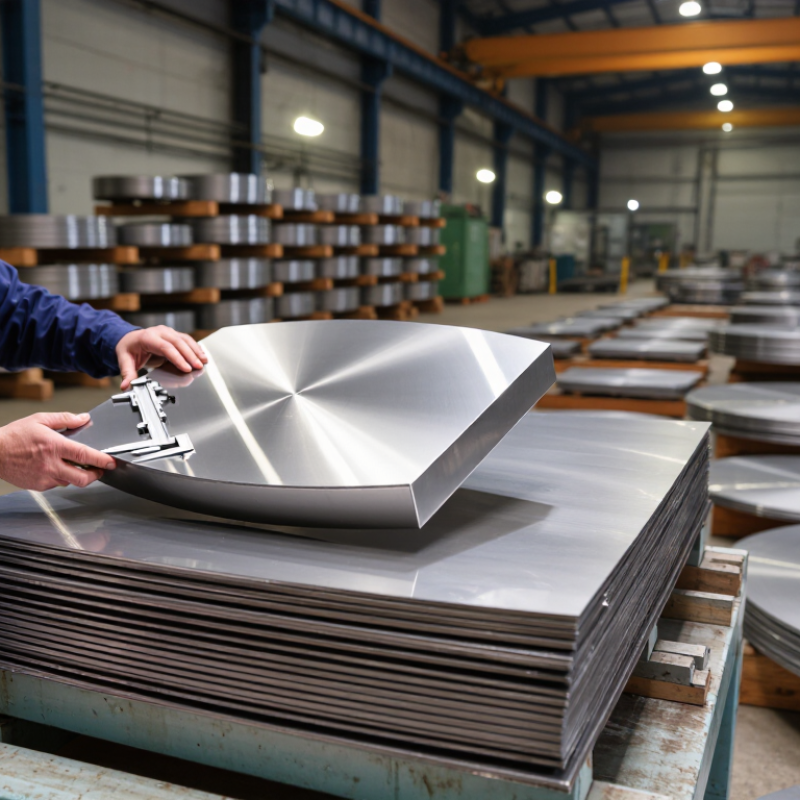
A reliable 316 stainless steel plate supplier should provide more than attractive product photos. Request a physical sample from a current production lot, not a showroom piece. Check thickness with a micrometer at several points. Examine the surface for scratches, pits, stains, and uneven polishing. Ask for a material test certificate and confirm the chemical composition through independent testing when the order is important. Small details matter.
Reviews can reveal how a supplier handles real problems. Look for recent comments about dimensional accuracy, protective packaging, delivery delays, and complaint responses. Repeat buyers offer stronger evidence than one enthusiastic review. Ask whether the reviewer purchased plates with similar thickness and finish. A common mistake is trusting ratings without checking the product specifications. I have learned that polished samples can hide production inconsistencies.
Put every requirement into the contract. State the grade, plate dimensions, thickness tolerance, surface finish, edge condition, quantity, certificates, packaging, and delivery date. Include inspection procedures before shipment. The agreement should explain replacement terms when plates fail testing or arrive damaged. Do not rely on informal chat promises. Clarify payment stages and document approval. I still leave room for error in forecasts, so I prefer suppliers who communicate delays early and provide dated production updates.
We use cookies on our website to give you an improved browser experience. View our Privacy Policy for more information. Please make your selection to opt in or out of ALL cookies here: Accept or Decline
Do you consent to the use of ALL cookies?
901 2nd Court West
Birmingham, AL 35204
Sales: 866.481.4036
Logistics/Ops: 866.481.4036
2101 Dralle Road
University Park, IL 60466
Sales: 708.813.9070
Logistics/Ops: 708.235.4200
400 E. 13th Street
Little Rock, AR 72114
Sales: 866.760.5344
Logistics/Ops: 866.760.5344
225 Collins Road
Elkhart, IN 46515
Sales: 574.295.0214
Logistics/Ops: 574.607.4611
601 Berryman Pike
Tipton, IN 46072
Sales: 800.897.7591
Logistics/Ops: 800.897.7591
3900 Uvalda Street
Denver, CO 80239
Sales: 303.706.8000
Ops/Logistics: 303.576.8398
510 3rd Street E
Milan, IL 61264
Sales: 800.322.1052
Logistics/Ops: 800.322.1052
1660 E. Aurora
Des Moines, IA 50313
Sales: 800.671.1660
Logistics: 800.671.1660
86554 Gene Lasserre Blvd.
Yulee, FL 32097
Sales: 904.253.3060
Logistics/Ops: 904.225.3000
694 S.E. County Road 245
Lake City, FL 32025
Sales: 800.727.6706
Logistics/Ops: 386.752.7412
210 Neptune Road
Auburndale, FL 33823
Sales: 863.967.1131
Logistics/Ops: 863.777.9814
4601 McCoy Drive
Pensacola, FL 32503
Sales: 850.308.7030
Logistics/Ops: 850.434.5502
815 South 56th Street
Tampa, FL 33619
Sales: 813.302.1940
Logistics/Ops: 813.621.1352
200 Hosea Road
Lawrenceville, GA 30046
Sales: 770.953.7575
Logistics/Ops: 770.513.6000
Branch Product Guide
Branch Line Card
Moulding Offering
Cedar Offering
Column Offering
8173 Hwy. 165 North
Monroe, LA 71211
Sales: 800.256.4165
Logistics/Ops: 800.256.4165
508 Warren Avenue
Portland, ME 04103
Sales: 207.888.2331
Logistics/Ops: 207.797.6565
4300 Georgia Pacific Blvd.
Frederick, MD 21704
Sales: 301.798.7474
Logistics/Ops: 301.874.8000
419 Maple Street
Bellingham, MA 02019
Sales: 508.449.0535
Logistics/Ops: 508.966.5500
825 Buchanan Ave SW
Grand Rapids, MI 49507
Sales: 877.800.1180
Logistics/Ops: 616.278.0909
995 Pacific St. NW
Aitkin, MN 56431
Sales: 800.432.3727
Logistics/Ops: 218.212.7770
1102 Port Terminal Drive
Duluth, MN 55802
Sales: 800.951.9899
Logistics/Ops: 800.851.9899
9110 83rd Ave. North
Brooklyn Park, MN 55445
Sales: 763.425.0204
Logistics/Ops: 763.425.0204
910 E. Railroad Street
Long Beach, MS 39560
Sales: 866.535.4135
Logistics/Ops: 228.205.2400
1727 Warren Street
North Kansas City, MO 64116
Sales: 800.621.2611
Logistics/Ops: 800.621.2611
2123 North Golden
Springfield, MO 65803
Sales: 800.375.7891
Logistics/Ops: 800.375.7891
13860 Corp. Woods Trail
Bridgeton, MO 63044
Sales: 314.209.0800
Logistics/Ops: 314.209.0800
1109 South 19th Street
Omaha, NE 68108
Sales: 800.489.6637
Logistics/Ops: 800.489.6637
1 Luger Road
Denville, NJ 07834
Sales: 973-339-3539
Logistics/Ops: 973.625.1461
3720 Jeffrey Blvd.
Blasdell, NY 14219
Sales: 716.235.5989
Logistics/Ops: 716.825.6557
319 Yaphank Ave.
Yaphank, NY 11980
Sales: 631.358.5714
Logistics/Ops: 631.924.7401
3300 Parkside Drive
Charlotte, NC 28208
Sales: 800.839.2588
Logistics/Ops: 704.394.3172
1712 East D Street
Butner, NC 27509
Sales: 984.389.8200
Logistics/Ops: 919.575.3700
128 Foothills Drive
Statesville, NC 28687
Sales: 800.222.1414
Logistics/Ops: 704.394.3172
550 Munroe Falls Rd.
Tallmadge, OH 44278
Sales: 330.357.4506
Logistics/Ops: 330.794.1141
10347 Toebben Dr.
Independence, KY 41051
Sales: 859.298.3926
Logistics/Ops: 859.746.2250
450 N. MacArthur
Oklahoma City, OK 73127
Sales: 800.375.6025
Logistics/Ops: 800.375.6025
1680 North Aspen
Broken Arrow, OK 74012
Sales: 918.272.2212
Logistics/Ops: 918.272.2212
522 Bridge Street
Hunker, PA 15639
Sales: 878.217.2001
Logistics/Ops: 724.925.7285
4290 Atlanta Street
Charleston, SC 29418
Sales: 843.371.1420
Logistics/Ops: 843.554.8192
1040 S. Industrial Dr.
Erwin, TN 37650
Sales: 423.641.1005
Logistics/Ops: 423.742.5911
4287 Pilot Drive
Memphis, TN 38118
Sales: 901.365.2101
Logistics/Ops: 901.365.2101
700 Myatt Drive
Madison, TN 37115
Sales: 615.327.9547
Logistics/Ops: 629.777.4949
4747 Mark IV Parkway
Fort Worth, TX 76106
Sales: 866.323.5117
Logistics/Ops: 817.625.9091
6990 Market Avenue
El Paso, TX 79915
Sales: 915.778.6356
Logistics/Ops: 915.265.7200
2502 Wilson Road
Harlingen, TX 78552
Sales: 800.580.6711
Logistics/Ops: 800.580.6711
10,000 North Loop East
Houston, TX 77029
Sales: 713.921.1977
Logistics/Ops: 713.675.3544
702 East 44th St.
Lubbock, TX 79404
Sales: 866.454.6010
Logistics/Ops: 866.454.6010
535 N. WW White Road
San Antonio, TX 78219
Sales: 800.284.0488
Logistics/Ops: 210.333.8112
142 Pine Haven Shores Rd.
Shelburne, VT 05482
Sales: 802.800.2540
Logistics/Ops: 802.985.2512
4700 Bethlehem Road,
Richmond, VA 23230
Sales: 804.201.2400
Logistics/Ops: 804.342.1161
4516 N Barker Road
Spokane Valley, WA 99027
Phone: 509.892.9420
Toll free: 800.728.6157
8365 N. 76th Street
Milwaukee, WI 53223
Sales: 800.356.9245
Logistics/Ops: 800.356.9245
312 S. Chester Street
Sparta, WI 54656
Sales: 800.362.5864
Logistics/Ops: 800.362.5864
899 Grossman Drive
Schofield, WI 54476
Sales: 800.472.0017
Logistics/Ops: 800.472.0017