
We use cookies on our website to give you an improved browser experience. View our Privacy Policy for more information. Please make your selection to opt in or out of ALL cookies here: Accept or Decline
A Glass Window does more than fill an opening. It brings daylight indoors, frames an outside view, and helps shield rooms from wind, rain, and noise. Yet glass is not one interchangeable material. Its construction, thickness, coatings, and frame can affect comfort, strength, clarity, and maintenance. Small differences matter.
Common options include annealed glass for basic applications, tempered glass designed to break into smaller pieces, and laminated glass that holds together when cracked. Insulated glass units use two or more panes with a sealed space between them, helping reduce heat transfer and outside noise. Low-emissivity coatings can further improve energy performance, while frosted or patterned glass offers privacy without blocking all daylight. These categories can overlap: a window may combine insulated panes, a coating, and a safety-glass layer. That detail is easy to miss.
Choosing well depends on where the window will go, the climate, desired privacy, and the building’s design. A bright kitchen window has different priorities from a bathroom window or a street-facing bedroom. Frame material and installation quality also influence how the complete window performs; glass alone cannot solve every draft or condensation problem. Product ratings and manufacturer specifications are useful starting points, but they do not replace project-specific advice. The best choice is not always the most expensive one. It should fit the opening, the room, and the people using it. Some decisions still involve trade-offs. A clearer view may mean less privacy, and extra performance features can add cost.
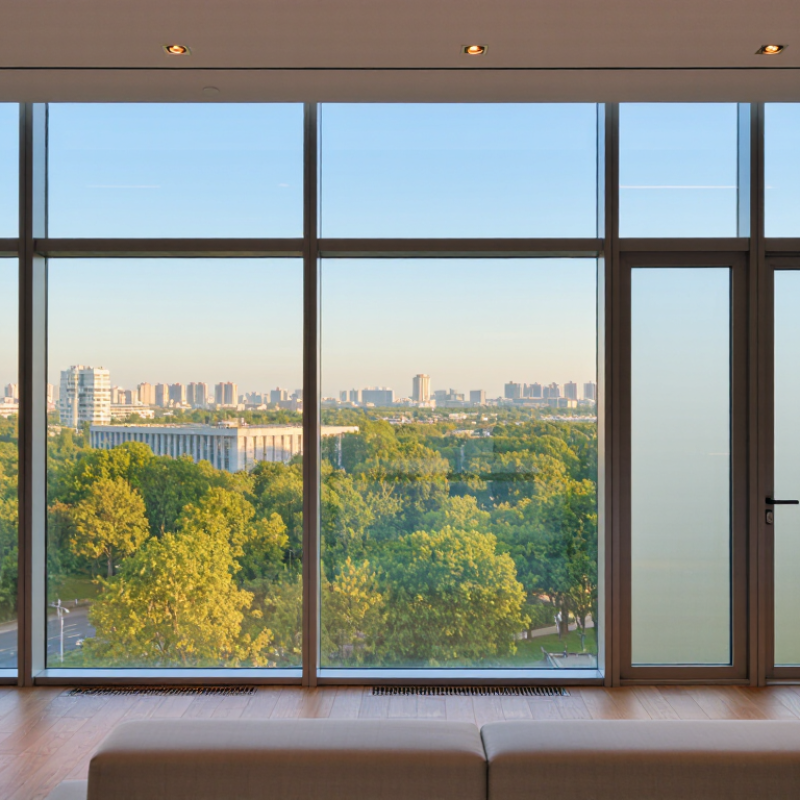
A glass window is an assembled opening that brings daylight and views into a building while helping separate indoor and outdoor conditions. Its main component is the glazing: one or more panes held within a frame. The frame, commonly made from wood, metal, or vinyl, supports the glass and attaches to the wall. A window is more than its visible pane. That distinction matters.
Seals around the glazing and frame help limit drafts and water entry. Spacers may separate multiple panes in insulated units, while locks, hinges, and handles allow opening and secure closure. Some windows also include grids, called muntins, that divide the glass visually. Fixed windows do not open; casement and sliding styles do. Small parts matter.
Tips: Look closely at the corners and edges for gaps or damaged seals. Check that an opening sash moves smoothly and closes firmly. If condensation appears between sealed panes, the insulated unit may have lost its seal; a qualified window professional can assess it. A little uncertainty is normal: symptoms can have more than one cause.
A glass window starts with silica sand, soda ash, and limestone melted in a furnace at roughly 1,500°C. In the float process, molten glass spreads across a bath of molten tin, forming a smooth, even sheet. It then cools gradually in an annealing lehr, which reduces internal stress before the glass is cut and inspected. Small flaws matter: uneven edges can complicate fitting and weaken a finished unit.
For an insulated window, manufacturers place two or more panes around a sealed cavity, using spacers to keep them apart. The cavity may contain air or an insulating gas. Low-emissivity coatings reflect some radiant heat while still allowing visible light through. Together, the panes, cavity, coating, frame, and seals affect how heat moves by conduction, convection, and radiation. It is a system, not just a sheet of glass.
The U.S. Department of Energy’s Energy Saver guidance estimates that heat gain and loss through windows account for 25–30% of residential heating and cooling energy use. Performance depends on climate, installation, and window condition, so a high-performing unit can still disappoint if its seals leak. That detail is easy to overlook. Condensation between panes can also indicate a failed seal, though surface condensation may have other causes. A window’s labels and test ratings help compare performance, but they cannot replace careful fitting.
Window glass is chosen for more than a clear view. It can help manage heat, reduce noise, or limit injury if breakage occurs. The right option depends on the window’s location and the conditions it faces.
Annealed glass is ordinary flat glass, often used where impact risk is low. It can crack into sharp pieces, so it may not suit every setting.
Tempered glass is heat-treated for strength and breaks into smaller, less jagged fragments. It is often used in doors and near floor level. It breaks differently.
Laminated glass holds together when cracked because a plastic layer sits between glass sheets. That can help keep a damaged pane in place, though replacement may be less straightforward.
Insulated glass units use two or more panes separated by a sealed gap. The gap slows heat transfer and can soften outside noise, but a failed seal may cause fogging between panes.
Low-emissivity coatings reflect some heat while allowing daylight through. Tinted glass can cut glare, but it may also darken a room and change how colors look. These features can be combined, such as low-E coating in an insulated unit.
More layers are not automatically better; climate, frame quality, and installation all affect performance. I would not choose by glass type alone. The details matter.
Window style describes how a window opens, while configuration refers to its layout and glass arrangement. A fixed window does not open, making it useful where daylight and a clear view matter more than ventilation. Casement windows swing outward on hinges and can catch breezes; sliding windows move horizontally and need clear wall space nearby. Double-hung windows have two movable sashes, which can help regulate airflow from both the top and bottom.
Awning windows hinge at the top and open outward, often allowing ventilation during light rain. Bay and bow windows project beyond the exterior wall, creating a wider interior sill and a more prominent view. They also need careful support and weather sealing. The details matter. A style that looks right on a drawing may feel awkward beside a sink or behind curtains.
Configurations include single, paired, and grouped windows, as well as units with one or more glass panes. Double- or triple-pane glass can improve insulation, though performance depends on the frame, seals, and installation too. For example, a large picture window beside a smaller casement can combine an open view with fresh air. Check how each sash operates, where furniture will sit, and how the room is used. Window terminology can vary, so confirm the opening direction and measurements before ordering.
Choosing a glass window starts with the room’s main need: warmth, quiet, privacy, or safety. For a bedroom facing a busy street, double glazing can reduce heat loss and soften outside noise. Low-emissivity coatings may help limit heat transfer, but their performance depends on the whole window, including its frame and installation. A sunny living room may benefit from solar-control glass to reduce glare and overheating. For bathrooms, frosted or textured glass admits daylight while obscuring views.
Safety matters near doors and in low windows. Tempered glass is designed to break into smaller pieces, while laminated glass holds fragments together. Ask a qualified installer which option suits the location and existing frame. Measure the opening carefully. A poor fit can undermine even good glazing, and replacement work may reveal damp or damaged trim. It is easy to compare glass alone and overlook those details.
Tips: Note where drafts, glare, or noise occur at different times of day. Compare whole-window ratings, not just glass descriptions. Check that the chosen glass suits the frame and room use. If privacy is the priority, test a sample in daylight; some finishes look different indoors. No option solves every problem.
We use cookies on our website to give you an improved browser experience. View our Privacy Policy for more information. Please make your selection to opt in or out of ALL cookies here: Accept or Decline
Do you consent to the use of ALL cookies?
901 2nd Court West
Birmingham, AL 35204
Sales: 866.481.4036
Logistics/Ops: 866.481.4036
2101 Dralle Road
University Park, IL 60466
Sales: 708.813.9070
Logistics/Ops: 708.235.4200
400 E. 13th Street
Little Rock, AR 72114
Sales: 866.760.5344
Logistics/Ops: 866.760.5344
225 Collins Road
Elkhart, IN 46515
Sales: 574.295.0214
Logistics/Ops: 574.607.4611
601 Berryman Pike
Tipton, IN 46072
Sales: 800.897.7591
Logistics/Ops: 800.897.7591
3900 Uvalda Street
Denver, CO 80239
Sales: 303.706.8000
Ops/Logistics: 303.576.8398
510 3rd Street E
Milan, IL 61264
Sales: 800.322.1052
Logistics/Ops: 800.322.1052
1660 E. Aurora
Des Moines, IA 50313
Sales: 800.671.1660
Logistics: 800.671.1660
86554 Gene Lasserre Blvd.
Yulee, FL 32097
Sales: 904.253.3060
Logistics/Ops: 904.225.3000
694 S.E. County Road 245
Lake City, FL 32025
Sales: 800.727.6706
Logistics/Ops: 386.752.7412
210 Neptune Road
Auburndale, FL 33823
Sales: 863.967.1131
Logistics/Ops: 863.777.9814
4601 McCoy Drive
Pensacola, FL 32503
Sales: 850.308.7030
Logistics/Ops: 850.434.5502
815 South 56th Street
Tampa, FL 33619
Sales: 813.302.1940
Logistics/Ops: 813.621.1352
200 Hosea Road
Lawrenceville, GA 30046
Sales: 770.953.7575
Logistics/Ops: 770.513.6000
Branch Product Guide
Branch Line Card
Moulding Offering
Cedar Offering
Column Offering
8173 Hwy. 165 North
Monroe, LA 71211
Sales: 800.256.4165
Logistics/Ops: 800.256.4165
508 Warren Avenue
Portland, ME 04103
Sales: 207.888.2331
Logistics/Ops: 207.797.6565
4300 Georgia Pacific Blvd.
Frederick, MD 21704
Sales: 301.798.7474
Logistics/Ops: 301.874.8000
419 Maple Street
Bellingham, MA 02019
Sales: 508.449.0535
Logistics/Ops: 508.966.5500
825 Buchanan Ave SW
Grand Rapids, MI 49507
Sales: 877.800.1180
Logistics/Ops: 616.278.0909
995 Pacific St. NW
Aitkin, MN 56431
Sales: 800.432.3727
Logistics/Ops: 218.212.7770
1102 Port Terminal Drive
Duluth, MN 55802
Sales: 800.951.9899
Logistics/Ops: 800.851.9899
9110 83rd Ave. North
Brooklyn Park, MN 55445
Sales: 763.425.0204
Logistics/Ops: 763.425.0204
910 E. Railroad Street
Long Beach, MS 39560
Sales: 866.535.4135
Logistics/Ops: 228.205.2400
1727 Warren Street
North Kansas City, MO 64116
Sales: 800.621.2611
Logistics/Ops: 800.621.2611
2123 North Golden
Springfield, MO 65803
Sales: 800.375.7891
Logistics/Ops: 800.375.7891
13860 Corp. Woods Trail
Bridgeton, MO 63044
Sales: 314.209.0800
Logistics/Ops: 314.209.0800
1109 South 19th Street
Omaha, NE 68108
Sales: 800.489.6637
Logistics/Ops: 800.489.6637
1 Luger Road
Denville, NJ 07834
Sales: 973-339-3539
Logistics/Ops: 973.625.1461
3720 Jeffrey Blvd.
Blasdell, NY 14219
Sales: 716.235.5989
Logistics/Ops: 716.825.6557
319 Yaphank Ave.
Yaphank, NY 11980
Sales: 631.358.5714
Logistics/Ops: 631.924.7401
3300 Parkside Drive
Charlotte, NC 28208
Sales: 800.839.2588
Logistics/Ops: 704.394.3172
1712 East D Street
Butner, NC 27509
Sales: 984.389.8200
Logistics/Ops: 919.575.3700
128 Foothills Drive
Statesville, NC 28687
Sales: 800.222.1414
Logistics/Ops: 704.394.3172
550 Munroe Falls Rd.
Tallmadge, OH 44278
Sales: 330.357.4506
Logistics/Ops: 330.794.1141
10347 Toebben Dr.
Independence, KY 41051
Sales: 859.298.3926
Logistics/Ops: 859.746.2250
450 N. MacArthur
Oklahoma City, OK 73127
Sales: 800.375.6025
Logistics/Ops: 800.375.6025
1680 North Aspen
Broken Arrow, OK 74012
Sales: 918.272.2212
Logistics/Ops: 918.272.2212
522 Bridge Street
Hunker, PA 15639
Sales: 878.217.2001
Logistics/Ops: 724.925.7285
4290 Atlanta Street
Charleston, SC 29418
Sales: 843.371.1420
Logistics/Ops: 843.554.8192
1040 S. Industrial Dr.
Erwin, TN 37650
Sales: 423.641.1005
Logistics/Ops: 423.742.5911
4287 Pilot Drive
Memphis, TN 38118
Sales: 901.365.2101
Logistics/Ops: 901.365.2101
700 Myatt Drive
Madison, TN 37115
Sales: 615.327.9547
Logistics/Ops: 629.777.4949
4747 Mark IV Parkway
Fort Worth, TX 76106
Sales: 866.323.5117
Logistics/Ops: 817.625.9091
6990 Market Avenue
El Paso, TX 79915
Sales: 915.778.6356
Logistics/Ops: 915.265.7200
2502 Wilson Road
Harlingen, TX 78552
Sales: 800.580.6711
Logistics/Ops: 800.580.6711
10,000 North Loop East
Houston, TX 77029
Sales: 713.921.1977
Logistics/Ops: 713.675.3544
702 East 44th St.
Lubbock, TX 79404
Sales: 866.454.6010
Logistics/Ops: 866.454.6010
535 N. WW White Road
San Antonio, TX 78219
Sales: 800.284.0488
Logistics/Ops: 210.333.8112
142 Pine Haven Shores Rd.
Shelburne, VT 05482
Sales: 802.800.2540
Logistics/Ops: 802.985.2512
4700 Bethlehem Road,
Richmond, VA 23230
Sales: 804.201.2400
Logistics/Ops: 804.342.1161
4516 N Barker Road
Spokane Valley, WA 99027
Phone: 509.892.9420
Toll free: 800.728.6157
8365 N. 76th Street
Milwaukee, WI 53223
Sales: 800.356.9245
Logistics/Ops: 800.356.9245
312 S. Chester Street
Sparta, WI 54656
Sales: 800.362.5864
Logistics/Ops: 800.362.5864
899 Grossman Drive
Schofield, WI 54476
Sales: 800.472.0017
Logistics/Ops: 800.472.0017
