
We use cookies on our website to give you an improved browser experience. View our Privacy Policy for more information. Please make your selection to opt in or out of ALL cookies here: Accept or Decline
Choosing a double stainless steel sink in 2026 requires more than comparing bowl sizes or polished finishes. A Sink Double Stainless Steel must handle rinsing vegetables, soaking pans, draining pasta, and daily cleaning without making the countertop feel crowded. Current industry research supports this practical view. The Houzz 2024 U.S. Kitchen Trends Study identifies sinks and faucets as frequent upgrade areas during kitchen renovations. The NKBA 2024 Design Trends Report also shows continued demand for durable, easy-care kitchen surfaces. Grand View Research describes stainless steel as a widely adopted sink material because of its strength, corrosion resistance, and adaptable appearance.
Kitchen designer Susan Serra, CKD, has described the sink as “the hardest-working item in the kitchen.” That observation matters. It also needs a small correction: the hardest-working sink is not automatically the largest one. A 33-inch model may offer generous workspace, yet it can reduce cabinet storage or create awkward movement in a narrow kitchen. A compact 30-inch sink may perform better in real life.
This guide examines gauge thickness, bowl depth, basin division, mounting style, sound insulation, drainage, and cleaning demands. It also considers family routines. A cook who washes large roasting trays needs different proportions from someone who mainly prepares quick meals. Product specifications can look convincing. Hands-on use often exposes the missing details. That is where careful selection becomes valuable, and where this article may challenge a few popular assumptions.
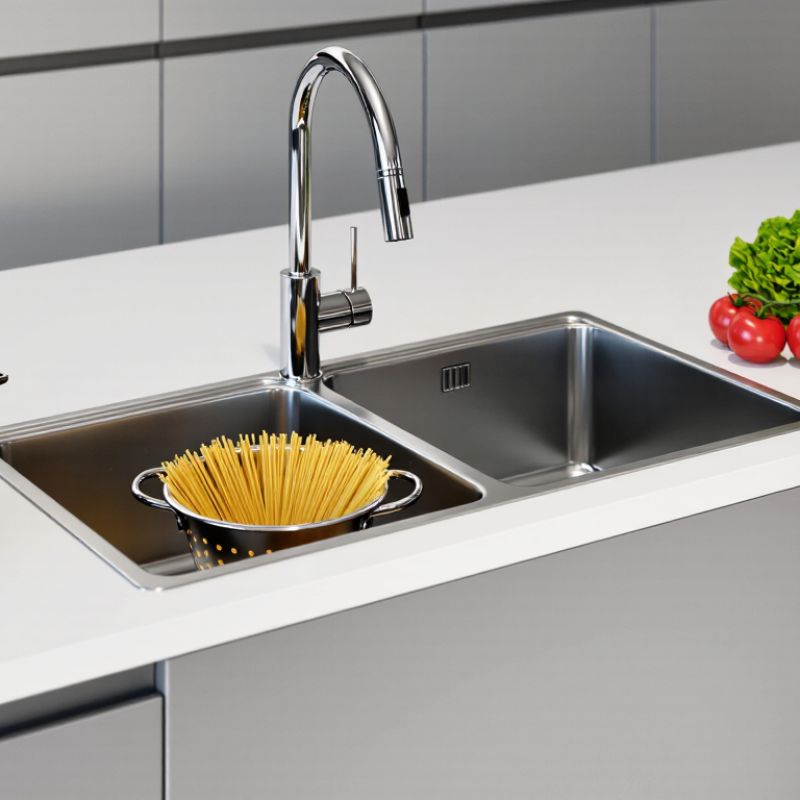
How to Choose a Double Stainless Steel Sink in 2026?
Understanding double stainless steel sink types and configurations begins with daily habits. An equal-bowl sink suits households that wash and rinse separately. An offset model offers one deeper bowl for stockpots. A low-divider design creates more working space, but splashes still happen. Mess remains. The 2024 Houzz U.S. Kitchen Trends Study reports that 74% of renovated kitchens used undermount sinks. This preference reflects cleaner lines and easier countertop wiping, not universal convenience.
Gauge numbers can mislead. A lower gauge usually means thicker steel and better resistance to dents. Look for 16- or 18-gauge material, reinforced corners, and sound-absorbing pads. The underside matters. Poorly bonded pads may trap moisture and create unpleasant odors. Grand View Research projects the global kitchen sinks market to grow at approximately 4.7% annually from 2024 through 2030. That growth encourages more configurations, but more choice does not guarantee better quality.
Measure the cabinet before choosing bowl dimensions. Two nine-inch bowls may feel cramped beside a large baking tray. A 60/40 split often balances food preparation and washing oversized cookware. Check drain placement, faucet-hole options, and the required installation clearance. Undermount sinks need precise countertop cutting. Top-mount sinks forgive small measurement errors and simplify replacement. Stainless steel is forgiving, not magical. Water spots remain visible on brushed surfaces. I prefer a deeper main bowl after testing shallow models, although that choice can strain the back. A small compromise may become annoying every day.
Choosing a double stainless steel sink in 2026 starts with measurements, not appearance. Measure cabinet width, countertop depth, plumbing position, and nearby drawer clearance. Measure twice. A sink may fit the cutout but block a drawer below. That mistake is surprisingly common. For many homes, a 30- to 33-inch sink suits daily washing without consuming the entire work zone. Smaller kitchens may need a 27-inch model. Leave usable counter space on both sides, especially near the preparation area. I once underestimated this clearance, and food preparation quickly became awkward.
Bowl depth affects comfort, capacity, and installation risk. An 8-inch bowl handles tall pots while limiting water splashes. A 9- or 10-inch bowl offers more volume, but it may strain your back. Test the working height with a sample container if possible. Double bowls also need a practical split. Equal bowls support balanced tasks. A 60/40 layout gives one side more room for roasting pans. Yet larger bowls can reduce space for rinsing small items. There is no perfect division.
Check faucet reach, sink clips, drain placement, and waste-line height before buying. Stainless steel tolerates heat and cleans easily in busy kitchens. Thicker steel often feels quieter, but sound pads and proper installation matter too. Confirm the cabinet can support the filled sink and connected equipment. Local plumbing requirements may affect drain connections. Product drawings deserve careful review because online dimensions can hide rim allowances. Recheck everything. A professional installer can catch structural problems before the countertop is cut, though even experts sometimes overlook a drawer collision.
For a double stainless steel sink, grade matters more than a shiny showroom finish. Type 304, containing roughly 18% chromium and 8% nickel, suits most kitchens and resists everyday acids, moisture, and stains. Type 316 adds molybdenum, improving chloride resistance near coasts. It often costs more than necessary indoors. Type 430 contains little nickel and may corrode sooner around saltwater. The U.S. Geological Survey’s 2025 Mineral Commodity Summaries reported about 3.7 million tonnes of global nickel mine production in 2024. Nickel supply affects 304 pricing. The World Stainless Association recorded approximately 58.4 million tonnes of stainless crude steel production in 2023, showing a mature but varied supply chain.
Thickness changes sound, vibration, and dent resistance. In many markets, 16-gauge steel measures about 1.5 millimeters, while 18-gauge measures about 1.2 millimeters. Gauge systems are not universal. Check the actual millimeter specification. That matters. A thin divider can flex when heavy cookware hits it. I once trusted gauge labels and ignored the sink’s underside coating. The result was louder than expected. I would inspect sound pads, bowl depth, corner radius, and cabinet support together.
Surface finish deserves equal attention. A brushed satin finish hides fine scratches better than a mirror polish. Directional grain also makes cleaning easier. Deep scratches remain visible. Not always. Ask for a sample under strong kitchen lighting. Review the fabricator’s care guidance, weld quality, and drain alignment before choosing the second bowl size.
How to Choose a Double Stainless Steel Sink in 2026?
Installation affects daily comfort more than many buyers expect. Check the cabinet width before choosing a double bowl sink. A sink that looks suitable may leave too little room for plumbing. Top-mount models are easier to replace, while undermount sinks create a smoother countertop edge. Flush-mount installation looks refined but demands accurate cutting and stronger fitting skills. In kitchen fitting work, I have seen small measurement errors cause leaks and uneven edges. Measure twice. Then confirm the cutout template.
Useful accessories should support real habits, not fill a shopping list. Choose deep drain baskets, removable rinse grids, and a covered overflow opening. A low-profile waste kit can create more storage beneath the bowls. Consider a flexible pull-out faucet, but check its reach across both compartments. Sound-absorbing pads also reduce the sharp noise of falling water. They are helpful, though not magical.
Maintenance depends on the finish and your routine. Wipe the stainless surface after use, following its brushed grain. Warm water and mild dish soap usually remove food film. Avoid abrasive powders, steel wool, and strong chlorine products, which may dull or stain the surface. Drying matters. Standing water can leave mineral marks, especially in hard-water areas. I once ignored a small drain seal, and a slow cabinet leak followed. Inspect connections every few months, clean the trap carefully, and replace worn seals before moisture damages the cabinet.
Installation methods, accessories, and maintenance planning guide
The chart uses practical planning scores from 1 to 5. A higher installation score indicates greater installation complexity, a higher accessory score indicates more accessory flexibility, and a higher maintenance score indicates easier routine care. Top-mount sinks are generally the simplest to install, undermount sinks provide a cleaner countertop transition but require more precise sealing, and flush-mount sinks demand the most accurate countertop preparation.
Choosing a double stainless steel sink in 2026 starts with the cabinet, not the showroom display. Measure width, depth, plumbing clearance, and door swing before comparing finishes. I once focused on a deep basin and later found that my tall stockpot blocked the faucet. That mistake changed my checklist. A 16- or 18-gauge bowl usually feels sturdier than thinner sheet metal, but thickness alone does not prove quality. Inspect the welds, corner radius, underside coating, and drain fit. A stated 304 stainless steel grade can help, but reliable documentation matters more than a sales phrase.
Practical features should match your daily routine. Two equal bowls suit separate washing and rinsing, while an offset design may leave room for baking trays. Look for gently sloped bases, sound-dampening pads, standard drain openings, and overflow protection where applicable. A low divider helps with large pans, yet it may allow more splash. I prefer a brushed surface because small scratches blend in, although it still needs regular drying near hard-water areas. Check the actual bowl dimensions. Advertised sink size can hide limited usable space.
Budget planning should include accessories, installation, sealant, plumbing changes, and possible countertop work. A cheaper sink can become expensive if its clips bend or drain assembly leaks. Read the warranty carefully: confirm coverage length, finish exclusions, installation conditions, and claim procedures. Keep the receipt and installation photos. Those details matter later. I would not trust a lifetime promise without clear terms. I am still learning to leave room for professional installation, because saving money on fitting can create a much larger repair bill.
| Selection Dimension | Recommended Specification | Why It Matters | Practical Check Before Purchase | Typical 2026 Budget Impact |
|---|---|---|---|---|
| Steel grade | 304 stainless steel for general residential kitchens; 316 stainless steel where exposure to salt or chlorides is unusually high. | 304 offers strong corrosion resistance and is widely used for kitchen sinks. 316 provides better resistance in coastal or high-salt environments. | Look for the steel grade in the technical specification, not only in the product title. Confirm whether the stated grade applies to the bowl itself. | Medium to high; 316 usually costs more than 304. |
| Material thickness | Approximately 16–18 gauge, equal to about 1.2–1.5 mm, for a durable residential sink. | A thicker bowl is generally more resistant to denting and tends to reduce vibration and noise. | Check whether the measurement refers to the bowl, rim, or mounting frame. Do not compare gauge numbers without confirming the measurement system. | Medium; thicker material commonly increases the purchase price. |
| Bowl configuration | Two bowls with a practical split such as 60/40 or 50/50. Choose bowl widths according to cookware and cabinet space. | A 50/50 split provides balanced washing and rinsing space. A 60/40 split leaves more room for large pans in one bowl. | Measure the usable internal bowl dimensions, not just the external sink size. Check that both bowls can hold the cookware used most often. | Low to medium; configuration usually affects price less than material and finish. |
| Overall size and cabinet fit | Common residential widths are about 30–36 inches, or 760–915 mm, but the sink must match the base cabinet and countertop cutout. | A sink that is too large may require cabinet modification, while a small sink can limit washing capacity. | Measure cabinet width, countertop opening, front-to-back clearance, plumbing position, and faucet-hole requirements before ordering. | Medium; larger sizes may require extra installation work. |
| Mounting style | Choose undermount, top-mount, or flush-mount according to the countertop material and installation plan. | Undermount designs make countertop wiping easier. Top-mount designs are often simpler to install and can suit more countertop types. | Confirm the required cutout template, support method, countertop compatibility, and whether mounting hardware is included. | Low to high; installation labor can exceed the difference in sink prices. |
| Bowl depth | Approximately 8–10 inches, or 200–255 mm, for most household kitchens. | Deeper bowls hold more dishes and help reduce splashing, but excessive depth may be uncomfortable and can conflict with plumbing. | Compare bowl depth with user height, under-sink plumbing, garbage-disposal clearance, and the height of frequently washed pans. | Low; ergonomics and installation compatibility are more important than a small price difference. |
| Corner radius and base shape | Moderately rounded corners and a gently sloped base toward the drain. | Rounded corners are easier to clean, while a sloped base helps water and food particles move toward the drain. | Inspect product drawings or photographs for standing-water areas and confirm the actual corner radius. | Low to medium; functional design is usually a better value than decorative detailing. |
| Sound reduction | Full or extensive underside sound-absorbing pads, plus protective coating on the outer bowl where available. | Pads and coatings can reduce the noise and vibration caused by running water, cutlery, and garbage disposal equipment. | Check coverage area and pad thickness. A few small pads may provide less dampening than broad coverage. | Low to medium; useful for open-plan kitchens. |
| Drain and accessory compatibility | Standard drain openings compatible with locally available baskets, strainers, waste fittings, and optional grids. | Compatible parts make replacement easier and help protect the sink surface from scratches and heavy cookware. | Verify drain diameter, drain position, included strainers, overflow requirements, and whether bottom grids are supplied. | Low to medium; included accessories can reduce later costs. |
| Surface finish | Brushed or satin finish for a balance of appearance, maintenance, and everyday scratch visibility. | Brushed surfaces generally conceal minor water marks and scuffs better than highly polished surfaces. | Ask for care instructions and check whether the finish direction is consistent across both bowls and the rim. | Low; choose based on maintenance preference rather than appearance alone. |
| Warranty coverage | Prefer a clearly written limited warranty covering manufacturing defects, with the coverage period and exclusions stated. | Warranty length matters less than whether it covers the bowl, finish, accessories, installation-related exclusions, and replacement process. | Check duration, proof-of-purchase rules, shipping responsibility, finish exclusions, and whether labor is excluded. | Low upfront impact; stronger written coverage can improve long-term value. |
| Budget allocation | Set a total project budget that includes the sink, faucet changes, plumbing fittings, countertop work, accessories, and installation. | The lowest purchase price may not be the lowest installed cost if cutouts, supports, or plumbing must be changed. | Obtain an installation estimate before choosing the sink and reserve roughly 10–15% for unexpected fitting work. | Varies by region; installation and countertop work can materially change the final cost. |
| Best overall 2026 balance | 304 stainless steel, approximately 16–18 gauge, 8–10 inch bowls, practical 60/40 or 50/50 layout, brushed finish, sloped base, sound pads, compatible drains, and transparent warranty terms. | This combination prioritizes corrosion resistance, durability, cleaning convenience, noise control, and manageable long-term ownership cost. | Confirm every measurement against the existing cabinet and countertop before paying for the sink or scheduling installation. | Typically a mid-range choice with a strong quality-to-cost balance. |
Note: Dimensions, material grades, and installation requirements should always be verified against the current technical drawing and local plumbing standards.
We use cookies on our website to give you an improved browser experience. View our Privacy Policy for more information. Please make your selection to opt in or out of ALL cookies here: Accept or Decline
Do you consent to the use of ALL cookies?
901 2nd Court West
Birmingham, AL 35204
Sales: 866.481.4036
Logistics/Ops: 866.481.4036
2101 Dralle Road
University Park, IL 60466
Sales: 708.813.9070
Logistics/Ops: 708.235.4200
400 E. 13th Street
Little Rock, AR 72114
Sales: 866.760.5344
Logistics/Ops: 866.760.5344
225 Collins Road
Elkhart, IN 46515
Sales: 574.295.0214
Logistics/Ops: 574.607.4611
601 Berryman Pike
Tipton, IN 46072
Sales: 800.897.7591
Logistics/Ops: 800.897.7591
3900 Uvalda Street
Denver, CO 80239
Sales: 303.706.8000
Ops/Logistics: 303.576.8398
510 3rd Street E
Milan, IL 61264
Sales: 800.322.1052
Logistics/Ops: 800.322.1052
1660 E. Aurora
Des Moines, IA 50313
Sales: 800.671.1660
Logistics: 800.671.1660
86554 Gene Lasserre Blvd.
Yulee, FL 32097
Sales: 904.253.3060
Logistics/Ops: 904.225.3000
694 S.E. County Road 245
Lake City, FL 32025
Sales: 800.727.6706
Logistics/Ops: 386.752.7412
210 Neptune Road
Auburndale, FL 33823
Sales: 863.967.1131
Logistics/Ops: 863.777.9814
4601 McCoy Drive
Pensacola, FL 32503
Sales: 850.308.7030
Logistics/Ops: 850.434.5502
815 South 56th Street
Tampa, FL 33619
Sales: 813.302.1940
Logistics/Ops: 813.621.1352
200 Hosea Road
Lawrenceville, GA 30046
Sales: 770.953.7575
Logistics/Ops: 770.513.6000
Branch Product Guide
Branch Line Card
Moulding Offering
Cedar Offering
Column Offering
8173 Hwy. 165 North
Monroe, LA 71211
Sales: 800.256.4165
Logistics/Ops: 800.256.4165
508 Warren Avenue
Portland, ME 04103
Sales: 207.888.2331
Logistics/Ops: 207.797.6565
4300 Georgia Pacific Blvd.
Frederick, MD 21704
Sales: 301.798.7474
Logistics/Ops: 301.874.8000
419 Maple Street
Bellingham, MA 02019
Sales: 508.449.0535
Logistics/Ops: 508.966.5500
825 Buchanan Ave SW
Grand Rapids, MI 49507
Sales: 877.800.1180
Logistics/Ops: 616.278.0909
995 Pacific St. NW
Aitkin, MN 56431
Sales: 800.432.3727
Logistics/Ops: 218.212.7770
1102 Port Terminal Drive
Duluth, MN 55802
Sales: 800.951.9899
Logistics/Ops: 800.851.9899
9110 83rd Ave. North
Brooklyn Park, MN 55445
Sales: 763.425.0204
Logistics/Ops: 763.425.0204
910 E. Railroad Street
Long Beach, MS 39560
Sales: 866.535.4135
Logistics/Ops: 228.205.2400
1727 Warren Street
North Kansas City, MO 64116
Sales: 800.621.2611
Logistics/Ops: 800.621.2611
2123 North Golden
Springfield, MO 65803
Sales: 800.375.7891
Logistics/Ops: 800.375.7891
13860 Corp. Woods Trail
Bridgeton, MO 63044
Sales: 314.209.0800
Logistics/Ops: 314.209.0800
1109 South 19th Street
Omaha, NE 68108
Sales: 800.489.6637
Logistics/Ops: 800.489.6637
1 Luger Road
Denville, NJ 07834
Sales: 973-339-3539
Logistics/Ops: 973.625.1461
3720 Jeffrey Blvd.
Blasdell, NY 14219
Sales: 716.235.5989
Logistics/Ops: 716.825.6557
319 Yaphank Ave.
Yaphank, NY 11980
Sales: 631.358.5714
Logistics/Ops: 631.924.7401
3300 Parkside Drive
Charlotte, NC 28208
Sales: 800.839.2588
Logistics/Ops: 704.394.3172
1712 East D Street
Butner, NC 27509
Sales: 984.389.8200
Logistics/Ops: 919.575.3700
128 Foothills Drive
Statesville, NC 28687
Sales: 800.222.1414
Logistics/Ops: 704.394.3172
550 Munroe Falls Rd.
Tallmadge, OH 44278
Sales: 330.357.4506
Logistics/Ops: 330.794.1141
10347 Toebben Dr.
Independence, KY 41051
Sales: 859.298.3926
Logistics/Ops: 859.746.2250
450 N. MacArthur
Oklahoma City, OK 73127
Sales: 800.375.6025
Logistics/Ops: 800.375.6025
1680 North Aspen
Broken Arrow, OK 74012
Sales: 918.272.2212
Logistics/Ops: 918.272.2212
522 Bridge Street
Hunker, PA 15639
Sales: 878.217.2001
Logistics/Ops: 724.925.7285
4290 Atlanta Street
Charleston, SC 29418
Sales: 843.371.1420
Logistics/Ops: 843.554.8192
1040 S. Industrial Dr.
Erwin, TN 37650
Sales: 423.641.1005
Logistics/Ops: 423.742.5911
4287 Pilot Drive
Memphis, TN 38118
Sales: 901.365.2101
Logistics/Ops: 901.365.2101
700 Myatt Drive
Madison, TN 37115
Sales: 615.327.9547
Logistics/Ops: 629.777.4949
4747 Mark IV Parkway
Fort Worth, TX 76106
Sales: 866.323.5117
Logistics/Ops: 817.625.9091
6990 Market Avenue
El Paso, TX 79915
Sales: 915.778.6356
Logistics/Ops: 915.265.7200
2502 Wilson Road
Harlingen, TX 78552
Sales: 800.580.6711
Logistics/Ops: 800.580.6711
10,000 North Loop East
Houston, TX 77029
Sales: 713.921.1977
Logistics/Ops: 713.675.3544
702 East 44th St.
Lubbock, TX 79404
Sales: 866.454.6010
Logistics/Ops: 866.454.6010
535 N. WW White Road
San Antonio, TX 78219
Sales: 800.284.0488
Logistics/Ops: 210.333.8112
142 Pine Haven Shores Rd.
Shelburne, VT 05482
Sales: 802.800.2540
Logistics/Ops: 802.985.2512
4700 Bethlehem Road,
Richmond, VA 23230
Sales: 804.201.2400
Logistics/Ops: 804.342.1161
4516 N Barker Road
Spokane Valley, WA 99027
Phone: 509.892.9420
Toll free: 800.728.6157
8365 N. 76th Street
Milwaukee, WI 53223
Sales: 800.356.9245
Logistics/Ops: 800.356.9245
312 S. Chester Street
Sparta, WI 54656
Sales: 800.362.5864
Logistics/Ops: 800.362.5864
899 Grossman Drive
Schofield, WI 54476
Sales: 800.472.0017
Logistics/Ops: 800.472.0017
