
We use cookies on our website to give you an improved browser experience. View our Privacy Policy for more information. Please make your selection to opt in or out of ALL cookies here: Accept or Decline
Choosing Galvanized Steel Pipe For Water requires more than checking diameter and price. The zinc coating protects the steel from external corrosion. However, water chemistry, temperature, flow speed, and installation quality also influence service life. A pipe that performs well in one building may deteriorate sooner in another.
The selection process should begin with the water’s intended use. Drinking-water systems need materials suitable for contact with potable water. Confirm relevant certifications, such as NSF/ANSI/CAN 61, where applicable. Review the pipe’s manufacturing standard, wall thickness, coating quality, and pressure rating. ASTM specifications can support comparison, but local requirements still matter. Ask suppliers for test reports, traceability records, and clear product markings.
Small details often decide the outcome. Inspect the zinc surface for bare spots, heavy flaking, or uneven threads. Check fittings carefully, because weak connections can leak before the pipe shows damage. Avoid mixing incompatible metals without suitable protection. Also consider sediment, stagnant sections, and water with unusual acidity or alkalinity. These conditions may shorten galvanized steel’s useful life.
The choice is not always obvious. In some systems, another approved material may be more practical. A reliable decision compares cost, maintenance, expected service life, and water quality together. Field experience helps, but it should not replace engineering review or current standards. Even experienced buyers can overlook corrosion risks. Careful verification remains essential.
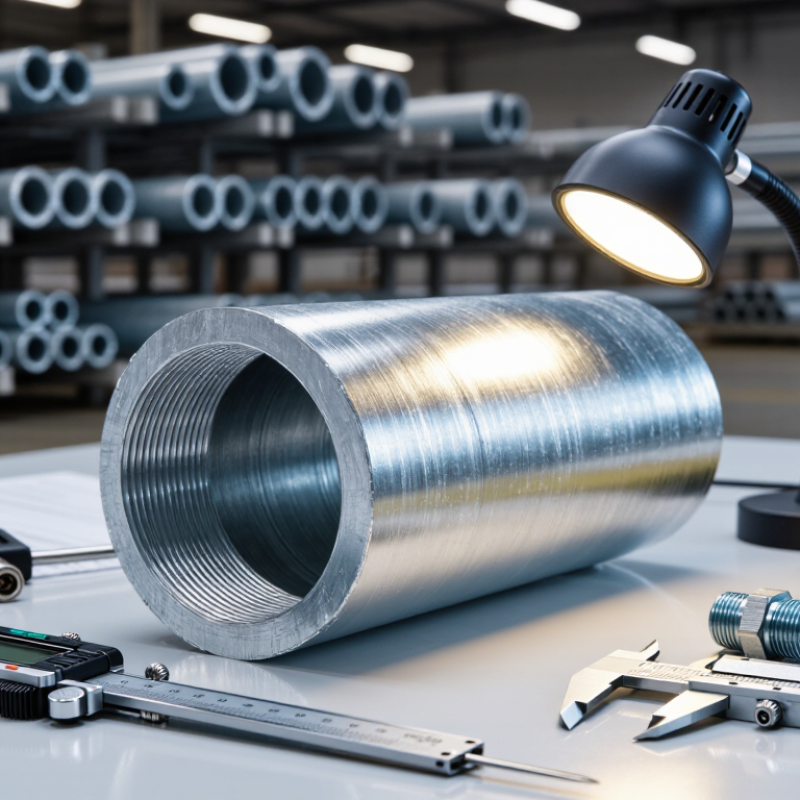
Choosing galvanized steel pipe for drinking water requires more than checking diameter, wall thickness, and pressure rating. The material must suit the water chemistry, temperature, soil conditions, and connection method. For potable systems, NSF/ANSI/CAN 61 is the key health-effects standard. It evaluates whether pipe, coatings, gaskets, fittings, or other wetted components can release harmful substances into drinking water. Certification must match the exact product, coating, and intended use. A general factory statement is not enough.
AWWA C800 focuses on underground service line valves and fittings. It helps define suitable components, dimensions, materials, and connection practices for service connections. However, it should not be treated as a complete approval for every galvanized steel pipe application. Check the current project specifications and local water authority requirements. In practice, a pipe may meet one requirement while its threaded fitting or protective lining does not. That detail is easy to overlook. It deserves a second review.
Tips: Request the current NSF/ANSI/CAN 61 certification and confirm its scope. Ask whether AWWA C800 applies to the selected service fittings. Compare test pressure, pipe size, coating, and installation environment. Inspect labels and documents before delivery. If water chemistry is unknown, obtain a laboratory analysis. A certificate can look reassuring, but it does not replace engineering judgment.
When choosing galvanized steel pipe for water, start with the required flow, not the outside diameter. NPS and DN are nominal designations. They do not equal the true inside diameter. A DN50 pipe may have different bore sizes under different wall thicknesses. Check the actual internal diameter against the applicable dimensional standard. Then calculate velocity from flow rate and pipe area. Keep velocity within the project’s accepted range. Excessive speed can cause noise, erosion, and water hammer.
Pressure matters just as much. Calculate friction loss through straight pipe, elbows, valves, and elevation changes. A pipe may carry the required flow but still lose too much pressure. The selected pressure class should exceed the maximum operating pressure, including pump surges. Check the weakest component, too. Threads, fittings, and joints may limit the system before the pipe wall does. Leave a reasonable safety margin.
A common field mistake is sizing only by DN. It looks simple. Site measurements often reveal restricted fittings or partially blocked sections. Water quality also deserves attention, especially where corrosion or scale may develop. I would recheck flow, velocity, and pressure after installation. The design may be correct on paper, yet the actual route can change performance.
Choosing galvanized steel pipe for water requires more than checking its diameter and pressure rating. Zinc protection must be specified clearly, preferably against ASTM A123/A123M, while the pipe itself follows ASTM A53/A53M. These standards address different concerns. A53 identifies the pipe’s manufacturing and performance requirements. A123 controls hot-dip galvanized coating quality.
Ask for coating thickness, coating mass, and surface coverage. For steel at least 6.4 mm thick, A123 commonly requires a minimum average coating thickness of 85 micrometres, or about 610 g/m². Thinner steel has lower specified values, such as 70 micrometres and 505 g/m², or 45 micrometres and 381 g/m². Check the current edition and product category before ordering. Small differences matter.
Coverage must be continuous inside and outside, including edges and fittings. Look for bare spots, heavy runs, peeling, or exposed threads. A magnetic thickness gauge can identify thin areas, but coating mass testing provides another useful check. The certificate is helpful, not magical. I have seen paperwork look excellent while field handling damaged the coating. Protect cut ends and repair approved damaged areas carefully. For drinking water, confirm local health requirements and verify that the complete pipe system is suitable, not only the zinc layer. Water chemistry can also shorten service life, especially when it is acidic or unusually soft.
How to Choose Galvanized Steel Pipe for Water?
Water chemistry should be checked before selecting galvanized steel pipe. Target a pH between 6.5 and 8.5. Outside this range, zinc coatings may deteriorate faster. Acidic water can attack the coating, while highly alkaline water may create scale and restrict flow. Test both the supply line and the building tap. Results can differ after water sits overnight.
Chloride deserves close attention. High chloride levels can damage protective zinc layers and encourage localized pitting. This damage may look minor at first, then produce rusty spots or pinhole leaks. Ask for a laboratory report showing chloride concentration, pH, hardness, and alkalinity. Do not rely only on taste or clear appearance. Water can look clean and still be aggressive.
In field inspections, I check a fresh sample and a first-draw sample. The difference can reveal stagnation inside older plumbing. Compare chloride results with local water requirements and the pipe supplier’s chemical-resistance data. Keep hot-water temperatures in mind, because heat can accelerate corrosion. I have seen systems selected from one test report fail earlier than expected. The missing detail was seasonal water variation. If results change across the year, retest before installation and consider whether another pipe material offers a safer service life.
Screen water chemistry before selection. A practical screening target is pH 6.5–8.5. Chloride is shown in mg/L; 250 mg/L is commonly used as a drinking-water taste guideline, but it is not a universal corrosion limit for galvanized steel.
Values outside the pH target range or with elevated chloride levels should be reviewed with a water-treatment or materials specialist. Confirm conditions using a representative laboratory water analysis before finalizing the pipe specification.
How to Choose Galvanized Steel Pipe for Water?
For water service, verify more than coating appearance. Confirm that the pipe complies with ASTM A53 and matches the required size, wall thickness, and grade. When the applicable A53 table or purchase specification requires a 700 psi hydrostatic test, request documented results from the manufacturer. The report should identify the heat number, pipe size, test pressure, test duration, and inspection date. A dry surface proves little. Pressure testing reveals leaks through seams, ends, or damaged areas.
NSF certification is equally important for drinking-water applications. Look for certification to NSF/ANSI/CAN 61, or the standard required by your local authority. Check that the certification covers galvanized steel pipe, fittings, coatings, and the intended water use. Certification must apply to the actual product, not merely a similar material. A clean certificate can still hide a specification mismatch. That mistake is easy to make.
Tips: Compare the hydrostatic report with the purchase order before installation. Inspect threads and zinc coverage under bright light. Avoid relying on verbal confirmation. Keep certificates, lot numbers, and delivery records together. If the 700 psi requirement is unclear, ask for written clarification before cutting the pipe. Small paperwork gaps can become expensive field repairs.
We use cookies on our website to give you an improved browser experience. View our Privacy Policy for more information. Please make your selection to opt in or out of ALL cookies here: Accept or Decline
Do you consent to the use of ALL cookies?
901 2nd Court West
Birmingham, AL 35204
Sales: 866.481.4036
Logistics/Ops: 866.481.4036
2101 Dralle Road
University Park, IL 60466
Sales: 708.813.9070
Logistics/Ops: 708.235.4200
400 E. 13th Street
Little Rock, AR 72114
Sales: 866.760.5344
Logistics/Ops: 866.760.5344
225 Collins Road
Elkhart, IN 46515
Sales: 574.295.0214
Logistics/Ops: 574.607.4611
601 Berryman Pike
Tipton, IN 46072
Sales: 800.897.7591
Logistics/Ops: 800.897.7591
3900 Uvalda Street
Denver, CO 80239
Sales: 303.706.8000
Ops/Logistics: 303.576.8398
510 3rd Street E
Milan, IL 61264
Sales: 800.322.1052
Logistics/Ops: 800.322.1052
1660 E. Aurora
Des Moines, IA 50313
Sales: 800.671.1660
Logistics: 800.671.1660
86554 Gene Lasserre Blvd.
Yulee, FL 32097
Sales: 904.253.3060
Logistics/Ops: 904.225.3000
694 S.E. County Road 245
Lake City, FL 32025
Sales: 800.727.6706
Logistics/Ops: 386.752.7412
210 Neptune Road
Auburndale, FL 33823
Sales: 863.967.1131
Logistics/Ops: 863.777.9814
4601 McCoy Drive
Pensacola, FL 32503
Sales: 850.308.7030
Logistics/Ops: 850.434.5502
815 South 56th Street
Tampa, FL 33619
Sales: 813.302.1940
Logistics/Ops: 813.621.1352
200 Hosea Road
Lawrenceville, GA 30046
Sales: 770.953.7575
Logistics/Ops: 770.513.6000
Branch Product Guide
Branch Line Card
Moulding Offering
Cedar Offering
Column Offering
8173 Hwy. 165 North
Monroe, LA 71211
Sales: 800.256.4165
Logistics/Ops: 800.256.4165
508 Warren Avenue
Portland, ME 04103
Sales: 207.888.2331
Logistics/Ops: 207.797.6565
4300 Georgia Pacific Blvd.
Frederick, MD 21704
Sales: 301.798.7474
Logistics/Ops: 301.874.8000
419 Maple Street
Bellingham, MA 02019
Sales: 508.449.0535
Logistics/Ops: 508.966.5500
825 Buchanan Ave SW
Grand Rapids, MI 49507
Sales: 877.800.1180
Logistics/Ops: 616.278.0909
995 Pacific St. NW
Aitkin, MN 56431
Sales: 800.432.3727
Logistics/Ops: 218.212.7770
1102 Port Terminal Drive
Duluth, MN 55802
Sales: 800.951.9899
Logistics/Ops: 800.851.9899
9110 83rd Ave. North
Brooklyn Park, MN 55445
Sales: 763.425.0204
Logistics/Ops: 763.425.0204
910 E. Railroad Street
Long Beach, MS 39560
Sales: 866.535.4135
Logistics/Ops: 228.205.2400
1727 Warren Street
North Kansas City, MO 64116
Sales: 800.621.2611
Logistics/Ops: 800.621.2611
2123 North Golden
Springfield, MO 65803
Sales: 800.375.7891
Logistics/Ops: 800.375.7891
13860 Corp. Woods Trail
Bridgeton, MO 63044
Sales: 314.209.0800
Logistics/Ops: 314.209.0800
1109 South 19th Street
Omaha, NE 68108
Sales: 800.489.6637
Logistics/Ops: 800.489.6637
1 Luger Road
Denville, NJ 07834
Sales: 973-339-3539
Logistics/Ops: 973.625.1461
3720 Jeffrey Blvd.
Blasdell, NY 14219
Sales: 716.235.5989
Logistics/Ops: 716.825.6557
319 Yaphank Ave.
Yaphank, NY 11980
Sales: 631.358.5714
Logistics/Ops: 631.924.7401
3300 Parkside Drive
Charlotte, NC 28208
Sales: 800.839.2588
Logistics/Ops: 704.394.3172
1712 East D Street
Butner, NC 27509
Sales: 984.389.8200
Logistics/Ops: 919.575.3700
128 Foothills Drive
Statesville, NC 28687
Sales: 800.222.1414
Logistics/Ops: 704.394.3172
550 Munroe Falls Rd.
Tallmadge, OH 44278
Sales: 330.357.4506
Logistics/Ops: 330.794.1141
10347 Toebben Dr.
Independence, KY 41051
Sales: 859.298.3926
Logistics/Ops: 859.746.2250
450 N. MacArthur
Oklahoma City, OK 73127
Sales: 800.375.6025
Logistics/Ops: 800.375.6025
1680 North Aspen
Broken Arrow, OK 74012
Sales: 918.272.2212
Logistics/Ops: 918.272.2212
522 Bridge Street
Hunker, PA 15639
Sales: 878.217.2001
Logistics/Ops: 724.925.7285
4290 Atlanta Street
Charleston, SC 29418
Sales: 843.371.1420
Logistics/Ops: 843.554.8192
1040 S. Industrial Dr.
Erwin, TN 37650
Sales: 423.641.1005
Logistics/Ops: 423.742.5911
4287 Pilot Drive
Memphis, TN 38118
Sales: 901.365.2101
Logistics/Ops: 901.365.2101
700 Myatt Drive
Madison, TN 37115
Sales: 615.327.9547
Logistics/Ops: 629.777.4949
4747 Mark IV Parkway
Fort Worth, TX 76106
Sales: 866.323.5117
Logistics/Ops: 817.625.9091
6990 Market Avenue
El Paso, TX 79915
Sales: 915.778.6356
Logistics/Ops: 915.265.7200
2502 Wilson Road
Harlingen, TX 78552
Sales: 800.580.6711
Logistics/Ops: 800.580.6711
10,000 North Loop East
Houston, TX 77029
Sales: 713.921.1977
Logistics/Ops: 713.675.3544
702 East 44th St.
Lubbock, TX 79404
Sales: 866.454.6010
Logistics/Ops: 866.454.6010
535 N. WW White Road
San Antonio, TX 78219
Sales: 800.284.0488
Logistics/Ops: 210.333.8112
142 Pine Haven Shores Rd.
Shelburne, VT 05482
Sales: 802.800.2540
Logistics/Ops: 802.985.2512
4700 Bethlehem Road,
Richmond, VA 23230
Sales: 804.201.2400
Logistics/Ops: 804.342.1161
4516 N Barker Road
Spokane Valley, WA 99027
Phone: 509.892.9420
Toll free: 800.728.6157
8365 N. 76th Street
Milwaukee, WI 53223
Sales: 800.356.9245
Logistics/Ops: 800.356.9245
312 S. Chester Street
Sparta, WI 54656
Sales: 800.362.5864
Logistics/Ops: 800.362.5864
899 Grossman Drive
Schofield, WI 54476
Sales: 800.472.0017
Logistics/Ops: 800.472.0017
