
We use cookies on our website to give you an improved browser experience. View our Privacy Policy for more information. Please make your selection to opt in or out of ALL cookies here: Accept or Decline
Choosing the right Dining Table is less about following trends and more about reading your room accurately. A table can look elegant online, yet feel oversized beside a narrow walkway. It can seat six on paper, but leave guests touching elbows during dinner.
Industry data shows why this decision deserves care. Grand View Research valued the global furniture market at approximately USD 516.6 billion in 2022 and expects continued growth through 2030. The report reflects strong demand, but it does not tell you whether a 180-centimeter table fits your apartment. That judgment still requires a tape measure, a floor plan, and practical experience. The 2024 IKEA Life at Home Report also emphasizes the importance of shared meals and comfortable social spaces. However, comfort depends on more than appearance. Clearance, seating depth, lighting, and daily movement shape the experience.
A useful starting point is simple. Measure the room first. Leave about 90 centimeters around the table for chairs and walking, where possible. For smaller rooms, a round or extendable design may improve circulation. Rectangular tables often suit long spaces, while square tables can support balanced seating in compact dining areas. These are helpful guidelines, not universal rules. I have seen attractive tables fail because door swings were ignored. That mistake is easy to make. Material, leg placement, and household habits matter too. This guide compares those details, using professional research and realistic room-planning principles to help you choose with greater confidence.
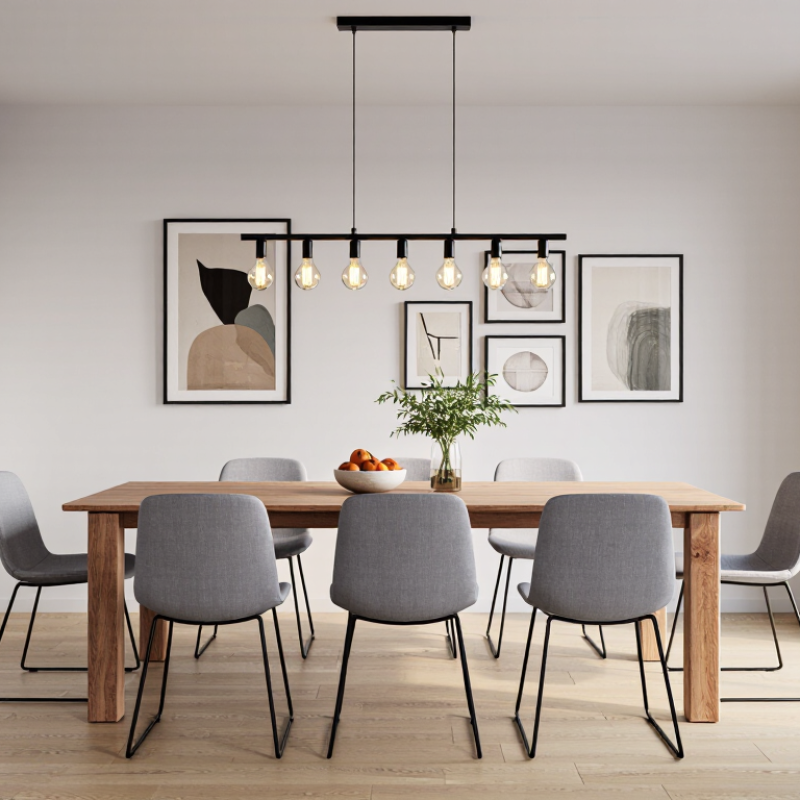
How to Choose the Right Dining Table for Your Space?
Assess your dining space before comparing shapes, finishes, or seating capacity. Measure the room’s length and width, then mark doors, windows, vents, and walkways. Leave about 36 inches between the table edge and nearby walls or furniture. This clearance allows chairs to pull out comfortably. It also keeps daily movement from feeling cramped.
Think about how your household actually uses the table. A couple may need a compact four-seat table, while a family might require six seats and flexible extension space. Measure each chair, including its arms, before deciding on the table width. Rectangular tables suit longer rooms, while round tables can improve conversation in tighter areas. Check leg placement carefully. A central pedestal may offer better knee room than four corner legs.
Your everyday habits matter more than occasional entertaining. Do children complete homework there? Does someone work with a laptop during meals? You may need extra surface depth and durable materials. Consider cleaning time, spills, storage, and sunlight exposure. I once chose a table that looked generous in a showroom, yet its wide frame crowded the walkway at home. That mistake taught me to test the layout with masking tape first. The result may look less elegant on the floor, but it reveals practical problems early. Leave room for real life.
| Dining Space Type | Recommended Table Shape | Suggested Table Size | Typical Seating | Minimum Comfortable Room Size | Best For | Key Planning Consideration | Priority |
|---|---|---|---|---|---|---|---|
| Compact kitchen nook | Round or square | 30–36 in diameter or 30–36 in square | 2–4 people | 8 × 8 ft | Daily meals in apartments or small homes | Choose a pedestal base or slim legs to improve legroom and circulation. | Space saving |
| Small dining area | Round, square, or compact rectangular | 36–42 in diameter or 36 × 48 in | 4 people | 9 × 10 ft | Small households and flexible everyday dining | A round tabletop can reduce sharp corners and make a narrow room feel less crowded. | Flexibility |
| Standard dining room | Rectangular or oval | 36 × 60–72 in | 4–6 people | 10 × 12 ft | Regular family meals and occasional guests | Leave enough space for chairs to pull out without blocking doors or walkways. | Everyday comfort |
| Medium dining room | Rectangular or oval | 36–42 × 72–84 in | 6–8 people | 11 × 13 ft | Families who host meals regularly | An extendable table is useful when the household size changes or guests visit often. | Guest ready |
| Large dining room | Rectangular or oval | 42–48 × 84–96 in | 8–10 people | 12 × 14 ft | Large families, celebrations, and frequent entertaining | Check that the table does not visually overwhelm the room or interfere with nearby furniture. | High capacity |
| Open-plan dining zone | Rectangular, oval, or round | 36–42 × 60–84 in or 42–54 in diameter | 4–8 people | Allow a 36 in circulation path | Homes where the dining area shares space with a kitchen or living room | Use the table to define the dining zone while preserving clear paths between major activity areas. | Traffic flow |
| Work-and-dine space | Rectangular or extendable | 30–36 × 60–72 in | 4–6 people | 10 × 12 ft | Dining, homework, remote work, and crafts | Select a durable, easy-clean surface and ensure comfortable knee clearance for extended sitting. | Versatility |
| Frequent entertaining | Extendable rectangular or oval | 36–42 × 60–72 in extends to 84–96 in | 4–6 daily; 8–10 extended | 12 × 14 ft when extended | Households that host dinners or holiday gatherings | Measure the fully extended length before purchasing, including chair space at both ends. | Expandable |
| Narrow dining room | Oval, narrow rectangular, or drop-leaf | 30–36 × 60–72 in | 4–6 people | 9 × 13 ft | Long rooms with limited width | Keep the tabletop width modest and avoid bulky armchairs that reduce the central passage. | Clearance |
| Small apartment | Drop-leaf, round, or nesting design | 30–36 in diameter or 30–36 × 48 in | 2–4 people | Use at least 30–36 in clear space | Renters and compact urban homes | Prioritize lightweight construction, flexible placement, and storage-friendly proportions. | Adaptable |
Measure the room before choosing a dining table. Record the room’s length, width, door swings, windows, radiators, and fixed cabinets. The National Kitchen & Bath Association’s Kitchen Planning Guidelines recommend about 32 inches between a table edge and nearby furniture. Allow 36 inches for a basic walkway. Increase this to 44 inches when people must pass behind seated diners. These clearances protect daily movement, not just the furniture layout.
A practical example helps. A 60-inch table needs at least 132 inches of room width for comfortable circulation on both sides. That equals 11 feet, or about 3.35 metres. Smaller rooms may need a round table, a drop-leaf design, or bench seating.
The U.S. Access Board’s accessibility guidance also uses 36-inch clear routes as a key planning reference. Residential dining areas are not identical to public spaces, but this standard highlights an important point: clear movement matters.
I once planned around the table alone. The chairs made the room feel crowded.
Tips: Mark the table footprint with painter’s tape. Add chair rectangles, each roughly 20 inches deep. Walk around them with a tray in hand. Open nearby doors fully. Leave extra space near the kitchen route. Measure twice. Real homes rarely behave like floor plans. Recheck the layout when chairs are pulled out, not pushed in.
A dining table should follow the room’s movement, not merely fill an empty corner. Measure the dining area before choosing a shape, including door swings, chair movement, and nearby cabinets. Leave at least 36 inches between the table edge and walls or furniture. Busy family spaces may need more.
Rectangular Tables Rectangular tables suit long rooms and larger gatherings. Their straight edges align well with walls, rugs, and pendant lights.
Round Tables A round table works better in compact or square rooms because it removes sharp corners and supports easier conversation. It can also make a narrow walkway feel less blocked.
Oval Tables Oval tables offer a useful middle ground, combining rectangular seating capacity with softer edges.
I once recommended a rectangular table for a narrow room, assuming extra seats mattered most. The walkway felt cramped, and daily use became frustrating. That experience changed how I assess layouts.
Count the seats, but study the traffic pattern too. A square table can suit a balanced room, yet it may waste space when placed near a doorway. An extendable design is practical, but only if the room can handle its full length.
Think about real habits. Do people pull chairs back often? Does someone carry food from a nearby kitchen? Mark the proposed tabletop with painter’s tape and walk around it. The result may challenge your first choice.
Choosing a dining table starts with people, not the room’s empty floor area. Measure the available length and width, then subtract clearance around every edge. The National Kitchen & Bath Association’s Planning Guidelines commonly allow 36 inches for a comfortable walkway. Increase that space near doors or busy routes. A table can technically fit and still feel awkward. I learned this after placing chairs too close to a wall; guests had to turn sideways when leaving.
For seating, allow about 24 inches of table width per person. A 60-inch rectangular table usually seats six comfortably, while a 72-inch table can support six to eight, depending on leg placement. Round tables need extra care. A 48-inch diameter table often seats four, while a 60-inch model may seat six without making conversation difficult. These estimates align with ergonomic planning principles discussed in the NKBA guidelines and furniture-space research from the Furniture Industry Research Association.
Do not count occasional seats as everyday capacity. Armchairs, wide cushions, and table legs reduce usable space. Leave at least 32 to 36 inches behind a pulled-out chair when possible. Measure with real chairs, not only tape on the floor. That small test exposes problems quickly. A perfect formula does not exist. Household habits, body sizes, and serving styles can change the answer. When uncertain, choose fewer seats and better movement rather than maximum capacity.
Choosing the right dining table starts with material, not decoration. Solid wood offers warmth, repairability, and visible grain, but it can expand with humidity. Veneer usually costs less and resists movement, though damaged edges are harder to restore. Glass makes a small room feel lighter. It also shows fingerprints quickly. Metal suits modern interiors and handles heavy use, yet it may feel cold without softer chairs.
Style must follow your room’s daily rhythm. A round table improves conversation and removes sharp corners, while a rectangular design uses narrow walls efficiently. Allow at least 36 inches between the tabletop and surrounding walls or furniture. For comfort, plan about 24 inches of table width per person. The U.S. Consumer Product Safety Commission’s furniture guidance also supports checking stability, especially where children are present. Sustainability deserves attention too. The U.S. Environmental Protection Agency’s latest detailed furniture-waste table, from 2018, recorded about 12.1 million tons of furniture and furnishings entering the municipal waste stream. Durable construction matters.
Tips: Measure the room, then mark the tabletop with painter’s tape. Walk around it with a chair pulled out. Check the table’s height, leg position, and extension mechanism. Look for recognized safety testing and responsibly sourced wood documentation. A perfect choice is unlikely. I would rather accept a small scratch than buy a fragile table that needs replacing soon. Ask whether the surface can be refinished, and inspect the underside before deciding.
We use cookies on our website to give you an improved browser experience. View our Privacy Policy for more information. Please make your selection to opt in or out of ALL cookies here: Accept or Decline
Do you consent to the use of ALL cookies?
901 2nd Court West
Birmingham, AL 35204
Sales: 866.481.4036
Logistics/Ops: 866.481.4036
2101 Dralle Road
University Park, IL 60466
Sales: 708.813.9070
Logistics/Ops: 708.235.4200
400 E. 13th Street
Little Rock, AR 72114
Sales: 866.760.5344
Logistics/Ops: 866.760.5344
225 Collins Road
Elkhart, IN 46515
Sales: 574.295.0214
Logistics/Ops: 574.607.4611
601 Berryman Pike
Tipton, IN 46072
Sales: 800.897.7591
Logistics/Ops: 800.897.7591
3900 Uvalda Street
Denver, CO 80239
Sales: 303.706.8000
Ops/Logistics: 303.576.8398
510 3rd Street E
Milan, IL 61264
Sales: 800.322.1052
Logistics/Ops: 800.322.1052
1660 E. Aurora
Des Moines, IA 50313
Sales: 800.671.1660
Logistics: 800.671.1660
86554 Gene Lasserre Blvd.
Yulee, FL 32097
Sales: 904.253.3060
Logistics/Ops: 904.225.3000
694 S.E. County Road 245
Lake City, FL 32025
Sales: 800.727.6706
Logistics/Ops: 386.752.7412
210 Neptune Road
Auburndale, FL 33823
Sales: 863.967.1131
Logistics/Ops: 863.777.9814
4601 McCoy Drive
Pensacola, FL 32503
Sales: 850.308.7030
Logistics/Ops: 850.434.5502
815 South 56th Street
Tampa, FL 33619
Sales: 813.302.1940
Logistics/Ops: 813.621.1352
200 Hosea Road
Lawrenceville, GA 30046
Sales: 770.953.7575
Logistics/Ops: 770.513.6000
Branch Product Guide
Branch Line Card
Moulding Offering
Cedar Offering
Column Offering
8173 Hwy. 165 North
Monroe, LA 71211
Sales: 800.256.4165
Logistics/Ops: 800.256.4165
508 Warren Avenue
Portland, ME 04103
Sales: 207.888.2331
Logistics/Ops: 207.797.6565
4300 Georgia Pacific Blvd.
Frederick, MD 21704
Sales: 301.798.7474
Logistics/Ops: 301.874.8000
419 Maple Street
Bellingham, MA 02019
Sales: 508.449.0535
Logistics/Ops: 508.966.5500
825 Buchanan Ave SW
Grand Rapids, MI 49507
Sales: 877.800.1180
Logistics/Ops: 616.278.0909
995 Pacific St. NW
Aitkin, MN 56431
Sales: 800.432.3727
Logistics/Ops: 218.212.7770
1102 Port Terminal Drive
Duluth, MN 55802
Sales: 800.951.9899
Logistics/Ops: 800.851.9899
9110 83rd Ave. North
Brooklyn Park, MN 55445
Sales: 763.425.0204
Logistics/Ops: 763.425.0204
910 E. Railroad Street
Long Beach, MS 39560
Sales: 866.535.4135
Logistics/Ops: 228.205.2400
1727 Warren Street
North Kansas City, MO 64116
Sales: 800.621.2611
Logistics/Ops: 800.621.2611
2123 North Golden
Springfield, MO 65803
Sales: 800.375.7891
Logistics/Ops: 800.375.7891
13860 Corp. Woods Trail
Bridgeton, MO 63044
Sales: 314.209.0800
Logistics/Ops: 314.209.0800
1109 South 19th Street
Omaha, NE 68108
Sales: 800.489.6637
Logistics/Ops: 800.489.6637
1 Luger Road
Denville, NJ 07834
Sales: 973-339-3539
Logistics/Ops: 973.625.1461
3720 Jeffrey Blvd.
Blasdell, NY 14219
Sales: 716.235.5989
Logistics/Ops: 716.825.6557
319 Yaphank Ave.
Yaphank, NY 11980
Sales: 631.358.5714
Logistics/Ops: 631.924.7401
3300 Parkside Drive
Charlotte, NC 28208
Sales: 800.839.2588
Logistics/Ops: 704.394.3172
1712 East D Street
Butner, NC 27509
Sales: 984.389.8200
Logistics/Ops: 919.575.3700
128 Foothills Drive
Statesville, NC 28687
Sales: 800.222.1414
Logistics/Ops: 704.394.3172
550 Munroe Falls Rd.
Tallmadge, OH 44278
Sales: 330.357.4506
Logistics/Ops: 330.794.1141
10347 Toebben Dr.
Independence, KY 41051
Sales: 859.298.3926
Logistics/Ops: 859.746.2250
450 N. MacArthur
Oklahoma City, OK 73127
Sales: 800.375.6025
Logistics/Ops: 800.375.6025
1680 North Aspen
Broken Arrow, OK 74012
Sales: 918.272.2212
Logistics/Ops: 918.272.2212
522 Bridge Street
Hunker, PA 15639
Sales: 878.217.2001
Logistics/Ops: 724.925.7285
4290 Atlanta Street
Charleston, SC 29418
Sales: 843.371.1420
Logistics/Ops: 843.554.8192
1040 S. Industrial Dr.
Erwin, TN 37650
Sales: 423.641.1005
Logistics/Ops: 423.742.5911
4287 Pilot Drive
Memphis, TN 38118
Sales: 901.365.2101
Logistics/Ops: 901.365.2101
700 Myatt Drive
Madison, TN 37115
Sales: 615.327.9547
Logistics/Ops: 629.777.4949
4747 Mark IV Parkway
Fort Worth, TX 76106
Sales: 866.323.5117
Logistics/Ops: 817.625.9091
6990 Market Avenue
El Paso, TX 79915
Sales: 915.778.6356
Logistics/Ops: 915.265.7200
2502 Wilson Road
Harlingen, TX 78552
Sales: 800.580.6711
Logistics/Ops: 800.580.6711
10,000 North Loop East
Houston, TX 77029
Sales: 713.921.1977
Logistics/Ops: 713.675.3544
702 East 44th St.
Lubbock, TX 79404
Sales: 866.454.6010
Logistics/Ops: 866.454.6010
535 N. WW White Road
San Antonio, TX 78219
Sales: 800.284.0488
Logistics/Ops: 210.333.8112
142 Pine Haven Shores Rd.
Shelburne, VT 05482
Sales: 802.800.2540
Logistics/Ops: 802.985.2512
4700 Bethlehem Road,
Richmond, VA 23230
Sales: 804.201.2400
Logistics/Ops: 804.342.1161
4516 N Barker Road
Spokane Valley, WA 99027
Phone: 509.892.9420
Toll free: 800.728.6157
8365 N. 76th Street
Milwaukee, WI 53223
Sales: 800.356.9245
Logistics/Ops: 800.356.9245
312 S. Chester Street
Sparta, WI 54656
Sales: 800.362.5864
Logistics/Ops: 800.362.5864
899 Grossman Drive
Schofield, WI 54476
Sales: 800.472.0017
Logistics/Ops: 800.472.0017
