
We use cookies on our website to give you an improved browser experience. View our Privacy Policy for more information. Please make your selection to opt in or out of ALL cookies here: Accept or Decline
Choosing the right Electro-Hydraulic Valve begins with understanding the machine, not the product catalogue. A valve that performs well on a test bench may behave differently beside a hot hydraulic pump, long hoses, or a rapidly changing load. The correct choice depends on pressure, flow rate, response speed, fluid type, control signal, and installation space. Small details matter. A mismatched port size can create noise, heat, and unwanted pressure loss.
Experienced engineers usually begin with the actuator and its actual duty cycle. They measure peak pressure, normal working pressure, required flow, and acceptable response time. They also check whether the system needs proportional control, directional switching, pressure regulation, or precise position control. Manufacturer data should be verified against recognized technical standards, application notes, and independent test information. Marketing claims alone are not enough.
Real-world reliability requires more than selecting a strong housing. Seal compatibility, contamination tolerance, electrical protection, maintenance access, and spare-part availability deserve equal attention. A valve installed in a dusty factory may need different protection from one used in a clean laboratory. Commissioning should include leak checks, signal testing, temperature monitoring, and controlled load trials. Do not skip this step.
There is no universal best valve. That assumption often causes expensive revisions. Even experienced designers can underestimate transient loads or wiring limitations. Reviewing the decision with a qualified hydraulic specialist can expose these gaps before production begins. The right Electro-Hydraulic Valve should fit the entire system, support safe operation, and remain dependable after months of practical use. Performance on paper is only part of the answer.
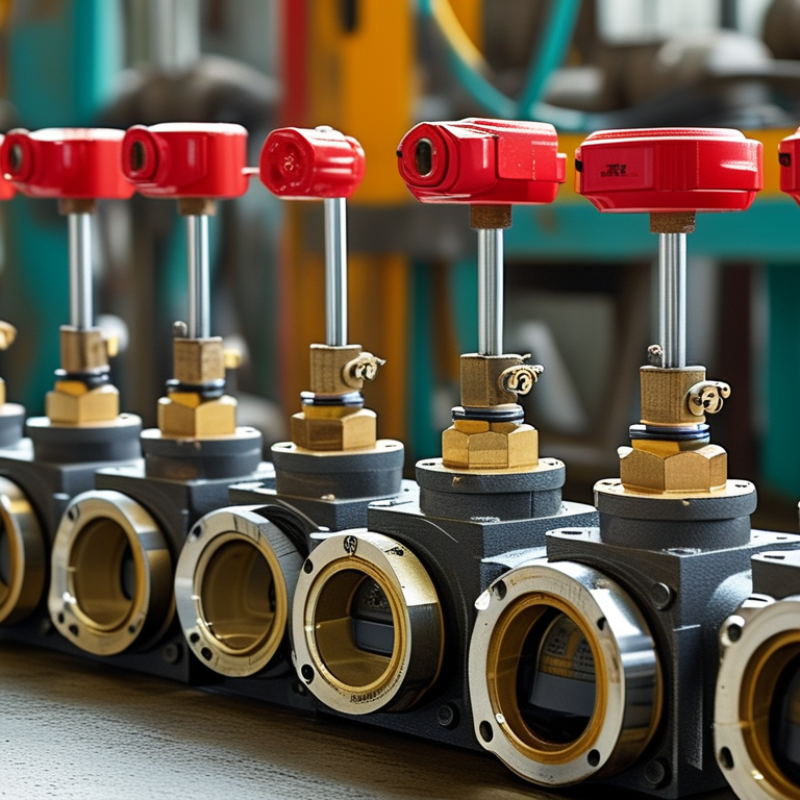
Choosing an electro-hydraulic valve starts with understanding its operating principle. An electrical signal commands a solenoid, proportional coil, or servo actuator. That device shifts a spool or controls a pilot stage. Pressurized fluid then moves the cylinder or motor with controlled force and speed.
Feedback completes the loop. A position sensor measures movement, while pressure and flow sensors reveal operating changes. The controller compares actual performance with the target command. Response depends on oil viscosity, contamination, valve overlap, and signal resolution. Small errors matter.
A 2024 MarketsandMarkets report projects the electro-hydraulic actuator market to grow at about 6% annually through 2029. This growth reflects demand for accurate motion control in mobile machinery and industrial automation. However, growth does not guarantee suitability. ISO 4413 stresses cleanliness, pressure control, safe energy isolation, and verified component ratings in hydraulic systems.
In practical testing, check the valve at cold start and working temperature. Listen for chatter near neutral. Watch pressure spikes during sudden spool movement. A valve rated for 250 bar may still perform poorly when flow demand approaches its limit. That is often overlooked.
Choose open-loop control for simpler tasks. Use closed-loop control when position accuracy, repeatability, or load variation matters. I would not rely on catalog flow data alone. Actual piping, oil condition, wiring, and tuning can change the result. Sometimes, the less expensive valve works better after proper commissioning.
How to Choose the Right Electro-Hydraulic Valve?
Key Application Requirements for Valve Selection
When selecting an electro-hydraulic valve, start with the machine’s actual duty cycle, not its catalog label. Record operating pressure, peak pressure, flow range, fluid type, temperature, and response time. A valve rated for pressure may still perform poorly at low flow. That detail matters. Measure the load during startup, steady movement, and stopping. These readings reveal pressure spikes that a static design sheet can miss.
Control requirements should match the motion. For precise positioning, examine hysteresis, repeatability, resolution, and signal compatibility. For rapid actuation, response time and damping may matter more than maximum flow. Define the safe state after power loss: hold, retract, or release. In commissioning work, unclear failure behavior has often caused more trouble than a slightly undersized connector. Confirm electrical protection, enclosure rating, mounting orientation, and available diagnostic feedback.
Installation conditions deserve equal attention. Dust, moisture, vibration, long cable runs, and contaminated fluid can change real-world performance. Check filtration, cleanliness targets, hose routing, and service access before approval. Ask whether technicians can inspect and replace the valve without draining the entire circuit. I once treated maintenance space as a minor issue; the later redesign cost more than expected. A useful mistake. Validate the selection with prototype testing under worst-case temperature, load, and supply voltage. Paper compatibility is not field evidence.
| Application Area | Key Requirement | Recommended Valve Characteristics | Important Sizing Criteria | Typical Design Guidance | Selection Verification |
|---|---|---|---|---|---|
| Load and Motion | Load type and actuator movement | Use a proportional directional valve for variable speed and position control. Use a servo valve when very high dynamic accuracy and fast closed-loop response are required. | Actuator area, mechanical load, friction, acceleration, required speed, and duty cycle. | Select the valve for the required operating point rather than only the maximum available flow. | Confirm that the actuator can generate the required force or torque at the minimum available system pressure. |
| Flow Capacity | Required actuator speed | Choose a valve with a rated flow that supports the required cylinder or motor speed without excessive pressure loss. | For a cylinder: Q = v × A. For a hydraulic motor: Q is related to displacement and rotational speed. | Allow operating margin above the calculated continuous flow while avoiding unnecessary oversizing. | Check rated flow, maximum flow, pressure drop, and the manufacturer's flow-versus-command curve. |
| Pressure and Force | Maximum working pressure | Use a pressure-rated valve compatible with the working circuit, transient peaks, and the selected hydraulic fluid. | Continuous pressure, peak pressure, return-line pressure, load-induced pressure spikes, and relief-valve setting. | The valve's continuous and peak pressure ratings should exceed the actual system requirements with a suitable engineering margin. | Compare the valve rating with both normal operating pressure and recorded transient pressure. |
| Dynamic Response | Response time and control bandwidth | Use a fast proportional or servo valve for rapid positioning, tension control, vibration testing, or motion synchronization. | Step response, frequency response, spool dynamics, actuator natural frequency, and control-loop sampling rate. | A slower valve may be appropriate for basic speed control; high-performance motion systems require matched valve and controller dynamics. | Review response-time data under the actual pressure, flow, temperature, and load conditions. |
| Accuracy and Stability | Position, force, or speed accuracy | Use closed-loop feedback with a proportional or servo valve when repeatability and low steady-state error are important. | Hysteresis, repeatability, null shift, resolution, deadband, leakage, and sensor accuracy. | The complete system accuracy depends on the valve, actuator, sensor, controller, fluid cleanliness, and mechanical compliance. | Evaluate performance across the complete temperature and pressure range, not only at one laboratory condition. |
| Fluid Cleanliness | Contamination tolerance | Use a valve whose cleanliness requirements match the filtration system. High-response servo valves generally require cleaner fluid than standard directional valves. | Required cleanliness code, filter rating, water content, varnish risk, and contamination-monitoring capability. | Maintain the cleanliness level specified for the selected valve and protect the circuit from particle ingress. | Specify filtration, flushing, sampling, and maintenance procedures before commissioning. |
| Leakage Control | Load holding and internal leakage | Use a low-leakage or closed-center configuration when actuator drift or load holding is critical. Add suitable load-holding devices when required. | Internal leakage at rated pressure, actuator compressibility, load mass, valve center condition, and holding time. | A directional valve alone may not provide a safe load-holding function for suspended or hazardous loads. | Test drift and leakage at operating temperature, pressure, and load; verify the required fail-safe condition. |
| Control Signal | Electrical interface and command type | Select the appropriate analog, fieldbus, or integrated electronics interface. Confirm whether the command is voltage, current, or digital. | Command range, feedback signal, supply voltage, input impedance, shielding, grounding, and communication protocol. | Common industrial command ranges include 0–10 V and 4–20 mA, but the valve electronics must match the controller. | Check pin assignments, signal polarity, diagnostic functions, electromagnetic compatibility, and cable requirements. |
| Fail-Safe Operation | Behavior during power or signal loss | Choose the correct spring-centered, spring-offset, detented, or monitored configuration. Use redundant or pilot-operated safety functions where necessary. | Required actuator position, stopping distance, stored energy, load-holding needs, and restart behavior. | Define the safe state before selecting the valve center condition or electrical de-energized position. | Perform power-loss, cable-break, emergency-stop, and controller-fault tests under the real load condition. |
| Pressure Drop and Efficiency | Energy consumption and heat generation | Use a valve with suitable flow passages and proportional characteristics to limit throttling losses. | Pressure drop at actual flow, pump efficiency, duty cycle, tank temperature, and available cooling capacity. | Excessive pressure drop converts hydraulic power into heat and can reduce system efficiency. | Calculate power loss using hydraulic power approximately equal to pressure drop multiplied by flow. |
| Environmental Conditions | Temperature, moisture, vibration, and corrosion | Specify seals, enclosure protection, connectors, and materials suitable for the installation environment. | Ambient temperature, fluid temperature, humidity, washdown exposure, vibration, shock, dust, and corrosive chemicals. | The valve's operating temperature and enclosure protection must cover the complete installation environment. | Verify environmental ratings for the valve, solenoid, electronics, connectors, and cable assemblies. |
| Hydraulic Fluid | Fluid compatibility | Match seal materials, coatings, and valve construction to the specified mineral oil, fire-resistant fluid, or biodegradable fluid. | Viscosity range, operating temperature, additives, water content, oxidation stability, and material compatibility. | Operating viscosity should remain within the valve's specified range to prevent sluggish response or excessive wear. | Confirm fluid compatibility with seals, spool, body materials, electronics, hoses, and filtration equipment. |
| Installation | Mounting and piping arrangement | Choose a valve configuration compatible with the manifold, subplate, port size, pipe routing, and available service space. | Mounting pattern, port size, flow direction, installation orientation, tube length, and accessibility. | Avoid undersized lines, sharp bends, unsupported valve mass, and piping arrangements that increase vibration. | Check interface dimensions, port standards, mounting torque, allowable orientation, and maintenance clearance. |
| Reliability and Maintenance | Service life and maintainability | Select a robust valve design with available diagnostic data, replaceable seals where appropriate, and accessible contamination-control components. | Switching frequency, cycle count, duty cycle, thermal loading, service intervals, and spare-part requirements. | High-cycle applications require validation under the actual pressure, temperature, flow, and command profile. | Review life-test data, maintenance instructions, failure modes, diagnostic capability, and commissioning procedures. |
| Safety and Compliance | Machine safety and applicable regulations | Use monitored, redundant, or safety-rated hydraulic functions when the risk assessment requires them. | Hazard severity, required performance level, diagnostic coverage, redundancy, safe stop function, and system architecture. | Valve selection should follow the machine risk assessment and applicable hydraulic and electrical safety requirements. | Document the safety function, validation method, proof-test interval, and behavior after detected faults. |
Choosing an electro-hydraulic valve starts with the system, not the catalog. Measure actual flow, peak pressure, return-line pressure, fluid temperature, and duty cycle. A valve rated for 210 bar may fail early when pressure spikes repeatedly near its limit. Leave a practical margin, but do not oversize blindly. A larger valve can reduce pressure loss, yet it may respond slowly and waste energy.
The U.S. Department of Energy reports that pumping systems can consume 25–50% of industrial electricity. Although this figure covers complete pumping systems, it shows why valve pressure drop deserves attention. Calculate the required flow at the actuator’s real speed. Then compare that value with the valve’s rated flow at its specified pressure drop. A 40 L/min valve may deliver much less performance if the application demands low hysteresis and rapid positioning. Check the control signal, response time, leakage class, and fail-safe position together.
Temperature changes the decision. High viscosity can slow response, while thin, overheated fluid can increase internal leakage. ISO 4413 guidance also emphasizes cleanliness, pressure control, and safe energy isolation. In field inspections, contamination is often treated as a maintenance issue rather than a specification issue. That is a mistake. Specify filtration and fluid compatibility with the valve. I would also test the worst operating condition, not only the clean laboratory condition. My earlier tendency was to trust nominal ratings too quickly. Actual machines are less polite.
Matching valve specifications to system flow and pressure conditions
The recommended nominal flow rating is typically selected about 20–30% above the system’s peak flow demand to accommodate pressure losses, temperature-related viscosity changes, and control margin. The valve’s maximum pressure rating must also exceed the highest operating pressure, including transient spikes.
Valve selection should begin with the movement, not the catalogue. Directional valves suit simple start-stop motion, while proportional valves regulate flow and pressure with greater flexibility. Servo valves offer faster response and finer positioning, but they demand cleaner oil and careful tuning. According to IEC 60534-2-1, control-valve sizing depends on flow, pressure drop, fluid properties, and operating conditions. Ignoring any of these can create noise, heat, or unstable motion.
Control method changes performance. A solenoid-operated valve is economical for repeatable switching. Proportional control supports smoother acceleration and deceleration. Closed-loop control adds feedback from position or pressure sensors, improving accuracy under changing loads. MarketsandMarkets’ 2024 Industrial Valves Market report estimates growth from about USD 78 billion in 2024 to over USD 99 billion by 2029. That growth reflects automation demand, but market growth does not guarantee a correct application choice. In field testing, response time, leakage, contamination tolerance, and power consumption often matter more than nominal pressure ratings. A larger valve is not automatically better.
Tips: Match the valve’s rated flow to the cylinder’s real speed. Check pressure losses at peak demand. Specify fail-safe behavior before installation. Follow ISO 4406 cleanliness targets where sensitive components are used. Test the complete circuit, not only the valve. My own bias is toward conservative sizing, yet oversizing can reduce control resolution. That trade-off deserves another review.
Choosing the right electro-hydraulic valve starts with the installation environment. Check the pressure, flow rate, fluid type, temperature, and electrical supply before unpacking the valve. Confirm the port markings carefully. A reversed connection can cause unstable movement or sudden actuator travel.
Mount the valve on a clean, rigid surface. Keep electrical connectors away from water, heat, and moving parts. Flush the hydraulic lines before connection. Small metal particles can damage internal control surfaces. During testing, increase pressure gradually and watch for leaks, noise, delayed response, or overheating. Use a calibrated gauge and record the results. Do not rely only on a quick visual check. I have seen apparently normal systems fail after several operating cycles.
Maintenance should follow operating hours, not guesswork. Inspect seals, fittings, cables, and mounting bolts regularly. Replace damaged parts with compatible components. Filter condition deserves attention. A clogged filter may imitate a valve fault. Before servicing, isolate electrical power, release hydraulic pressure, and secure any suspended load. Hydraulic energy can remain trapped. Lockout procedures reduce this risk. Safety glasses and suitable gloves are practical requirements, not decoration. Test emergency stopping and fail-safe functions under controlled conditions. The selection may still need revision after testing, especially when actual machine behavior differs from the original calculations.
We use cookies on our website to give you an improved browser experience. View our Privacy Policy for more information. Please make your selection to opt in or out of ALL cookies here: Accept or Decline
Do you consent to the use of ALL cookies?
901 2nd Court West
Birmingham, AL 35204
Sales: 866.481.4036
Logistics/Ops: 866.481.4036
2101 Dralle Road
University Park, IL 60466
Sales: 708.813.9070
Logistics/Ops: 708.235.4200
400 E. 13th Street
Little Rock, AR 72114
Sales: 866.760.5344
Logistics/Ops: 866.760.5344
225 Collins Road
Elkhart, IN 46515
Sales: 574.295.0214
Logistics/Ops: 574.607.4611
601 Berryman Pike
Tipton, IN 46072
Sales: 800.897.7591
Logistics/Ops: 800.897.7591
3900 Uvalda Street
Denver, CO 80239
Sales: 303.706.8000
Ops/Logistics: 303.576.8398
510 3rd Street E
Milan, IL 61264
Sales: 800.322.1052
Logistics/Ops: 800.322.1052
1660 E. Aurora
Des Moines, IA 50313
Sales: 800.671.1660
Logistics: 800.671.1660
86554 Gene Lasserre Blvd.
Yulee, FL 32097
Sales: 904.253.3060
Logistics/Ops: 904.225.3000
694 S.E. County Road 245
Lake City, FL 32025
Sales: 800.727.6706
Logistics/Ops: 386.752.7412
210 Neptune Road
Auburndale, FL 33823
Sales: 863.967.1131
Logistics/Ops: 863.777.9814
4601 McCoy Drive
Pensacola, FL 32503
Sales: 850.308.7030
Logistics/Ops: 850.434.5502
815 South 56th Street
Tampa, FL 33619
Sales: 813.302.1940
Logistics/Ops: 813.621.1352
200 Hosea Road
Lawrenceville, GA 30046
Sales: 770.953.7575
Logistics/Ops: 770.513.6000
Branch Product Guide
Branch Line Card
Moulding Offering
Cedar Offering
Column Offering
8173 Hwy. 165 North
Monroe, LA 71211
Sales: 800.256.4165
Logistics/Ops: 800.256.4165
508 Warren Avenue
Portland, ME 04103
Sales: 207.888.2331
Logistics/Ops: 207.797.6565
4300 Georgia Pacific Blvd.
Frederick, MD 21704
Sales: 301.798.7474
Logistics/Ops: 301.874.8000
419 Maple Street
Bellingham, MA 02019
Sales: 508.449.0535
Logistics/Ops: 508.966.5500
825 Buchanan Ave SW
Grand Rapids, MI 49507
Sales: 877.800.1180
Logistics/Ops: 616.278.0909
995 Pacific St. NW
Aitkin, MN 56431
Sales: 800.432.3727
Logistics/Ops: 218.212.7770
1102 Port Terminal Drive
Duluth, MN 55802
Sales: 800.951.9899
Logistics/Ops: 800.851.9899
9110 83rd Ave. North
Brooklyn Park, MN 55445
Sales: 763.425.0204
Logistics/Ops: 763.425.0204
910 E. Railroad Street
Long Beach, MS 39560
Sales: 866.535.4135
Logistics/Ops: 228.205.2400
1727 Warren Street
North Kansas City, MO 64116
Sales: 800.621.2611
Logistics/Ops: 800.621.2611
2123 North Golden
Springfield, MO 65803
Sales: 800.375.7891
Logistics/Ops: 800.375.7891
13860 Corp. Woods Trail
Bridgeton, MO 63044
Sales: 314.209.0800
Logistics/Ops: 314.209.0800
1109 South 19th Street
Omaha, NE 68108
Sales: 800.489.6637
Logistics/Ops: 800.489.6637
1 Luger Road
Denville, NJ 07834
Sales: 973-339-3539
Logistics/Ops: 973.625.1461
3720 Jeffrey Blvd.
Blasdell, NY 14219
Sales: 716.235.5989
Logistics/Ops: 716.825.6557
319 Yaphank Ave.
Yaphank, NY 11980
Sales: 631.358.5714
Logistics/Ops: 631.924.7401
3300 Parkside Drive
Charlotte, NC 28208
Sales: 800.839.2588
Logistics/Ops: 704.394.3172
1712 East D Street
Butner, NC 27509
Sales: 984.389.8200
Logistics/Ops: 919.575.3700
128 Foothills Drive
Statesville, NC 28687
Sales: 800.222.1414
Logistics/Ops: 704.394.3172
550 Munroe Falls Rd.
Tallmadge, OH 44278
Sales: 330.357.4506
Logistics/Ops: 330.794.1141
10347 Toebben Dr.
Independence, KY 41051
Sales: 859.298.3926
Logistics/Ops: 859.746.2250
450 N. MacArthur
Oklahoma City, OK 73127
Sales: 800.375.6025
Logistics/Ops: 800.375.6025
1680 North Aspen
Broken Arrow, OK 74012
Sales: 918.272.2212
Logistics/Ops: 918.272.2212
522 Bridge Street
Hunker, PA 15639
Sales: 878.217.2001
Logistics/Ops: 724.925.7285
4290 Atlanta Street
Charleston, SC 29418
Sales: 843.371.1420
Logistics/Ops: 843.554.8192
1040 S. Industrial Dr.
Erwin, TN 37650
Sales: 423.641.1005
Logistics/Ops: 423.742.5911
4287 Pilot Drive
Memphis, TN 38118
Sales: 901.365.2101
Logistics/Ops: 901.365.2101
700 Myatt Drive
Madison, TN 37115
Sales: 615.327.9547
Logistics/Ops: 629.777.4949
4747 Mark IV Parkway
Fort Worth, TX 76106
Sales: 866.323.5117
Logistics/Ops: 817.625.9091
6990 Market Avenue
El Paso, TX 79915
Sales: 915.778.6356
Logistics/Ops: 915.265.7200
2502 Wilson Road
Harlingen, TX 78552
Sales: 800.580.6711
Logistics/Ops: 800.580.6711
10,000 North Loop East
Houston, TX 77029
Sales: 713.921.1977
Logistics/Ops: 713.675.3544
702 East 44th St.
Lubbock, TX 79404
Sales: 866.454.6010
Logistics/Ops: 866.454.6010
535 N. WW White Road
San Antonio, TX 78219
Sales: 800.284.0488
Logistics/Ops: 210.333.8112
142 Pine Haven Shores Rd.
Shelburne, VT 05482
Sales: 802.800.2540
Logistics/Ops: 802.985.2512
4700 Bethlehem Road,
Richmond, VA 23230
Sales: 804.201.2400
Logistics/Ops: 804.342.1161
4516 N Barker Road
Spokane Valley, WA 99027
Phone: 509.892.9420
Toll free: 800.728.6157
8365 N. 76th Street
Milwaukee, WI 53223
Sales: 800.356.9245
Logistics/Ops: 800.356.9245
312 S. Chester Street
Sparta, WI 54656
Sales: 800.362.5864
Logistics/Ops: 800.362.5864
899 Grossman Drive
Schofield, WI 54476
Sales: 800.472.0017
Logistics/Ops: 800.472.0017
