
We use cookies on our website to give you an improved browser experience. View our Privacy Policy for more information. Please make your selection to opt in or out of ALL cookies here: Accept or Decline
A detachable sunroom can turn a patio into a bright, sheltered place for morning coffee, quiet reading, or extra room when family visits. But the best choice is not simply the largest model or the one with the prettiest frame. It should fit your home, local weather, available space, and plans for using it. A structure that looks airy in a product photo may feel cramped once you add a table, chairs, and a door swing. Measure the site carefully. Then picture an ordinary day inside.
Architect Frank Lloyd Wright observed, “The space within becomes the reality of the building.” His words address architecture broadly, not detachable sunrooms specifically, but they offer a useful lens: comfort depends on how a space works, not just how it looks. When comparing options, examine the frame, panel materials, ventilation, anchoring method, and instructions for seasonal removal. Ask how the unit handles wind and rain, and whether replacement parts are available. Details matter.
No model suits every home. A shaded yard may need different glazing from a sunny one, and a lightweight design may require more careful anchoring. Even a thorough checklist can miss a practical issue, such as where stored panels will go in winter. That is worth considering early. This guide explains how to choose a Detachable Sunroom with realistic expectations, clear questions for sellers, and attention to the small details that shape everyday comfort.
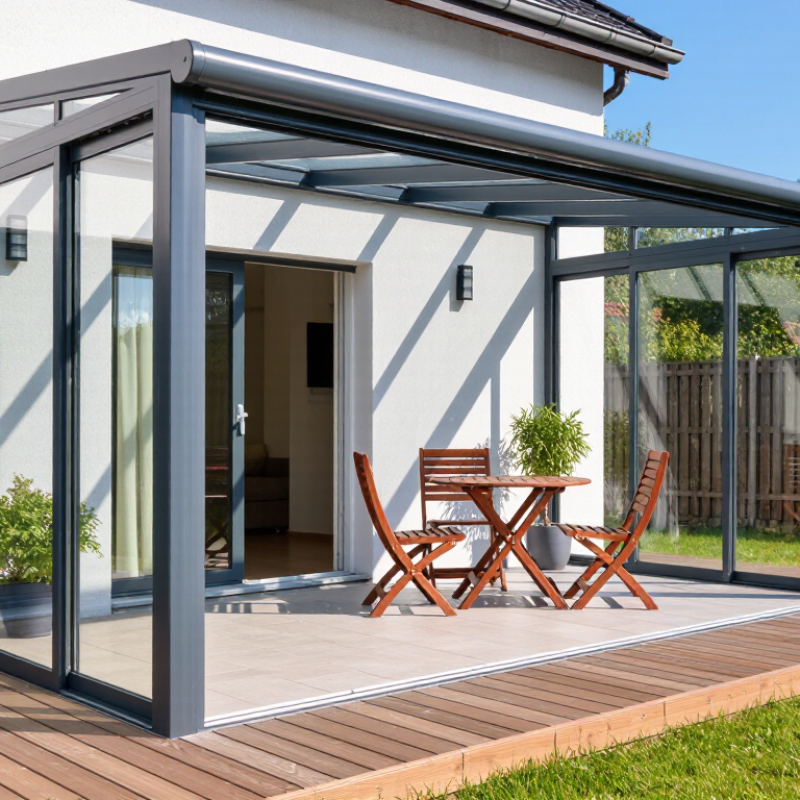
Before comparing detachable sunrooms, measure the usable ground, not just the open area you can see. Mark doors, stairs, drains, and the path you use to carry chairs outside. A frame that fits on paper may block a sliding door during daily use. Check overhead branches and the direction of afternoon sun, too. Small details matter. On a narrow patio, a few inches can affect ventilation and movement. It is easy to misjudge the space until furniture is inside.
Climate should shape the frame, panels, and anchoring method you consider. Wind exposure, heavy rain, snow, and strong sun can place very different demands on a structure. Compare product specifications with your local conditions, and ask how the enclosure should be secured on your surface. A soft lawn and a concrete patio may need different approaches. For warm, sunny areas, screened or ventilated sides can help reduce trapped heat. In cooler weather, enclosed panels may extend comfortable use, but they will not replace proper heating. Think about the room’s job: quiet reading, meals, plant care, or occasional storage. A small table needs less clearance than dining chairs pulled back from it. Don’t assume one setup will suit every season; note when you expect to use the space and what you may need to move or adjust.
How to Choose the Best Detachable Sunroom
Compare Detachable Sunroom Types and Structural Designs
A fabric-sided sunroom is light and quick to take down, making it useful for mild seasons and compact patios. Its frame may flex in gusts, and fabric can flap or hold moisture if ventilation is poor. Not ideal for every climate. Panel-based designs use clear polycarbonate or glass-like sections for a steadier, brighter enclosure. They usually feel more substantial, but heavier panels need stronger framing and careful storage.
The frame matters as much as the walls. Aluminum is easier to move and resists rust, while steel can feel sturdier but adds weight; coating and joint quality still matter. A freestanding structure can sit away from the house, while an attached design may share a wall but needs a sound connection and reliable flashing. Check roof pitch, drainage paths, anchoring points, and stated wind or snow limits before choosing. Details decide comfort.
Measure the patio in real use, including door swings, chairs, and the path for removing panels. A larger enclosure can look appealing on paper, yet block light or collect water beside the home. It is easy to overvalue window area and overlook how the structure handles rain. Compare how each system locks, vents, and packs away, then ask an installer to assess the surface and local exposure if conditions are uncertain. Test a panel removal before committing; awkward latches become obvious quickly.
| Sunroom Type | Typical Structural Design | Roof and Wall Materials | Seasonal Comfort | Detachment and Storage | Best Suited For | Key Checks Before Buying |
|---|---|---|---|---|---|---|
| Retractable fabric canopy enclosure | Lightweight frame, commonly aluminum or steel, with a folding or telescoping canopy and optional removable side panels. | Coated outdoor fabric roof; fabric, mesh, or clear flexible panels at the sides. | Provides shade and basic rain protection when designed for it; generally offers limited insulation and is not a year-round thermal enclosure. | Usually among the easiest styles to retract or take down. Fabric should be clean and fully dry before storage. | Temporary summer seating, patios, and users who want a flexible, open-air arrangement. | Check anchoring requirements, drainage, fabric care, and the manufacturer’s stated wind and weather limits. |
| Removable screen room | A frame attached to a patio or deck, with screen panels fitted into framed openings or removable tracks. | Typically a solid or fabric-covered roof with mesh wall panels; some designs include clear seasonal inserts. | Allows airflow and helps keep insects out, but screens do not provide meaningful insulation or stop wind-driven rain completely. | Screen panels can often be removed seasonally; frame removal depends on whether it is freestanding or fixed to the building. | Warm-weather use in areas where ventilation and insect protection are priorities. | Confirm screen repair options, door placement, roof runoff management, and secure frame connections. |
| Polycarbonate-panel enclosure | Lightweight framed structure with sloped roof panels; wall panels may be fixed, sliding, or removable. | Polycarbonate sheets on the roof and sometimes the walls, supported by aluminum or steel framing. | Transmits daylight and offers more weather protection than a screen room. Comfort varies with panel type, ventilation, shading, and local climate. | Panels may be removable, but dismantling a framed enclosure usually takes more effort than retracting a canopy. | Users seeking a bright, sheltered space without the weight of a full glass enclosure. | Check UV protection, panel thickness and support spacing, thermal movement allowances, condensation, and snow-load suitability. |
| Louvered-roof pergola enclosure | Post-and-beam structure with adjustable roof louvers; optional sliding glass, screen, or fabric side panels. | Usually aluminum louvers and frame; side panels vary by configuration. | Louvers regulate shade and airflow. A closed roof may shed rain if designed with drainage, but open sides limit temperature control. | The roof is generally adjustable rather than fully detachable; side screens or panels may be removable. | Patios where adjustable shade and ventilation matter more than full insulation. | Review drainage paths, motor or manual operation, frame anchoring, and wind limits in both open and closed positions. |
| Modular glass-panel sunroom | Rigid frame anchored to a suitable deck, slab, or building; may use sliding or removable panels, but is typically a semi-permanent installation. | Framed safety glass or glazing panels, often with an aluminum frame; roof glazing or an insulated solid roof is possible. | Offers stronger protection from wind and rain than open-sided options. Insulation depends on glazing, seals, roof construction, and heating or cooling. | Panel removal may be possible, but the frame and foundation connections make this less portable and slower to dismantle. | A more enclosed, daylight-filled room where a substantial structure is acceptable. | Check glass safety rating, structural loads, water sealing, ventilation, foundation capacity, and local permit requirements. |
Selection note: “Detachable” can mean removable panels, a retractable roof, or a structure that can be dismantled. Confirm exactly which components detach. Wind, snow, rain, and building-code performance depend on the specific design, installation, anchoring, and local conditions; check the product documentation and local requirements before purchase.
Evaluate Materials, Glazing, and Weather Protection
Start with the frame and glazing, not the brochure’s room photos. Aluminum is light and durable, but exposed metal can conduct heat quickly. Thermally broken frames reduce that path. Timber can feel warmer, yet needs regular inspection for moisture damage. Check joints and hardware, too. Detachable sections are only as reliable as their connections.
Glazing affects comfort as well as daylight. The U.S. Department of Energy’s Energy Saver guidance says windows account for about 25–30% of household heating and cooling energy use. That figure is not a sunroom-specific estimate, but it shows why glass performance matters. Compare U-factor and solar heat gain coefficient (SHGC) ratings on National Fenestration Rating Council labels. Lower U-factors generally mean less heat transfer; suitable SHGC depends on climate and sun exposure. Details matter. I would not pretend one glazing choice fits every site.
Weather protection deserves a hands-on check. Look for continuous seals, sloped roof panels, clear drainage paths, and corrosion-resistant fasteners. Water always finds gaps. Ask for documented wind-load and snow-load ratings, then compare them with local conditions and installation requirements. A quick hose test can reveal poor drainage, though it cannot replace proper testing. Inspect the corners after assembly; small alignment errors are easy to miss and can invite drafts or leaks.
A detachable sunroom should connect securely without putting unnecessary stress on the house. Start by checking how its frame attaches: clamps, brackets, or a track system each suit different wall and roof conditions. Compare the proposed fixing points with your home’s materials, not just the product dimensions. A connection that looks firm on a smooth wall may shift on uneven siding. Small details matter.
Before installation, confirm the required clearances and whether the sunroom needs a level base. Read the assembly instructions fully, then lay out the parts and check that all fasteners are present. Allow enough room for doors to open and for rainwater to drain away from the house. If drilling, anchoring, or altering a wall is involved, ask a qualified installer to assess the structure. Guessing can be costly.
Safety depends on more than tight bolts. Check that panels lock in place, edges are finished, and the frame does not wobble under gentle pressure. Follow the maker’s limits for wind, snow, and use; detachable does not mean safe in every storm. Recheck fittings after the first few weeks and after severe weather. This step is easy to forget. I would also keep the instructions nearby, since memory tends to simplify the awkward parts.
Compare itemized quotes, not just headline prices. Ask whether the estimate includes the frame, panels, anchoring hardware, delivery, and installation. A low upfront price may leave out site preparation or weather seals. Compare options with similar dimensions and materials. Small extras add up. Keep a modest allowance for unexpected fitting work, since uneven patios can complicate installation.
Maintenance depends on the materials and your local weather. Glass panels need regular cleaning, while polycarbonate may scratch if scrubbed with abrasive pads. Check how easily panels and seals can be replaced. Ask about recommended cleaning products and seasonal inspections. Budget time as well as money. I would not assume “low maintenance” means maintenance-free; dust, moisture, and loose fasteners still need attention.
Read the warranty before paying a deposit. Confirm how long coverage lasts for the frame, panels, and hardware, since these may have different terms. Ask whether labor, replacement parts, and shipping are included. Note exclusions for storm damage, improper cleaning, or modifications. Keep the warranty and care instructions with your receipt. Even careful comparisons can miss a detail, so get verbal promises in writing.
We use cookies on our website to give you an improved browser experience. View our Privacy Policy for more information. Please make your selection to opt in or out of ALL cookies here: Accept or Decline
Do you consent to the use of ALL cookies?
901 2nd Court West
Birmingham, AL 35204
Sales: 866.481.4036
Logistics/Ops: 866.481.4036
2101 Dralle Road
University Park, IL 60466
Sales: 708.813.9070
Logistics/Ops: 708.235.4200
400 E. 13th Street
Little Rock, AR 72114
Sales: 866.760.5344
Logistics/Ops: 866.760.5344
225 Collins Road
Elkhart, IN 46515
Sales: 574.295.0214
Logistics/Ops: 574.607.4611
601 Berryman Pike
Tipton, IN 46072
Sales: 800.897.7591
Logistics/Ops: 800.897.7591
3900 Uvalda Street
Denver, CO 80239
Sales: 303.706.8000
Ops/Logistics: 303.576.8398
510 3rd Street E
Milan, IL 61264
Sales: 800.322.1052
Logistics/Ops: 800.322.1052
1660 E. Aurora
Des Moines, IA 50313
Sales: 800.671.1660
Logistics: 800.671.1660
86554 Gene Lasserre Blvd.
Yulee, FL 32097
Sales: 904.253.3060
Logistics/Ops: 904.225.3000
694 S.E. County Road 245
Lake City, FL 32025
Sales: 800.727.6706
Logistics/Ops: 386.752.7412
210 Neptune Road
Auburndale, FL 33823
Sales: 863.967.1131
Logistics/Ops: 863.777.9814
4601 McCoy Drive
Pensacola, FL 32503
Sales: 850.308.7030
Logistics/Ops: 850.434.5502
815 South 56th Street
Tampa, FL 33619
Sales: 813.302.1940
Logistics/Ops: 813.621.1352
200 Hosea Road
Lawrenceville, GA 30046
Sales: 770.953.7575
Logistics/Ops: 770.513.6000
Branch Product Guide
Branch Line Card
Moulding Offering
Cedar Offering
Column Offering
8173 Hwy. 165 North
Monroe, LA 71211
Sales: 800.256.4165
Logistics/Ops: 800.256.4165
508 Warren Avenue
Portland, ME 04103
Sales: 207.888.2331
Logistics/Ops: 207.797.6565
4300 Georgia Pacific Blvd.
Frederick, MD 21704
Sales: 301.798.7474
Logistics/Ops: 301.874.8000
419 Maple Street
Bellingham, MA 02019
Sales: 508.449.0535
Logistics/Ops: 508.966.5500
825 Buchanan Ave SW
Grand Rapids, MI 49507
Sales: 877.800.1180
Logistics/Ops: 616.278.0909
995 Pacific St. NW
Aitkin, MN 56431
Sales: 800.432.3727
Logistics/Ops: 218.212.7770
1102 Port Terminal Drive
Duluth, MN 55802
Sales: 800.951.9899
Logistics/Ops: 800.851.9899
9110 83rd Ave. North
Brooklyn Park, MN 55445
Sales: 763.425.0204
Logistics/Ops: 763.425.0204
910 E. Railroad Street
Long Beach, MS 39560
Sales: 866.535.4135
Logistics/Ops: 228.205.2400
1727 Warren Street
North Kansas City, MO 64116
Sales: 800.621.2611
Logistics/Ops: 800.621.2611
2123 North Golden
Springfield, MO 65803
Sales: 800.375.7891
Logistics/Ops: 800.375.7891
13860 Corp. Woods Trail
Bridgeton, MO 63044
Sales: 314.209.0800
Logistics/Ops: 314.209.0800
1109 South 19th Street
Omaha, NE 68108
Sales: 800.489.6637
Logistics/Ops: 800.489.6637
1 Luger Road
Denville, NJ 07834
Sales: 973-339-3539
Logistics/Ops: 973.625.1461
3720 Jeffrey Blvd.
Blasdell, NY 14219
Sales: 716.235.5989
Logistics/Ops: 716.825.6557
319 Yaphank Ave.
Yaphank, NY 11980
Sales: 631.358.5714
Logistics/Ops: 631.924.7401
3300 Parkside Drive
Charlotte, NC 28208
Sales: 800.839.2588
Logistics/Ops: 704.394.3172
1712 East D Street
Butner, NC 27509
Sales: 984.389.8200
Logistics/Ops: 919.575.3700
128 Foothills Drive
Statesville, NC 28687
Sales: 800.222.1414
Logistics/Ops: 704.394.3172
550 Munroe Falls Rd.
Tallmadge, OH 44278
Sales: 330.357.4506
Logistics/Ops: 330.794.1141
10347 Toebben Dr.
Independence, KY 41051
Sales: 859.298.3926
Logistics/Ops: 859.746.2250
450 N. MacArthur
Oklahoma City, OK 73127
Sales: 800.375.6025
Logistics/Ops: 800.375.6025
1680 North Aspen
Broken Arrow, OK 74012
Sales: 918.272.2212
Logistics/Ops: 918.272.2212
522 Bridge Street
Hunker, PA 15639
Sales: 878.217.2001
Logistics/Ops: 724.925.7285
4290 Atlanta Street
Charleston, SC 29418
Sales: 843.371.1420
Logistics/Ops: 843.554.8192
1040 S. Industrial Dr.
Erwin, TN 37650
Sales: 423.641.1005
Logistics/Ops: 423.742.5911
4287 Pilot Drive
Memphis, TN 38118
Sales: 901.365.2101
Logistics/Ops: 901.365.2101
700 Myatt Drive
Madison, TN 37115
Sales: 615.327.9547
Logistics/Ops: 629.777.4949
4747 Mark IV Parkway
Fort Worth, TX 76106
Sales: 866.323.5117
Logistics/Ops: 817.625.9091
6990 Market Avenue
El Paso, TX 79915
Sales: 915.778.6356
Logistics/Ops: 915.265.7200
2502 Wilson Road
Harlingen, TX 78552
Sales: 800.580.6711
Logistics/Ops: 800.580.6711
10,000 North Loop East
Houston, TX 77029
Sales: 713.921.1977
Logistics/Ops: 713.675.3544
702 East 44th St.
Lubbock, TX 79404
Sales: 866.454.6010
Logistics/Ops: 866.454.6010
535 N. WW White Road
San Antonio, TX 78219
Sales: 800.284.0488
Logistics/Ops: 210.333.8112
142 Pine Haven Shores Rd.
Shelburne, VT 05482
Sales: 802.800.2540
Logistics/Ops: 802.985.2512
4700 Bethlehem Road,
Richmond, VA 23230
Sales: 804.201.2400
Logistics/Ops: 804.342.1161
4516 N Barker Road
Spokane Valley, WA 99027
Phone: 509.892.9420
Toll free: 800.728.6157
8365 N. 76th Street
Milwaukee, WI 53223
Sales: 800.356.9245
Logistics/Ops: 800.356.9245
312 S. Chester Street
Sparta, WI 54656
Sales: 800.362.5864
Logistics/Ops: 800.362.5864
899 Grossman Drive
Schofield, WI 54476
Sales: 800.472.0017
Logistics/Ops: 800.472.0017
