
We use cookies on our website to give you an improved browser experience. View our Privacy Policy for more information. Please make your selection to opt in or out of ALL cookies here: Accept or Decline
For global buyers, choosing a dependable carbon steel pipe supplier requires more than comparing prices. The best manufacturers combine production experience, consistent quality control, and clear technical communication. This guide, Top Carbon Seamless Pipe Manufacturers for Global Buyers, examines the practical signals behind a trustworthy supplier. A capable Carbon Seamless Pipe Manufacturer should explain its manufacturing route, steel grades, dimensions, and testing procedures without vague claims. Buyers should also review applicable standards, including ASTM, ASME, API, or EN requirements. These standards matter on real projects.
Factory evidence is equally important. Look for heat-number traceability, chemical analysis, tensile results, hydrostatic testing, and dimensional inspection records. Mill test certificates should match the delivered bundle, not merely a sample document. Small details count. Photographs of marked pipes, protective end caps, and dry warehouse storage can reveal operational discipline. Independent inspection may add confidence before shipment, especially for critical energy, construction, and process applications. Packaging, loading methods, lead times, and export documentation also deserve attention. A professional manufacturer explains limitations instead of promising everything immediately. That honesty is useful.
Still, supplier evaluation is rarely perfect. Online rankings can reflect marketing more than manufacturing capability. Some factories have strong equipment but weak after-sales communication. Others respond quickly yet provide incomplete records. Buyers should compare audited evidence, production capacity, complaint handling, and recent delivery performance. References from similar projects can help, but they should be verified carefully. The strongest choice is not always the largest company. It is the supplier that repeatedly delivers compliant pipes, accurate documents, and practical support when specifications change. Reality is messier. Careful verification remains essential.
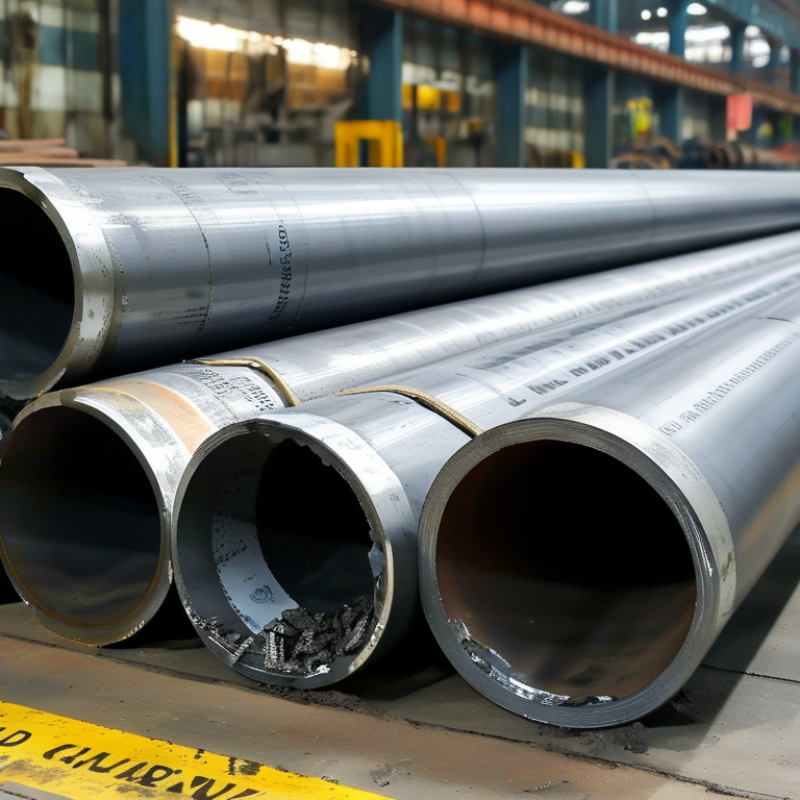
Carbon seamless pipes are steel tubes made without a welded joint. A solid billet is heated, pierced, and rolled into a hollow shape. This process creates a continuous structure around the pipe. It can improve strength under pressure and temperature changes. Not flawless, though. Manufacturing tolerances still matter.
These pipes serve demanding industrial applications. Oil and gas lines often use them for controlled fluid transport. Boiler systems rely on them for hot water and steam service. Construction projects may specify them for structural columns, piles, and high-load supports. In field inspections, wall thickness is especially important. A small internal loss can reduce service life.
Key advantages include high strength, uniform performance, and good resistance to mechanical stress. Seamless construction removes the weld area, which can be a vulnerable point in some applications. However, carbon steel can corrode when moisture and oxygen remain present. Protective coatings, proper drainage, and routine inspection remain necessary. Buyers should verify the material grade, outside diameter, wall thickness, and pressure rating. Mill certificates help confirm chemical composition and mechanical properties. Hydrostatic testing can also reveal hidden weaknesses. Applicable ASTM or ASME specifications should guide acceptance checks. A practical mistake is choosing by price alone. Service temperature, fluid conditions, installation loads, and inspection records deserve equal attention.
Carbon seamless pipes begin as round steel billets, not welded plates. The billet is heated, commonly near 1,200°C, then pierced by rotary rolls. The hollow shell passes through elongating and sizing mills. This controls wall thickness and outside diameter. Some grades receive normalizing, quenching, and tempering. Cold drawing can improve dimensional accuracy and surface finish.
Manufacturers typically verify chemistry with spectrometric analysis before production. Tensile testing measures strength and elongation. Hardness, flattening, flaring, and impact tests reveal different weaknesses. Hydrostatic testing checks pressure resistance, while ultrasonic or eddy-current inspection searches for internal and surface discontinuities. ASTM A106, ASTM A530, and ISO 10893 requirements are often applied, depending on service and contract terms. Inspection records should identify the heat number, test method, calibration status, and acceptance result.
The scale is substantial. World Steel Association data reports 1,888.2 million tonnes of crude steel production in 2023. The International Energy Agency estimates steelmaking creates about 7% of global energy-system carbon dioxide emissions. Efficient heating and controlled processing therefore matter beyond cost. Yet certificates are not magic. A clean report can still hide poor sampling or weak traceability. Buyers should compare mill records with independent inspection results, especially for high-pressure service. Small details matter. Surface marks deserve attention. Statistical process control helps, but it cannot replace experienced review.
The chart compares minimum specified yield strength and tensile strength for commonly referenced seamless carbon steel pipe grades. Carbon seamless pipes are generally produced by heating a solid billet, rotary piercing it into a hollow shell, elongating and sizing the shell, followed by heat treatment, straightening, dimensional inspection, non-destructive testing and hydrostatic or equivalent pressure testing. Actual manufacturing and inspection requirements depend on the applicable ASTM, API or ISO specification and purchase order.
Strength values are minimum specification requirements expressed in MPa; they are not company performance data or individual test results.
Carbon seamless pipe quality begins with the correct international standard. ASTM A106 commonly covers high-temperature service, while EN 10216-2 addresses pressure applications in Europe. API 5L remains important for pipeline systems. These standards define chemistry, tensile strength, dimensions, testing, and acceptance limits. Buyers should request heat numbers, mill test certificates, and full traceability. A certificate without matching markings is only paperwork.
Production scale also matters. The World Steel Association reported global crude steel production of about 1.89 billion tonnes in 2023. This enormous supply chain increases sourcing options, but it can hide inconsistent control. Qualified manufacturers should use calibrated ultrasonic testing, hydrostatic testing, and dimensional inspection. For critical service, independent inspection can verify sampling and loading records. In practice, even experienced buyers sometimes approve documents too quickly. That mistake deserves reflection.
Tips: Compare the pipe grade with the design code, not only the purchase description. Confirm wall-thickness tolerance, test pressure, surface condition, and impact requirements. Ask for recent inspection reports and photographs of markings. Check whether testing follows ISO 17025 principles. Do not treat “seamless” as proof of safety. Weld-free construction reduces one risk, but material defects, poor heat treatment, and incorrect storage still matter. The OECD Steel Market Developments report also highlights continuing pressure on global steel supply chains, making transparent traceability increasingly valuable.
When global buyers evaluate carbon seamless pipe manufacturers, they should inspect evidence rather than polished promises. Ask for mill certificates, heat numbers, dimensional reports, and test dates for the exact pipe offered. A reliable manufacturer can connect each document to a production batch without hesitation. That small link matters. Check whether certificates identify steel grade, chemistry, tensile strength, elongation, and hydrostatic test results. Old files prove little. Request recent records from comparable sizes and wall thicknesses. Practical sourcing often reveals gaps between sales claims and factory capability.
Technical evaluation should examine the full process, from billet heating and piercing to rolling, sizing, and surface inspection. Ask how the factory controls eccentricity, ovality, wall thickness, and end preparation. These details affect welding, pressure performance, and installation time. Independent testing may include ultrasonic inspection, tensile testing, flattening, and chemical analysis. Confirm the laboratory’s scope and equipment calibration dates. Do not rely on a certificate without traceability. Still, a perfect report is not enough. An occasional imperfect batch can reveal whether corrective action is honest and documented.
Reliability appears in ordinary details. Review production capacity against the requested schedule, then examine packaging photographs and previous delivery records. Ask for references involving similar pressure, temperature, and corrosion conditions. Clear answers are useful, but written commitments are stronger. During a factory audit, observe storage areas, identification tags, gauge condition, and how nonconforming pipes are isolated. Communication also deserves testing. Send a technical question with several requirements and measure the response. If answers remain vague, future claims may become difficult to verify.
| Evaluation Dimension | Relevant Requirement or Benchmark | What Global Buyers Should Check | Recommended Evidence | Buyer Assessment |
|---|---|---|---|---|
| Applicable Product Standard | The pipe specification should match the project standard, such as ASTM A106/A106M for seamless carbon steel pipe for high-temperature service or ASTM A53/A53M for mechanical and pressure applications. | Confirm the standard edition, grade, type, schedule, outside diameter, wall thickness, and service temperature before placing an order. | Approved technical data sheet, purchase specification, and standard edition stated on the quotation. | Accept only when the manufacturer clearly identifies the applicable standard and product scope. |
| Material Grade and Chemical Composition | Chemical limits must comply with the selected standard and grade. Carbon, manganese, phosphorus, sulfur, silicon, and other specified elements should be verified by heat analysis. | Check whether the proposed grade is suitable for pressure, structural, process, or low-temperature service. | Heat certificate, ladle analysis, product analysis, and independent laboratory report when required. | Compare every reported element with the exact limits in the purchase standard. |
| Manufacturing Process | A seamless pipe is produced without a longitudinal welded seam, commonly through billet heating, piercing, rolling or extrusion, sizing, heat treatment, and finishing. | Verify that the process is genuinely seamless and that the facility has suitable piercing, sizing, heat-treatment, and inspection equipment. | Process flow chart, mill capability statement, production records, and facility audit findings. | Give preference to suppliers with documented process control from billet receipt to final inspection. |
| Dimensional Accuracy | Outside diameter, wall thickness, length, ovality, straightness, and end condition must remain within the tolerances specified by the applicable standard or purchase order. | Pay special attention to wall-thickness variation and dimensional stability for pressure systems and machining operations. | Calibrated measurement records, dimensional inspection report, and calibration certificates. | Reject reports that provide only nominal dimensions without actual measurement results. |
| Mechanical Properties | Tensile strength, yield strength, elongation, hardness, and impact properties must meet the requirements of the selected grade and service condition. | Confirm whether testing is performed by heat, lot, size range, or another frequency required by the standard. | Mechanical test results linked to heat numbers and pipe identification. | Check both minimum required values and actual test results. |
| Heat Treatment Control | Heat treatment requirements depend on the grade, product standard, wall thickness, and intended service. Normalizing, normalizing-and-tempering, or other specified treatments may apply. | Confirm furnace type, temperature uniformity, soaking time, cooling method, and traceability of each batch. | Heat-treatment chart, furnace calibration record, batch report, and procedure qualification documents. | Use suppliers that can provide complete and traceable thermal-cycle records. |
| Non-Destructive Examination | Ultrasonic, electromagnetic, eddy-current, or other examination may be required to detect internal or surface discontinuities, depending on the specification. | Identify the required examination method, coverage, acceptance criteria, equipment capability, and operator qualification. | NDT procedure, inspection report, equipment calibration record, and personnel qualification record. | Ensure the NDT method is consistent with the product standard and project specification. |
| Surface and End Quality | Pipes should be free from harmful cracks, laps, seams, injurious gouges, and other defects that could affect service performance. | Review surface condition, bevel quality, end squareness, internal cleanliness, protective coating, and marking durability. | Visual inspection report, photographs, end-condition specification, and packing checklist. | Define acceptable repair limits and surface-finish requirements in the purchase order. |
| Traceability System | Each pipe or bundle should remain traceable to its heat number, production batch, inspection records, and material certificate. | Check whether markings remain legible after handling, coating, storage, and shipment. | Heat-number register, bundle list, permanent marking procedure, and material certificate. | Require one-to-one or clearly controlled batch traceability for critical applications. |
| Quality Management | A documented quality management system should control purchasing, production, inspection, nonconformity, corrective action, and document retention. | Evaluate audit results, complaint handling, process controls, internal inspection, and corrective-action effectiveness. | Current quality certificate, quality manual, audit report, inspection and test plan, and corrective-action records. | Certification should be verified for scope, validity, issuing body, and manufacturing location. |
| Testing Laboratory Capability | Chemical, mechanical, dimensional, hydrostatic, and NDT testing should be performed with calibrated equipment and controlled procedures. | Determine which tests are conducted in-house and which are subcontracted, including control of external laboratories. | Laboratory scope, calibration certificates, test procedures, and third-party laboratory accreditation where applicable. | Give higher confidence to suppliers with transparent laboratory controls and reproducible test records. |
| Hydrostatic or Pressure Testing | Where required by the applicable standard or purchase order, each pipe or defined lot should undergo the specified pressure test without leakage or unacceptable deformation. | Confirm test pressure, holding time, test medium, equipment accuracy, and whether alternative NDT is permitted by the specification. | Pressure-test chart, test log, equipment calibration certificate, and acceptance record. | Do not compare pressure values without checking pipe size, wall thickness, grade, and standard requirements. |
| Production Capacity and Lead Time | Capacity should be evaluated against the required size range, wall thickness, grade, quantity, delivery schedule, and inspection plan. | Separate nominal monthly capacity from capacity available for the specific order and production route. | Capacity statement, production schedule, machine list, historical delivery records, and confirmed manufacturing plan. | Use a written production milestone plan for large or time-sensitive orders. |
| Export Packaging and Logistics | Packaging should protect pipe ends, surfaces, markings, and bundles during inland transport, port handling, sea freight, and storage. | Review bundling, separators, end caps, moisture protection, lifting points, container loading, and corrosion protection. | Packing specification, loading photographs, shipping marks, container plan, and inspection checklist. | Packaging should be adapted to destination climate, transport mode, and storage duration. |
| Commercial and Technical Transparency | A reliable quotation should identify standard, grade, dimensions, quantity, tolerance, testing, coating, documentation, delivery terms, and validity period. | Compare quotations on equivalent technical and commercial conditions rather than unit price alone. | Detailed quotation, deviation list, technical clarification sheet, payment terms, and warranty provisions. | Flag quotations containing vague descriptions such as “equivalent grade” without documented equivalency. |
For international buyers, ordering carbon seamless pipe starts with a precise purchase specification.
State the outside diameter, wall thickness, length, steel grade, heat-treatment condition, and required standard. World Steel Association data recorded about 1.89 billion tonnes of crude steel production in 2023, showing the scale of this supply chain. Scale does not guarantee consistency. Ask for a heat number, mill test certificate, dimensional tolerance, and production schedule before payment.
Inspection should match the pipe’s service risk.
Review chemical composition and tensile results against the agreed standard. Request ultrasonic or hydrostatic testing when internal flaws could cause failure. An independent inspector can witness sampling, marking, packing, and document checks. Small details matter. Photograph each bundle before loading. Yet paperwork is not proof of every condition. Sampling plans can miss localized defects, especially when inspection timing is rushed.
Shipping requires equal discipline.
UNCTAD’s Review of Maritime Transport 2024 states that more than 80% of world merchandise trade moves by sea. Confirm the delivery term, port, export documents, cargo insurance, and corrosion protection. Pipe ends need secure caps, while bundles need dry separation and lifting points. Check container or vessel limitations early; oversized bundles may require special handling. Weather delays and port congestion remain practical risks, even with a clear schedule. A realistic buffer is wiser than a perfect promise. Before dispatch, compare the packing list with the invoice, certificates, bundle marks, and booking details. One overlooked digit can delay customs clearance.
We use cookies on our website to give you an improved browser experience. View our Privacy Policy for more information. Please make your selection to opt in or out of ALL cookies here: Accept or Decline
Do you consent to the use of ALL cookies?
901 2nd Court West
Birmingham, AL 35204
Sales: 866.481.4036
Logistics/Ops: 866.481.4036
2101 Dralle Road
University Park, IL 60466
Sales: 708.813.9070
Logistics/Ops: 708.235.4200
400 E. 13th Street
Little Rock, AR 72114
Sales: 866.760.5344
Logistics/Ops: 866.760.5344
225 Collins Road
Elkhart, IN 46515
Sales: 574.295.0214
Logistics/Ops: 574.607.4611
601 Berryman Pike
Tipton, IN 46072
Sales: 800.897.7591
Logistics/Ops: 800.897.7591
3900 Uvalda Street
Denver, CO 80239
Sales: 303.706.8000
Ops/Logistics: 303.576.8398
510 3rd Street E
Milan, IL 61264
Sales: 800.322.1052
Logistics/Ops: 800.322.1052
1660 E. Aurora
Des Moines, IA 50313
Sales: 800.671.1660
Logistics: 800.671.1660
86554 Gene Lasserre Blvd.
Yulee, FL 32097
Sales: 904.253.3060
Logistics/Ops: 904.225.3000
694 S.E. County Road 245
Lake City, FL 32025
Sales: 800.727.6706
Logistics/Ops: 386.752.7412
210 Neptune Road
Auburndale, FL 33823
Sales: 863.967.1131
Logistics/Ops: 863.777.9814
4601 McCoy Drive
Pensacola, FL 32503
Sales: 850.308.7030
Logistics/Ops: 850.434.5502
815 South 56th Street
Tampa, FL 33619
Sales: 813.302.1940
Logistics/Ops: 813.621.1352
200 Hosea Road
Lawrenceville, GA 30046
Sales: 770.953.7575
Logistics/Ops: 770.513.6000
Branch Product Guide
Branch Line Card
Moulding Offering
Cedar Offering
Column Offering
8173 Hwy. 165 North
Monroe, LA 71211
Sales: 800.256.4165
Logistics/Ops: 800.256.4165
508 Warren Avenue
Portland, ME 04103
Sales: 207.888.2331
Logistics/Ops: 207.797.6565
4300 Georgia Pacific Blvd.
Frederick, MD 21704
Sales: 301.798.7474
Logistics/Ops: 301.874.8000
419 Maple Street
Bellingham, MA 02019
Sales: 508.449.0535
Logistics/Ops: 508.966.5500
825 Buchanan Ave SW
Grand Rapids, MI 49507
Sales: 877.800.1180
Logistics/Ops: 616.278.0909
995 Pacific St. NW
Aitkin, MN 56431
Sales: 800.432.3727
Logistics/Ops: 218.212.7770
1102 Port Terminal Drive
Duluth, MN 55802
Sales: 800.951.9899
Logistics/Ops: 800.851.9899
9110 83rd Ave. North
Brooklyn Park, MN 55445
Sales: 763.425.0204
Logistics/Ops: 763.425.0204
910 E. Railroad Street
Long Beach, MS 39560
Sales: 866.535.4135
Logistics/Ops: 228.205.2400
1727 Warren Street
North Kansas City, MO 64116
Sales: 800.621.2611
Logistics/Ops: 800.621.2611
2123 North Golden
Springfield, MO 65803
Sales: 800.375.7891
Logistics/Ops: 800.375.7891
13860 Corp. Woods Trail
Bridgeton, MO 63044
Sales: 314.209.0800
Logistics/Ops: 314.209.0800
1109 South 19th Street
Omaha, NE 68108
Sales: 800.489.6637
Logistics/Ops: 800.489.6637
1 Luger Road
Denville, NJ 07834
Sales: 973-339-3539
Logistics/Ops: 973.625.1461
3720 Jeffrey Blvd.
Blasdell, NY 14219
Sales: 716.235.5989
Logistics/Ops: 716.825.6557
319 Yaphank Ave.
Yaphank, NY 11980
Sales: 631.358.5714
Logistics/Ops: 631.924.7401
3300 Parkside Drive
Charlotte, NC 28208
Sales: 800.839.2588
Logistics/Ops: 704.394.3172
1712 East D Street
Butner, NC 27509
Sales: 984.389.8200
Logistics/Ops: 919.575.3700
128 Foothills Drive
Statesville, NC 28687
Sales: 800.222.1414
Logistics/Ops: 704.394.3172
550 Munroe Falls Rd.
Tallmadge, OH 44278
Sales: 330.357.4506
Logistics/Ops: 330.794.1141
10347 Toebben Dr.
Independence, KY 41051
Sales: 859.298.3926
Logistics/Ops: 859.746.2250
450 N. MacArthur
Oklahoma City, OK 73127
Sales: 800.375.6025
Logistics/Ops: 800.375.6025
1680 North Aspen
Broken Arrow, OK 74012
Sales: 918.272.2212
Logistics/Ops: 918.272.2212
522 Bridge Street
Hunker, PA 15639
Sales: 878.217.2001
Logistics/Ops: 724.925.7285
4290 Atlanta Street
Charleston, SC 29418
Sales: 843.371.1420
Logistics/Ops: 843.554.8192
1040 S. Industrial Dr.
Erwin, TN 37650
Sales: 423.641.1005
Logistics/Ops: 423.742.5911
4287 Pilot Drive
Memphis, TN 38118
Sales: 901.365.2101
Logistics/Ops: 901.365.2101
700 Myatt Drive
Madison, TN 37115
Sales: 615.327.9547
Logistics/Ops: 629.777.4949
4747 Mark IV Parkway
Fort Worth, TX 76106
Sales: 866.323.5117
Logistics/Ops: 817.625.9091
6990 Market Avenue
El Paso, TX 79915
Sales: 915.778.6356
Logistics/Ops: 915.265.7200
2502 Wilson Road
Harlingen, TX 78552
Sales: 800.580.6711
Logistics/Ops: 800.580.6711
10,000 North Loop East
Houston, TX 77029
Sales: 713.921.1977
Logistics/Ops: 713.675.3544
702 East 44th St.
Lubbock, TX 79404
Sales: 866.454.6010
Logistics/Ops: 866.454.6010
535 N. WW White Road
San Antonio, TX 78219
Sales: 800.284.0488
Logistics/Ops: 210.333.8112
142 Pine Haven Shores Rd.
Shelburne, VT 05482
Sales: 802.800.2540
Logistics/Ops: 802.985.2512
4700 Bethlehem Road,
Richmond, VA 23230
Sales: 804.201.2400
Logistics/Ops: 804.342.1161
4516 N Barker Road
Spokane Valley, WA 99027
Phone: 509.892.9420
Toll free: 800.728.6157
8365 N. 76th Street
Milwaukee, WI 53223
Sales: 800.356.9245
Logistics/Ops: 800.356.9245
312 S. Chester Street
Sparta, WI 54656
Sales: 800.362.5864
Logistics/Ops: 800.362.5864
899 Grossman Drive
Schofield, WI 54476
Sales: 800.472.0017
Logistics/Ops: 800.472.0017
