
We use cookies on our website to give you an improved browser experience. View our Privacy Policy for more information. Please make your selection to opt in or out of ALL cookies here: Accept or Decline
Sourcing 2" fauxwood cordless blinds requires more than comparing product photos and low prices. Buyers must examine construction, safety features, sizing accuracy, and supplier reliability. The keyword 2" fauxwood cordless blinds often describes 2-inch slat blinds made from PVC, composite wood, or moisture-resistant materials. These options can suit bedrooms, offices, kitchens, and rental properties. However, product names are not always consistent. Confirm the actual slat width.
A dependable sourcing process begins with a clear specification sheet. Include window dimensions, inside or outside mounting, color, valance style, control method, and quantity. Ask suppliers for material details, operating instructions, test reports, and recent production images. A physical sample can reveal surface texture, slat flexibility, and color differences that images hide. Small details matter. A loose tilt mechanism can create problems after installation.
Experience also shows that the cheapest quotation may not be the lowest total cost. Freight, packaging, replacement parts, sampling fees, and production delays can change the final price. Review the supplier’s factory experience, quality-control steps, communication speed, and documented business history. Request a pre-shipment inspection when order volume is significant. Still, no process is perfect. Measurements may be entered incorrectly, and samples may not represent every batch. That is why written approvals and inspection records are valuable.
This guide explains how to compare suppliers, verify specifications, evaluate samples, and reduce sourcing risks. It focuses on practical decisions rather than polished promises. Good sourcing takes patience. The right supplier should deliver consistent blinds, clear documentation, and responsive support from quotation through installation.
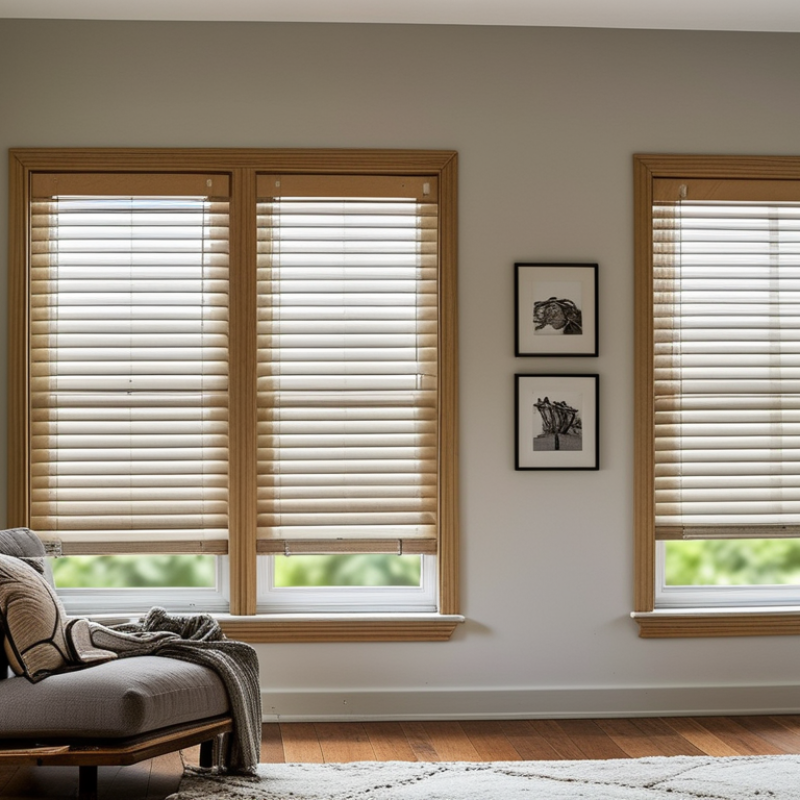
Before sourcing 2 inch faux wood cordless blinds, define the window—not just the room. Measure width at the top, middle, and bottom, then record the smallest number for an inside mount. Measure height on both sides and across the center. Windows are rarely perfect. That small flaw matters.
Check the recess depth, sill shape, handle projection, and nearby trim. A 2 inch slat may need more clearance than a slimmer profile, especially when tilted open. For outside mounts, measure beyond the frame to reduce light gaps. Note each window separately; copying one measurement across a wall can create expensive mistakes. Decide whether you need privacy, blackout performance, airflow, or easy cleaning. Kitchens and bathrooms also require moisture-resistant materials.
The U.S. Department of Energy reports that windows can account for roughly 25% to 30% of residential heating and cooling energy use. Your blind will not replace efficient glazing, but accurate coverage can support better solar and privacy control. The National Fenestration Rating Council evaluates window performance through U-factor and solar heat gain coefficient, useful details when selecting complementary coverings. For cordless operation, confirm the lifting method, stack height, and child-accessible placement. Cordless does not mean maintenance-free. Dust still collects on every slat, and a slightly uneven reveal may remain visible in strong afternoon light. Allow for that reality when approving the final specification.
Sourcing 2-inch faux wood cordless blinds requires more than comparing prices. Start by checking the material. PVC-based faux wood resists moisture well, making it suitable for kitchens and bathrooms. Composite materials often feel lighter and may provide better color stability near sunny windows. Solid polymer options can look more substantial, but they may increase shipping weight. Ask suppliers for material specifications, finish samples, and cleaning instructions before placing a large order.
Slat size affects both appearance and performance. Two-inch slats create a familiar wood-blind look and allow useful daylight control. Wider slats usually offer a clearer outside view when opened. However, they may collect more visible dust. Compare the tilt angle, overlap, and edge quality. A small sample can reveal uneven paint, rough corners, or weak ladder strings. Cordless operation improves everyday safety and gives the window a cleaner appearance. Test the lift tension, handle grip, and stopping position. It should move smoothly, not suddenly.
Tips: Request one sample before bulk sourcing. Measure the window recess twice, especially where frames are uneven. Confirm the cordless mechanism’s tested weight range and operating instructions. I once focused too heavily on color matching and overlooked a stiff lift system. That mistake made installation frustrating. Also, ask about replacement parts and warranty terms. A low purchase price is less useful when damaged components cannot be replaced.
| Faux Wood Material | Typical Composition | Weight and Handling | Moisture Resistance | Appearance and Finish | Recommended Areas | Key Sourcing Considerations | Typical Value Rating |
|---|---|---|---|---|---|---|---|
| PVC-Based Faux Wood | Extruded or molded polymer with a wood-grain texture and painted or laminated surface. | Generally heavier than hollow polymer slats; large or wide blinds may require stronger headrail components. | Very good resistance to humidity, splashes, and routine cleaning. | Consistent color and texture; can provide a realistic wood-grain appearance, although the finish may look less natural than painted composite or real wood. | Kitchens, bathrooms, laundry rooms, and humid climates. | Confirm the slat will not soften, warp, or discolor under the intended temperature and sunlight conditions. Request color and texture samples before ordering. | ★★★★☆ |
| Polymer Composite Faux Wood | Engineered polymer or resin composite, often formed around a reinforcing structure and finished with paint or film. | Medium to heavy, depending on the core and slat construction; usually provides a solid, substantial feel. | Very good moisture resistance when the edges, holes, and coatings are properly sealed. | Offers a smooth painted finish and stable color; can closely resemble painted wood. | High-use rooms, family rooms, kitchens, and areas needing a balance of appearance and durability. | Check core construction, edge sealing, coating adhesion, and the maximum recommended blind width for the cordless headrail. | ★★★★★ |
| Foam-Filled Polymer Faux Wood | Lightweight polymer slat with a foamed or cellular interior and a printed or painted exterior. | Lightweight and easy to lift; suitable for many standard-size windows and frequently adjusted blinds. | Good resistance to normal indoor humidity; performance depends on the exterior coating and sealed ends. | Uniform surface with a decorative wood-grain pattern; may have less visual depth than a solid composite slat. | Bedrooms, offices, rental properties, and medium-sized windows where low operating force is important. | Verify dent resistance, slat rigidity, colorfastness, and whether the lightweight construction is compatible with the chosen cordless system. | ★★★★☆ |
| Polystyrene-Based Faux Wood | Rigid synthetic polymer formed into slats and finished with paint, film, or a wood-grain surface. | Light to medium weight; generally easy to operate but may be more vulnerable to impact than denser composites. | Good resistance to moisture in normal residential use; prolonged heat exposure should be evaluated. | Available in painted and textured finishes; quality varies with surface coating and molding precision. | Budget-conscious residential projects and low-to-moderate traffic rooms. | Ask for heat, impact, and UV performance information. Inspect the slat edges and tilt-hole alignment before approving a production sample. | ★★★☆☆ |
| Comparison Dimension | Recommended Specification for 2 Inch Blinds | Why It Matters When Sourcing | Verification Method |
|---|---|---|---|
| Nominal Slat Size | 2 inches, equal to approximately 50.8 mm nominal width; actual finished width may vary slightly by construction. | Creates a classic plantation-blind appearance while allowing a relatively wide view-through area when the slats are tilted open. | Measure a finished slat with a caliper or ruler and compare it with the approved product specification. |
| Slat Thickness | Common products use a thin rigid profile; the exact thickness varies by material, core, and manufacturing process. | Thickness influences rigidity, weight, stacking height, durability, and the operating force required by a cordless system. | Request a cross-section drawing or production sample rather than relying only on the nominal slat width. |
| Slat Tilt Mechanism | Hidden tilt mechanism, front-facing tilt control, or integrated cordless tilt control. | A concealed mechanism provides a cleaner appearance and reduces exposed operating components. | Cycle the tilt system repeatedly and check for smooth movement, uniform slat alignment, and consistent stopping points. |
| Cordless Lift System | Spring-assisted lift, counterbalance system, or cordless operating mechanism with a bottom rail handle. | Removes the operating cord and reduces accessible loop hazards, while keeping the window treatment visually cleaner. | Test the blind at its specified size and weight. It should raise, lower, and hold position without excessive force or drifting. |
| Child-Safety Design | No accessible operating cords or loops; use a compliant cordless design intended for the target market. | Cordless construction can reduce strangulation hazards, but the complete blind still needs safe installation and operation. | Review current market safety requirements, installation instructions, warning labels, and third-party test documentation where applicable. |
| Maximum Recommended Width | Set by the manufacturer according to slat weight, headrail strength, spring capacity, and operating mechanism. | A blind that is too wide or heavy may operate poorly, sag, fail to hold its position, or experience premature mechanism wear. | Obtain a size-and-weight chart and test the largest planned production size before placing a volume order. |
| Mounting Options | Inside mount and outside mount, with brackets sized for the headrail and window clearance. | Mounting depth affects light gaps, frame clearance, slat rotation, and the final appearance. | Confirm minimum inside-mount depth, headrail dimensions, bracket projection, and required clearance from handles or locks. |
| Light Control | 2 inch slats with adjustable tilt; optional routeless construction can reduce visible light gaps. | Slat overlap and routing-hole placement affect privacy and light leakage when the blind is closed. | Evaluate a fully installed sample from both sides of the window under daylight and artificial light. |
| Cleaning and Maintenance | Dust with a microfiber cloth or vacuum with a soft brush; wipe with a lightly damp cloth when permitted by the finish. | Simple maintenance supports longer service life and helps preserve the painted or laminated surface. | Request approved cleaning instructions and test common cleaning products on an inconspicuous sample area. |
| Quality-Control Checks | Check slat straightness, color consistency, tilt alignment, lift balance, surface finish, headrail fit, and hardware completeness. | These checks identify functional and appearance defects before shipment or installation. | Use a pre-shipment inspection checklist with measurable tolerances and retain an approved reference sample. |
Specifications shown are typical sourcing guidelines. Exact dimensions, load limits, certifications, and performance ratings vary by construction and target market, so final approval should be based on a production sample and applicable local safety requirements.
How to Source 2 Inch Faux Wood Cordless Blinds?
Reliable sourcing begins with a supplier’s documentation, not attractive product photos. Request a full specification sheet for the 2 inch slats, headrail, cordless mechanism, materials, and available sizes. A dependable supplier should explain production capacity, lead times, packaging, and quality checks clearly. Ask for recent samples from the same production line. Sample quality matters.
Inspect each blind closely. Check whether the slats close evenly and whether the cordless lift moves smoothly without sticking. Look for chipped paint, rough edges, uneven holes, or loose components. Measure the slat width and finished dimensions yourself. Small differences can affect installation and customer satisfaction. Test the blind repeatedly. One test is not enough. Request applicable safety and performance reports, then confirm they match the actual product. Paperwork alone cannot prove quality.
Tips: Compare at least three suppliers using the same questions. Photograph sample defects and record every measurement. Ask how they handle replacements for damaged goods. A low quote may hide thinner materials or weaker hardware. I have found that polished samples can conceal inconsistent batch quality, so a small trial order is wiser than a large commitment. Recheck cartons, labels, and instructions before shipment. Details are easy to miss.
This chart presents a practical verification framework for comparing suppliers. The 50.8 mm slat width is the metric equivalent of a nominal 2-inch slat. The percentages are recommended evaluation weights for sourcing decisions, not company or brand performance data.
How to Source 2 Inch Faux Wood Cordless Blinds?
Requesting samples before pricing is essential for 2 inch faux wood cordless blinds. Examine the slat finish under daylight, not only showroom lighting. Check the weight, color consistency, ladder-hole alignment, and surface texture. Measure twice. Do not guess. A 2 inch slat can look noticeably different across wide windows.
The U.S. Department of Energy reports that windows can account for significant household heat gain and loss, so material and fit deserve careful review. Ask suppliers for complete specifications, including slat thickness, headrail dimensions, mounting depth, tilt control, maximum width, and moisture resistance. Request physical samples with the quotation. My own sourcing mistake was comparing unit prices before checking carton dimensions and installation hardware. The cheaper offer became less attractive after freight and replacement costs.
A reliable quote should state minimum order quantity, sample charges, tooling fees, production time, packaging method, warranty terms, and payment conditions. Ask for test reports and applicable safety documentation. The U.S. Consumer Product Safety Commission’s window-covering requirements make operating-cord safety an important verification point, even when a product is marketed as cordless. Customization may include colors, valance styles, bottom rails, private labels, and unusual sizes. Confirm each option in writing. One detail is often missed: sample approval should cover both appearance and operating performance. A blind can match the color perfectly and still feel stiff, noisy, or uneven.
Shipping details can reveal a supplier’s reliability before payment. Request a written lead time, carton dimensions, shipping method, and damage policy. I prefer suppliers who send measurement samples and confirm window sizes before production. A boxed blind should arrive with protected corners, sealed hardware bags, and readable labels. Photograph the cartons immediately after delivery. This small habit supports faster claims when slats arrive bent or rails are scratched. Delays still happen, especially during peak seasons. Build several extra days into the installation schedule.
Installation support deserves the same attention as product quality. Ask whether the supplier provides clear instructions, mounting diagrams, and short installation videos. Confirm the included brackets, screws, valance clips, and child-safe cordless components. A reliable support team should explain inside-mount depth, clearance, and uneven window frames. Test one blind before installing the entire order. I once trusted identical measurements across several windows and found slight frame differences. That mistake cost time and required new adjustments.
After-sales service should be specific, not just friendly. Check the warranty period, covered parts, response time, and replacement procedure. Ask how missing hardware or defective mechanisms will be handled. Keep invoices, measurements, photos, and installation dates in one file. Suppliers with traceable inspection records usually answer technical questions more accurately. Still, service promises can sound better than actual support. Test the response with a practical question before ordering in volume. A quick, detailed reply is useful evidence.
We use cookies on our website to give you an improved browser experience. View our Privacy Policy for more information. Please make your selection to opt in or out of ALL cookies here: Accept or Decline
Do you consent to the use of ALL cookies?
901 2nd Court West
Birmingham, AL 35204
Sales: 866.481.4036
Logistics/Ops: 866.481.4036
2101 Dralle Road
University Park, IL 60466
Sales: 708.813.9070
Logistics/Ops: 708.235.4200
400 E. 13th Street
Little Rock, AR 72114
Sales: 866.760.5344
Logistics/Ops: 866.760.5344
225 Collins Road
Elkhart, IN 46515
Sales: 574.295.0214
Logistics/Ops: 574.607.4611
601 Berryman Pike
Tipton, IN 46072
Sales: 800.897.7591
Logistics/Ops: 800.897.7591
3900 Uvalda Street
Denver, CO 80239
Sales: 303.706.8000
Ops/Logistics: 303.576.8398
510 3rd Street E
Milan, IL 61264
Sales: 800.322.1052
Logistics/Ops: 800.322.1052
1660 E. Aurora
Des Moines, IA 50313
Sales: 800.671.1660
Logistics: 800.671.1660
86554 Gene Lasserre Blvd.
Yulee, FL 32097
Sales: 904.253.3060
Logistics/Ops: 904.225.3000
694 S.E. County Road 245
Lake City, FL 32025
Sales: 800.727.6706
Logistics/Ops: 386.752.7412
210 Neptune Road
Auburndale, FL 33823
Sales: 863.967.1131
Logistics/Ops: 863.777.9814
4601 McCoy Drive
Pensacola, FL 32503
Sales: 850.308.7030
Logistics/Ops: 850.434.5502
815 South 56th Street
Tampa, FL 33619
Sales: 813.302.1940
Logistics/Ops: 813.621.1352
200 Hosea Road
Lawrenceville, GA 30046
Sales: 770.953.7575
Logistics/Ops: 770.513.6000
Branch Product Guide
Branch Line Card
Moulding Offering
Cedar Offering
Column Offering
8173 Hwy. 165 North
Monroe, LA 71211
Sales: 800.256.4165
Logistics/Ops: 800.256.4165
508 Warren Avenue
Portland, ME 04103
Sales: 207.888.2331
Logistics/Ops: 207.797.6565
4300 Georgia Pacific Blvd.
Frederick, MD 21704
Sales: 301.798.7474
Logistics/Ops: 301.874.8000
419 Maple Street
Bellingham, MA 02019
Sales: 508.449.0535
Logistics/Ops: 508.966.5500
825 Buchanan Ave SW
Grand Rapids, MI 49507
Sales: 877.800.1180
Logistics/Ops: 616.278.0909
995 Pacific St. NW
Aitkin, MN 56431
Sales: 800.432.3727
Logistics/Ops: 218.212.7770
1102 Port Terminal Drive
Duluth, MN 55802
Sales: 800.951.9899
Logistics/Ops: 800.851.9899
9110 83rd Ave. North
Brooklyn Park, MN 55445
Sales: 763.425.0204
Logistics/Ops: 763.425.0204
910 E. Railroad Street
Long Beach, MS 39560
Sales: 866.535.4135
Logistics/Ops: 228.205.2400
1727 Warren Street
North Kansas City, MO 64116
Sales: 800.621.2611
Logistics/Ops: 800.621.2611
2123 North Golden
Springfield, MO 65803
Sales: 800.375.7891
Logistics/Ops: 800.375.7891
13860 Corp. Woods Trail
Bridgeton, MO 63044
Sales: 314.209.0800
Logistics/Ops: 314.209.0800
1109 South 19th Street
Omaha, NE 68108
Sales: 800.489.6637
Logistics/Ops: 800.489.6637
1 Luger Road
Denville, NJ 07834
Sales: 973-339-3539
Logistics/Ops: 973.625.1461
3720 Jeffrey Blvd.
Blasdell, NY 14219
Sales: 716.235.5989
Logistics/Ops: 716.825.6557
319 Yaphank Ave.
Yaphank, NY 11980
Sales: 631.358.5714
Logistics/Ops: 631.924.7401
3300 Parkside Drive
Charlotte, NC 28208
Sales: 800.839.2588
Logistics/Ops: 704.394.3172
1712 East D Street
Butner, NC 27509
Sales: 984.389.8200
Logistics/Ops: 919.575.3700
128 Foothills Drive
Statesville, NC 28687
Sales: 800.222.1414
Logistics/Ops: 704.394.3172
550 Munroe Falls Rd.
Tallmadge, OH 44278
Sales: 330.357.4506
Logistics/Ops: 330.794.1141
10347 Toebben Dr.
Independence, KY 41051
Sales: 859.298.3926
Logistics/Ops: 859.746.2250
450 N. MacArthur
Oklahoma City, OK 73127
Sales: 800.375.6025
Logistics/Ops: 800.375.6025
1680 North Aspen
Broken Arrow, OK 74012
Sales: 918.272.2212
Logistics/Ops: 918.272.2212
522 Bridge Street
Hunker, PA 15639
Sales: 878.217.2001
Logistics/Ops: 724.925.7285
4290 Atlanta Street
Charleston, SC 29418
Sales: 843.371.1420
Logistics/Ops: 843.554.8192
1040 S. Industrial Dr.
Erwin, TN 37650
Sales: 423.641.1005
Logistics/Ops: 423.742.5911
4287 Pilot Drive
Memphis, TN 38118
Sales: 901.365.2101
Logistics/Ops: 901.365.2101
700 Myatt Drive
Madison, TN 37115
Sales: 615.327.9547
Logistics/Ops: 629.777.4949
4747 Mark IV Parkway
Fort Worth, TX 76106
Sales: 866.323.5117
Logistics/Ops: 817.625.9091
6990 Market Avenue
El Paso, TX 79915
Sales: 915.778.6356
Logistics/Ops: 915.265.7200
2502 Wilson Road
Harlingen, TX 78552
Sales: 800.580.6711
Logistics/Ops: 800.580.6711
10,000 North Loop East
Houston, TX 77029
Sales: 713.921.1977
Logistics/Ops: 713.675.3544
702 East 44th St.
Lubbock, TX 79404
Sales: 866.454.6010
Logistics/Ops: 866.454.6010
535 N. WW White Road
San Antonio, TX 78219
Sales: 800.284.0488
Logistics/Ops: 210.333.8112
142 Pine Haven Shores Rd.
Shelburne, VT 05482
Sales: 802.800.2540
Logistics/Ops: 802.985.2512
4700 Bethlehem Road,
Richmond, VA 23230
Sales: 804.201.2400
Logistics/Ops: 804.342.1161
4516 N Barker Road
Spokane Valley, WA 99027
Phone: 509.892.9420
Toll free: 800.728.6157
8365 N. 76th Street
Milwaukee, WI 53223
Sales: 800.356.9245
Logistics/Ops: 800.356.9245
312 S. Chester Street
Sparta, WI 54656
Sales: 800.362.5864
Logistics/Ops: 800.362.5864
899 Grossman Drive
Schofield, WI 54476
Sales: 800.472.0017
Logistics/Ops: 800.472.0017
