
We use cookies on our website to give you an improved browser experience. View our Privacy Policy for more information. Please make your selection to opt in or out of ALL cookies here: Accept or Decline
Choosing a Sport Floor for an international facility is not simply a design decision. It affects safety, athlete confidence, maintenance, and long-term operating costs. Global buyers often compare samples under showroom lighting, then discover different results after installation. A floor that feels excellent in a dry European hall may perform poorly in a humid coastal region. This guide presents ten practical buying tips shaped by supplier discussions, installation observations, and common project mistakes. It considers surface grip, shock absorption, ball response, subfloor preparation, drainage, cleaning, certifications, and warranty support. Small details matter. A seam can collect dirt. An uneven base can change movement. Yet product brochures rarely show these weaknesses clearly. Good purchasing requires evidence, not attractive claims.
Buyers should request technical data, independent test reports, installation references, and maintenance instructions before approving a quotation. Ask how the Sport Floor performs after repeated use, temperature changes, and routine cleaning. Confirm whether local installers can repair damaged sections and whether replacement rolls remain available. Freight, import duties, storage conditions, and site moisture can alter the real budget. These issues are easy to underestimate. I have seen projects focus on purchase price while overlooking subfloor correction and ventilation. That approach may save money initially, but it can create expensive interruptions later. No checklist removes every uncertainty. Conditions differ. A careful buyer records assumptions, challenges optimistic promises, and tests samples in realistic conditions. The following ten tips offer a clearer path toward a safer, more durable, and commercially sensible decision.
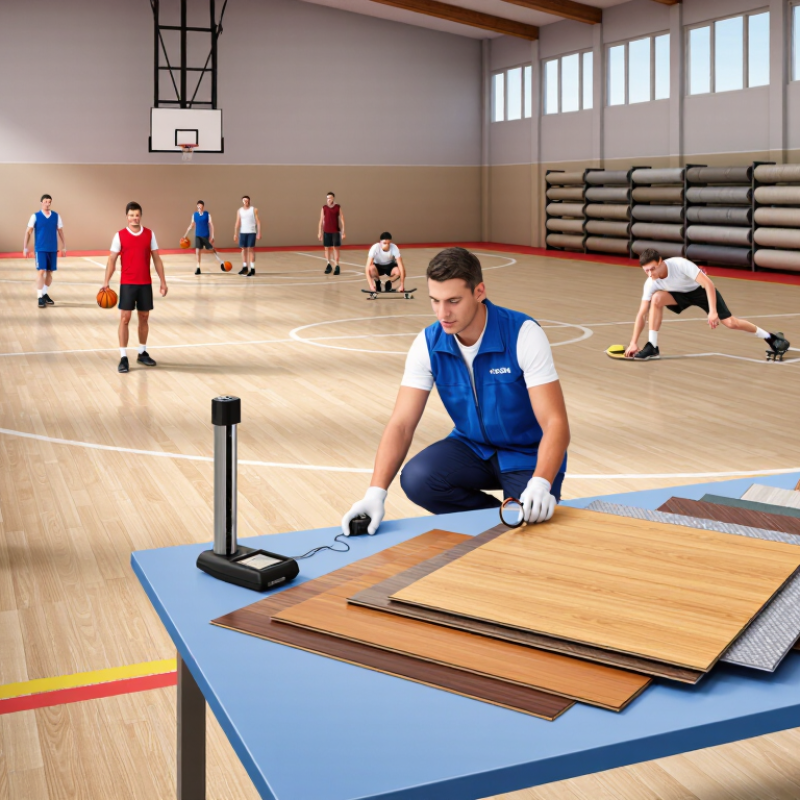
Before comparing sport floors, define the sport clearly. Basketball needs controlled ball rebound, stable foot grip, and impact protection during repeated jumps. Indoor football demands fast traction changes and resistance to stud marks. A fitness studio may prioritize cushioning, noise control, and easy cleaning. These needs can conflict. A softer surface may reduce fatigue but weaken ball response.
Study the venue before choosing materials. Measure the subfloor, moisture level, temperature range, and available installation height. A basement hall may need stronger moisture control than an upper-floor gym. Check door clearances, floor drains, ventilation, and wheelchair routes. Site inspections often reveal small problems, such as uneven concrete near wall edges. They can later cause visible seams or premature wear. Do not trust a sample alone.
Translate performance goals into measurable requirements. Ask for slip resistance data, force-reduction results, indentation recovery, rolling-load performance, and acoustic ratings. Testing should match the sport and expected traffic, not only laboratory conditions. Consider shoes, cleaning chemicals, equipment wheels, and daily playing hours. I have seen attractive floors fail because maintenance staff used unsuitable detergents. The specification was incomplete. Revisit it with coaches, facility managers, installers, and safety professionals. Their practical feedback can expose assumptions that product sheets rarely mention. Document acceptable limits before requesting quotations.
Compare materials before comparing prices. Solid maple provides a lively response and clear footfall feedback, but it needs stable humidity control. PVC and polyurethane systems offer easier cleaning, consistent grip, and flexible colour options. Rubber reduces impact effectively, although some athletes find it slower for rapid turns.
In practice, surface texture matters as much as material. A fine matte finish can limit glare, while deep embossing may collect dust. Test both with clean and slightly damp footwear.
Playing characteristics need measurable evidence. EN 14904:2012 specifies 25–75% force reduction, maximum 5 mm vertical deformation, and at least 90% basketball rebound for compliant indoor sports floors.
These figures help buyers compare laboratory results, not marketing claims. Ask for independent test reports covering shock absorption, slip resistance, ball rebound, and rolling loads. ASTM F2772 also evaluates key performance areas, including impact protection and surface indentation. The exact test method matters.
Design should support movement, visibility, and maintenance.
Use court lines with strong contrast, but avoid glossy coatings near windows. Check how colours appear under LED lighting. A pale floor may reveal dust quickly. That is useful, but not always practical.
Review expansion joints, moisture barriers, and replacement procedures before ordering. A beautiful sample cannot reveal installation errors. Request a full-size trial panel and record shoe grip, ball response, noise, and cleaning time during real training sessions.
10 Sport Floor Buying Tips for Global Buyers
Safety should be checked under real playing conditions, not only in a showroom. Ask for tested shock absorption, slip resistance, ball response, and vertical deformation data. Inspect seams and edge transitions with your hand. Small height differences can catch a shoe. Wet areas need extra attention. No floor is completely risk-free.
Durability depends on traffic, footwear, equipment, and cleaning routines. A floor for school courts may face different abuse than one for professional training. Request abrasion results, load limits, warranty terms, and repair procedures. Roll heavy goals carefully. Dragging them can scar the surface. Maintenance also matters: use the approved cleaner, remove grit daily, and avoid excessive water. I have seen expensive floors fail because simple cleaning instructions were ignored.
Environmental performance deserves evidence, not attractive claims. Check recycled content, product emissions, manufacturing energy, packaging, and end-of-life options. Look for independent test reports or environmental declarations with clear scopes. Local climate can affect installation and service life, so review moisture tolerance and temperature limits. Comparing products is difficult when data uses different methods. That uncertainty should be recorded, not hidden. Ask who tested the floor, when, and under which conditions. A lower purchase price may become costly after frequent repairs, early replacement, or difficult disposal.
| Tip | Buying Dimension | What to Check | Practical Benchmark or Reference | Evidence to Request | Why It Matters |
|---|---|---|---|---|---|
| 1 | Sports suitability | Confirm that the flooring system is designed for the intended sport, movement pattern, footwear, and playing level. | Use a sports-flooring standard appropriate to the project, such as EN 14904 for indoor multi-sports surfaces. | Independent laboratory test report, product construction drawing, and intended-use statement. | A basketball court, fitness studio, indoor court, and multipurpose hall place different demands on traction, ball response, impact protection, and wear resistance. |
| 2 | Impact protection | Check area-elastic or point-elastic shock absorption, vertical deformation, and surface stability. | For indoor sports, compare results against the applicable performance class in EN 14904 or the project specification; do not rely only on foam thickness. | Test results showing shock absorption, vertical deformation, and force reduction for the complete installed system. | Correct impact performance can reduce stress on athletes while avoiding an unstable or excessively soft playing surface. |
| 3 | Slip resistance and traction | Evaluate wet and dry slip behavior, footwear compatibility, surface texture, and consistency across seams. | Require testing under the relevant sports-flooring standard and local regulations; avoid selecting solely by a generic coefficient of friction. | Laboratory slip-resistance report, maintenance instructions, and a representative installed sample. | Too little traction may increase sliding risk, while excessive or uneven traction may hinder turning and increase joint loading. |
| 4 | Ball rebound and surface response | For ball sports, check vertical ball rebound, area uniformity, rolling behavior, and levelness. | EN 14904 commonly evaluates vertical ball behavior for indoor multi-sports floors; compare the complete floor assembly, not just the top layer. | Ball-rebound test report, floor-flatness tolerance, subfloor requirements, and site acceptance procedure. | Consistent rebound and levelness improve play quality and help prevent unpredictable ball movement. |
| 5 | Wear and service life | Assess abrasion resistance, indentation recovery, resistance to rolling loads, seam durability, and expected traffic intensity. | Ask for test conditions and results rather than accepting an unsupported service-life claim; high-use facilities need more robust wear-layer construction. | Accelerated wear data, indentation test results, warranty terms, and references for comparable usage conditions. | Durability depends on the complete system, cleaning regime, footwear, equipment loads, UV exposure, and installation quality. |
| 6 | Fire and smoke performance | Check reaction to fire for the floor surface, adhesive, underlay, coating, and any backing layer as a combined system. | Request classification under the destination-market system, such as EN 13501-1 in Europe, or the applicable local building code. | Current fire-classification report covering the exact product build-up and installation method. | Fire performance can affect occupant safety, permitting, insurance, and approval for public buildings. |
| 7 | Moisture and dimensional stability | Review subfloor moisture limits, vapor control, expansion gaps, temperature range, humidity range, and resistance to curling or shrinkage. | Follow the flooring manufacturer’s measured moisture limits and the adhesive supplier’s installation requirements; never install over an unverified damp slab. | Moisture-test method, installation manual, acclimatization requirements, and compatibility statement for the subfloor. | Moisture-related failures can cause blistering, loose tiles, open joints, odors, mold growth, and premature replacement. |
| 8 | Cleaning and maintenance | Check daily cleaning, periodic deep cleaning, stain removal, recoating, disinfectant compatibility, and required equipment. | Prefer a documented maintenance schedule with recommended pH range and dilution ratios; avoid harsh chemicals unless specifically approved. | Cleaning manual, chemical compatibility list, maintenance cost estimate, and training requirements. | Correct maintenance preserves traction, appearance, hygiene, and performance while reducing lifecycle cost. |
| 9 | Environmental and indoor-air performance | Evaluate recycled content, recyclability, product transparency, volatile organic compound emissions, and responsible sourcing. | Request a product-specific EPD under ISO 14025 and EN 15804 where available, plus VOC-emission evidence under the destination-market method. | EPD, third-party VOC test, ingredient or chemical disclosure, recycled-content statement, and end-of-life guidance. | Product-specific documentation supports credible environmental comparisons and helps protect indoor air quality. |
| 10 | Installation, repair, and total cost | Compare subfloor preparation, installation time, spare-material requirements, repairability, replacement method, and disposal cost. | Calculate total cost of ownership over the planned service period, including installation, cleaning, repairs, recoating, energy use, and end-of-life handling. | Itemized quotation, installation method statement, project schedule, spare-parts policy, warranty exclusions, and lifecycle-cost model. | The lowest purchase price may not be the lowest-cost option if installation disruption, maintenance, or replacement costs are high. |
Note: Performance values and classifications should be verified for the complete installed flooring system and matched to the building code, sports federation requirements, climate, and testing method applicable in the destination market.
Verify the standards before comparing colors, prices, or delivery dates. A sports floor should match the intended activity and local building rules. Ask for current test reports, not only a certificate logo. Check standards such as EN 14904, ASTM F2772, or the relevant national equivalent. Requirements can differ for shock absorption, vertical deformation, ball rebound, slip resistance, and surface reflectance. A document from one market may not satisfy another market’s authority.
Review the certificate holder, test laboratory, product code, and testing date carefully. Confirm that the report covers the exact floor structure, including adhesive, underlay, coating, and joints. One overlooked layer can change performance. Request fire classification, VOC data, and maintenance guidance in writing. These details matter in schools, public halls, and professional training spaces. A certificate alone is not enough.
Installation requirements deserve equal attention. Measure subfloor moisture, flatness, temperature, and humidity before shipment. Concrete that feels dry may still damage the finished floor. Check acclimation time, expansion gaps, ventilation, and curing periods. Use installers trained for the specified system, and record each inspection with photos. I have seen projects delay opening because the floor arrived before the building climate was ready. The schedule looked efficient, but it was not. Ask who handles defects, testing, and replacement if local approval fails. Get those answers before signing.
10 Sport Floor Buying Tips for Global Buyers
Evaluate Suppliers, Total Costs, Shipping, and After-Sales Support
A reliable supplier should show real installation experience, clear specifications, and recent project references. Ask for surface samples, technical data, test reports, and production photographs. Confirm whether the factory controls material quality or relies entirely on outside contractors. I once trusted a polished quotation too quickly. The delivered color differed slightly from the sample, creating avoidable replacement work. Written approval matters.
Compare the complete landed cost, not only the unit price. Include installation, local taxes, customs clearance, pallets, insurance, unloading, and currency changes. Request a detailed quotation with measurable quantities and payment milestones. Check the selected delivery term carefully. Shipping may take longer during port congestion or seasonal holidays. Protect rolls or tiles from moisture, crushing, and sharp handling. Ask for packaging photos and a loading plan before dispatch. Small omissions become expensive.
After-sales support should be specific and practical. Request a written warranty, response-time commitment, maintenance instructions, and replacement-stock policy. Ask who will guide installers if the floor bubbles, shifts, or shows uneven seams. Confirm whether remote training or on-site support is available. Keep spare material from the same production batch when possible. That detail can save a difficult color match later. Supplier claims deserve evidence, but buyers should also review their own floor preparation and installation decisions.
We use cookies on our website to give you an improved browser experience. View our Privacy Policy for more information. Please make your selection to opt in or out of ALL cookies here: Accept or Decline
Do you consent to the use of ALL cookies?
901 2nd Court West
Birmingham, AL 35204
Sales: 866.481.4036
Logistics/Ops: 866.481.4036
2101 Dralle Road
University Park, IL 60466
Sales: 708.813.9070
Logistics/Ops: 708.235.4200
400 E. 13th Street
Little Rock, AR 72114
Sales: 866.760.5344
Logistics/Ops: 866.760.5344
225 Collins Road
Elkhart, IN 46515
Sales: 574.295.0214
Logistics/Ops: 574.607.4611
601 Berryman Pike
Tipton, IN 46072
Sales: 800.897.7591
Logistics/Ops: 800.897.7591
3900 Uvalda Street
Denver, CO 80239
Sales: 303.706.8000
Ops/Logistics: 303.576.8398
510 3rd Street E
Milan, IL 61264
Sales: 800.322.1052
Logistics/Ops: 800.322.1052
1660 E. Aurora
Des Moines, IA 50313
Sales: 800.671.1660
Logistics: 800.671.1660
86554 Gene Lasserre Blvd.
Yulee, FL 32097
Sales: 904.253.3060
Logistics/Ops: 904.225.3000
694 S.E. County Road 245
Lake City, FL 32025
Sales: 800.727.6706
Logistics/Ops: 386.752.7412
210 Neptune Road
Auburndale, FL 33823
Sales: 863.967.1131
Logistics/Ops: 863.777.9814
4601 McCoy Drive
Pensacola, FL 32503
Sales: 850.308.7030
Logistics/Ops: 850.434.5502
815 South 56th Street
Tampa, FL 33619
Sales: 813.302.1940
Logistics/Ops: 813.621.1352
200 Hosea Road
Lawrenceville, GA 30046
Sales: 770.953.7575
Logistics/Ops: 770.513.6000
Branch Product Guide
Branch Line Card
Moulding Offering
Cedar Offering
Column Offering
8173 Hwy. 165 North
Monroe, LA 71211
Sales: 800.256.4165
Logistics/Ops: 800.256.4165
508 Warren Avenue
Portland, ME 04103
Sales: 207.888.2331
Logistics/Ops: 207.797.6565
4300 Georgia Pacific Blvd.
Frederick, MD 21704
Sales: 301.798.7474
Logistics/Ops: 301.874.8000
419 Maple Street
Bellingham, MA 02019
Sales: 508.449.0535
Logistics/Ops: 508.966.5500
825 Buchanan Ave SW
Grand Rapids, MI 49507
Sales: 877.800.1180
Logistics/Ops: 616.278.0909
995 Pacific St. NW
Aitkin, MN 56431
Sales: 800.432.3727
Logistics/Ops: 218.212.7770
1102 Port Terminal Drive
Duluth, MN 55802
Sales: 800.951.9899
Logistics/Ops: 800.851.9899
9110 83rd Ave. North
Brooklyn Park, MN 55445
Sales: 763.425.0204
Logistics/Ops: 763.425.0204
910 E. Railroad Street
Long Beach, MS 39560
Sales: 866.535.4135
Logistics/Ops: 228.205.2400
1727 Warren Street
North Kansas City, MO 64116
Sales: 800.621.2611
Logistics/Ops: 800.621.2611
2123 North Golden
Springfield, MO 65803
Sales: 800.375.7891
Logistics/Ops: 800.375.7891
13860 Corp. Woods Trail
Bridgeton, MO 63044
Sales: 314.209.0800
Logistics/Ops: 314.209.0800
1109 South 19th Street
Omaha, NE 68108
Sales: 800.489.6637
Logistics/Ops: 800.489.6637
1 Luger Road
Denville, NJ 07834
Sales: 973-339-3539
Logistics/Ops: 973.625.1461
3720 Jeffrey Blvd.
Blasdell, NY 14219
Sales: 716.235.5989
Logistics/Ops: 716.825.6557
319 Yaphank Ave.
Yaphank, NY 11980
Sales: 631.358.5714
Logistics/Ops: 631.924.7401
3300 Parkside Drive
Charlotte, NC 28208
Sales: 800.839.2588
Logistics/Ops: 704.394.3172
1712 East D Street
Butner, NC 27509
Sales: 984.389.8200
Logistics/Ops: 919.575.3700
128 Foothills Drive
Statesville, NC 28687
Sales: 800.222.1414
Logistics/Ops: 704.394.3172
550 Munroe Falls Rd.
Tallmadge, OH 44278
Sales: 330.357.4506
Logistics/Ops: 330.794.1141
10347 Toebben Dr.
Independence, KY 41051
Sales: 859.298.3926
Logistics/Ops: 859.746.2250
450 N. MacArthur
Oklahoma City, OK 73127
Sales: 800.375.6025
Logistics/Ops: 800.375.6025
1680 North Aspen
Broken Arrow, OK 74012
Sales: 918.272.2212
Logistics/Ops: 918.272.2212
522 Bridge Street
Hunker, PA 15639
Sales: 878.217.2001
Logistics/Ops: 724.925.7285
4290 Atlanta Street
Charleston, SC 29418
Sales: 843.371.1420
Logistics/Ops: 843.554.8192
1040 S. Industrial Dr.
Erwin, TN 37650
Sales: 423.641.1005
Logistics/Ops: 423.742.5911
4287 Pilot Drive
Memphis, TN 38118
Sales: 901.365.2101
Logistics/Ops: 901.365.2101
700 Myatt Drive
Madison, TN 37115
Sales: 615.327.9547
Logistics/Ops: 629.777.4949
4747 Mark IV Parkway
Fort Worth, TX 76106
Sales: 866.323.5117
Logistics/Ops: 817.625.9091
6990 Market Avenue
El Paso, TX 79915
Sales: 915.778.6356
Logistics/Ops: 915.265.7200
2502 Wilson Road
Harlingen, TX 78552
Sales: 800.580.6711
Logistics/Ops: 800.580.6711
10,000 North Loop East
Houston, TX 77029
Sales: 713.921.1977
Logistics/Ops: 713.675.3544
702 East 44th St.
Lubbock, TX 79404
Sales: 866.454.6010
Logistics/Ops: 866.454.6010
535 N. WW White Road
San Antonio, TX 78219
Sales: 800.284.0488
Logistics/Ops: 210.333.8112
142 Pine Haven Shores Rd.
Shelburne, VT 05482
Sales: 802.800.2540
Logistics/Ops: 802.985.2512
4700 Bethlehem Road,
Richmond, VA 23230
Sales: 804.201.2400
Logistics/Ops: 804.342.1161
4516 N Barker Road
Spokane Valley, WA 99027
Phone: 509.892.9420
Toll free: 800.728.6157
8365 N. 76th Street
Milwaukee, WI 53223
Sales: 800.356.9245
Logistics/Ops: 800.356.9245
312 S. Chester Street
Sparta, WI 54656
Sales: 800.362.5864
Logistics/Ops: 800.362.5864
899 Grossman Drive
Schofield, WI 54476
Sales: 800.472.0017
Logistics/Ops: 800.472.0017
