
We use cookies on our website to give you an improved browser experience. View our Privacy Policy for more information. Please make your selection to opt in or out of ALL cookies here: Accept or Decline
Choosing the right Wooden Door Hinge is a small decision with a surprisingly large effect. It influences movement, weight support, noise, appearance, and long-term maintenance. A beautiful timber door can still sag if its hinges are undersized or poorly positioned.
Gary Katz, a respected finish-carpentry educator and door-hardware specialist, often stresses, “A door is only as good as the hinges holding it.” This practical warning deserves attention. Hinge selection should not begin with color alone. Door thickness, weight, frame material, opening frequency, moisture exposure, and screw strength all matter. A lightweight interior door may suit a simple butt hinge. A heavy oak entrance door needs stronger leaves, deeper screws, and better load distribution.
This guide introduces seven practical tips for choosing the best Wooden Door Hinge. It examines hinge size, material, bearing design, finish, security, installation, and environmental conditions. Close attention will be given to details people often overlook, such as hinge spacing and the risk of softwood splitting around screw holes.
Appearance can mislead.
A polished brass hinge may look impressive in a showroom. Yet it may wear quickly beside a damp garden entrance. Stainless steel might offer better resistance, but its finish may not match every traditional door. There is no perfect hinge for every project. Even experienced installers sometimes reassess their first choice after checking the actual door weight and frame condition. Careful measurement remains more reliable than assumption.
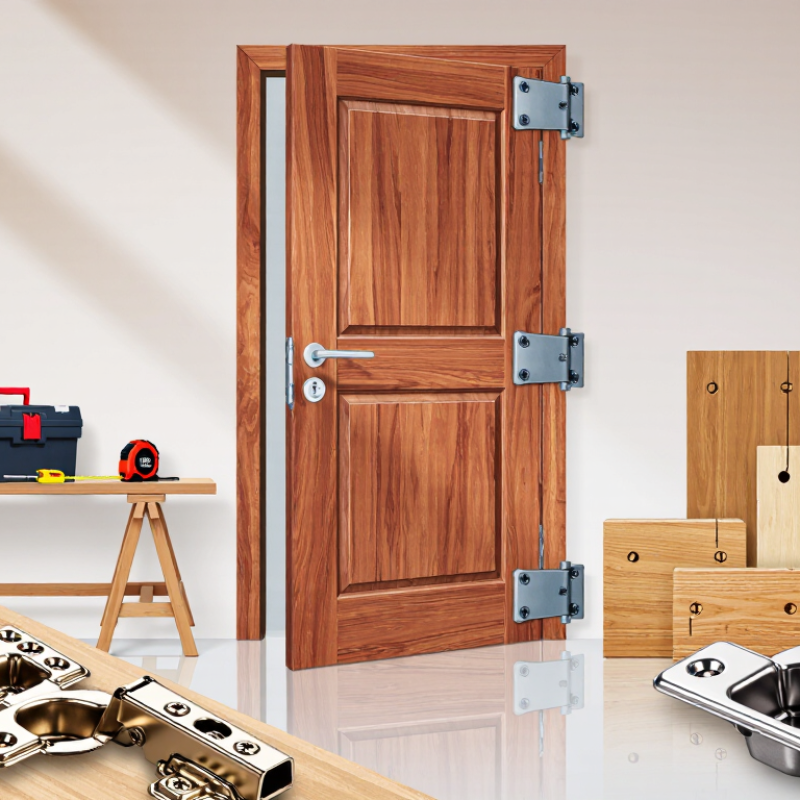
Choosing the best wooden door hinge starts with the door’s weight, movement, and location. Standard butt hinges suit most interior doors. Pivot hinges work well for wide or heavy doors. Concealed hinges create a clean appearance on modern timber doors. Spring hinges can help a door close automatically, while strap hinges fit rustic gates and thick external doors. Each type has a practical purpose.
Measure the door thickness before buying. Check the hinge’s load rating, not only its size. Use three hinges for a tall or heavy door. Match screw length with the frame’s depth.
Choose corrosion-resistant materials for bathrooms, kitchens, and exterior entrances. Test the swing clearance near walls and cabinets. Compare the hinge finish with the handle and lock.
Small details matter.
During installation, keep the hinge leaves flush with the wood surface. A shallow recess can make the door scrape. A deep recess can weaken the frame. I once trusted a hinge’s appearance and ignored its weight limit; the door slowly dropped. That mistake taught me to test movement after every screw is tightened.
Always follow measured specifications, but inspect the actual timber too. Wood density, moisture, and old repair holes can change the result. A professional assessment is useful when the door is oversized, warped, or frequently used.
Choosing the best wooden door hinge begins with accurate measurements, not appearance. Weigh the complete door, including glass, panels, locks, and closers. A solid oak door can become surprisingly heavy. Check the hinge load rating, then allow extra capacity for daily impact and gradual timber movement. Never match the rating too closely.
Tip 1: Measure twice. Record the door’s height, width, thickness, and weight. Wider doors create greater leverage on the hinges, even when their weight seems moderate. Taller doors may also flex during opening. This detail is often overlooked.
Use the manufacturer’s stated capacity for the exact number of hinges installed. A rating for three hinges may not apply equally to two. For a heavy wooden door, additional hinges can improve stability, but spacing matters. Place them according to the door’s structure and frame strength. Weak screws can defeat strong hinges. Use suitable fasteners that reach solid timber, rather than relying only on thin trim.
Tip 2: Inspect the frame before buying. If it twists, sags, or contains damaged wood, the hinge is not the real solution.
Tip 3: Leave clearance for paint, seasonal swelling, and small installation errors. Experienced installers know that a perfect measurement on a dry day may change in humid weather. I would also recheck the door after installation; minor binding can reveal a calculation that looked correct but was incomplete.
Choosing a wooden door hinge starts with the door’s weight, thickness, and daily use.
A solid oak door needs stronger hinges than a hollow-core door. ANSI/BHMA A156.1 classifies hinge durability at up to 2.5 million cycles for Grade 1 hardware.
Choose the rating, not only the appearance.
Stainless steel suits humid rooms, coastal homes, and exterior entrances. Solid brass offers a warm look and good corrosion resistance indoors. Zinc alloy can reduce cost, but it may be less suitable for heavy doors or harsh weather. Check the screw material too. Weak screws can fail before the hinge does.
Surface finish affects both protection and maintenance.
PVD and high-quality electroplated finishes usually resist wear better than thin decorative coatings. However, no finish is permanent. ISO 9227 salt-spray testing compares corrosion resistance under controlled conditions, but it does not predict exact outdoor service life. That limitation matters.
A bright polished hinge shows fingerprints quickly, while satin finishes hide small marks.
Match the finish with the handle, lock, and door threshold. Also inspect the hinge leaf edges. Rough edges can damage paint and create early rust spots. Leave a small clearance around the knuckle. Incorrect alignment causes rubbing, noise, and uneven coating wear.
Seven practical checks help:
load rating, material, environment, finish thickness, screw strength, cycle rating, and installation accuracy.
A beautiful hinge can still be the wrong hinge.
Matching hinge design with door style and installation needs begins with the door’s weight, thickness, and movement. A solid oak door needs stronger hinges than a hollow-core bedroom door. Measure the door before shopping. Check its height, width, and hinge spacing. Three hinges usually support standard interior doors, while tall or heavy doors may need four. Small details matter.
The Builders Hardware Manufacturers Association standard A156.1 rates butt hinges by tested cycle performance.
These figures provide useful guidance, not a universal answer. A busy entrance deserves higher durability. A lightly used cupboard does not. Choosing the highest grade everywhere may waste money.
Match the finish and shape to the door style. Ball-bearing hinges suit heavy doors and frequent use. Plain-bearing hinges can work well on lighter interior doors. Concealed hinges create a cleaner modern appearance, but installation demands accurate routing. Older wooden frames may need adjustable hinges because they shift over time.
I once fitted attractive hinges without checking frame alignment. The door rubbed within weeks. That mistake still informs my recommendations.
Select screw lengths that reach solid timber, not only surface trim. Confirm clearances, handing, and fire-door requirements before installation. NFPA 80 requires approved hardware for many fire-rated assemblies, so decorative hinges cannot replace tested components.
7 Tips for Choosing the Best Wooden Door Hinge
Tip 1: Check the hinge material and weight rating. Solid steel or corrosion-resistant alloys usually handle daily movement better. Match the hinge capacity to the door’s actual weight, including paint and hardware. I once chose a light hinge for a heavy oak door. It sagged within months. Tip 2: Examine the pin and knuckles closely. Smooth movement, tight joints, and clean alignment often indicate better manufacturing. Test it physically. Small gaps matter.
Tip 3: Consider maintenance before installation. Removable pins make repairs easier, while sealed or low-friction designs may need less oil. Avoid assuming “maintenance-free” means permanent. Dust still collects around busy entrances. Tip 4: Inspect the finish for moisture resistance, especially near bathrooms, kitchens, or exterior openings. A weak coating can blister and expose the metal. Wipe hinges regularly and use a suitable lubricant when movement becomes noisy.
Tip 5: Review security features without ignoring the door frame. Non-removable pins can reduce tampering risks when hinges face outward. However, strong hinges cannot compensate for a weak frame or loose screws. Security starts here. Tip 6: Confirm screw length and compatibility with the wood. Short screws may pull out under repeated stress, while oversized screws can split thin timber. A professional installer can check this accurately.
Tip 7: Compare overall value, not only purchase price. A durable hinge may cost more but reduce alignment problems, replacements, and maintenance visits. Read technical specifications and installation guidance from reliable sources. If the door moves smoothly, closes evenly, and stays aligned after repeated testing, the hinge is doing its job.
We use cookies on our website to give you an improved browser experience. View our Privacy Policy for more information. Please make your selection to opt in or out of ALL cookies here: Accept or Decline
Do you consent to the use of ALL cookies?
901 2nd Court West
Birmingham, AL 35204
Sales: 866.481.4036
Logistics/Ops: 866.481.4036
2101 Dralle Road
University Park, IL 60466
Sales: 708.813.9070
Logistics/Ops: 708.235.4200
400 E. 13th Street
Little Rock, AR 72114
Sales: 866.760.5344
Logistics/Ops: 866.760.5344
225 Collins Road
Elkhart, IN 46515
Sales: 574.295.0214
Logistics/Ops: 574.607.4611
601 Berryman Pike
Tipton, IN 46072
Sales: 800.897.7591
Logistics/Ops: 800.897.7591
3900 Uvalda Street
Denver, CO 80239
Sales: 303.706.8000
Ops/Logistics: 303.576.8398
510 3rd Street E
Milan, IL 61264
Sales: 800.322.1052
Logistics/Ops: 800.322.1052
1660 E. Aurora
Des Moines, IA 50313
Sales: 800.671.1660
Logistics: 800.671.1660
86554 Gene Lasserre Blvd.
Yulee, FL 32097
Sales: 904.253.3060
Logistics/Ops: 904.225.3000
694 S.E. County Road 245
Lake City, FL 32025
Sales: 800.727.6706
Logistics/Ops: 386.752.7412
210 Neptune Road
Auburndale, FL 33823
Sales: 863.967.1131
Logistics/Ops: 863.777.9814
4601 McCoy Drive
Pensacola, FL 32503
Sales: 850.308.7030
Logistics/Ops: 850.434.5502
815 South 56th Street
Tampa, FL 33619
Sales: 813.302.1940
Logistics/Ops: 813.621.1352
200 Hosea Road
Lawrenceville, GA 30046
Sales: 770.953.7575
Logistics/Ops: 770.513.6000
Branch Product Guide
Branch Line Card
Moulding Offering
Cedar Offering
Column Offering
8173 Hwy. 165 North
Monroe, LA 71211
Sales: 800.256.4165
Logistics/Ops: 800.256.4165
508 Warren Avenue
Portland, ME 04103
Sales: 207.888.2331
Logistics/Ops: 207.797.6565
4300 Georgia Pacific Blvd.
Frederick, MD 21704
Sales: 301.798.7474
Logistics/Ops: 301.874.8000
419 Maple Street
Bellingham, MA 02019
Sales: 508.449.0535
Logistics/Ops: 508.966.5500
825 Buchanan Ave SW
Grand Rapids, MI 49507
Sales: 877.800.1180
Logistics/Ops: 616.278.0909
995 Pacific St. NW
Aitkin, MN 56431
Sales: 800.432.3727
Logistics/Ops: 218.212.7770
1102 Port Terminal Drive
Duluth, MN 55802
Sales: 800.951.9899
Logistics/Ops: 800.851.9899
9110 83rd Ave. North
Brooklyn Park, MN 55445
Sales: 763.425.0204
Logistics/Ops: 763.425.0204
910 E. Railroad Street
Long Beach, MS 39560
Sales: 866.535.4135
Logistics/Ops: 228.205.2400
1727 Warren Street
North Kansas City, MO 64116
Sales: 800.621.2611
Logistics/Ops: 800.621.2611
2123 North Golden
Springfield, MO 65803
Sales: 800.375.7891
Logistics/Ops: 800.375.7891
13860 Corp. Woods Trail
Bridgeton, MO 63044
Sales: 314.209.0800
Logistics/Ops: 314.209.0800
1109 South 19th Street
Omaha, NE 68108
Sales: 800.489.6637
Logistics/Ops: 800.489.6637
1 Luger Road
Denville, NJ 07834
Sales: 973-339-3539
Logistics/Ops: 973.625.1461
3720 Jeffrey Blvd.
Blasdell, NY 14219
Sales: 716.235.5989
Logistics/Ops: 716.825.6557
319 Yaphank Ave.
Yaphank, NY 11980
Sales: 631.358.5714
Logistics/Ops: 631.924.7401
3300 Parkside Drive
Charlotte, NC 28208
Sales: 800.839.2588
Logistics/Ops: 704.394.3172
1712 East D Street
Butner, NC 27509
Sales: 984.389.8200
Logistics/Ops: 919.575.3700
128 Foothills Drive
Statesville, NC 28687
Sales: 800.222.1414
Logistics/Ops: 704.394.3172
550 Munroe Falls Rd.
Tallmadge, OH 44278
Sales: 330.357.4506
Logistics/Ops: 330.794.1141
10347 Toebben Dr.
Independence, KY 41051
Sales: 859.298.3926
Logistics/Ops: 859.746.2250
450 N. MacArthur
Oklahoma City, OK 73127
Sales: 800.375.6025
Logistics/Ops: 800.375.6025
1680 North Aspen
Broken Arrow, OK 74012
Sales: 918.272.2212
Logistics/Ops: 918.272.2212
522 Bridge Street
Hunker, PA 15639
Sales: 878.217.2001
Logistics/Ops: 724.925.7285
4290 Atlanta Street
Charleston, SC 29418
Sales: 843.371.1420
Logistics/Ops: 843.554.8192
1040 S. Industrial Dr.
Erwin, TN 37650
Sales: 423.641.1005
Logistics/Ops: 423.742.5911
4287 Pilot Drive
Memphis, TN 38118
Sales: 901.365.2101
Logistics/Ops: 901.365.2101
700 Myatt Drive
Madison, TN 37115
Sales: 615.327.9547
Logistics/Ops: 629.777.4949
4747 Mark IV Parkway
Fort Worth, TX 76106
Sales: 866.323.5117
Logistics/Ops: 817.625.9091
6990 Market Avenue
El Paso, TX 79915
Sales: 915.778.6356
Logistics/Ops: 915.265.7200
2502 Wilson Road
Harlingen, TX 78552
Sales: 800.580.6711
Logistics/Ops: 800.580.6711
10,000 North Loop East
Houston, TX 77029
Sales: 713.921.1977
Logistics/Ops: 713.675.3544
702 East 44th St.
Lubbock, TX 79404
Sales: 866.454.6010
Logistics/Ops: 866.454.6010
535 N. WW White Road
San Antonio, TX 78219
Sales: 800.284.0488
Logistics/Ops: 210.333.8112
142 Pine Haven Shores Rd.
Shelburne, VT 05482
Sales: 802.800.2540
Logistics/Ops: 802.985.2512
4700 Bethlehem Road,
Richmond, VA 23230
Sales: 804.201.2400
Logistics/Ops: 804.342.1161
4516 N Barker Road
Spokane Valley, WA 99027
Phone: 509.892.9420
Toll free: 800.728.6157
8365 N. 76th Street
Milwaukee, WI 53223
Sales: 800.356.9245
Logistics/Ops: 800.356.9245
312 S. Chester Street
Sparta, WI 54656
Sales: 800.362.5864
Logistics/Ops: 800.362.5864
899 Grossman Drive
Schofield, WI 54476
Sales: 800.472.0017
Logistics/Ops: 800.472.0017
