
We use cookies on our website to give you an improved browser experience. View our Privacy Policy for more information. Please make your selection to opt in or out of ALL cookies here: Accept or Decline
Choosing the right Insulated Floor Tile Panels is more complex than comparing prices and surface finishes. Global buyers must examine thermal resistance, moisture control, compressive strength, fire performance, installation methods, and regional climate demands. A panel that performs well in a dry warehouse may fail in a humid coastal project.
Dr. Joseph Lstiburek, a respected building-science expert, often reminds professionals, “There is no such thing as a perfect building.” His observation also applies to flooring systems. Every product involves trade-offs between insulation value, thickness, durability, weight, and installation speed. Buyers should study technical datasheets, independent test reports, warranty terms, and supplier experience before making a decision.
This guide reviews ten Insulated Floor Tile Panels for international purchasing teams, contractors, architects, and distributors. The comparison considers practical details, including panel edges, tile compatibility, vapor resistance, load support, cutting accuracy, and replacement convenience. Imagine a cold storage corridor, a residential renovation, or a temporary commercial floor. Each setting creates different performance pressures.
Small details matter.
Some panels may look impressive but lack clear test information. Others may offer strong insulation yet require specialized installation tools. That weakness deserves attention. Product rankings should not replace project-specific engineering or local compliance checks. They should support better questions, clearer comparisons, and more confident procurement decisions across different markets.
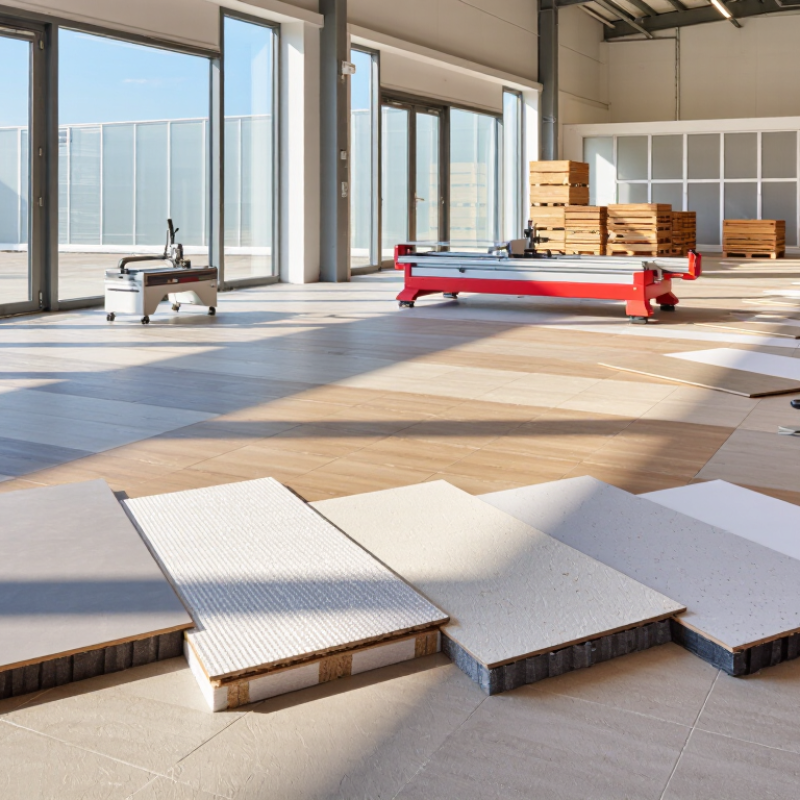
Insulated floor tile panels are engineered boards that combine thermal insulation with a firm, tile-ready surface. They usually contain a rigid foam or mineral-based core, covered by cementitious, fiber-reinforced, or waterproof facing layers. Ceramic, porcelain, or stone tiles can then be installed above them with suitable adhesive.
The term is not perfectly standardized. Some suppliers mean tile backer boards, while others mean structural floor panels with insulation included. Buyers should check compressive strength, moisture resistance, thermal conductivity, thickness, and tested load capacity. A panel may feel solid but still perform poorly under heavy furniture or uneven subfloors. That detail is easy to miss.
The International Energy Agency and UNEP reported that buildings and construction consumed about 30% of global final energy in 2022. They also produced approximately 26% of energy-related emissions. Proper floor insulation can reduce heat transfer through cold slabs, suspended floors, and rooms above unheated spaces. However, results depend on installation quality, perimeter sealing, and local climate.
Look beneath the tile system.
For global buyers comparing the top ten options, test documentation matters more than attractive product claims. Look for data based on recognized standards, including thermal resistance, water absorption, fire performance, and dimensional stability. The U.S. Department of Energy also emphasizes continuous insulation and careful air sealing in efficient building assemblies. Real projects remain imperfect. Small gaps, damp substrates, or incorrect adhesive selection can undermine an otherwise advanced panel.
| Rank | Panel Type | Typical Core Material | Common Tile-Facing or Substrate | Typical Thickness | Typical Thermal Conductivity (λ, W/m·K) | Approx. Thermal Resistance at 20 mm (R, m²·K/W) | Typical Compressive Strength | Moisture Performance | Typical Global Applications |
|---|---|---|---|---|---|---|---|---|---|
| 1 | Cement-Faced XPS Tile Backer Panel | Extruded polystyrene foam | Polymer-modified cement or glass-fiber-reinforced cement surface | 6–80 mm | 0.029–0.036 | 0.56–0.69 | 200–500 kPa | Closed-cell core; low water absorption when joints and penetrations are sealed | Bathrooms, kitchens, wet rooms, balconies, and underfloor heating systems |
| 2 | Glass-Fiber-Faced EPS Tile Panel | Expanded polystyrene foam | Glass-fiber mesh with cementitious coating | 10–60 mm | 0.031–0.040 | 0.50–0.65 | 100–250 kPa | Resistant to rot; requires a continuous waterproofing system in wet areas | Residential floors, lightweight renovation, and projects requiring low panel weight |
| 3 | PIR Insulation Tile Backer Panel | Polyisocyanurate rigid foam | Aluminium foil, glass-fiber, or cementitious facing | 20–120 mm | 0.022–0.028 | 0.71–0.91 | 120–200 kPa | Low water absorption; edge detailing and compatible adhesive are required | Thin-build floors, energy-efficient renovations, and cold-climate construction |
| 4 | Phenolic Foam Tile Support Panel | Rigid phenolic foam | Mineral-coated glass-fiber or foil laminate facing | 20–100 mm | 0.020–0.025 | 0.80–1.00 | 90–150 kPa | Generally low water absorption; all exposed edges should be protected | Projects requiring high insulation performance at restricted floor build-up |
| 5 | Rigid Mineral Wool Tile Panel | High-density stone wool or glass wool | Cementitious board, mineral coating, or rigid reinforced facing | 20–100 mm | 0.034–0.040 | 0.50–0.59 | 40–150 kPa | Non-combustible mineral core; must be kept dry during installation | Fire-conscious buildings, acoustic floor assemblies, and commercial interiors |
| 6 | Cork Composite Tile Underlay Panel | Expanded natural cork granules bonded into rigid board | Raw cork, wood-fiber, or cement-faced surface | 10–40 mm | 0.037–0.045 | 0.44–0.54 | 100–180 kPa | Moderate moisture tolerance; requires dry installation and moisture control below | Residential floors, acoustic improvement, and projects using bio-based materials |
| 7 | Rigid Wood-Fiber Tile Panel | Compressed wood fibers with hydrophobic treatment | Wood-fiber surface or reinforced cementitious facing | 20–80 mm | 0.038–0.050 | 0.40–0.53 | 80–200 kPa | Moisture-sensitive compared with closed-cell foam; requires careful vapor and water control | Low-energy buildings, timber structures, and bio-based construction systems |
| 8 | Aerogel-Enhanced Floor Insulation Panel | Silica aerogel composite or aerogel blanket laminate | Fiber-reinforced mineral, glass-fiber, or cementitious facing | 5–30 mm | 0.015–0.025 | 0.80–1.33 | Application-dependent; commonly requires a load-spreading board | Low moisture uptake; joints and facing must be protected from abrasion and water | Heritage renovation, narrow thresholds, and ultra-thin insulation upgrades |
| 9 | Foam Glass Tile Insulation Board | Cellular glass made from foamed recycled glass | Factory-finished cellular glass or bitumen-coated surface | 30–120 mm | 0.040–0.055 | 0.36–0.50 | 400–1,600 kPa | Closed-cell, non-absorbent, and resistant to rot and most common pests | Basements, ground-bearing floors, high-load areas, and moisture-prone locations |
| 10 | Cement-Bonded Wood-Wool Insulation Panel | Wood wool strands bonded with cement | Mineral or cementitious surface suitable for a separate tile substrate | 15–75 mm | 0.065–0.090 | 0.22–0.31 | 150–500 kPa | More moisture-tolerant than untreated wood fiber; not a waterproofing layer | Acoustic floor systems, service floors, and assemblies requiring mechanical fixing |
| Buyer note: The figures above are representative ranges for generic panel constructions, not product guarantees. Actual performance depends on density, facing, thickness, joints, installation method, temperature, and applicable national standards. Buyers should verify declared thermal conductivity, compressive strength, water absorption, reaction-to-fire classification, tile adhesive compatibility, and testing documentation before purchase. Thermal resistance values are calculated approximately from 0.020 m ÷ λ and exclude facings, adhesive layers, joints, and thermal bridges. | |||||||||
For global buyers, the best insulated floor tile panels are not chosen by appearance alone. Performance must match climate, traffic, installation methods, and local regulations. A practical comparison starts with thermal resistance, compressive strength, moisture absorption, and dimensional stability. These four measurements often reveal more than a product brochure.
Thermal resistance affects energy use and indoor comfort. In cold storage areas, weak insulation can create cold bridges near joints. Compressive strength matters under shelving, machinery, and repeated foot traffic. Ask for tested load values, not general claims. Moisture absorption should remain low in kitchens, basements, and humid coastal regions. Sealed edges help, but poor joint preparation can still allow water entry.
Fire classification, slip resistance, surface hardness, and cleaning performance deserve equal attention. Tile thickness must suit the subfloor and available door clearance. For international shipments, check panel weight, pallet protection, replacement availability, and installation instructions in clear language. In my experience, small packaging failures can damage more panels than expected. That lesson is easy to overlook. Independent test reports and traceable batch information improve purchasing confidence. However, no panel performs perfectly in every project. Buyers should compare laboratory results with actual site conditions, then request a sample before approving a large order.
Global buyers can compare ten strong options through both material and surface design. Ceramic-faced panels offer familiar cleaning and sharp patterns. Porcelain surfaces resist moisture and suit busy rooms. Natural stone creates depth, but its weight may increase installation demands. SPC panels provide rigid stability and convincing wood or concrete visuals. WPC panels feel warmer underfoot and support residential interiors. Recycled rubber works well in gyms, workshops, and utility areas. Cork adds softness and natural texture, though it needs careful moisture control. Panels with EPS or XPS cores improve thermal insulation with lower weight. Mineral-wool cores can support fire-conscious specifications, subject to local testing. Textured anti-slip designs add practical value near entrances and wet zones.
Tips: Check the core, surface, edge joint, and declared thermal rating together. A beautiful tile can still perform poorly over a damp or uneven slab. Request test reports, installation instructions, and sample pieces before ordering. Measure room transitions carefully. Small height differences become obvious beside doors.
Design should match climate, traffic, and maintenance habits. Light colors may enlarge compact rooms, but they can expose dirt quickly. Deep textures hide marks, yet they may require more cleaning. Some specifications look excellent on paper. Site conditions can disagree. Verify compatibility with underfloor heating, adhesive systems, and expansion gaps. Independent certification and clear supplier documentation improve purchasing confidence, although no panel suits every project.
Top 10 Insulated Floor Tile Panels for Global Buyers
Comparison of Thermal, Structural, and Installation Features
Across ten insulated floor panel formats, thermal performance should be compared through tested R-values, not marketing claims. The 2023 UNEP Global Status Report states that buildings consume about 30% of global final energy. Floor insulation therefore matters, especially above garages, crawl spaces, and cold slabs. Panels using rigid foam cores usually provide stronger thermal resistance than lightweight mineral-filled boards, but moisture exposure can reduce real-world performance. Check declared values under EN 12667 or equivalent testing.
Structural behavior needs equal attention. A tile panel must resist point loads, rolling loads, and repeated movement without crushing its core. ASTM C627 evaluates tiled floor assemblies through rolling-load testing, offering useful evidence for commercial applications. Cementitious surfaces often improve stiffness, while thinner composite panels may reduce floor height. That advantage can become a weakness under heavy shelving or uneven substrates. Laboratory results are valuable, but site loading is rarely perfect.
Installation differences are often decisive. Tongue-and-groove edges can shorten fitting time, while large panels reduce joint numbers and improve continuity. Yet large formats demand flatter substrates and more careful handling. Adhesive compatibility, vapor control, perimeter gaps, and fastener spacing should follow documented instructions. The IEA’s Energy Efficiency 2023 report links efficiency gains with better building envelopes, but installation quality remains an overlooked variable. I have seen excellent insulation perform poorly after careless edge cutting. A few millimeters matter.
Climate should guide panel selection, not appearance alone. The UNEP 2023 Global Status Report states that buildings consume about 30% of global final energy. A well-insulated floor can reduce heat transfer, surface condensation, and indoor discomfort. In cold climates, choose panels with low thermal conductivity, ideally around 0.022–0.036 W/m·K. Check tested thermal resistance, not only advertised thickness. Continuous joints matter.
Humid and tropical regions require closed-cell insulation, low water absorption, and reliable vapor control. A small gap can become a moisture path. Coastal projects also need corrosion-resistant fixings and stable tile adhesives. In warehouses, retail spaces, and hospitals, compressive strength deserves equal attention. Heavy shelving, carts, and equipment can crush weak cores. Testing under EN 12667 and relevant load standards provides more dependable comparisons.
Building use changes the decision. Apartments may prioritize acoustic comfort and warm barefoot surfaces. Cold-storage facilities need stronger thermal continuity at edges and slab penetrations. Renovated buildings often have limited floor height, so thinner high-performance panels may be practical. Still, thinner is not automatically better. Installation errors remain common, especially around drains and thresholds. A perfect panel does not exist. I would also verify fire classification, dimensional stability, and local code acceptance before ordering large quantities. Data sheets can look precise, yet site humidity, substrate flatness, and installer experience may change actual performance. Consult ISO 6946 calculations and project-specific climate data rather than relying on a generic global rating.
We use cookies on our website to give you an improved browser experience. View our Privacy Policy for more information. Please make your selection to opt in or out of ALL cookies here: Accept or Decline
Do you consent to the use of ALL cookies?
901 2nd Court West
Birmingham, AL 35204
Sales: 866.481.4036
Logistics/Ops: 866.481.4036
2101 Dralle Road
University Park, IL 60466
Sales: 708.813.9070
Logistics/Ops: 708.235.4200
400 E. 13th Street
Little Rock, AR 72114
Sales: 866.760.5344
Logistics/Ops: 866.760.5344
225 Collins Road
Elkhart, IN 46515
Sales: 574.295.0214
Logistics/Ops: 574.607.4611
601 Berryman Pike
Tipton, IN 46072
Sales: 800.897.7591
Logistics/Ops: 800.897.7591
3900 Uvalda Street
Denver, CO 80239
Sales: 303.706.8000
Ops/Logistics: 303.576.8398
510 3rd Street E
Milan, IL 61264
Sales: 800.322.1052
Logistics/Ops: 800.322.1052
1660 E. Aurora
Des Moines, IA 50313
Sales: 800.671.1660
Logistics: 800.671.1660
86554 Gene Lasserre Blvd.
Yulee, FL 32097
Sales: 904.253.3060
Logistics/Ops: 904.225.3000
694 S.E. County Road 245
Lake City, FL 32025
Sales: 800.727.6706
Logistics/Ops: 386.752.7412
210 Neptune Road
Auburndale, FL 33823
Sales: 863.967.1131
Logistics/Ops: 863.777.9814
4601 McCoy Drive
Pensacola, FL 32503
Sales: 850.308.7030
Logistics/Ops: 850.434.5502
815 South 56th Street
Tampa, FL 33619
Sales: 813.302.1940
Logistics/Ops: 813.621.1352
200 Hosea Road
Lawrenceville, GA 30046
Sales: 770.953.7575
Logistics/Ops: 770.513.6000
Branch Product Guide
Branch Line Card
Moulding Offering
Cedar Offering
Column Offering
8173 Hwy. 165 North
Monroe, LA 71211
Sales: 800.256.4165
Logistics/Ops: 800.256.4165
508 Warren Avenue
Portland, ME 04103
Sales: 207.888.2331
Logistics/Ops: 207.797.6565
4300 Georgia Pacific Blvd.
Frederick, MD 21704
Sales: 301.798.7474
Logistics/Ops: 301.874.8000
419 Maple Street
Bellingham, MA 02019
Sales: 508.449.0535
Logistics/Ops: 508.966.5500
825 Buchanan Ave SW
Grand Rapids, MI 49507
Sales: 877.800.1180
Logistics/Ops: 616.278.0909
995 Pacific St. NW
Aitkin, MN 56431
Sales: 800.432.3727
Logistics/Ops: 218.212.7770
1102 Port Terminal Drive
Duluth, MN 55802
Sales: 800.951.9899
Logistics/Ops: 800.851.9899
9110 83rd Ave. North
Brooklyn Park, MN 55445
Sales: 763.425.0204
Logistics/Ops: 763.425.0204
910 E. Railroad Street
Long Beach, MS 39560
Sales: 866.535.4135
Logistics/Ops: 228.205.2400
1727 Warren Street
North Kansas City, MO 64116
Sales: 800.621.2611
Logistics/Ops: 800.621.2611
2123 North Golden
Springfield, MO 65803
Sales: 800.375.7891
Logistics/Ops: 800.375.7891
13860 Corp. Woods Trail
Bridgeton, MO 63044
Sales: 314.209.0800
Logistics/Ops: 314.209.0800
1109 South 19th Street
Omaha, NE 68108
Sales: 800.489.6637
Logistics/Ops: 800.489.6637
1 Luger Road
Denville, NJ 07834
Sales: 973-339-3539
Logistics/Ops: 973.625.1461
3720 Jeffrey Blvd.
Blasdell, NY 14219
Sales: 716.235.5989
Logistics/Ops: 716.825.6557
319 Yaphank Ave.
Yaphank, NY 11980
Sales: 631.358.5714
Logistics/Ops: 631.924.7401
3300 Parkside Drive
Charlotte, NC 28208
Sales: 800.839.2588
Logistics/Ops: 704.394.3172
1712 East D Street
Butner, NC 27509
Sales: 984.389.8200
Logistics/Ops: 919.575.3700
128 Foothills Drive
Statesville, NC 28687
Sales: 800.222.1414
Logistics/Ops: 704.394.3172
550 Munroe Falls Rd.
Tallmadge, OH 44278
Sales: 330.357.4506
Logistics/Ops: 330.794.1141
10347 Toebben Dr.
Independence, KY 41051
Sales: 859.298.3926
Logistics/Ops: 859.746.2250
450 N. MacArthur
Oklahoma City, OK 73127
Sales: 800.375.6025
Logistics/Ops: 800.375.6025
1680 North Aspen
Broken Arrow, OK 74012
Sales: 918.272.2212
Logistics/Ops: 918.272.2212
522 Bridge Street
Hunker, PA 15639
Sales: 878.217.2001
Logistics/Ops: 724.925.7285
4290 Atlanta Street
Charleston, SC 29418
Sales: 843.371.1420
Logistics/Ops: 843.554.8192
1040 S. Industrial Dr.
Erwin, TN 37650
Sales: 423.641.1005
Logistics/Ops: 423.742.5911
4287 Pilot Drive
Memphis, TN 38118
Sales: 901.365.2101
Logistics/Ops: 901.365.2101
700 Myatt Drive
Madison, TN 37115
Sales: 615.327.9547
Logistics/Ops: 629.777.4949
4747 Mark IV Parkway
Fort Worth, TX 76106
Sales: 866.323.5117
Logistics/Ops: 817.625.9091
6990 Market Avenue
El Paso, TX 79915
Sales: 915.778.6356
Logistics/Ops: 915.265.7200
2502 Wilson Road
Harlingen, TX 78552
Sales: 800.580.6711
Logistics/Ops: 800.580.6711
10,000 North Loop East
Houston, TX 77029
Sales: 713.921.1977
Logistics/Ops: 713.675.3544
702 East 44th St.
Lubbock, TX 79404
Sales: 866.454.6010
Logistics/Ops: 866.454.6010
535 N. WW White Road
San Antonio, TX 78219
Sales: 800.284.0488
Logistics/Ops: 210.333.8112
142 Pine Haven Shores Rd.
Shelburne, VT 05482
Sales: 802.800.2540
Logistics/Ops: 802.985.2512
4700 Bethlehem Road,
Richmond, VA 23230
Sales: 804.201.2400
Logistics/Ops: 804.342.1161
4516 N Barker Road
Spokane Valley, WA 99027
Phone: 509.892.9420
Toll free: 800.728.6157
8365 N. 76th Street
Milwaukee, WI 53223
Sales: 800.356.9245
Logistics/Ops: 800.356.9245
312 S. Chester Street
Sparta, WI 54656
Sales: 800.362.5864
Logistics/Ops: 800.362.5864
899 Grossman Drive
Schofield, WI 54476
Sales: 800.472.0017
Logistics/Ops: 800.472.0017
