
We use cookies on our website to give you an improved browser experience. View our Privacy Policy for more information. Please make your selection to opt in or out of ALL cookies here: Accept or Decline
What Are the Top 10 Lumber Distributors in China?
China’s timber market is broad, regional, and constantly changing. Buyers may need structural lumber, panels, packaging stock, or specialty hardwoods. The right supplier can affect price, delivery timing, and project consistency. This guide explores ten notable lumber distributors serving the Chinese market and explains what buyers should examine before contacting them.
A useful comparison goes beyond company names. It considers product range, sourcing information, processing capacity, warehouse locations, and delivery arrangements. Buyers should also ask about grading standards, moisture content, documentation, and sample availability. These details matter when a shipment must match a construction schedule or a furniture specification. A polished website alone is not proof of dependable service. Verify claims directly.
There is no single ranking that fits every buyer. A distributor with strong regional coverage may suit a large contractor, while a smaller specialist may better serve a workshop. Prices and inventory can shift, and public information may not tell the whole story. That is worth remembering. The overview is a starting point, not a substitute for due diligence. Confirm current product availability, commercial terms, and relevant quality records before making a commitment. With clear requirements and careful checks, readers can use this list to identify lumber distributors that merit a closer review.
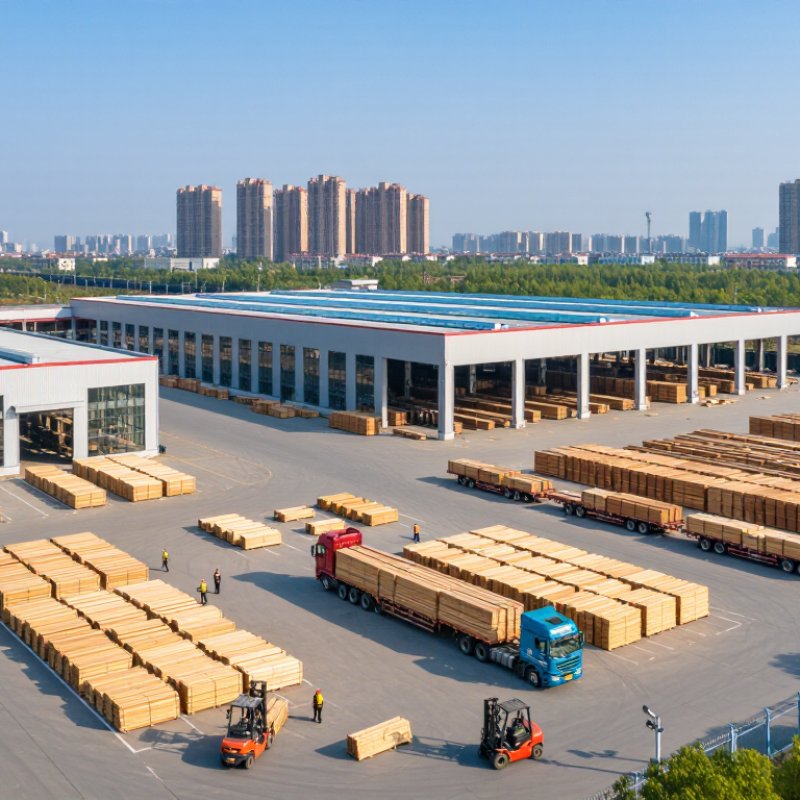
Table of Contents
[Hide]
China’s Lumber Distribution Market: Products, Channels, and Key Regions
China’s lumber distribution market serves furniture makers, construction firms, flooring producers, and smaller workshops. Common products include sawn softwood, hardwood boards, plywood, and engineered panels. Buyers often compare species, dimensions, moisture levels, and grading documents before placing orders. A low price means little if boards arrive warped.
Distribution runs through importers, regional wholesalers, processors, and direct supply agreements. Larger buyers may arrange scheduled deliveries, while small workshops often purchase from local timber markets. Warehouses near ports can offer broad imported selections. Inland customers may face longer lead times and higher transport costs. Details matter.
Key trading and processing activity clusters around the Yangtze River Delta, Pearl River Delta, and Bohai Rim, where ports, factories, and transport links support steady movement. Northeast China also has a longstanding forestry and wood-processing base. These patterns are not fixed; local demand and sourcing conditions change. A regional label alone cannot confirm dependable supply. Check stock, traceability records, storage conditions, and delivery capacity. Even careful buyers miss things sometimes. Moisture readings at dispatch, then again on arrival, can reveal problems early.
| No. | Distribution Hub or Region | Common Lumber Products | Typical Distribution Channels | Regional Market Role |
|---|---|---|---|---|
| 1 | Yangtze River Delta (Shanghai, Jiangsu, Zhejiang) |
Imported softwood and hardwood lumber; sawn timber; wood panels | Port importers, wholesale markets, trading companies, direct supply to manufacturers | A major import and consumption region, supported by extensive port, logistics, furniture, and manufacturing networks. |
| 2 | Pearl River Delta (Guangdong, including Guangzhou and Foshan) |
Softwood and hardwood lumber; furniture-grade timber; plywood and other panels | Importers, regional wholesalers, building-material markets, furniture-industry suppliers | A large manufacturing and construction market with established furniture and interior-fit-out supply chains. |
| 3 | Bohai Rim (Tianjin, Beijing, Hebei) |
Structural and packaging lumber; sawnwood; wood panels | Port-based importers, regional warehouses, wholesalers, construction-material distributors | Serves northern China through seaports and road and rail connections to nearby industrial and construction markets. |
| 4 | Shandong (including Qingdao and Linyi) |
Sawnwood, logs, plywood, blockboard, and other wood-based panels | Port importers, timber and panel markets, processors, domestic wholesale networks | Combines coastal import access with significant timber processing and wood-products trading activity. |
| 5 | Fujian Coastal Region (including Xiamen and Zhangzhou) |
Hardwood and softwood lumber; logs; furniture and construction timber | Port importers, local timber traders, furniture-industry suppliers, regional wholesalers | Connects coastal import routes with timber-processing and furniture-manufacturing demand in southeast China. |
| 6 | Central China (Wuhan and surrounding provinces) |
Construction lumber; sawn timber; plywood and other panels | Inland wholesalers, warehouse distributors, building-material markets, direct-to-factory supply | Wuhan’s transport links support distribution to inland markets across Hubei and neighboring provinces. |
| 7 | Chengdu–Chongqing Economic Region | Construction and packaging lumber; sawnwood; wood panels | Inland logistics operators, regional wholesalers, construction suppliers, manufacturing distributors | A major western China demand center supplied through inland rail, road, and river-connected logistics networks. |
| 8 | Northeast China (Liaoning, Jilin, Heilongjiang) |
Softwood lumber; structural timber; packaging wood; panels | Port and rail-linked importers, regional timber yards, wholesalers, local processors | Serves construction, furniture, and industrial demand across the northeastern provinces, with access to northern ports and rail routes. |
| 9 | Yunnan and Southwest Border Region | Hardwood lumber; sawn timber; selected imported wood products | Border-trade and inland traders, local wholesalers, processors, regional building-material channels | Distribution is shaped by southwest transport links and cross-border trade routes; product availability varies by route and regulation. |
| 10 | Northwest China (including Shaanxi and Xinjiang) |
Construction lumber; packaging timber; panels and processed wood products | Inland wholesalers, rail- and road-connected warehouses, local building-material distributors | Supplies geographically dispersed inland markets, where transport costs and distance from seaports influence distribution. |
Note: China does not have a single authoritative public ranking of its lumber distributors. This table therefore presents ten significant distribution hubs and channel profiles, not a ranked list of companies. Product availability and trade routes vary by grade, origin, regulations, and market conditions.
Related Posts
-
How to Find Reliable Lumber Yards for Global Sourcing?
-
What Are the Top 10 Lumber Yards in China?
-
Top 10 Best Lumber Store Tips for Home Improvement Projects
-

Why Choose Discount Lumber for Your Next Project?
-

10 Tips to Choose the Best Lumber Distributors for Your Project
-

Top Lumber Distributors to Visit at China Import Expo 2026?
