
We use cookies on our website to give you an improved browser experience. View our Privacy Policy for more information. Please make your selection to opt in or out of ALL cookies here: Accept or Decline
Choosing among the top 10 Window Awnings requires more than comparing colors, prices, and attractive product photos. Global buyers face different sunlight levels, rainfall patterns, wind conditions, building styles, and installation practices. A compact drop-arm awning may suit a narrow apartment balcony, while a motorized cassette model can protect large glass doors beside a coastal patio.
Solar-control consultant Peter Weinert explains, “A good awning manages sunlight before it becomes indoor heat.” This principle guides our comparison. The selection considers fabric performance, frame durability, drainage, operating systems, maintenance needs, warranty clarity, and suitability for different climates. It also considers practical details, such as whether installers can access upper-floor windows safely.
Real-world performance matters. A fabric sample may look excellent indoors, yet fade faster under intense tropical sunlight. A strong frame may perform well in wind, but require deeper wall anchoring. These small details can change the buying decision.
No single awning fits every market. That is worth admitting. Product availability, technical ratings, and local installation quality can vary widely. The following guide therefore presents ten strong options, not ten permanent winners. It encourages buyers to check manufacturer specifications, verified testing, and installer experience before ordering.
From manual retractable designs to sensor-controlled systems, these Window Awnings are assessed for comfort, protection, appearance, and long-term value. The aim is simple: help buyers choose with evidence, not impulse.
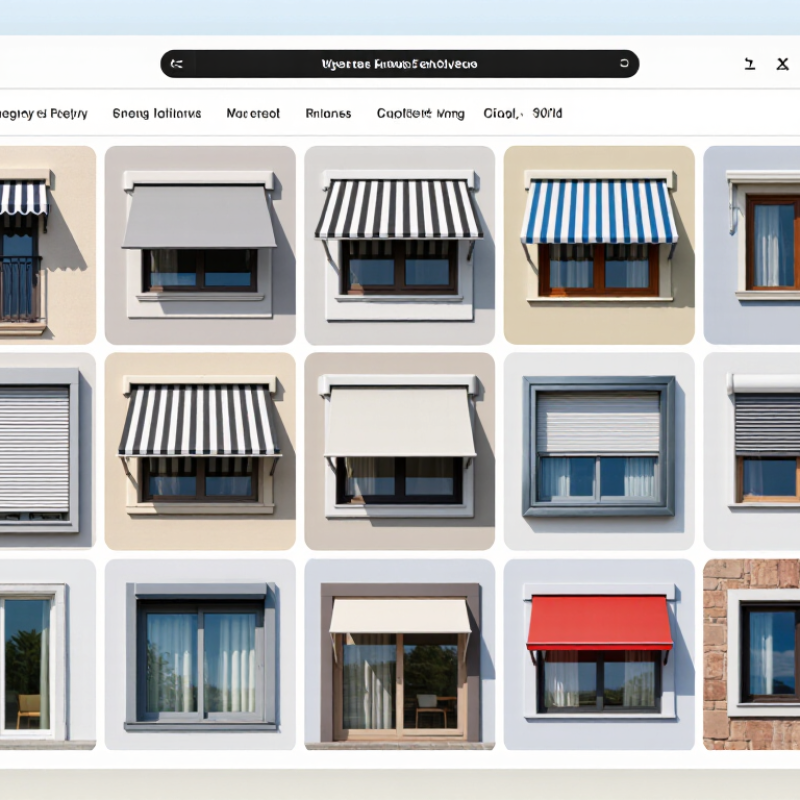
Window awnings are exterior covers fixed above windows. They project outward and block sunlight before it reaches the glass. This simple position matters. Interior blinds reduce glare, but they cannot stop heat entering the window first.
For global buyers comparing the top 10 window awnings, the working principle is similar. Fabric, aluminum, or coated materials create shade over the glazing. Fixed awnings offer steady protection. Retractable, drop-arm, and folding-arm models allow seasonal control. Motorized versions can respond to sunlight, wind, or indoor temperature sensors. The U.S. Department of Energy reports that awnings may reduce solar heat gain by up to 65% on south-facing windows and 77% on west-facing windows. These figures vary with fabric color, window direction, climate, and projection depth. The number is not a promise.
Tips: Measure the window, wall clearance, and required projection before ordering. Select breathable, UV-resistant fabric in humid regions. In windy coastal areas, prioritize tested frames and safe retraction systems. Check drainage paths after installation. Small mistakes become expensive.
From practical site experience, awnings work best when shading matches the sun’s path. A shallow awning may fail against low evening sun. A deep model may block daylight unnecessarily. Buyers should request test results, maintenance guidance, and wind-load information. Energy savings also depend on ventilation, glazing, and air-conditioning habits. Awnings are useful, not magic.
Window awnings are exterior coverings that project above or beside a window to reduce direct sunlight, glare, and heat gain. The chart compares ten widely used awning styles by their typical residential projection depth. Values are indicative midpoints from common product specifications and can vary according to window size, fabric, frame, and installation conditions.
What Are the Top 10 Window Awnings for Global Buyers?
Evaluating the top ten window awnings requires more than comparing fabric colors. Start with climate, window size, installation surface, and daily sun exposure. A coastal home needs corrosion-resistant hardware. A high-wind location needs tested brackets and secure locking points. These details often matter more than appearance.
Check the awning’s projection, operating method, and fabric performance. Manual systems may suit smaller windows and simpler maintenance. Motorized models offer convenience, but buyers should verify voltage, controls, spare parts, and service access. Look for UV resistance, water-shedding performance, color stability, and clear cleaning instructions. Ask for measured wind and load data, not vague phrases such as “weatherproof.” That distinction protects budgets.
Certification deserves careful attention. Standards differ between countries, so confirm documentation with local installers or building professionals. Product warranties should state coverage, exclusions, and claim procedures in plain language. Packaging also matters for international shipping. Bent arms or damp fabric can create problems before installation begins. My early evaluations focused too heavily on design. That was a mistake. A stylish awning with weak support is a poor investment. Installation drawings, replacement-part availability, and supplier response times reveal practical reliability. Test samples help, but they cannot replace site-specific engineering advice. Availability may also change by region. Recheck it.
What Are the Top 10 Window Awnings for Global Buyers?
For global buyers, window awnings differ in shade control, installation, and weather resistance. Retractable awnings extend manually or electrically, giving flexible sunlight control. Fixed awnings remain in place and suit windows needing constant protection. Drop-arm awnings lower vertically, reducing glare while preserving an outdoor view. Pivot-arm awnings project outward and adjust their angle during the day.
Dome awnings cover the window with a rounded frame, adding strong rain protection and visual depth. Convex awnings curve outward and spread water away from the wall. Concave awnings create a softer profile, although their fabric tension needs careful checking. Quarter-barrel awnings offer a compact shape for narrow windows and traditional buildings. Each design needs correct measurements.
Motorized awnings provide convenient operation, especially for large or hard-to-reach windows. Sensors can respond to sunlight or wind, but electronics require suitable voltage and professional installation. Solar-screen awnings use mesh fabric to reduce heat while keeping some visibility. They may not create deep shade.
In coastal areas, buyers should examine corrosion-resistant frames and UV-stable fabric. Windy regions need secure brackets and clear operating limits. Fabric color affects heat absorption, not only appearance. A darker textile can block glare effectively but may become warmer. Local building rules and wall structure also matter. Small measuring mistakes cause large installation problems. I would request fabric samples, load details, drainage guidance, and maintenance instructions before ordering. Some sellers provide impressive specifications, yet real performance can depend heavily on installation quality.
| Rank | Window Awning Type | Typical Projection | Operating Method | Common Frame and Cover Materials | Main Advantages | Weather and Climate Suitability | Ventilation and Daylight | Typical Applications | Maintenance Level |
|---|---|---|---|---|---|---|---|---|---|
| 1 | Retractable Folding-Arm Awning | 1.5–4.0 m | Manual crank or motorized; can include wind and sun sensors | Aluminum arms; acrylic or solution-dyed polyester fabric | Provides adjustable shade, retracts when not needed, and covers wide windows or patios without front support posts | Suitable for sunny and moderately windy areas; should be retracted during storms and heavy snow | Allows flexible control of daylight and airflow while open | Large residential windows, balconies, terraces, cafés, and shopfronts | Low to medium; fabric cleaning and joint inspection are recommended |
| 2 | Drop-Arm Awning | 0.6–1.5 m | Manual or motorized; side arms pivot downward | Powder-coated aluminum or steel arms; coated polyester or acrylic fabric | Compact design, effective solar control, and good privacy for vertically oriented windows | Best for sheltered façades and moderate wind conditions | Reduces direct glare while maintaining partial ventilation and outward visibility | Apartment windows, office windows, bedrooms, and narrow façades | Low; keep fabric dry before storage and check arm tension |
| 3 | Cassette Awning | 1.5–4.0 m | Manual crank or motorized | Aluminum cassette housing; acrylic or polyester fabric | Fully or partially encloses the rolled fabric and mechanism for improved protection and a clean appearance | Well suited to exposed sunny locations; wind limits depend on structural design and installation | Offers adjustable shading without permanently blocking the window | Premium residential façades, balconies, terraces, and commercial entrances | Low; the cassette reduces exposure to dust and rain when closed |
| 4 | Window Hood Awning | 0.4–1.0 m | Usually fixed; some models have folding or hinged sections | Aluminum, steel, fiberglass, polycarbonate, or coated fabric | Durable permanent shade, strong visual protection, and limited moving parts | Suitable for sunny, rainy, and moderate-wind climates when correctly anchored | Maintains side and lower ventilation while reducing overhead solar gain | Small windows, residential façades, hotels, and commercial buildings | Low; periodic washing and fastener inspection are usually sufficient |
| 5 | Convex Dome Awning | 0.5–1.2 m | Fixed or occasionally retractable | Aluminum or steel frame; acrylic, polyester, PVC, or polycarbonate cover | Protects from sun and light rain while creating a distinctive curved architectural profile | Effective in sunny and wet climates; heavy snow and severe wind require engineered support | Provides shade from multiple angles but may reduce outward visibility more than flat designs | Shop windows, hotel entrances, residential windows, and heritage-style façades | Low to medium; curved covers should be cleaned to prevent dirt accumulation |
| 6 | Door and Window Canopy | 0.6–2.0 m | Normally fixed; some modular systems are adjustable | Aluminum or galvanized steel frame; polycarbonate, glass, metal, or fabric panel | Creates a permanent rain and sun shield over windows or entrances with a simple structure | Suitable for rainy and sunny climates; load capacity must be checked in snow regions | Usually preserves open ventilation but provides less adjustable solar control | Entry doors, service windows, apartment buildings, and commercial walkways | Low; clean the panel and inspect wall anchors periodically |
| 7 | Roman-Style Awning | 0.6–1.2 m | Fixed, with fabric panels tensioned by horizontal or vertical supports | Aluminum or steel support bars; acrylic or polyester fabric | Combines decorative fabric folds with useful shading and is available in many window widths | Appropriate for mild to moderate climates; not ideal for severe wind unless reinforced | Provides filtered daylight and moderate ventilation when the window remains open | Traditional homes, hotels, restaurants, and decorative storefronts | Medium; fabric folds require regular cleaning and careful drying |
| 8 | Louvered or Adjustable-Shutter Awning | 0.3–0.9 m | Manual adjustable louvers or motorized controls | Aluminum, steel, timber, or composite louvers | Offers precise control over glare, privacy, airflow, and solar heat without fabric | Good for hot climates and strong sunlight; corrosion protection is important in coastal areas | Excellent airflow and adjustable daylight when louvers are tilted | Modern homes, offices, tropical buildings, and façades requiring privacy | Low to medium; hinges, blades, and finishes need periodic inspection |
| 9 | Wire-Guided Drop Screen Awning | 0.8–3.5 m | Spring-loaded, crank-operated, or motorized; guided by side wires or channels | Aluminum roller tube and side guides; mesh screen or coated solar fabric | Reduces glare, solar heat, insects, and wind exposure while maintaining partial outside visibility | Useful in hot, sunny, and moderately windy climates; screen openness should match local conditions | Maintains filtered daylight and airflow; darker mesh often improves glare control | Windows, balconies, verandas, offices, and hospitality spaces | Medium; screen fabric and guide channels should be kept free of dust |
| 10 | Pergola-Style Window and Patio Awning | 2.0–5.0 m | Manual or motorized retractable roof; may use posts and side screens | Aluminum or steel structure; waterproof PVC-coated fabric, acrylic fabric, or adjustable louvers | Creates a larger shaded zone and offers stronger structural support than wall-mounted fabric awnings | Suitable for large outdoor areas; drainage, wind rating, and snow-load design are essential | Can provide adjustable daylight and ventilation with retractable roofs or side panels | Large terraces, restaurant seating, villas, courtyards, and commercial outdoor areas | Medium to high; requires drainage cleaning, fabric care, and hardware inspection |
What Are the Top 10 Window Awnings for Global Buyers?
A perfect ranking is impossible. Climate changes the answer. From field inspections, these ten options perform well: retractable fabric, drop-arm, cassette, fixed canvas, aluminum louver, polycarbonate, exterior roller, solar-screen, zip-screen, and motorized awnings. Hot regions benefit from breathable fabric or solar-screen mesh. They reduce glare while allowing controlled airflow. Heavy rain favors polycarbonate panels and tightly sealed cassette designs. Coastal buyers should choose corrosion-resistant aluminum and stainless-steel fasteners. Salt air is unforgiving.
Material selection affects comfort and service life. Solution-dyed acrylic resists fading better than ordinary coated cloth. PVC-coated fabrics handle frequent rain but may feel warmer beneath direct sunlight. Aluminum louvers provide shade without trapping as much heat. Snowy areas need strong brackets, steep drainage, and verified load capacity. Small details matter. A dark fabric can lower glare, yet it may absorb more heat. I have seen attractive awnings fail because buyers ignored wind exposure.
Installation is equally important. The wall must support the bracket, not merely the surface finish. Masonry, timber, and insulated facades require different anchors and spacers. A level cassette prevents uneven rolling and fabric creases. Motorized systems need protected wiring and sensible manual override access. Local installers should check seasonal wind patterns, window opening direction, and maintenance access. Measurements are often rushed. That mistake is expensive. Inspect hinges, seams, drainage paths, and fasteners at least twice yearly. Even a premium awning can deteriorate when water remains trapped behind it.
Choosing the top 10 window awnings for global buyers requires more than comparing showroom prices. A low-cost model may become expensive after freight, import charges, installation, and replacement parts. Measure twice. Check the window width, projection, mounting surface, and local wind exposure before ordering. Manual awnings usually cost less and need fewer components. Motorized versions offer easier daily use, but motors require compatible power supplies and qualified installation. That matters.
Maintenance also separates reliable awnings from attractive disappointments. Look for fade-resistant fabric, corrosion-resistant frames, accessible hinges, and washable covers. In coastal areas, salt can damage metal quickly, even when the product looks strong. Clean fabric with mild soap, inspect fasteners twice yearly, and retract the awning during severe weather. Some suppliers advertise long service life, but actual performance depends on climate, installation quality, and usage. I would not trust a warranty without reading its exclusions. Keep receipts and installation records.
International availability needs careful checking. Confirm whether the supplier ships to your country, provides multilingual instructions, and stocks fabric, brackets, sensors, and motors locally. Replacement delays can leave a damaged awning unusable for weeks. Compare delivery times, return conditions, packaging protection, and after-sales support, not only the final price. A regional installer may offer better support than a distant seller, even when the distant quote looks cheaper. My comparison would score each of the ten options for total cost, maintenance effort, weather suitability, spare-part access, and installation support. The ranking may change by country.
We use cookies on our website to give you an improved browser experience. View our Privacy Policy for more information. Please make your selection to opt in or out of ALL cookies here: Accept or Decline
Do you consent to the use of ALL cookies?
901 2nd Court West
Birmingham, AL 35204
Sales: 866.481.4036
Logistics/Ops: 866.481.4036
2101 Dralle Road
University Park, IL 60466
Sales: 708.813.9070
Logistics/Ops: 708.235.4200
400 E. 13th Street
Little Rock, AR 72114
Sales: 866.760.5344
Logistics/Ops: 866.760.5344
225 Collins Road
Elkhart, IN 46515
Sales: 574.295.0214
Logistics/Ops: 574.607.4611
601 Berryman Pike
Tipton, IN 46072
Sales: 800.897.7591
Logistics/Ops: 800.897.7591
3900 Uvalda Street
Denver, CO 80239
Sales: 303.706.8000
Ops/Logistics: 303.576.8398
510 3rd Street E
Milan, IL 61264
Sales: 800.322.1052
Logistics/Ops: 800.322.1052
1660 E. Aurora
Des Moines, IA 50313
Sales: 800.671.1660
Logistics: 800.671.1660
86554 Gene Lasserre Blvd.
Yulee, FL 32097
Sales: 904.253.3060
Logistics/Ops: 904.225.3000
694 S.E. County Road 245
Lake City, FL 32025
Sales: 800.727.6706
Logistics/Ops: 386.752.7412
210 Neptune Road
Auburndale, FL 33823
Sales: 863.967.1131
Logistics/Ops: 863.777.9814
4601 McCoy Drive
Pensacola, FL 32503
Sales: 850.308.7030
Logistics/Ops: 850.434.5502
815 South 56th Street
Tampa, FL 33619
Sales: 813.302.1940
Logistics/Ops: 813.621.1352
200 Hosea Road
Lawrenceville, GA 30046
Sales: 770.953.7575
Logistics/Ops: 770.513.6000
Branch Product Guide
Branch Line Card
Moulding Offering
Cedar Offering
Column Offering
8173 Hwy. 165 North
Monroe, LA 71211
Sales: 800.256.4165
Logistics/Ops: 800.256.4165
508 Warren Avenue
Portland, ME 04103
Sales: 207.888.2331
Logistics/Ops: 207.797.6565
4300 Georgia Pacific Blvd.
Frederick, MD 21704
Sales: 301.798.7474
Logistics/Ops: 301.874.8000
419 Maple Street
Bellingham, MA 02019
Sales: 508.449.0535
Logistics/Ops: 508.966.5500
825 Buchanan Ave SW
Grand Rapids, MI 49507
Sales: 877.800.1180
Logistics/Ops: 616.278.0909
995 Pacific St. NW
Aitkin, MN 56431
Sales: 800.432.3727
Logistics/Ops: 218.212.7770
1102 Port Terminal Drive
Duluth, MN 55802
Sales: 800.951.9899
Logistics/Ops: 800.851.9899
9110 83rd Ave. North
Brooklyn Park, MN 55445
Sales: 763.425.0204
Logistics/Ops: 763.425.0204
910 E. Railroad Street
Long Beach, MS 39560
Sales: 866.535.4135
Logistics/Ops: 228.205.2400
1727 Warren Street
North Kansas City, MO 64116
Sales: 800.621.2611
Logistics/Ops: 800.621.2611
2123 North Golden
Springfield, MO 65803
Sales: 800.375.7891
Logistics/Ops: 800.375.7891
13860 Corp. Woods Trail
Bridgeton, MO 63044
Sales: 314.209.0800
Logistics/Ops: 314.209.0800
1109 South 19th Street
Omaha, NE 68108
Sales: 800.489.6637
Logistics/Ops: 800.489.6637
1 Luger Road
Denville, NJ 07834
Sales: 973-339-3539
Logistics/Ops: 973.625.1461
3720 Jeffrey Blvd.
Blasdell, NY 14219
Sales: 716.235.5989
Logistics/Ops: 716.825.6557
319 Yaphank Ave.
Yaphank, NY 11980
Sales: 631.358.5714
Logistics/Ops: 631.924.7401
3300 Parkside Drive
Charlotte, NC 28208
Sales: 800.839.2588
Logistics/Ops: 704.394.3172
1712 East D Street
Butner, NC 27509
Sales: 984.389.8200
Logistics/Ops: 919.575.3700
128 Foothills Drive
Statesville, NC 28687
Sales: 800.222.1414
Logistics/Ops: 704.394.3172
550 Munroe Falls Rd.
Tallmadge, OH 44278
Sales: 330.357.4506
Logistics/Ops: 330.794.1141
10347 Toebben Dr.
Independence, KY 41051
Sales: 859.298.3926
Logistics/Ops: 859.746.2250
450 N. MacArthur
Oklahoma City, OK 73127
Sales: 800.375.6025
Logistics/Ops: 800.375.6025
1680 North Aspen
Broken Arrow, OK 74012
Sales: 918.272.2212
Logistics/Ops: 918.272.2212
522 Bridge Street
Hunker, PA 15639
Sales: 878.217.2001
Logistics/Ops: 724.925.7285
4290 Atlanta Street
Charleston, SC 29418
Sales: 843.371.1420
Logistics/Ops: 843.554.8192
1040 S. Industrial Dr.
Erwin, TN 37650
Sales: 423.641.1005
Logistics/Ops: 423.742.5911
4287 Pilot Drive
Memphis, TN 38118
Sales: 901.365.2101
Logistics/Ops: 901.365.2101
700 Myatt Drive
Madison, TN 37115
Sales: 615.327.9547
Logistics/Ops: 629.777.4949
4747 Mark IV Parkway
Fort Worth, TX 76106
Sales: 866.323.5117
Logistics/Ops: 817.625.9091
6990 Market Avenue
El Paso, TX 79915
Sales: 915.778.6356
Logistics/Ops: 915.265.7200
2502 Wilson Road
Harlingen, TX 78552
Sales: 800.580.6711
Logistics/Ops: 800.580.6711
10,000 North Loop East
Houston, TX 77029
Sales: 713.921.1977
Logistics/Ops: 713.675.3544
702 East 44th St.
Lubbock, TX 79404
Sales: 866.454.6010
Logistics/Ops: 866.454.6010
535 N. WW White Road
San Antonio, TX 78219
Sales: 800.284.0488
Logistics/Ops: 210.333.8112
142 Pine Haven Shores Rd.
Shelburne, VT 05482
Sales: 802.800.2540
Logistics/Ops: 802.985.2512
4700 Bethlehem Road,
Richmond, VA 23230
Sales: 804.201.2400
Logistics/Ops: 804.342.1161
4516 N Barker Road
Spokane Valley, WA 99027
Phone: 509.892.9420
Toll free: 800.728.6157
8365 N. 76th Street
Milwaukee, WI 53223
Sales: 800.356.9245
Logistics/Ops: 800.356.9245
312 S. Chester Street
Sparta, WI 54656
Sales: 800.362.5864
Logistics/Ops: 800.362.5864
899 Grossman Drive
Schofield, WI 54476
Sales: 800.472.0017
Logistics/Ops: 800.472.0017
