
We use cookies on our website to give you an improved browser experience. View our Privacy Policy for more information. Please make your selection to opt in or out of ALL cookies here: Accept or Decline
Carbon steel plate remains a practical foundation for bridges, pressure vessels, shipyards, heavy machinery, and energy infrastructure. Its appeal is direct: strength, weldability, availability, and comparatively predictable pricing. Yet choosing among Carbon Steel Plate Manufacturers requires more than comparing annual output or advertised prices.
The World Steel Association reported approximately 1.89 billion tonnes of crude steel production worldwide in 2023. Its 2024 Short Range Outlook also showed how construction demand, manufacturing activity, and regional economic conditions continue shaping steel markets. These figures describe crude steel, not finished plate. That distinction matters. A large producer may not offer the thickness, grade, heat treatment, or certification required for a specific project.
Quality is visible in details. Consider mill certificates, ultrasonic testing, dimensional tolerances, surface condition, and traceability from heat number to shipment. The IEA’s Iron and Steel Technology Roadmap also highlights emissions reduction as a major industry challenge. Production volume alone is no longer enough.
Edwin Basson, Director General of the World Steel Association, has described steel as “essential to modern life.” That observation remains relevant, though it does not answer every purchasing question. Delivery reliability, technical support, and transparent documentation can matter more than a polished ranking.
This guide examines ten leading manufacturers worldwide through those practical measures. The list is informative, not absolute. Regional access, product scope, and changing market conditions may alter the outcome. Readers should verify current certifications, plant capabilities, and commercial terms before making a final decision.
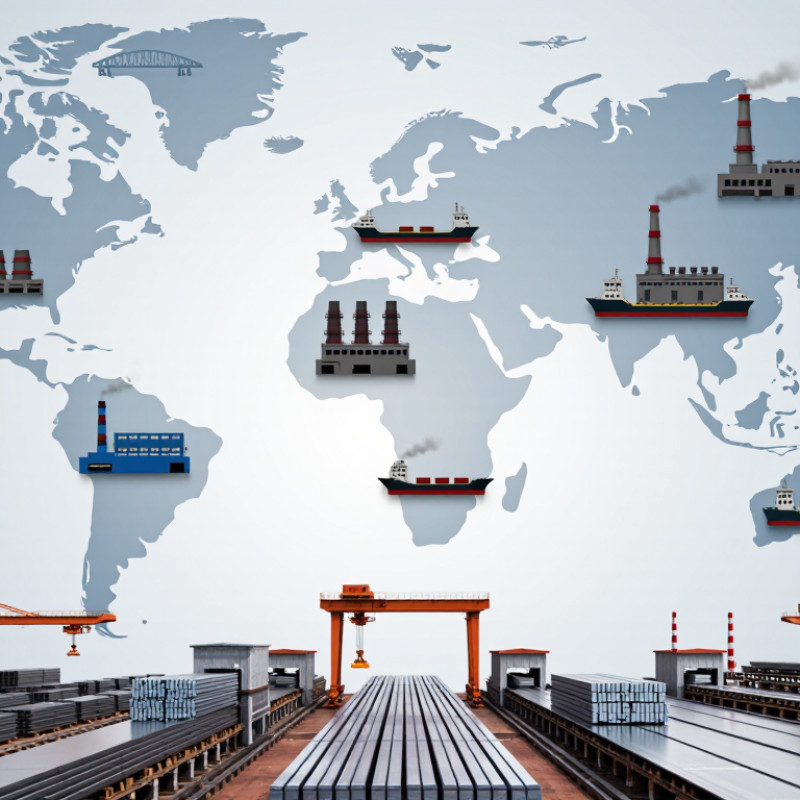
Global steelmaking reached approximately 1.89 billion tonnes in 2023, according to the World Steel Association’s World Steel in Figures 2024. This figure represents crude steel, not carbon steel plate alone. Still, it shows the enormous industrial base supporting plate production, from shipyards to bridges and pressure equipment.
Carbon steel plates begin with slabs, reheating furnaces, and controlled rolling. Their final performance depends on thickness, chemistry, cooling speed, and inspection discipline. The OECD Steel Outlook highlights persistent overcapacity concerns and uneven demand across major markets. That pressure can influence mill utilization, delivery schedules, and export pricing.
Quality is more than a polished certificate. Buyers should review heat numbers, ultrasonic testing records, tensile results, and impact-test temperatures. A plate may look flawless under warehouse lighting. It can still fail a specification review. ASTM, EN, and ISO requirements offer useful frameworks, but documents must match the actual production heat. Traceability matters.
Energy use remains a difficult issue. The International Energy Agency identifies steel as one of the largest industrial sources of carbon dioxide emissions. Cleaner electricity, higher scrap use, and lower-emission production routes may reduce future impacts. Progress is uneven. That deserves scrutiny. For any global manufacturer ranking, output volume alone is an incomplete measure. Consistency, verified data, technical support, and responsible production should carry equal weight.
A credible ranking starts with annual output, but total crude steel is not plate production. The World Steel Association reported 1.892 billion tonnes of global crude steel output in 2023. That figure shows scale, not product specialization. Our ranking therefore weighs published plate capacity, rolling-line size, slab supply, and recent operating data. Capacity should be verified against annual reports, technical disclosures, and shipment records.
Certification adds another practical test. ISO 9001 supports quality control, while ISO 14001 indicates structured environmental management. Product approvals, inspection systems, and traceability matter more for pressure vessels, bridges, and heavy machinery. Global reach is measured through export destinations, port access, regional service centers, and delivery reliability. The OECD’s Steel Market Developments reports continuing worldwide excess capacity, so installed capacity alone can be misleading. Some mills list impressive capacity but operate well below it. That deserves scrutiny.
Tips: Compare saleable plate output, not crude steel output. Check thickness ranges, maximum plate width, and documented delivery performance. Request current mill certificates and third-party audit evidence. World Steel Association data is useful for market context, but it does not replace plant-level verification. A ranking can still contain gaps. Disclosure quality varies, and private production figures are sometimes incomplete. That uncertainty should remain visible rather than hidden behind precise-looking scores.
A credible Top 10 ranking must measure more than advertised capacity. The World Steel Association reported global crude steel production of 1,892 million tonnes in 2023. That figure covers steelmaking, not finished carbon steel plate. The distinction matters. Production scale should combine crude output, plate-line capacity, utilization, and delivery consistency. Public filings and mill certificates provide stronger evidence than promotional claims. Still imperfect. Capacity may remain idle during maintenance or weak demand.
Market coverage requires more than export volume. UN Comtrade records under HS codes 7208, 7209, and 7211 help track relevant flat-rolled steel flows. OECD steel outlooks add useful context on excess capacity and regional demand. A manufacturer serving shipyards in Asia, infrastructure projects in Europe, and machinery buyers in North America shows broader reach. However, trade statistics can mix carbon, alloy, coated, and semi-finished products. Buyers should examine product-level data carefully.
For the ten leading producers, production scale could receive 60% of the score. Market coverage could receive 40%. Scale includes melting capacity, plate throughput, and stable monthly deliveries. Coverage includes regional warehouses, technical support, certifications, and shipment reliability. The weighting remains debatable. A huge mill with inconsistent lead times may support fewer projects than a smaller, responsive producer. Audited quality records and recent shipment histories make the ranking more defensible. Numbers alone can mislead.
| Rank | Anonymized Producer | Parent-Group Crude Steel Output 2023 (Million Tonnes) | Carbon Steel Plate Capability | Estimated Production-Scale Tier | Geographic Market Coverage | Export Market Reach | Typical Plate Product Range |
|---|---|---|---|---|---|---|---|
| 1 | Producer 01 | 130.77 | Integrated flat-steel and heavy-plate operations | Very Large | Domestic, regional, and global | High | Structural, shipbuilding, pressure-vessel, and line-pipe plate |
| 2 | Producer 02 | 68.52 | Multiple flat-steel and plate production sites | Very Large | Europe, North America, South America, and selected Asian markets | High | Structural, automotive-grade, energy, and wear-resistant plate |
| 3 | Producer 03 | 55.89 | Large integrated plate and flat-products capacity | Very Large | Domestic and international markets | High | Shipbuilding, bridges, machinery, and structural plate |
| 4 | Producer 04 | 43.64 | Advanced flat-steel and specialty plate facilities | Large | East Asia, North America, Southeast Asia, and Europe | High | High-strength, construction, energy, and industrial plate |
| 5 | Producer 05 | 41.34 | Integrated steelmaking with broad flat-product capability | Large | Domestic, Asian, Middle Eastern, and African markets | Moderate to High | Structural, pressure-vessel, pipeline, and ship plate |
| 6 | Producer 06 | 40.54 | Large-scale carbon steel and heavy-plate production | Large | Domestic and Asia-Pacific markets | Moderate to High | General engineering, construction, shipbuilding, and machinery plate |
| 7 | Producer 07 | 39.23 | Integrated flat products and project-oriented plate supply | Large | Domestic, Southeast Asian, and selected export markets | Moderate | Construction, infrastructure, machinery, and wear-resistant plate |
| 8 | Producer 08 | 33.65 | Flat-steel, heavy-plate, and engineered steel products | Large | Domestic, Asian, Middle Eastern, and African markets | Moderate to High | Bridge, shipbuilding, pressure-vessel, and structural plate |
| 9 | Producer 09 | 29.48 | Flat-steel and plate production across several regions | Upper-Medium | India, Europe, Southeast Asia, and selected global markets | High | Construction, line-pipe, energy, and industrial plate |
| 10 | Producer 10 | 26.15 | Integrated steelmaking with growing plate capacity | Upper-Medium | India, North America, Europe, and selected export markets | High | Structural, infrastructure, energy, and heavy-engineering plate |
Note: Company identities are intentionally anonymized. The production figures represent publicly reported parent-group crude steel output for 2023 rather than standalone carbon steel plate output, because most manufacturers do not separately disclose plate production volumes. Market-coverage and product-capability categories summarize publicly documented operating footprints and product portfolios.
Regional capability matters when comparing the top 10 Carbon Steel Plate Manufacturers worldwide. Asia often leads in production scale, competitive pricing, and export capacity. Large mills can roll plates from 6 to 300 millimeters thick. Many serve construction, shipbuilding, and heavy machinery markets. However, delivery times may change sharply during port congestion or raw material disruptions.
European producers generally emphasize advanced grades, energy efficiency, and strict traceability. Their documentation often includes heat numbers, impact-test results, and ultrasonic inspection records. This supports demanding infrastructure and pressure equipment projects. Costs are usually higher. Yet buyers may receive stronger technical support and more predictable quality control. The difference is not always clear on paper.
North American manufacturers benefit from regional supply chains and established certification systems. They often compete through reliable delivery, customized dimensions, and close customer service. Emerging steel markets are expanding modern rolling lines and improving laboratory testing. They may offer attractive prices and shorter routes to nearby buyers. Still, buyers should verify production history, inspection independence, and mill certificate accuracy. A low quotation can hide extra testing, inland freight, or import duties. No region wins every category. This comparison also remains imperfect because plant performance changes with investment, energy prices, and local demand. A serious sourcing decision should review recent test reports, plate tolerances, minimum order quantities, and actual shipment records. Small details matter.
A useful review of the top 10 carbon steel plate manufacturers should begin with product data, not production volume. Common grades include ASTM A36 for general fabrication, ASTM A572 for higher-strength structures, and ASTM A516 for pressure vessels. European buyers may specify S235JR, S275JR, or S355JR under EN 10025. JIS SS400 remains common in Asian supply chains.
Thickness ranges often start near 3 mm and extend beyond 200 mm, depending on the mill, grade, and rolling route. Heavy plates may require normalized rolling, quenching and tempering, or controlled cooling. These treatments affect strength, weldability, and impact performance. Standards also define chemistry, tensile properties, bend tests, and dimensional tolerances. Do not trust a range without checking the actual mill certificate.
End-use sectors reveal whether the product data is practical. Shipbuilding needs reliable weldability and impact toughness. Construction projects often prioritize yield strength, flatness, and cutting performance. Energy equipment may require ultrasonic testing, low-temperature impact tests, and strict traceability. A heat number should follow the plate from production to delivery. That detail matters.
A polished comparison table can still mislead. Thickness availability changes with width, order volume, and delivery region. Certificates may meet a standard while missing a project-specific requirement. I would verify the latest test report, inspection level, surface condition, and tolerances before approving any supplier. Small details decide whether a plate performs well in the field.
The chart compares ten widely specified carbon and low-alloy structural or pressure-vessel plate grades used by global producers. Values represent minimum yield strength stated by the relevant specifications; actual thickness availability varies by mill, heat treatment, and certification.
| Grade / Specification | Typical Thickness Range | Primary End-Use Sectors |
|---|---|---|
| ASTM A36 | 6–200 mm | Buildings, bridges, general fabrication, machinery |
| ASTM A572 Grade 50 | 6–150 mm | Structural frames, bridges, transport equipment |
| ASTM A516 Grade 60 | 6–205 mm | Pressure vessels, boilers, storage tanks |
| ASTM A516 Grade 70 | 6–205 mm | Pressure vessels, petrochemical and process equipment |
| EN 10025 S235JR | 3–400 mm | Construction, structural steelwork, general engineering |
| EN 10025 S355JR | 3–400 mm | Heavy construction, bridges, cranes, machinery |
| JIS G3101 SS400 | 6–200 mm | Buildings, industrial equipment, welded structures |
| GB/T 700 Q235B | 4–200 mm | Construction, general fabrication, machinery |
| GB/T 1591 Q355B | 4–200 mm | Bridges, buildings, heavy equipment, transport |
| AS/NZS 3678-250 | 6–200 mm | Structural steelwork, infrastructure, fabrication |
Reference framework: ASTM A36, ASTM A572, ASTM A516, EN 10025, JIS G3101, GB/T 700, GB/T 1591, and AS/NZS 3678. Thickness ranges are representative commercial product ranges rather than universal specification limits.
We use cookies on our website to give you an improved browser experience. View our Privacy Policy for more information. Please make your selection to opt in or out of ALL cookies here: Accept or Decline
Do you consent to the use of ALL cookies?
901 2nd Court West
Birmingham, AL 35204
Sales: 866.481.4036
Logistics/Ops: 866.481.4036
2101 Dralle Road
University Park, IL 60466
Sales: 708.813.9070
Logistics/Ops: 708.235.4200
400 E. 13th Street
Little Rock, AR 72114
Sales: 866.760.5344
Logistics/Ops: 866.760.5344
225 Collins Road
Elkhart, IN 46515
Sales: 574.295.0214
Logistics/Ops: 574.607.4611
601 Berryman Pike
Tipton, IN 46072
Sales: 800.897.7591
Logistics/Ops: 800.897.7591
3900 Uvalda Street
Denver, CO 80239
Sales: 303.706.8000
Ops/Logistics: 303.576.8398
510 3rd Street E
Milan, IL 61264
Sales: 800.322.1052
Logistics/Ops: 800.322.1052
1660 E. Aurora
Des Moines, IA 50313
Sales: 800.671.1660
Logistics: 800.671.1660
86554 Gene Lasserre Blvd.
Yulee, FL 32097
Sales: 904.253.3060
Logistics/Ops: 904.225.3000
694 S.E. County Road 245
Lake City, FL 32025
Sales: 800.727.6706
Logistics/Ops: 386.752.7412
210 Neptune Road
Auburndale, FL 33823
Sales: 863.967.1131
Logistics/Ops: 863.777.9814
4601 McCoy Drive
Pensacola, FL 32503
Sales: 850.308.7030
Logistics/Ops: 850.434.5502
815 South 56th Street
Tampa, FL 33619
Sales: 813.302.1940
Logistics/Ops: 813.621.1352
200 Hosea Road
Lawrenceville, GA 30046
Sales: 770.953.7575
Logistics/Ops: 770.513.6000
Branch Product Guide
Branch Line Card
Moulding Offering
Cedar Offering
Column Offering
8173 Hwy. 165 North
Monroe, LA 71211
Sales: 800.256.4165
Logistics/Ops: 800.256.4165
508 Warren Avenue
Portland, ME 04103
Sales: 207.888.2331
Logistics/Ops: 207.797.6565
4300 Georgia Pacific Blvd.
Frederick, MD 21704
Sales: 301.798.7474
Logistics/Ops: 301.874.8000
419 Maple Street
Bellingham, MA 02019
Sales: 508.449.0535
Logistics/Ops: 508.966.5500
825 Buchanan Ave SW
Grand Rapids, MI 49507
Sales: 877.800.1180
Logistics/Ops: 616.278.0909
995 Pacific St. NW
Aitkin, MN 56431
Sales: 800.432.3727
Logistics/Ops: 218.212.7770
1102 Port Terminal Drive
Duluth, MN 55802
Sales: 800.951.9899
Logistics/Ops: 800.851.9899
9110 83rd Ave. North
Brooklyn Park, MN 55445
Sales: 763.425.0204
Logistics/Ops: 763.425.0204
910 E. Railroad Street
Long Beach, MS 39560
Sales: 866.535.4135
Logistics/Ops: 228.205.2400
1727 Warren Street
North Kansas City, MO 64116
Sales: 800.621.2611
Logistics/Ops: 800.621.2611
2123 North Golden
Springfield, MO 65803
Sales: 800.375.7891
Logistics/Ops: 800.375.7891
13860 Corp. Woods Trail
Bridgeton, MO 63044
Sales: 314.209.0800
Logistics/Ops: 314.209.0800
1109 South 19th Street
Omaha, NE 68108
Sales: 800.489.6637
Logistics/Ops: 800.489.6637
1 Luger Road
Denville, NJ 07834
Sales: 973-339-3539
Logistics/Ops: 973.625.1461
3720 Jeffrey Blvd.
Blasdell, NY 14219
Sales: 716.235.5989
Logistics/Ops: 716.825.6557
319 Yaphank Ave.
Yaphank, NY 11980
Sales: 631.358.5714
Logistics/Ops: 631.924.7401
3300 Parkside Drive
Charlotte, NC 28208
Sales: 800.839.2588
Logistics/Ops: 704.394.3172
1712 East D Street
Butner, NC 27509
Sales: 984.389.8200
Logistics/Ops: 919.575.3700
128 Foothills Drive
Statesville, NC 28687
Sales: 800.222.1414
Logistics/Ops: 704.394.3172
550 Munroe Falls Rd.
Tallmadge, OH 44278
Sales: 330.357.4506
Logistics/Ops: 330.794.1141
10347 Toebben Dr.
Independence, KY 41051
Sales: 859.298.3926
Logistics/Ops: 859.746.2250
450 N. MacArthur
Oklahoma City, OK 73127
Sales: 800.375.6025
Logistics/Ops: 800.375.6025
1680 North Aspen
Broken Arrow, OK 74012
Sales: 918.272.2212
Logistics/Ops: 918.272.2212
522 Bridge Street
Hunker, PA 15639
Sales: 878.217.2001
Logistics/Ops: 724.925.7285
4290 Atlanta Street
Charleston, SC 29418
Sales: 843.371.1420
Logistics/Ops: 843.554.8192
1040 S. Industrial Dr.
Erwin, TN 37650
Sales: 423.641.1005
Logistics/Ops: 423.742.5911
4287 Pilot Drive
Memphis, TN 38118
Sales: 901.365.2101
Logistics/Ops: 901.365.2101
700 Myatt Drive
Madison, TN 37115
Sales: 615.327.9547
Logistics/Ops: 629.777.4949
4747 Mark IV Parkway
Fort Worth, TX 76106
Sales: 866.323.5117
Logistics/Ops: 817.625.9091
6990 Market Avenue
El Paso, TX 79915
Sales: 915.778.6356
Logistics/Ops: 915.265.7200
2502 Wilson Road
Harlingen, TX 78552
Sales: 800.580.6711
Logistics/Ops: 800.580.6711
10,000 North Loop East
Houston, TX 77029
Sales: 713.921.1977
Logistics/Ops: 713.675.3544
702 East 44th St.
Lubbock, TX 79404
Sales: 866.454.6010
Logistics/Ops: 866.454.6010
535 N. WW White Road
San Antonio, TX 78219
Sales: 800.284.0488
Logistics/Ops: 210.333.8112
142 Pine Haven Shores Rd.
Shelburne, VT 05482
Sales: 802.800.2540
Logistics/Ops: 802.985.2512
4700 Bethlehem Road,
Richmond, VA 23230
Sales: 804.201.2400
Logistics/Ops: 804.342.1161
4516 N Barker Road
Spokane Valley, WA 99027
Phone: 509.892.9420
Toll free: 800.728.6157
8365 N. 76th Street
Milwaukee, WI 53223
Sales: 800.356.9245
Logistics/Ops: 800.356.9245
312 S. Chester Street
Sparta, WI 54656
Sales: 800.362.5864
Logistics/Ops: 800.362.5864
899 Grossman Drive
Schofield, WI 54476
Sales: 800.472.0017
Logistics/Ops: 800.472.0017
