
We use cookies on our website to give you an improved browser experience. View our Privacy Policy for more information. Please make your selection to opt in or out of ALL cookies here: Accept or Decline
Choosing commercial smart locks for global projects is not simply a matter of comparing prices or mobile applications. Buyers must examine door materials, traffic levels, network reliability, credential management, and maintenance support. A lock installed on a busy hotel entrance faces different pressures from one serving a warehouse or office corridor.
Chris E. McGoey, a longtime security consultant, offers a useful reminder: “Security is a process, not a product.” That principle matters here. A strong commercial smart locks program should include controlled user permissions, audit records, emergency access procedures, battery monitoring, and regular software updates. Convenience is valuable. Resilience matters more.
Look closely at the details.
A fingerprint reader may perform poorly with wet hands. A wireless lock may struggle inside thick concrete walls. Cloud management can simplify administration, yet it also creates dependence on connectivity and vendor support. These weaknesses are easy to overlook during a showroom demonstration.
Global buyers should also review regional data practices, product certifications, installation requirements, warranty terms, and service availability before signing a purchase agreement. Requirements differ across markets, buildings, and industries. No single lock fits every property.
The best choice is rarely the most advanced model. It is the system that users can operate correctly, managers can monitor confidently, and technicians can repair without delay. That sounds obvious, but projects still fail through rushed installation and unclear ownership. A careful evaluation should test real doors, real workflows, and realistic failure conditions. The following guide compares leading options through that practical lens.
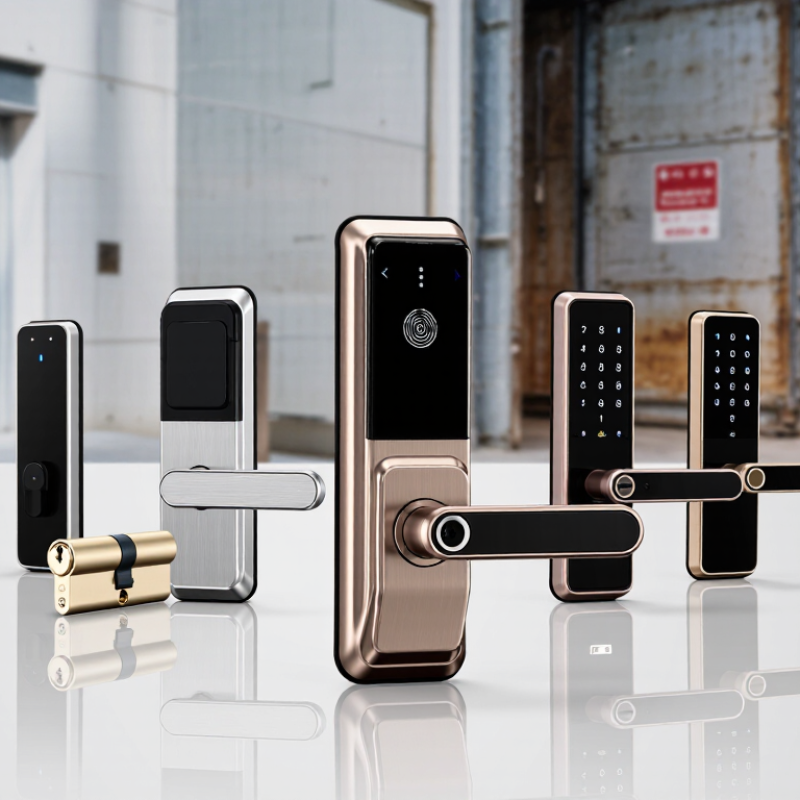
What Are Commercial Smart Locks and How Do They Work?
Commercial smart locks are electronic access devices designed for offices, warehouses, hotels, schools, and managed buildings. They replace or support traditional keys with digital credentials, including PINs, cards, mobile apps, or biometric verification. MarketsandMarkets projects the global smart lock market will grow from about $2.2 billion in 2023 to $4.4 billion by 2028. This growth reflects stronger demand for controlled access and digital records.
A typical lock contains a credential reader, control board, motor, battery, and communication module. After verification, the system releases the latch or turns the locking cylinder. Some models connect through Bluetooth, Wi-Fi, Zigbee, or wired building networks. Managers can create time limits, remove lost credentials, and review entry logs remotely. NIST guidance on digital identity stresses authentication, secure credential management, and regular system monitoring. Those principles matter in busy commercial spaces.
The hardware is not magic.
During installation, door alignment and battery condition often cause more failures than software. A heavy fire door may not close fully, leaving a smart lock unable to engage. Power loss also requires planning. Battery backup, mechanical override procedures, and fail-safe or fail-secure settings should match the building’s safety requirements. A 2024 report from Grand View Research identifies security, convenience, and remote monitoring as major smart-lock growth factors. Still, remote control can create new risks if accounts use weak passwords or outdated firmware. In practice, a reliable system needs testing, staff training, and periodic access reviews. That practical work is easy to underestimate.
A practical comparison of commercial smart-lock categories, operating methods, specifications, and purchasing considerations
| Lock Category | What It Is | How It Works | Typical Commercial Specifications and Buyer Considerations |
|---|---|---|---|
| Electronic Cylindrical Lock | A door-handle lock that replaces or upgrades a conventional cylindrical lockset with electronic access control. | An authorized credential activates a motor or clutch inside the lock. The handle then retracts the latch. Unauthorized credentials leave the handle disengaged. | Common credentials include PIN codes, RFID cards, mobile credentials, or mechanical keys. Suitable for offices, classrooms, and staff entrances. Check door thickness, latch dimensions, handing, fire-door requirements, and local certification rules. |
| Electronic Mortise Lock | A smart lock built around a mortise case installed inside the door edge, often providing latch and deadbolt functions in one unit. | The access controller verifies the credential and drives the mortise mechanism to unlock or relock the door. Some models support automatic relocking and passage modes. | Offers a neat, integrated appearance and strong suitability for hotels, apartments, offices, and institutional buildings. Verify mortise-case dimensions, door preparation, emergency egress, and compatibility with the existing strike plate. |
| Electronic Exit Device | A panic bar or push bar fitted with electronic access-control functions for commercial exit doors. | The inside push bar normally permits free exit. A reader, keypad, or remote controller manages entry from the secure side while the exit function remains available during an emergency. | Frequently used in schools, warehouses, retail premises, and public buildings. Confirm door width, fire-exit regulations, alarm interfaces, fail-safe or fail-secure requirements, and accessibility obligations. |
| Wireless Lever or Knob Lock | A battery-powered electronic lock with a lever or knob, designed for doors where wired access control is difficult or expensive. | The lock stores access permissions locally or receives them through a wireless gateway. A valid credential releases the internal clutch or motor for a programmed period. | Installation is generally less disruptive than wired systems. Typical battery life depends on traffic, wireless use, temperature, and battery quality. Select models with low-battery alerts, mechanical override options, and a defined emergency power procedure. |
| Keypad Smart Lock | A commercial lock that uses a numeric PIN instead of, or in addition to, a physical key or card. | The user enters a stored PIN. The controller checks the code locally or through a management platform and unlocks the door when the code is valid and active. | Useful for temporary staff, contractors, shared rooms, and serviced accommodation. Look for unique user codes, time schedules, failed-attempt limits, anti-tamper alarms, and options to disable lost or expired codes. |
| RFID or NFC Card Lock | An electronic lock that reads contactless cards, key fobs, or compatible near-field credentials. | The reader detects the credential and compares its identifier with authorized records. The lock opens when the credential is valid and closes according to the configured relocking policy. | Common in hotels, offices, dormitories, and multi-tenant buildings. Confirm credential frequency, encryption capability, card-management workflow, read range, reader placement, and compatibility with the selected access-control platform. |
| Mobile-Credential Lock | A smart lock that allows an authorized smartphone to function as a digital key. | The phone communicates with the lock through Bluetooth, NFC, or a gateway-supported connection. The system validates the digital credential and records the access event. | Supports remote issuance and revocation of credentials. Buyers should check mobile operating-system support, offline operation, guest-access controls, privacy practices, battery impact, and what happens if a phone is lost or unavailable. |
| Networked Wireless Lock | A lock connected to a building-management or access-control system through a wireless hub, gateway, or mesh network. | The lock communicates with the gateway using a short-range wireless protocol. The gateway transfers permissions, schedules, and event records between the lock and a central management platform. | Reduces cabling for retrofit projects and enables centralized administration. Evaluate network range, interference, gateway density, encryption, firmware-update procedures, offline behavior, and total infrastructure cost. |
| Wired Online Access Lock | A permanently powered lock connected to an access-control panel or building network. | The access controller receives credential data, applies permissions in real time, and operates the lock relay. Events can be transmitted immediately to a central system. | Appropriate for high-traffic entrances and sites requiring real-time monitoring. Consider cable routes, power-supply capacity, backup power, network security, door-position sensors, request-to-exit devices, and installation labor. |
| Biometric Commercial Lock | A lock that verifies a physical characteristic, such as a fingerprint or facial feature, for access authorization. | A sensor captures the biometric input and compares it with an enrolled template. If the match meets the configured threshold, the lock releases. | Can reduce the need for cards or PINs but requires careful privacy, consent, data-retention, and local-law management. Assess performance with gloves, moisture, lighting, user accessibility, spoof resistance, and fallback credentials. |
| Hybrid Smart Lock | A commercial lock combining two or more methods, such as card, PIN, mobile credential, remote management, and mechanical key override. | The controller accepts one or more configured credentials and applies rules such as dual authentication, time schedules, temporary access, or emergency override. | Provides operational flexibility for mixed user groups and backup access. Compare the full cost of software licenses, gateways, credentials, maintenance, training, integration, and future replacement parts before purchasing. |
Global purchasing note: Actual performance depends on door construction, climate, usage frequency, installation quality, local fire and accessibility regulations, power conditions, network availability, and the selected access-management software. Always confirm certification, warranty coverage, spare-parts availability, and technical support in the destination market.
Top Commercial Smart Locks for Global Buyers?
A commercial smart lock should match the building’s workflow, not merely its door. Keypad locks suit small offices, clinics, and storage rooms needing shared PIN access. Managers can delete codes after staff changes. PINs also avoid lost cards. However, visible buttons collect fingerprints and may reveal commonly used numbers. That weakness is easy to overlook.
RFID and NFC locks work well in hotels, campuses, and factories with frequent user turnover. Cards or mobile credentials support quick entry, while administrators can set time limits. For remote offices, Wi-Fi-enabled locks provide live event records and remote permissions. Bluetooth models often consume less power, but users must stay near the reader. Fortune Business Insights valued the global smart lock market at USD 2.69 billion in 2024, with strong growth projected through 2032. That growth does not make every system suitable.
High-security sites may need biometric readers, dual authentication, or electronic cylinders connected to an access-control platform. These options fit laboratories, data rooms, and financial offices. Yet biometric accuracy can decline with wet hands, gloves, or poor lighting. Connectivity also deserves careful testing. A 2024 Verizon Data Breach Investigations Report found that human involvement remained present in most analyzed breaches, so permission design matters greatly. In practice, buyers should test battery life, emergency access, audit logs, offline operation, and local support. A lock that performs well in a showroom may fail beside a cold loading dock.
Which commercial smart lock types suit different business needs?
The chart uses a comparative 1–5 suitability score based on typical commercial requirements: deployment fit, access flexibility, auditability, offline resilience, and operational scalability. Mobile and RFID/NFC locks are suitable for flexible access management, keypad locks work well for shared facilities, biometric locks prioritize identity assurance, and electromechanical locks are often selected for robust offline operation.
Commercial smart locks should be compared as access systems, not standalone door gadgets. According to Fortune Business Insights’ 2024 Smart Lock Market report, demand is expanding as businesses adopt connected security and remote management. That growth can hide weak purchasing decisions. Ask how the lock protects credentials, not just how it opens doors.
Review encryption, secure firmware updates, tamper alerts, and local operation during internet outages. NIST guidance on digital identity stresses strong authentication and controlled credential recovery. A useful system supports role-based permissions, temporary codes, and immediate revocation. Test the audit trail yourself. Can an administrator see who opened a storage room at 9:14 a.m.? Can the record export cleanly for an internal investigation? Small details matter. Battery warnings should arrive before a night-shift failure.
Connectivity also changes operating risk. Wi-Fi offers direct cloud access but may increase network exposure and battery use. Bluetooth can reduce power demands, while gateway-based protocols may improve coverage across concrete walls. ABI Research reports continued growth in enterprise IoT deployments, but connectivity fragmentation remains a practical challenge. Check integration with existing access software, identity providers, and emergency procedures. A lock that works in a showroom may fail beside a metal security door. I have seen specifications look convincing until installers measured signal loss. That part deserves more skepticism. Consider regional radio requirements, data-hosting expectations, offline credentials, and service support before selecting a system.
A commercial smart lock must fit the door before it connects to software. Check the mortise, cylinder profile, door thickness, handing, and latch position. Measure the frame, not only the lock body. A few millimeters can stop installation.
Compatibility also includes power and communication. Confirm battery life under heavy daily traffic, emergency power access, and offline operation. Test wireless performance through concrete walls and metal doors. Does the lock support the buyer’s preferred mobile credentials, cards, or wired access system? A site survey often reveals problems that product sheets hide.
Compliance requires more than a printed certificate. Ask for current test reports, radio approvals, electrical safety evidence, fire-door suitability, and privacy documentation for the destination market. Data storage, encryption, administrator access, and audit-log retention deserve careful review. Local installers and inspectors can verify requirements that overseas sellers may misunderstand. A spreadsheet may look complete, yet miss regional documentation or door certification. That is worth questioning. Run a small pilot with real users, weak network areas, and repeated battery cycles. Record failures honestly. Reliable purchasing comes from verified fit, clear records, and performance under ordinary pressure.
Commercial buyers should test the door, not just the lock. Check metal thickness, frame alignment, handle clearance, and available power. A retrofit may appear simple, yet a crowded server room can make cabling difficult. Request a sample installation before ordering hundreds of units. Record fitting time, required tools, and failure points. Small delays become expensive across multiple locations.
Management deserves equal attention. Look for clear user roles, temporary credentials, audit logs, and remote status alerts. The platform should remain usable during a network outage, with secure offline access where appropriate. Ask how administrators recover lost devices or remove former staff. A clean dashboard matters. Confusing software creates avoidable mistakes. Integration with existing access systems can also reduce duplicate work, but compatibility claims need practical testing.
Support often reveals the real supplier quality. Confirm response times, spare-part availability, installation guides, training, and firmware maintenance. Support across time zones may require defined escalation channels. Calculate the total cost over several years, including batteries, gateways, licenses, labor, replacements, and network charges. The cheapest unit is rarely the cheapest system. I have seen teams underestimate battery changes and staff training. That assumption deserves another review. Also examine warranty exclusions carefully, especially for high-use doors and harsh environments. A controlled pilot with measured results is more reliable than a polished sales demonstration.
We use cookies on our website to give you an improved browser experience. View our Privacy Policy for more information. Please make your selection to opt in or out of ALL cookies here: Accept or Decline
Do you consent to the use of ALL cookies?
901 2nd Court West
Birmingham, AL 35204
Sales: 866.481.4036
Logistics/Ops: 866.481.4036
2101 Dralle Road
University Park, IL 60466
Sales: 708.813.9070
Logistics/Ops: 708.235.4200
400 E. 13th Street
Little Rock, AR 72114
Sales: 866.760.5344
Logistics/Ops: 866.760.5344
225 Collins Road
Elkhart, IN 46515
Sales: 574.295.0214
Logistics/Ops: 574.607.4611
601 Berryman Pike
Tipton, IN 46072
Sales: 800.897.7591
Logistics/Ops: 800.897.7591
3900 Uvalda Street
Denver, CO 80239
Sales: 303.706.8000
Ops/Logistics: 303.576.8398
510 3rd Street E
Milan, IL 61264
Sales: 800.322.1052
Logistics/Ops: 800.322.1052
1660 E. Aurora
Des Moines, IA 50313
Sales: 800.671.1660
Logistics: 800.671.1660
86554 Gene Lasserre Blvd.
Yulee, FL 32097
Sales: 904.253.3060
Logistics/Ops: 904.225.3000
694 S.E. County Road 245
Lake City, FL 32025
Sales: 800.727.6706
Logistics/Ops: 386.752.7412
210 Neptune Road
Auburndale, FL 33823
Sales: 863.967.1131
Logistics/Ops: 863.777.9814
4601 McCoy Drive
Pensacola, FL 32503
Sales: 850.308.7030
Logistics/Ops: 850.434.5502
815 South 56th Street
Tampa, FL 33619
Sales: 813.302.1940
Logistics/Ops: 813.621.1352
200 Hosea Road
Lawrenceville, GA 30046
Sales: 770.953.7575
Logistics/Ops: 770.513.6000
Branch Product Guide
Branch Line Card
Moulding Offering
Cedar Offering
Column Offering
8173 Hwy. 165 North
Monroe, LA 71211
Sales: 800.256.4165
Logistics/Ops: 800.256.4165
508 Warren Avenue
Portland, ME 04103
Sales: 207.888.2331
Logistics/Ops: 207.797.6565
4300 Georgia Pacific Blvd.
Frederick, MD 21704
Sales: 301.798.7474
Logistics/Ops: 301.874.8000
419 Maple Street
Bellingham, MA 02019
Sales: 508.449.0535
Logistics/Ops: 508.966.5500
825 Buchanan Ave SW
Grand Rapids, MI 49507
Sales: 877.800.1180
Logistics/Ops: 616.278.0909
995 Pacific St. NW
Aitkin, MN 56431
Sales: 800.432.3727
Logistics/Ops: 218.212.7770
1102 Port Terminal Drive
Duluth, MN 55802
Sales: 800.951.9899
Logistics/Ops: 800.851.9899
9110 83rd Ave. North
Brooklyn Park, MN 55445
Sales: 763.425.0204
Logistics/Ops: 763.425.0204
910 E. Railroad Street
Long Beach, MS 39560
Sales: 866.535.4135
Logistics/Ops: 228.205.2400
1727 Warren Street
North Kansas City, MO 64116
Sales: 800.621.2611
Logistics/Ops: 800.621.2611
2123 North Golden
Springfield, MO 65803
Sales: 800.375.7891
Logistics/Ops: 800.375.7891
13860 Corp. Woods Trail
Bridgeton, MO 63044
Sales: 314.209.0800
Logistics/Ops: 314.209.0800
1109 South 19th Street
Omaha, NE 68108
Sales: 800.489.6637
Logistics/Ops: 800.489.6637
1 Luger Road
Denville, NJ 07834
Sales: 973-339-3539
Logistics/Ops: 973.625.1461
3720 Jeffrey Blvd.
Blasdell, NY 14219
Sales: 716.235.5989
Logistics/Ops: 716.825.6557
319 Yaphank Ave.
Yaphank, NY 11980
Sales: 631.358.5714
Logistics/Ops: 631.924.7401
3300 Parkside Drive
Charlotte, NC 28208
Sales: 800.839.2588
Logistics/Ops: 704.394.3172
1712 East D Street
Butner, NC 27509
Sales: 984.389.8200
Logistics/Ops: 919.575.3700
128 Foothills Drive
Statesville, NC 28687
Sales: 800.222.1414
Logistics/Ops: 704.394.3172
550 Munroe Falls Rd.
Tallmadge, OH 44278
Sales: 330.357.4506
Logistics/Ops: 330.794.1141
10347 Toebben Dr.
Independence, KY 41051
Sales: 859.298.3926
Logistics/Ops: 859.746.2250
450 N. MacArthur
Oklahoma City, OK 73127
Sales: 800.375.6025
Logistics/Ops: 800.375.6025
1680 North Aspen
Broken Arrow, OK 74012
Sales: 918.272.2212
Logistics/Ops: 918.272.2212
522 Bridge Street
Hunker, PA 15639
Sales: 878.217.2001
Logistics/Ops: 724.925.7285
4290 Atlanta Street
Charleston, SC 29418
Sales: 843.371.1420
Logistics/Ops: 843.554.8192
1040 S. Industrial Dr.
Erwin, TN 37650
Sales: 423.641.1005
Logistics/Ops: 423.742.5911
4287 Pilot Drive
Memphis, TN 38118
Sales: 901.365.2101
Logistics/Ops: 901.365.2101
700 Myatt Drive
Madison, TN 37115
Sales: 615.327.9547
Logistics/Ops: 629.777.4949
4747 Mark IV Parkway
Fort Worth, TX 76106
Sales: 866.323.5117
Logistics/Ops: 817.625.9091
6990 Market Avenue
El Paso, TX 79915
Sales: 915.778.6356
Logistics/Ops: 915.265.7200
2502 Wilson Road
Harlingen, TX 78552
Sales: 800.580.6711
Logistics/Ops: 800.580.6711
10,000 North Loop East
Houston, TX 77029
Sales: 713.921.1977
Logistics/Ops: 713.675.3544
702 East 44th St.
Lubbock, TX 79404
Sales: 866.454.6010
Logistics/Ops: 866.454.6010
535 N. WW White Road
San Antonio, TX 78219
Sales: 800.284.0488
Logistics/Ops: 210.333.8112
142 Pine Haven Shores Rd.
Shelburne, VT 05482
Sales: 802.800.2540
Logistics/Ops: 802.985.2512
4700 Bethlehem Road,
Richmond, VA 23230
Sales: 804.201.2400
Logistics/Ops: 804.342.1161
4516 N Barker Road
Spokane Valley, WA 99027
Phone: 509.892.9420
Toll free: 800.728.6157
8365 N. 76th Street
Milwaukee, WI 53223
Sales: 800.356.9245
Logistics/Ops: 800.356.9245
312 S. Chester Street
Sparta, WI 54656
Sales: 800.362.5864
Logistics/Ops: 800.362.5864
899 Grossman Drive
Schofield, WI 54476
Sales: 800.472.0017
Logistics/Ops: 800.472.0017
