Top 10 Types of Custom Rubber Springs Suppliers?
Choosing the right Custom Rubber Springs Supplier is rarely a simple price comparison. Rubber springs support vibration control, shock absorption, alignment, and movement in demanding equipment. A small material mistake can create noise, fatigue, or early cracking.
Dr. Alan N. Gent, a respected rubber scientist and author of Engineering with Rubber, explained, “Rubber is not simply elastic; it is viscoelastic.” This principle matters when comparing suppliers. A capable manufacturer should understand compression set, hysteresis, temperature resistance, hardness, and dynamic loading. Those details become visible in real products, such as a rubber spring working beside a hot motor or under repeated machinery vibration.
This guide examines the top 10 types of Custom Rubber Springs Supplier businesses, including molded rubber manufacturers, silicone specialists, OEM partners, prototype producers, and low-volume custom fabricators. Each type offers different strengths. Some provide faster sampling. Others offer stronger compound development or better production consistency. The cheapest option may not be the safest long-term choice.
Look beyond the catalog.
Ask about testing, tooling, tolerances, traceability, and production experience. Request samples when the application is critical. Review how the supplier handles design changes, because real projects rarely remain perfect. Even experienced buyers can overlook compression direction or installation clearance. That is an uncomfortable point, but it deserves attention.
A reliable supplier combines engineering knowledge with honest communication. The best choice depends on load, environment, service life, quantity, and risk—not marketing language alone.
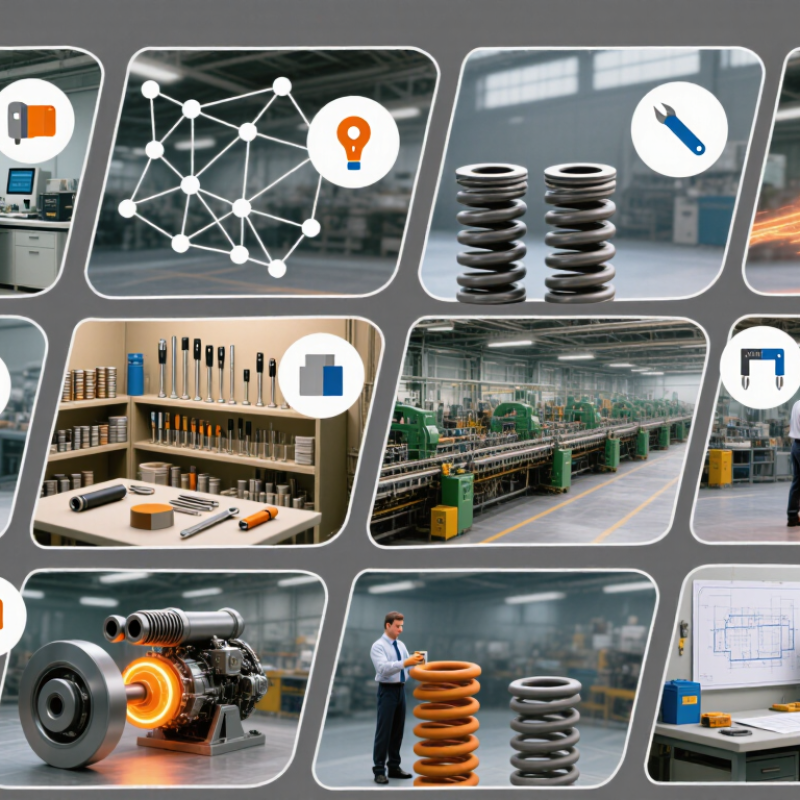
Understanding Custom Rubber Springs and Their Engineering Role
Custom rubber springs are elastomeric components designed to support loads, absorb vibration, and control movement. They are not simply softer metal springs. Their performance depends on rubber compound, geometry, temperature, and compression direction.
In engineering applications, suppliers may include rubber molders, vibration-control specialists, prototype manufacturers, and material compound developers. Each type brings a different strength. A molding supplier may produce bonded rubber-to-metal parts with tight dimensions. A prototype supplier may adjust wall thickness quickly during testing. The right partner should understand load paths, fatigue, shear strain, and aging effects.
Small details matter. A rubber spring under a machine frame can reduce transmitted vibration and protect nearby components. A mount inside a vehicle system may also limit noise and unwanted movement. Engineers normally review static stiffness, dynamic stiffness, compression set, and environmental resistance. Testing should include heat, oil exposure, repeated loading, and dimensional inspection.
Paper calculations are not enough. Field behavior can surprise you. Rubber properties change with frequency and temperature. A design that works in a laboratory may respond differently after months of compression. I have seen teams focus on maximum load while overlooking side loads and installation errors. That mistake is common. Clear drawings, traceable test data, and honest communication with the supplier make the design more dependable. Yet even a careful specification may need revision after real-world trials.
How Custom Rubber Spring Suppliers Are Classified
Top 10 Types of Custom Rubber Springs Suppliers
How Custom Rubber Spring Suppliers Are Classified
Custom rubber spring suppliers are best understood by capability, not product labels alone. They may serve different loads, temperatures, industries, and production volumes. Classification starts with the supplier’s engineering role. Prototype suppliers develop small batches, adjust hardness, and solve fit problems quickly. Low-volume specialists suit unusual dimensions or field repairs. High-volume manufacturers focus on repeatability, cycle time, and automated inspection. Material-focused suppliers work with natural rubber, silicone, EPDM, or specialty compounds. Each choice changes compression set, weather resistance, and service life.
Other categories reflect application expertise. Vibration-control suppliers design mounts, isolators, and suspension elements for machinery. Sealing-focused suppliers combine spring action with fluid or dust protection. Transportation suppliers usually manage dynamic loads, noise, and strict validation schedules. Medical and clean-environment suppliers require controlled processing and traceable batches. Custom molding houses build tools, while design-and-test suppliers also calculate deflection and fatigue. Some companies fit several categories. That overlap can confuse purchasing teams.
During supplier reviews, request drawings, rubber compound data, tolerance tables, and test reports. Ask how technicians measure hardness, bond strength, compression set, and aging. A practical trial should copy the real load, temperature, and mounting surface. Small details matter. In practice, a spring may pass a bench test yet fail after side loading. This is why classification should support questions, not replace engineering judgment. Supplier claims still need independent verification when the application is critical.
Top 10 Types of Custom Rubber Springs Suppliers? - How Custom Rubber Spring Suppliers Are Classified
Custom rubber spring suppliers are commonly classified by the elastomer families they formulate and process. The chart compares indicative upper continuous-service temperatures frequently used during preliminary material selection. Actual performance depends on compound formulation, load, frequency, environment, and design geometry.
Reference basis: commonly used engineering selection ranges for elastomer materials. Values are indicative screening figures rather than universal limits; compound-specific test data should be confirmed before production.
The Ten Main Types of Custom Rubber Spring Suppliers
The Ten Main Types of Custom Rubber Spring Suppliers
Custom rubber spring suppliers differ by their production focus, testing ability, and engineering support. Catalog-based suppliers modify proven spring sizes for faster delivery. Custom molding specialists build parts from drawings, load requirements, and installation space. Metal-bonded suppliers combine rubber with steel plates, studs, or sleeves. Their parts suit mounts, hinges, and compact suspension systems.
Vibration-control suppliers develop springs for machinery, vehicles, and building equipment. Sealing-focused suppliers produce rubber springs that also resist moisture, dust, or pressure. High-temperature specialists select compounds for ovens, engines, and industrial heat zones. Medical and food-contact suppliers follow stricter material controls and provide traceability documents. Prototype suppliers use small molds or rapid tooling to test a design before mass production. Full-service engineering suppliers handle material selection, simulation, tooling, and production inspection.
Ask for hardness tolerance, load-deflection curves, compression-set data, and fatigue results. A reliable supplier should explain test conditions clearly. Check whether samples match the final production compound. Small differences matter. A spring that performs well at room temperature may soften near a heat source. I have also seen designs fail because engineers ignored lateral movement. That mistake is easy to repeat. Good suppliers review drawings, mounting surfaces, operating temperature, and expected cycle life before quoting. Certification can help, but practical evidence matters more. Photos of sample inspection, batch records, and measured dimensions often reveal a supplier’s real discipline.
Comparing Supplier Capabilities, Materials, and Manufacturing Methods
Top 10 Types of Custom Rubber Springs Suppliers
Comparing Supplier Capabilities, Materials, and Manufacturing Methods
Custom rubber spring suppliers often specialize in different designs, including compression, shear, conical, bonded, torsional, and wire-reinforced springs. Other specialists produce bellows, vibration isolators, silicone springs, or polyurethane components. The best choice depends on load direction, working temperature, movement range, and expected service life.
Material knowledge separates capable suppliers from simple molders. Natural rubber offers strong elasticity, while SBR supports general industrial use. NBR suits oil-contact environments, and EPDM performs well against weather and heat. Silicone remains useful for wide temperature changes, but it may tear more easily under sharp dynamic loads. Polyurethane can resist abrasion, although it may feel too stiff for some applications.
Manufacturing methods also reveal supplier depth. Compression molding works well for stable, medium-volume production. Transfer and injection molding can improve consistency for complex geometries. Bonded rubber-to-metal parts require careful surface preparation, adhesive control, and curing. Reliable suppliers should provide material certificates, hardness data, dimensional reports, and fatigue testing. Ask about prototype tooling and process traceability. Small details matter.
A polished sample proves little.
In practical sourcing, engineers should compare test methods, not only catalog ratings. Finite element analysis can predict stress areas, but physical testing remains essential. One weakness is easy to miss: a supplier may offer excellent materials but limited mold maintenance. That gap deserves careful questioning before approval.
Selecting the Right Supplier for Quality, Performance, and Cost
Top 10 Types of Custom Rubber Springs Suppliers
Selecting a custom rubber spring supplier requires more than comparing unit prices. Consider ten supplier types: molded-rubber specialists, bonded rubber-metal manufacturers, silicone suppliers, EPDM suppliers, NBR suppliers, polyurethane suppliers, vibration-isolation experts, heavy-load spring makers, miniature-component producers, and prototype-focused workshops. Each serves different temperature, load, chemical, and space requirements. A supplier should explain why a compound fits your environment, not simply recommend its most common material.
Quality evidence matters. The ISO Survey 2023 recorded 1,265,216 valid ISO 9001 certificates worldwide, but certification alone proves little about spring performance. Request compound traceability, hardness records, compression-set data, fatigue testing, and dimensional inspection reports. ASTM D2000 classifications can clarify material performance, while finite-element analysis may expose stress concentration around bonded metal inserts.
Ask for samples from the actual production tool.
Samples matter.
Cost needs a wider calculation. Grand View Research’s 2024 synthetic rubber report forecasts approximately 4.9% market growth through 2030, suggesting continued pressure on material and manufacturing costs. Compare tooling, scrap, testing, packaging, and replacement expenses. A cheaper spring may creep under load and fail early.
I have seen quotations hide inspection fees.
That deserves questions.
Require a clear tolerance agreement, production-capacity evidence, and a written change-control process. No supplier is perfect. The best one admits its limits, documents uncertainty, and helps you test the design before volume production.

