
We use cookies on our website to give you an improved browser experience. View our Privacy Policy for more information. Please make your selection to opt in or out of ALL cookies here: Accept or Decline
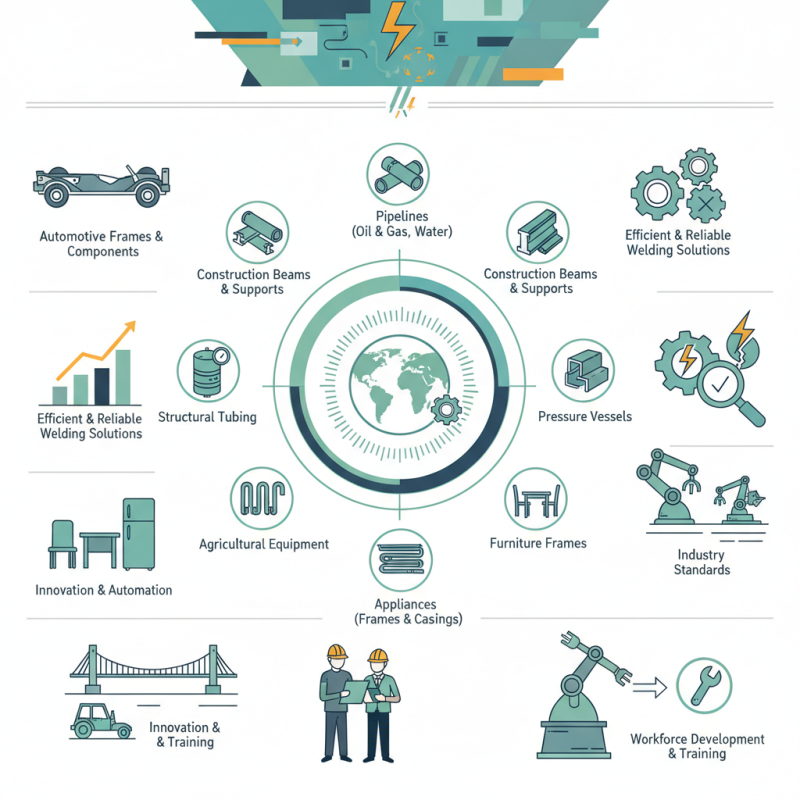
Electric Resistance Welded (ERW) products play a crucial role in various industries, from automotive to construction. According to a recent report by Mordor Intelligence, the global ERW market is expected to grow significantly, reaching over $10 billion by 2026. This growth is propelled by increasing demand for efficient and reliable welding solutions. As industry expert Dr. Alan Rossi noted, “The future of metal fabrication depends heavily on advancements in Electric Resistance Welding technology.”
The versatility of Electric Resistance Welded products cannot be overstated. They are vital in creating strong, durable connections in pipelines and automotive parts. However, challenges persist. Many manufacturers still struggle with quality control and production efficiency. A survey conducted by the International Institute of Welding revealed that up to 30% of ERW welds do not meet industry standards. This highlights the need for continuous improvement in manufacturing practices.
At the same time, innovation in ERW technology is on the rise. New methodologies and automation are enhancing productivity. Nevertheless, as Dr. Rossi warns, “Adopting new technologies without proper training can lead to costly mistakes.” It is essential for companies to invest in both technology and workforce development. Only then can they harness the full potential of Electric Resistance Welded products in a competitive market.
Electric resistance welding (ERW) is a vital joining process in modern manufacturing. It involves applying heat generated from electric resistance to fuse materials together. Typically, this method is employed for metals like steel and aluminum. The simplicity and speed of ERW make it widely used in various industries, including automotive and construction.
The process begins with two metal pieces being brought into contact. As electric current flows through the materials, resistance at the contact point generates heat. This heat softens the metals, allowing them to bond when pressure is applied. Although this technique is efficient, it is crucial to control various parameters such as current, pressure, and time to achieve a strong weld. Improvisations or lapses can lead to defects, affecting the integrity of the final product.
While ERW offers many advantages, it is not without its challenges. Factors like material thickness and surface contaminants can compromise weld quality. Proper preparation and maintenance are necessary to mitigate risks. Continuous training for operators can also enhance skill levels, ensuring consistent results in production. These considerations underscore the importance of precision in electric resistance welding.
Electric resistance welding (ERW) has gained prominence in various industries. Its primary appeal lies in the efficiency and strength of the welded joints. By applying heat generated from electrical resistance, metals are fused together quickly and effectively. This method minimizes material waste and enhances production speed, making it a cost-effective choice.
One of the key advantages of ERW products is their structural integrity. The welding process allows for robust connections, essential in sectors like automotive and construction. Many engineers prefer ERW for its consistency and reliability. However, not every application benefits equally from this method. For instance, complex shapes may present challenges that require additional considerations. Buyers should evaluate their specific needs carefully.
Sustainability is another consideration. Electric resistance welding can reduce energy consumption compared to other methods. Yet, the overall environmental impact depends on the materials used. Awareness of these factors is crucial. While ERW has significant advantages, a dual approach of evaluation and application ensures optimal results. Exploring the balance between efficiency and practicality can lead to better decision-making.
Electric resistance welding (ERW) is a widely used technology in various industries. This method involves joining materials through the application of heat generated by electric resistance. Many sectors rely on this technique for fabrication and assembly. Among the top industries utilizing electric resistance welded products are automotive, construction, and aerospace.
In the automotive industry, manufacturers use ERW for creating structural components. Parts like chassis and body panels benefit from this precise method. It ensures strong, durable joints that withstand stress. However, challenges arise, such as maintaining consistent weld quality across production runs. In construction, ERW is vital for building materials. Tubing and pipes made through this process offer reliability for structural applications. Yet, variations in material properties can lead to unexpected performance issues.
The aerospace industry also plays a significant role in ERW. It utilizes this technology for parts that require high strength-to-weight ratios. The need for quality assurance in aerospace cannot be overstated. Small defects can have serious implications. While ERW provides efficient solutions, ongoing quality checks are essential. Each sector seeks ways to improve processes and mitigate risks associated with electric resistance welding.
| Product Type | Material Used | Application Industry | Production Volume (Units/Year) | Average Price (USD) |
|---|---|---|---|---|
| Automotive Components | Steel | Automotive | 5,000,000 | $2.00 |
| Furniture | Aluminum | Furniture Manufacturing | 1,200,000 | $15.00 |
| Construction Pipes | Mild Steel | Construction | 2,500,000 | $30.00 |
| Electrical Enclosures | Stainless Steel | Electronics | 750,000 | $50.00 |
| Railway Tracks | High Carbon Steel | Rail Transport | 1,000,000 | $100.00 |
| Appliance Frames | Cold Rolled Steel | Consumer Appliances | 1,500,000 | $10.00 |
| Bicycle Frames | Chromoly Steel | Bicycles | 800,000 | $150.00 |
| Industrial Tanks | Stainless Steel | Chemical | 600,000 | $500.00 |
| Metal Fences | Galvanized Steel | Landscaping | 1,000,000 | $20.00 |
| Heat Exchangers | Copper | HVAC | 300,000 | $200.00 |
When selecting high-quality electric resistance welded products, several factors come into play. Look for the material quality first. High-grade steel or alloy ensures durability and performance. Verify the welding method used. A consistent and precise process is crucial for strength. Analyze the thickness of the welded seams. Thicker seams can provide a more robust product, while thinner ones may be prone to failure.
Next, consider certifications. Products must meet international standards for safety and quality. This can enhance reliability. Testing for performance is vital as well. Products should undergo rigorous assessments to ensure they can withstand their intended use. Feedback from other buyers can also be invaluable. Look for reviews or ratings that reflect actual performance over time.
Lastly, pay attention to the supplier’s reputation. A reputable manufacturer often indicates reliable production practices. Transparency in sourcing materials and production processes is essential. While price is a factor, it shouldn’t be the only one. Sometimes, a lower price may compromise quality or durability. Reflecting on these criteria can improve your selection process significantly.
Electric resistance welding (ERW) is gaining traction globally, driven by advancements in technology and increased demand across various sectors. According to a recent industry report, the global electric resistance welding market is projected to reach $5 billion by 2025, growing at a compound annual growth rate (CAGR) of 5.9%. This growth is largely attributed to the automotive and construction industries, where the need for strong and durable metal joints is critical.
Emerging trends reveal a shift towards automation in ERW processes. Many manufacturers are investing in automated welding technologies to improve efficiency and precision. This transition not only enhances productivity but also addresses a growing skills gap in the workforce. However, companies face challenges in integrating these new technologies. Training staff and managing initial implementation costs can be daunting. Despite this, the long-term benefits of reduced labor costs and improved quality are driving many to adapt.
Sustainability is also becoming a focal point in the ERW market. As environmental regulations tighten, manufacturers are exploring eco-friendly welding practices. A study indicated that around 70% of industry players are actively seeking sustainable solutions. Yet, the industry still grapples with balancing innovation and environmental responsibility. This dynamic landscape presents both opportunities and hurdles for global buyers looking to invest in ERW products.
We use cookies on our website to give you an improved browser experience. View our Privacy Policy for more information. Please make your selection to opt in or out of ALL cookies here: Accept or Decline
Do you consent to the use of ALL cookies?
901 2nd Court West
Birmingham, AL 35204
Sales: 866.481.4036
Logistics/Ops: 866.481.4036
2101 Dralle Road
University Park, IL 60466
Sales: 708.813.9070
Logistics/Ops: 708.235.4200
400 E. 13th Street
Little Rock, AR 72114
Sales: 866.760.5344
Logistics/Ops: 866.760.5344
225 Collins Road
Elkhart, IN 46515
Sales: 574.295.0214
Logistics/Ops: 574.607.4611
601 Berryman Pike
Tipton, IN 46072
Sales: 800.897.7591
Logistics/Ops: 800.897.7591
3900 Uvalda Street
Denver, CO 80239
Sales: 303.706.8000
Ops/Logistics: 303.576.8398
510 3rd Street E
Milan, IL 61264
Sales: 800.322.1052
Logistics/Ops: 800.322.1052
1660 E. Aurora
Des Moines, IA 50313
Sales: 800.671.1660
Logistics: 800.671.1660
86554 Gene Lasserre Blvd.
Yulee, FL 32097
Sales: 904.253.3060
Logistics/Ops: 904.225.3000
694 S.E. County Road 245
Lake City, FL 32025
Sales: 800.727.6706
Logistics/Ops: 386.752.7412
210 Neptune Road
Auburndale, FL 33823
Sales: 863.967.1131
Logistics/Ops: 863.777.9814
4601 McCoy Drive
Pensacola, FL 32503
Sales: 850.308.7030
Logistics/Ops: 850.434.5502
815 South 56th Street
Tampa, FL 33619
Sales: 813.302.1940
Logistics/Ops: 813.621.1352
200 Hosea Road
Lawrenceville, GA 30046
Sales: 770.953.7575
Logistics/Ops: 770.513.6000
Branch Product Guide
Branch Line Card
Moulding Offering
Cedar Offering
Column Offering
8173 Hwy. 165 North
Monroe, LA 71211
Sales: 800.256.4165
Logistics/Ops: 800.256.4165
508 Warren Avenue
Portland, ME 04103
Sales: 207.888.2331
Logistics/Ops: 207.797.6565
4300 Georgia Pacific Blvd.
Frederick, MD 21704
Sales: 301.798.7474
Logistics/Ops: 301.874.8000
419 Maple Street
Bellingham, MA 02019
Sales: 508.449.0535
Logistics/Ops: 508.966.5500
825 Buchanan Ave SW
Grand Rapids, MI 49507
Sales: 877.800.1180
Logistics/Ops: 616.278.0909
995 Pacific St. NW
Aitkin, MN 56431
Sales: 800.432.3727
Logistics/Ops: 218.212.7770
1102 Port Terminal Drive
Duluth, MN 55802
Sales: 800.951.9899
Logistics/Ops: 800.851.9899
9110 83rd Ave. North
Brooklyn Park, MN 55445
Sales: 763.425.0204
Logistics/Ops: 763.425.0204
910 E. Railroad Street
Long Beach, MS 39560
Sales: 866.535.4135
Logistics/Ops: 228.205.2400
1727 Warren Street
North Kansas City, MO 64116
Sales: 800.621.2611
Logistics/Ops: 800.621.2611
2123 North Golden
Springfield, MO 65803
Sales: 800.375.7891
Logistics/Ops: 800.375.7891
13860 Corp. Woods Trail
Bridgeton, MO 63044
Sales: 314.209.0800
Logistics/Ops: 314.209.0800
1109 South 19th Street
Omaha, NE 68108
Sales: 800.489.6637
Logistics/Ops: 800.489.6637
1 Luger Road
Denville, NJ 07834
Sales: 973-339-3539
Logistics/Ops: 973.625.1461
3720 Jeffrey Blvd.
Blasdell, NY 14219
Sales: 716.235.5989
Logistics/Ops: 716.825.6557
319 Yaphank Ave.
Yaphank, NY 11980
Sales: 631.358.5714
Logistics/Ops: 631.924.7401
3300 Parkside Drive
Charlotte, NC 28208
Sales: 800.839.2588
Logistics/Ops: 704.394.3172
1712 East D Street
Butner, NC 27509
Sales: 984.389.8200
Logistics/Ops: 919.575.3700
128 Foothills Drive
Statesville, NC 28687
Sales: 800.222.1414
Logistics/Ops: 704.394.3172
550 Munroe Falls Rd.
Tallmadge, OH 44278
Sales: 330.357.4506
Logistics/Ops: 330.794.1141
10347 Toebben Dr.
Independence, KY 41051
Sales: 859.298.3926
Logistics/Ops: 859.746.2250
450 N. MacArthur
Oklahoma City, OK 73127
Sales: 800.375.6025
Logistics/Ops: 800.375.6025
1680 North Aspen
Broken Arrow, OK 74012
Sales: 918.272.2212
Logistics/Ops: 918.272.2212
522 Bridge Street
Hunker, PA 15639
Sales: 878.217.2001
Logistics/Ops: 724.925.7285
4290 Atlanta Street
Charleston, SC 29418
Sales: 843.371.1420
Logistics/Ops: 843.554.8192
1040 S. Industrial Dr.
Erwin, TN 37650
Sales: 423.641.1005
Logistics/Ops: 423.742.5911
4287 Pilot Drive
Memphis, TN 38118
Sales: 901.365.2101
Logistics/Ops: 901.365.2101
700 Myatt Drive
Madison, TN 37115
Sales: 615.327.9547
Logistics/Ops: 629.777.4949
4747 Mark IV Parkway
Fort Worth, TX 76106
Sales: 866.323.5117
Logistics/Ops: 817.625.9091
6990 Market Avenue
El Paso, TX 79915
Sales: 915.778.6356
Logistics/Ops: 915.265.7200
2502 Wilson Road
Harlingen, TX 78552
Sales: 800.580.6711
Logistics/Ops: 800.580.6711
10,000 North Loop East
Houston, TX 77029
Sales: 713.921.1977
Logistics/Ops: 713.675.3544
702 East 44th St.
Lubbock, TX 79404
Sales: 866.454.6010
Logistics/Ops: 866.454.6010
535 N. WW White Road
San Antonio, TX 78219
Sales: 800.284.0488
Logistics/Ops: 210.333.8112
142 Pine Haven Shores Rd.
Shelburne, VT 05482
Sales: 802.800.2540
Logistics/Ops: 802.985.2512
4700 Bethlehem Road,
Richmond, VA 23230
Sales: 804.201.2400
Logistics/Ops: 804.342.1161
4516 N Barker Road
Spokane Valley, WA 99027
Phone: 509.892.9420
Toll free: 800.728.6157
8365 N. 76th Street
Milwaukee, WI 53223
Sales: 800.356.9245
Logistics/Ops: 800.356.9245
312 S. Chester Street
Sparta, WI 54656
Sales: 800.362.5864
Logistics/Ops: 800.362.5864
899 Grossman Drive
Schofield, WI 54476
Sales: 800.472.0017
Logistics/Ops: 800.472.0017
