
We use cookies on our website to give you an improved browser experience. View our Privacy Policy for more information. Please make your selection to opt in or out of ALL cookies here: Accept or Decline
Choosing a Modular Container House begins with understanding how people actually live, build, and maintain space. Global buyers need more than attractive renderings. They need practical choices for homes, offices, classrooms, clinics, studios, guest units, and emergency accommodation. Each type responds to a different need, climate, budget, and transport condition.
Architect Adam Kalkin, a recognized figure in container architecture, has described the shipping container as “a building block.” That idea explains the strength of modular design. Units can be combined, relocated, expanded, or adapted with fewer construction steps. However, a steel box is not automatically comfortable. Insulation, ventilation, moisture control, window placement, and thermal bridging require careful planning. Small mistakes become obvious on a hot roof or during a cold night.
This guide examines ten Modular Container House types for international buyers. It considers single-unit homes, expandable models, stacked layouts, office modules, and specialized designs. It also discusses factory quality, delivery access, foundation choices, electrical systems, and local building requirements. These details often decide whether a project succeeds.
The ranking is useful, not absolute. A coastal cabin may need different protection than a desert office. A lower price may also hide weaker insulation or incomplete installation services. That part deserves honest reflection.
Buyers should request drawings, material specifications, warranty terms, and project references before ordering. They should also confirm local approvals with qualified professionals. A modular house can be fast and efficient, but only when its design matches the site and its users.
Top 10 Modular Container House Types for Global Buyers
How Modular Container Houses Are Classified for International Buyers
Modular container houses are classified by purpose, layout, and transport needs. The ten common types include studio units, one-bedroom homes, family units, multi-module villas, site offices, classrooms, retail kiosks, sanitary units, hospitality cabins, and temperature-controlled utility rooms. Each type serves a different buyer and installation condition. A studio may fit a narrow urban plot, while a family unit needs stronger zoning for bedrooms, storage, and daily movement. A multi-module villa offers more space, but it requires careful joining, waterproofing, and lifting access.
Purpose is only one classification. Buyers should also compare structural systems, insulation levels, fire performance, and connection methods. Cold regions may need thicker wall panels and protected plumbing. Hot, humid areas often require shading, ventilation, and corrosion-resistant finishes. Coastal projects deserve extra attention. Salt air is unforgiving. Transport dimensions matter too, because oversized modules can increase port, road, and crane costs.
In project reviews, I often see buyers focus on floor area first. That approach is understandable, but incomplete. Local building rules, electrical standards, foundation design, and energy requirements can change the final cost. The categories also overlap. A hospitality cabin may resemble a studio, yet its bathroom, fire separation, and service expectations differ. Some classifications look clear on paper. Real sites are less tidy. Verify drawings, material data, and installation responsibilities before ordering.
Top 10 Modular Container House Types for Global Buyers
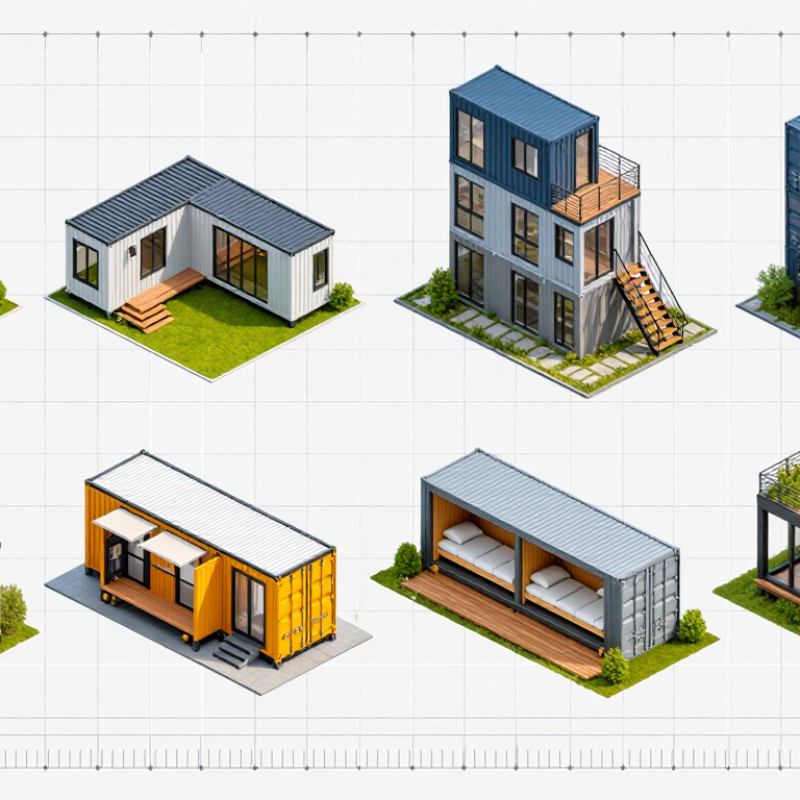
Ten popular modular container house types serve different daily needs. A studio unit suits singles, guests, or compact holiday stays. A family home combines two or more modules with bedrooms, a kitchen, and a living area. A site dormitory provides practical sleeping space for workers near approved construction projects. An office unit creates quiet workrooms with desks, wiring, and natural light. A classroom module supports schools needing fast, organized expansion.
A clinic module can include examination rooms, handwashing points, storage, and accessible entrances. A retail kiosk works for cafés, ticket counters, or small shops. A hospitality cabin offers a private room, bathroom, and small terrace for rural tourism. A farm shelter provides storage, staff rest space, or equipment protection. An emergency housing unit supplies basic accommodation after approved relief programs, with careful attention to safety and local coordination.
Good planning matters more than appearance. Check insulation, ventilation, drainage, fire resistance, and structural connections before purchase. Local permits may affect size, foundations, electrical systems, and placement. Climate also changes the specification. Coastal areas need corrosion protection, while cold regions require stronger insulation and heating design. No type is perfect. A retail kiosk may feel cramped, and a family layout may waste space without careful planning. In my experience, buyers often focus on delivery speed first. That can be a mistake. A reliable supplier should provide drawings, material details, installation guidance, and realistic maintenance advice. Small details matter, especially door seals and roof drainage.
| No. | Modular Container House Type | Typical Module Size | Approx. Floor Area | Typical Occupancy | Main Uses | Key Advantages | Important Planning Considerations |
|---|---|---|---|---|---|---|---|
| 1 | Single-Module Studio House | 20-foot module Approx. 6.1 m × 2.4 m | About 14–15 m² | 1–2 people | Guest accommodation, compact housing, worker lodging, student housing | Compact footprint, relatively simple transportation, quick installation, and efficient use of a single module | Requires careful space planning for the kitchen, bathroom, storage, and natural ventilation |
| 2 | One-Bedroom Container House | 40-foot module Approx. 12.2 m × 2.4 m | About 28–30 m² | 1–2 people | Permanent or semi-permanent housing, rental units, backyard homes, holiday accommodation | Provides a separate bedroom and living area while retaining a narrow, transportable layout | Local regulations may define minimum room sizes, insulation levels, emergency exits, and utility requirements |
| 3 | Two-Module Family House | Two 20-foot modules or one 40-foot plus one 20-foot module | About 28–45 m² | 2–4 people | Small families, affordable housing projects, staff accommodation, rural residences | More flexible zoning than a single module and allows separate bedrooms, living areas, and service spaces | The connection between modules needs properly designed structural joints, weather sealing, insulation, and drainage |
| 4 | Multi-Module Villa | Three or more modules Commonly 40-foot modules | About 55–120 m² or more | 3–6 people | Permanent family homes, premium vacation residences, modular community housing | Supports multiple bedrooms, larger kitchens, living rooms, terraces, and customized floor plans | Needs a stronger foundation, detailed engineering coordination, larger transport planning, and potentially more on-site work |
| 5 | Stacked Two-Story Container House | Two vertical levels using 20-foot or 40-foot modules | About 55–120 m² total | 3–6 people | Urban infill housing, narrow plots, worker villages, compact residential developments | Uses vertical space efficiently and can increase floor area without significantly expanding the building footprint | Requires structural calculations for stacking, wind and seismic loads, stair access, fire safety, and lifting operations |
| 6 | Expandable Container House | Closed transport module that expands on site | About 18–40 m² after expansion | 1–4 people | Emergency accommodation, remote housing, temporary offices, mobile clinics, disaster response | Offers a larger usable area after deployment while reducing transport volume and installation time | Moving parts, hinges, seals, and folding connections require regular inspection and careful weatherproofing |
| 7 | Office and Site-Work Cabin | 20-foot or 40-foot module | About 14–30 m² | 4–12 workstations, depending on layout | Construction offices, mining camps, project offices, security posts, temporary administration | Fast deployment, relocatability, and the ability to include desks, meeting areas, storage, lighting, and communications systems | Ventilation, thermal comfort, acoustic control, accessibility, and reliable power and data connections should be planned |
| 8 | Sanitary and Shower Module | 20-foot or 40-foot module | About 14–30 m² | Varies by fixture count and operating schedule | Construction sites, camps, events, schools, temporary housing communities, public facilities | Centralizes toilets, showers, washbasins, changing areas, and water-heating equipment in a factory-prepared unit | Requires adequate water pressure, drainage capacity, ventilation, waterproof finishes, and maintenance access |
| 9 | Retail and Food-Service Module | 20-foot or 40-foot module | About 14–30 m² | 2–8 staff, depending on activity | Pop-up shops, cafés, kiosks, ticket booths, small restaurants, farm-product outlets | Can be fitted with service counters, display windows, commercial equipment, signage zones, and flexible interior layouts | Food operations may require grease management, fire protection, hygiene controls, extraction, and local operating permits |
| 10 | Classroom and Training Module | 40-foot module or combined modules | About 28–60 m² | Approximately 15–35 learners | Temporary schools, training centers, site induction rooms, community education facilities | Provides a repeatable classroom solution with factory-installed electrical systems, windows, insulation, and interior finishes | Should address daylight, ventilation, acoustics, accessibility, child safety, fire exits, and education-building regulations |
Top 10 Modular Container House Types for Global Buyers
Key Design, Size, and Material Differences Among the Ten Types
In site assessments, I compare ten common types: studio homes, family units, offices, dormitories, retail kiosks, classrooms, clinics, sanitary units, expandable homes, and stackable complexes. Their sizes vary widely. A compact studio may use one 20-foot module, while a family unit often needs two or three modules. Expandable designs create more floor space after delivery, but hinges and seals require careful inspection.
Design choices affect daily comfort. Studios favor open plans, large windows, and built-in storage. Offices need cable routes, acoustic panels, and brighter task lighting. Classrooms require safe circulation and stronger ventilation. Clinics need washable surfaces and separated service areas. Retail units often prioritize front glazing, signage zones, and customer flow. Stackable buildings save land, though they demand precise structural connections and lifting plans.
Material differences are equally important. Galvanized steel frames resist moisture better than untreated steel, but protective coatings can still fail near salty coasts. Fiber-cement boards handle weather well, while metal panels are lighter and faster to install. Mineral wool improves fire and acoustic performance; foam insulation may reduce wall thickness. Timber interiors feel warmer, yet they need disciplined moisture control. A perfect ranking is impossible. Local climate, transport limits, foundation quality, and maintenance skills can change the best choice. I would not approve a unit from drawings alone. A small bathroom leak can reveal a much larger quality problem.
Top 10 Modular Container House Types for Global Buyers
A practical comparison of modular container houses starts with the complete delivered cost. The ten common types include studios, family homes, offices, classrooms, retail kiosks, site cabins, dormitories, sanitation units, consultation rooms, and multi-unit apartments. Each type needs different insulation, plumbing, electrical capacity, and interior finishes.
Purchase price is only one part of the budget. A cheaper unit may require expensive port handling, customs clearance, inland transport, or a crane. Ask for a line-by-line quotation with packaging, foundation work, assembly, utility connections, and local taxes included. Delivery time also depends on production capacity, shipping routes, weather, and border procedures. Installation may take one day for a small office, but larger buildings need trained crews and careful alignment. Check the supplier’s drawings against local building, fire, wind, snow, and energy requirements.
Tips: Compare cost per usable square metre, not just the container price. Request installation photos, maintenance records, material specifications, and replacement-part plans. Check whether local technicians can repair doors, seals, wiring, and plumbing. Salt air can damage untreated steel surprisingly fast. In hot climates, weak insulation increases cooling costs. In cold regions, poor floor insulation creates uncomfortable rooms. A low quote can look attractive; I have seen projects lose savings through delayed foundations and missing fittings. Buyers should also allow a contingency budget. Estimates are useful, but they are never perfect.
How to compare purchase cost, international delivery, installation time, and annual maintenance worldwide
The chart uses indicative 2024–2025 international planning benchmarks. Construction costs are shown in USD per square metre and exclude land, permits, taxes, utility connections, foundations, and interior upgrades. Delivery time means factory order to arrival at the destination port or site; installation time assumes prepared foundations and normal site access. Annual maintenance is estimated as a percentage of initial construction cost.
Buying a modular container house begins with local approval, not a catalog image. Confirm planning permission, structural rules, fire separation, electrical standards, plumbing requirements, and accessibility needs. A studio, office, dormitory, retail unit, or emergency shelter may require different documents. Ask a qualified local engineer to review stamped drawings. Factory paperwork alone is not enough.
Climate changes the specification. In coastal areas, request corrosion-resistant coatings, sealed joints, and stainless hardware. Cold regions need continuous insulation, protected pipes, and tested heating capacity. Hot climates require roof ventilation, reflective finishes, shading, and efficient cooling. Check wind, snow, seismic, flood, and soil conditions before selecting a module. Condensation is often underestimated. It can damage finishes quietly.
Supplier checks should include production photos, material schedules, quality records, loading plans, and independent inspection rights. Request clear warranty terms and replacement-part availability. Verify the supplier’s export experience, packing method, delivery scope, and installation support. Customization should cover window placement, bathrooms, kitchens, doors, insulation, and interior finishes. Keep transport limits in mind; wider modules may need special permits and lifting equipment. A low quotation may look efficient, but missing foundations or utility connections can change the final cost. I would leave contingency money. Mistakes happen. Recheck every drawing before fabrication.
We use cookies on our website to give you an improved browser experience. View our Privacy Policy for more information. Please make your selection to opt in or out of ALL cookies here: Accept or Decline
Do you consent to the use of ALL cookies?
901 2nd Court West
Birmingham, AL 35204
Sales: 866.481.4036
Logistics/Ops: 866.481.4036
2101 Dralle Road
University Park, IL 60466
Sales: 708.813.9070
Logistics/Ops: 708.235.4200
400 E. 13th Street
Little Rock, AR 72114
Sales: 866.760.5344
Logistics/Ops: 866.760.5344
225 Collins Road
Elkhart, IN 46515
Sales: 574.295.0214
Logistics/Ops: 574.607.4611
601 Berryman Pike
Tipton, IN 46072
Sales: 800.897.7591
Logistics/Ops: 800.897.7591
3900 Uvalda Street
Denver, CO 80239
Sales: 303.706.8000
Ops/Logistics: 303.576.8398
510 3rd Street E
Milan, IL 61264
Sales: 800.322.1052
Logistics/Ops: 800.322.1052
1660 E. Aurora
Des Moines, IA 50313
Sales: 800.671.1660
Logistics: 800.671.1660
86554 Gene Lasserre Blvd.
Yulee, FL 32097
Sales: 904.253.3060
Logistics/Ops: 904.225.3000
694 S.E. County Road 245
Lake City, FL 32025
Sales: 800.727.6706
Logistics/Ops: 386.752.7412
210 Neptune Road
Auburndale, FL 33823
Sales: 863.967.1131
Logistics/Ops: 863.777.9814
4601 McCoy Drive
Pensacola, FL 32503
Sales: 850.308.7030
Logistics/Ops: 850.434.5502
815 South 56th Street
Tampa, FL 33619
Sales: 813.302.1940
Logistics/Ops: 813.621.1352
200 Hosea Road
Lawrenceville, GA 30046
Sales: 770.953.7575
Logistics/Ops: 770.513.6000
Branch Product Guide
Branch Line Card
Moulding Offering
Cedar Offering
Column Offering
8173 Hwy. 165 North
Monroe, LA 71211
Sales: 800.256.4165
Logistics/Ops: 800.256.4165
508 Warren Avenue
Portland, ME 04103
Sales: 207.888.2331
Logistics/Ops: 207.797.6565
4300 Georgia Pacific Blvd.
Frederick, MD 21704
Sales: 301.798.7474
Logistics/Ops: 301.874.8000
419 Maple Street
Bellingham, MA 02019
Sales: 508.449.0535
Logistics/Ops: 508.966.5500
825 Buchanan Ave SW
Grand Rapids, MI 49507
Sales: 877.800.1180
Logistics/Ops: 616.278.0909
995 Pacific St. NW
Aitkin, MN 56431
Sales: 800.432.3727
Logistics/Ops: 218.212.7770
1102 Port Terminal Drive
Duluth, MN 55802
Sales: 800.951.9899
Logistics/Ops: 800.851.9899
9110 83rd Ave. North
Brooklyn Park, MN 55445
Sales: 763.425.0204
Logistics/Ops: 763.425.0204
910 E. Railroad Street
Long Beach, MS 39560
Sales: 866.535.4135
Logistics/Ops: 228.205.2400
1727 Warren Street
North Kansas City, MO 64116
Sales: 800.621.2611
Logistics/Ops: 800.621.2611
2123 North Golden
Springfield, MO 65803
Sales: 800.375.7891
Logistics/Ops: 800.375.7891
13860 Corp. Woods Trail
Bridgeton, MO 63044
Sales: 314.209.0800
Logistics/Ops: 314.209.0800
1109 South 19th Street
Omaha, NE 68108
Sales: 800.489.6637
Logistics/Ops: 800.489.6637
1 Luger Road
Denville, NJ 07834
Sales: 973-339-3539
Logistics/Ops: 973.625.1461
3720 Jeffrey Blvd.
Blasdell, NY 14219
Sales: 716.235.5989
Logistics/Ops: 716.825.6557
319 Yaphank Ave.
Yaphank, NY 11980
Sales: 631.358.5714
Logistics/Ops: 631.924.7401
3300 Parkside Drive
Charlotte, NC 28208
Sales: 800.839.2588
Logistics/Ops: 704.394.3172
1712 East D Street
Butner, NC 27509
Sales: 984.389.8200
Logistics/Ops: 919.575.3700
128 Foothills Drive
Statesville, NC 28687
Sales: 800.222.1414
Logistics/Ops: 704.394.3172
550 Munroe Falls Rd.
Tallmadge, OH 44278
Sales: 330.357.4506
Logistics/Ops: 330.794.1141
10347 Toebben Dr.
Independence, KY 41051
Sales: 859.298.3926
Logistics/Ops: 859.746.2250
450 N. MacArthur
Oklahoma City, OK 73127
Sales: 800.375.6025
Logistics/Ops: 800.375.6025
1680 North Aspen
Broken Arrow, OK 74012
Sales: 918.272.2212
Logistics/Ops: 918.272.2212
522 Bridge Street
Hunker, PA 15639
Sales: 878.217.2001
Logistics/Ops: 724.925.7285
4290 Atlanta Street
Charleston, SC 29418
Sales: 843.371.1420
Logistics/Ops: 843.554.8192
1040 S. Industrial Dr.
Erwin, TN 37650
Sales: 423.641.1005
Logistics/Ops: 423.742.5911
4287 Pilot Drive
Memphis, TN 38118
Sales: 901.365.2101
Logistics/Ops: 901.365.2101
700 Myatt Drive
Madison, TN 37115
Sales: 615.327.9547
Logistics/Ops: 629.777.4949
4747 Mark IV Parkway
Fort Worth, TX 76106
Sales: 866.323.5117
Logistics/Ops: 817.625.9091
6990 Market Avenue
El Paso, TX 79915
Sales: 915.778.6356
Logistics/Ops: 915.265.7200
2502 Wilson Road
Harlingen, TX 78552
Sales: 800.580.6711
Logistics/Ops: 800.580.6711
10,000 North Loop East
Houston, TX 77029
Sales: 713.921.1977
Logistics/Ops: 713.675.3544
702 East 44th St.
Lubbock, TX 79404
Sales: 866.454.6010
Logistics/Ops: 866.454.6010
535 N. WW White Road
San Antonio, TX 78219
Sales: 800.284.0488
Logistics/Ops: 210.333.8112
142 Pine Haven Shores Rd.
Shelburne, VT 05482
Sales: 802.800.2540
Logistics/Ops: 802.985.2512
4700 Bethlehem Road,
Richmond, VA 23230
Sales: 804.201.2400
Logistics/Ops: 804.342.1161
4516 N Barker Road
Spokane Valley, WA 99027
Phone: 509.892.9420
Toll free: 800.728.6157
8365 N. 76th Street
Milwaukee, WI 53223
Sales: 800.356.9245
Logistics/Ops: 800.356.9245
312 S. Chester Street
Sparta, WI 54656
Sales: 800.362.5864
Logistics/Ops: 800.362.5864
899 Grossman Drive
Schofield, WI 54476
Sales: 800.472.0017
Logistics/Ops: 800.472.0017
