
We use cookies on our website to give you an improved browser experience. View our Privacy Policy for more information. Please make your selection to opt in or out of ALL cookies here: Accept or Decline
A Modular Container can serve as a site office, secure storage unit, pop-up shop, or compact accommodation space. In 2026, the best choice depends less on a catchy label and more on the job, site access, climate, and expected service life. A container that works well beside a city construction site may be awkward on a remote plot with narrow access roads.
This guide compares leading types, including standard shipping containers, flat-pack units, expandable containers, and converted modular buildings. It considers setup time, transport, interior flexibility, insulation, and maintenance. These details matter: a wide doorway, a well-sealed roof, or a few extra centimeters of usable space can change daily operations. One caution: rankings can look tidier than real projects.
Tom Hardiman, executive director of the Modular Building Institute, has advocated planning modular projects around coordination and early decisions. Put as a paraphrase, his point is that design, transport, and installation need to work together. That principle helps explain why no single container type wins every comparison. Some units are easier to move. Others offer more comfortable interiors or simpler expansion. The sections ahead identify where each option fits, what trade-offs to inspect, and which questions buyers should ask before choosing. The details are not glamorous. They prevent expensive surprises.
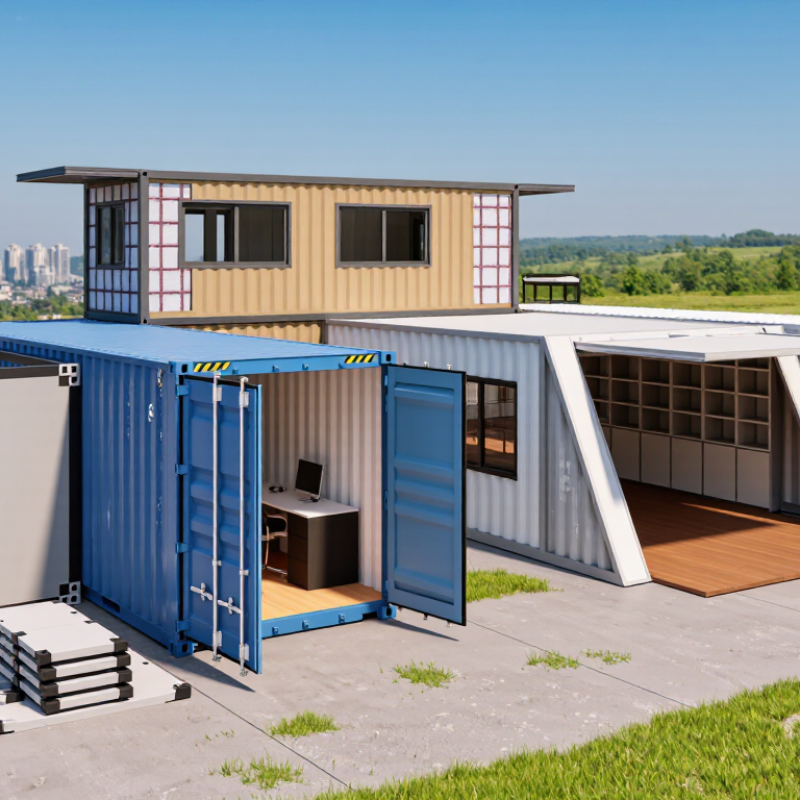
A modular container is a prefabricated unit designed to connect with other units or function independently. Its defining feature is repeatable dimensions and interfaces, which help teams plan transport, placement, and assembly. Units may use steel frames, insulated panels, or timber-based structures. That sounds simple. In practice, terminology varies between suppliers and industries, so specifications matter more than labels.
A useful classification considers structure, purpose, and mobility. Structurally, containers may be single modules, linked modules, or stackable units. By purpose, they can serve as offices, storage rooms, workshops, or accommodation. Mobility separates fixed installations from units designed for frequent relocation. A container with a reinforced floor and wide access doors may suit equipment storage; one with insulation, windows, and ventilation is better suited to regular occupancy. Not every shipping container is a modular building module.
Classification also depends on connection details. Look for lifting points, corner connections, service openings, and stated load limits. These features affect how units can be combined and what site preparation they need. The categories overlap, and that can be confusing. A relocatable office, for example, may be both a transportable unit and part of a larger linked system. Comparing drawings and technical data is more reliable than choosing by category name alone.
| Container Type | How It Is Defined | Typical Configuration | Common Uses | Key Planning Considerations |
|---|---|---|---|---|
| Standard dry container | An enclosed, general-purpose freight container with fixed walls, a roof, and end doors. | Common nominal lengths include 20 ft and 40 ft; dimensions and payload vary by unit. | Shipping boxed goods, equipment, and materials; conversion into basic storage or workspace modules. | Check the container’s actual internal dimensions, payload, condition, ventilation, and suitability for any building conversion. |
| High-cube container | A general-purpose enclosed container with greater external height than a standard-height unit. | Often available in 40 ft lengths; the extra height provides additional interior volume. | Bulky freight, tall equipment, and modular rooms that benefit from increased ceiling height. | Confirm route, lifting, and site clearances; usable interior height is less than the external height. |
| Refrigerated container | An insulated container fitted with a refrigeration unit to control the internal temperature. | Insulated walls and a powered cooling system; operating range depends on the equipment and unit. | Temperature-sensitive food, medicines, and other chilled or frozen cargo; controlled-temperature spaces. | Requires a suitable power supply, temperature monitoring, maintenance, and allowance for reduced interior space. |
| Open-side container | A container with a side opening, usually made with doors along much or all of one long side. | Retains a container base and roof while providing wider side access than end doors alone. | Loading long or wide items, display access, and storage that needs frequent side entry. | Side openings affect access and may affect structural performance; verify door operation, weather protection, and handling requirements. |
| Open-top container | A freight container without a fixed roof, generally designed for loading from above and covered with a removable cover when required. | Open upper access; some units use removable roof bows and a tarpaulin. | Oversized or heavy cargo that cannot be conveniently loaded through end doors. | Not equivalent to a sealed roofed module; consider weather exposure, cargo securing, and lifting access. |
| Flat-rack container | A platform-style freight unit with end walls and no fixed side walls or roof; some end walls fold. | Open sides and top allow cargo to extend beyond the usual enclosed-container envelope, subject to transport rules. | Heavy machinery, vehicles, and oversized loads. | Requires suitable cargo securing and specialist handling; it is generally not an enclosed room module. |
| Tank container | A tank vessel held within a frame designed for intermodal transport. | Tank and frame dimensions follow transport requirements; the vessel is designed for specified liquids or gases. | Transport of compatible bulk liquids, gases, or certain powders, depending on tank design. | Verify material compatibility, pressure and safety requirements, certification, and intended cargo; not a general-purpose storage room. |
| Container-based modular building unit | A transportable module adapted or purpose-built for occupancy, work, or services rather than solely for freight. | May include insulation, doors, windows, wiring, plumbing, and interior finishes; modules can be arranged side by side or stacked when designed for it. | Temporary offices, classrooms, site facilities, accommodation, and service rooms. | Check local building and fire codes, foundations, structural connections, accessibility, utilities, insulation, and ventilation. |
| Expandable modular unit | A transportable module that opens or extends on site to create a larger usable floor area than its transport configuration. | Typically uses hinged, sliding, or fold-out sections; specific mechanisms differ by design. | Rapidly deployed workspaces, clinics, accommodation, and temporary facilities. | Assess deployment space, anchoring, weather sealing, transport limits, and inspection of moving connections. |
| Multi-module or stacked system | A building arrangement formed by connecting multiple compatible modules horizontally, vertically, or both. | Layouts vary from single-storey rows to engineered multi-storey configurations. | Larger offices, education spaces, accommodation blocks, and temporary or permanent facilities. | Requires project-specific structural design, verified connection details, foundations, fire strategy, and coordinated services. |
In 2026, standard dry containers, high-cube units, and fitted office containers remain common modular choices. Standard 20-foot and 40-foot units suit storage and straightforward site buildings. Their familiar dimensions make transport and layout planning easier. High-cube containers add about a foot of interior height, which helps with insulation, services, or overhead storage. That extra space matters.
Office and site units are widely used for temporary workspaces, classrooms, and staff facilities. They may include windows, lighting, electrical fittings, and insulation. Refrigerated containers serve projects that need temperature control, but their equipment, power use, and maintenance make them a more specialized option. Open-side units also appear where wide access helps move bulky items or arrange interior spaces.
“Most common” depends on the project and location, so a universal ranking can mislead. A container that looks suitable outside may feel cramped once insulation and wall finishes are installed. Check usable internal dimensions, ventilation, access, and lifting requirements before choosing. It is easy to focus on the box itself and overlook the ground beneath it; uneven support can complicate installation.
How Shipping, Office, and Living Containers Differ
Shipping containers are built to move cargo, so their main strengths are sturdy steel walls and standardized dimensions. They usually have heavy doors, a sealed floor, and few windows. That makes them useful for storage or transport, but less comfortable for people who spend hours inside. Check for corrosion, leaks, and floor damage before choosing one. A container that looks sound outside may still hold moisture inside.
Office containers are designed for regular work. They often include insulation, wiring, lighting, windows, and space for desks. Some have heating or cooling, but performance depends on the climate and installation. A practical detail: check where outlets sit before arranging furniture. Small layouts can feel cramped. There is a catch: adding windows and services may reduce usable wall space.
Living containers need closer attention to comfort and daily routines. Insulation, ventilation, plumbing, and reliable temperature control matter more than a quick cosmetic finish. Ask how the unit handles condensation, and inspect the bathroom and kitchen connections. For longer stays, storage and natural light matter too. It is easy to focus on floor plans and overlook noise or airflow. Those details are less exciting, but residents notice them every day.
Specialized modular containers are designed around a specific job, not just extra floor space. In healthcare, container clinics can provide examination rooms, vaccination areas, or temporary recovery space. Washable wall panels, hand-washing sinks, and clear separation between clean and used materials matter more than a polished exterior. Staff flow matters, too.
For laboratories and testing facilities, modules may include controlled ventilation, sealed work surfaces, and dedicated utility connections. These details need to match the equipment and the work being performed. A container used as a small data center has different priorities: cooling capacity, cable routes, backup power, and secure access. Heat can build quickly. It is easy to underestimate.
Other common applications include classroom modules, site offices, food preparation units, and temperature-controlled storage. A mobile classroom needs daylight, acoustic treatment, and safe circulation around desks. Cold-storage modules require consistent temperature monitoring and doors that limit warm-air entry. In practice, a standard layout rarely fits every site. Uneven ground, utility limits, or awkward delivery access can force changes, and those details are sometimes noticed too late. A careful site review helps match the container’s structure, services, and interior finish to its actual use.
Typical nominal lengths for commonly used container configurations. Length is not a measure of popularity.
High-cube containers provide extra vertical clearance for bulky cargo. Refrigerated containers serve temperature-controlled food and pharmaceutical transport; open-top units accommodate loading from above; flat racks carry oversized or heavy cargo; tank containers transport bulk liquids; and side-door units make long or bulky goods easier to load. The chart shows common 20- and 40-foot nominal configurations; exact dimensions and availability vary by unit.
For 2026 projects, the right modular container depends less on appearance than on daily use. A standard storage unit may suit dry, secure inventory, while an office module needs insulation, daylight, and reliable ventilation. A workshop may require stronger flooring and carefully planned power access. Start with the task, not the catalogue.
Measure the site, including delivery access, turning space, ground conditions, and overhead obstructions. Then check internal dimensions, door clearance, insulation needs, and expected occupancy. A container that fits on paper can feel cramped once shelving or equipment is installed. Climate matters too: condensation can damage stored materials, so ask how ventilation and moisture control will work. A neat floor plan can still be wrong in practice.
Tips: Sketch the layout and mark door swings, work surfaces, and large items. Ask for specifications on floor loading, insulation, and utility connections. Compare installation and upkeep costs, not just the purchase price. I would not rely on a checklist alone; walk the site if possible. One measurement is easy to miss.
We use cookies on our website to give you an improved browser experience. View our Privacy Policy for more information. Please make your selection to opt in or out of ALL cookies here: Accept or Decline
Do you consent to the use of ALL cookies?
901 2nd Court West
Birmingham, AL 35204
Sales: 866.481.4036
Logistics/Ops: 866.481.4036
2101 Dralle Road
University Park, IL 60466
Sales: 708.813.9070
Logistics/Ops: 708.235.4200
400 E. 13th Street
Little Rock, AR 72114
Sales: 866.760.5344
Logistics/Ops: 866.760.5344
225 Collins Road
Elkhart, IN 46515
Sales: 574.295.0214
Logistics/Ops: 574.607.4611
601 Berryman Pike
Tipton, IN 46072
Sales: 800.897.7591
Logistics/Ops: 800.897.7591
3900 Uvalda Street
Denver, CO 80239
Sales: 303.706.8000
Ops/Logistics: 303.576.8398
510 3rd Street E
Milan, IL 61264
Sales: 800.322.1052
Logistics/Ops: 800.322.1052
1660 E. Aurora
Des Moines, IA 50313
Sales: 800.671.1660
Logistics: 800.671.1660
86554 Gene Lasserre Blvd.
Yulee, FL 32097
Sales: 904.253.3060
Logistics/Ops: 904.225.3000
694 S.E. County Road 245
Lake City, FL 32025
Sales: 800.727.6706
Logistics/Ops: 386.752.7412
210 Neptune Road
Auburndale, FL 33823
Sales: 863.967.1131
Logistics/Ops: 863.777.9814
4601 McCoy Drive
Pensacola, FL 32503
Sales: 850.308.7030
Logistics/Ops: 850.434.5502
815 South 56th Street
Tampa, FL 33619
Sales: 813.302.1940
Logistics/Ops: 813.621.1352
200 Hosea Road
Lawrenceville, GA 30046
Sales: 770.953.7575
Logistics/Ops: 770.513.6000
Branch Product Guide
Branch Line Card
Moulding Offering
Cedar Offering
Column Offering
8173 Hwy. 165 North
Monroe, LA 71211
Sales: 800.256.4165
Logistics/Ops: 800.256.4165
508 Warren Avenue
Portland, ME 04103
Sales: 207.888.2331
Logistics/Ops: 207.797.6565
4300 Georgia Pacific Blvd.
Frederick, MD 21704
Sales: 301.798.7474
Logistics/Ops: 301.874.8000
419 Maple Street
Bellingham, MA 02019
Sales: 508.449.0535
Logistics/Ops: 508.966.5500
825 Buchanan Ave SW
Grand Rapids, MI 49507
Sales: 877.800.1180
Logistics/Ops: 616.278.0909
995 Pacific St. NW
Aitkin, MN 56431
Sales: 800.432.3727
Logistics/Ops: 218.212.7770
1102 Port Terminal Drive
Duluth, MN 55802
Sales: 800.951.9899
Logistics/Ops: 800.851.9899
9110 83rd Ave. North
Brooklyn Park, MN 55445
Sales: 763.425.0204
Logistics/Ops: 763.425.0204
910 E. Railroad Street
Long Beach, MS 39560
Sales: 866.535.4135
Logistics/Ops: 228.205.2400
1727 Warren Street
North Kansas City, MO 64116
Sales: 800.621.2611
Logistics/Ops: 800.621.2611
2123 North Golden
Springfield, MO 65803
Sales: 800.375.7891
Logistics/Ops: 800.375.7891
13860 Corp. Woods Trail
Bridgeton, MO 63044
Sales: 314.209.0800
Logistics/Ops: 314.209.0800
1109 South 19th Street
Omaha, NE 68108
Sales: 800.489.6637
Logistics/Ops: 800.489.6637
1 Luger Road
Denville, NJ 07834
Sales: 973-339-3539
Logistics/Ops: 973.625.1461
3720 Jeffrey Blvd.
Blasdell, NY 14219
Sales: 716.235.5989
Logistics/Ops: 716.825.6557
319 Yaphank Ave.
Yaphank, NY 11980
Sales: 631.358.5714
Logistics/Ops: 631.924.7401
3300 Parkside Drive
Charlotte, NC 28208
Sales: 800.839.2588
Logistics/Ops: 704.394.3172
1712 East D Street
Butner, NC 27509
Sales: 984.389.8200
Logistics/Ops: 919.575.3700
128 Foothills Drive
Statesville, NC 28687
Sales: 800.222.1414
Logistics/Ops: 704.394.3172
550 Munroe Falls Rd.
Tallmadge, OH 44278
Sales: 330.357.4506
Logistics/Ops: 330.794.1141
10347 Toebben Dr.
Independence, KY 41051
Sales: 859.298.3926
Logistics/Ops: 859.746.2250
450 N. MacArthur
Oklahoma City, OK 73127
Sales: 800.375.6025
Logistics/Ops: 800.375.6025
1680 North Aspen
Broken Arrow, OK 74012
Sales: 918.272.2212
Logistics/Ops: 918.272.2212
522 Bridge Street
Hunker, PA 15639
Sales: 878.217.2001
Logistics/Ops: 724.925.7285
4290 Atlanta Street
Charleston, SC 29418
Sales: 843.371.1420
Logistics/Ops: 843.554.8192
1040 S. Industrial Dr.
Erwin, TN 37650
Sales: 423.641.1005
Logistics/Ops: 423.742.5911
4287 Pilot Drive
Memphis, TN 38118
Sales: 901.365.2101
Logistics/Ops: 901.365.2101
700 Myatt Drive
Madison, TN 37115
Sales: 615.327.9547
Logistics/Ops: 629.777.4949
4747 Mark IV Parkway
Fort Worth, TX 76106
Sales: 866.323.5117
Logistics/Ops: 817.625.9091
6990 Market Avenue
El Paso, TX 79915
Sales: 915.778.6356
Logistics/Ops: 915.265.7200
2502 Wilson Road
Harlingen, TX 78552
Sales: 800.580.6711
Logistics/Ops: 800.580.6711
10,000 North Loop East
Houston, TX 77029
Sales: 713.921.1977
Logistics/Ops: 713.675.3544
702 East 44th St.
Lubbock, TX 79404
Sales: 866.454.6010
Logistics/Ops: 866.454.6010
535 N. WW White Road
San Antonio, TX 78219
Sales: 800.284.0488
Logistics/Ops: 210.333.8112
142 Pine Haven Shores Rd.
Shelburne, VT 05482
Sales: 802.800.2540
Logistics/Ops: 802.985.2512
4700 Bethlehem Road,
Richmond, VA 23230
Sales: 804.201.2400
Logistics/Ops: 804.342.1161
4516 N Barker Road
Spokane Valley, WA 99027
Phone: 509.892.9420
Toll free: 800.728.6157
8365 N. 76th Street
Milwaukee, WI 53223
Sales: 800.356.9245
Logistics/Ops: 800.356.9245
312 S. Chester Street
Sparta, WI 54656
Sales: 800.362.5864
Logistics/Ops: 800.362.5864
899 Grossman Drive
Schofield, WI 54476
Sales: 800.472.0017
Logistics/Ops: 800.472.0017
