
We use cookies on our website to give you an improved browser experience. View our Privacy Policy for more information. Please make your selection to opt in or out of ALL cookies here: Accept or Decline
Choosing the right oxygen sensor adapter begins with understanding the exhaust system, not merely matching thread sizes. An oxygen sensor adapter can correct fitment, change sensor placement, or provide clearance near a tight transmission tunnel. The wrong design may expose the sensor to condensation, excessive heat, or turbulent exhaust flow.
Common types include weld-in bungs, threaded spacers, angled adapters, sensor extenders, and wideband conversion adapters. A weld-in bung suits custom headers and gives fabricators control over sensor position. A spacer can move the sensor slightly away from direct exhaust flow. Angled adapters help when the sensor body touches the floorpan or nearby wiring. Wideband adapters require closer attention because their connectors, calibration needs, and exhaust exposure differ from narrowband systems.
Dr. Günter Bauman, widely credited with developing the automotive zirconia oxygen sensor, stated, “The oxygen sensor is the most important sensor in the engine management system.” That principle still matters when selecting an oxygen sensor adapter. The adapter must preserve dependable measurement, not simply solve a mechanical problem.
In practice, I would inspect thread compatibility, bung angle, heat shielding, sensor depth, and clearance before installation. Small details matter. A sensor positioned too far from the exhaust stream may respond slowly. A poorly sealed thread can create an exhaust leak and distort readings. Stainless steel usually offers durability, but material choice alone cannot guarantee reliability.
The categories overlap. That is easy to miss. Some applications need a custom solution rather than a catalog part. A careful technician should verify the vehicle’s engine management strategy and sensor specification before cutting, welding, or relocating anything.
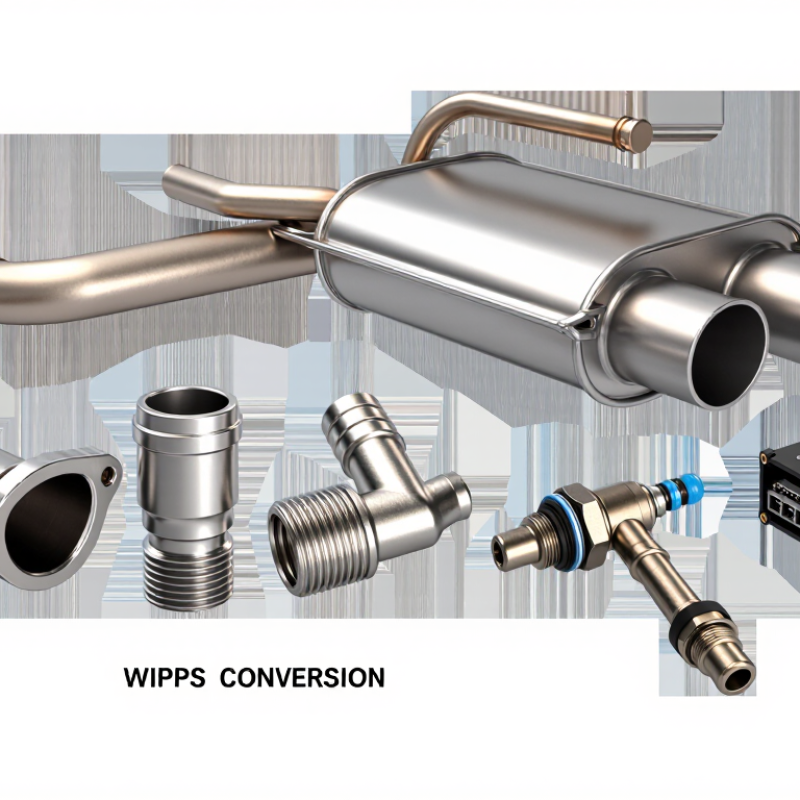
An oxygen sensor adapter connects a sensor to an exhaust system when the original fit is unsuitable. It can correct thread differences, mounting depth, or sensor clearance. In practical repairs, the right adapter prevents damaged threads and awkward wiring angles. Fit matters.
Common types
Common types include extension adapters, angled adapters, thread converters, and weld-in mounting bungs.
Extension adapter
moves the sensor away from a tight space.
Angled adapter
helps when nearby pipes or shields block installation.
Thread converter
matches different sensor and exhaust-port sizes.
Weld-in bung
creates a new mounting point during exhaust fabrication.
Choosing an adapter requires more than checking the thread size. A technician should compare sensor reach, exhaust temperature, sealing surfaces, and available clearance. The adapter must use heat-resistant material and sit securely without stressing the sensor body. Poor positioning can produce unstable readings or contact with hot components. That can lead to repeated repairs.
A common mistake
A common mistake is assuming every adapter improves sensor performance. It does not. The adapter should preserve the sensor’s intended position and airflow exposure. Some spacers may change readings and may not suit every vehicle or inspection requirement.
Always confirm the repair manual, inspect for leaks, and verify readings after installation. I have found that a small clearance check often prevents a much larger problem. Purpose matters.
What Are the Top Oxygen Sensor Adapter Types?
How Oxygen Sensor Adapters Are Classified by Design and Function
Oxygen sensor adapters are classified by both physical design and intended function. Thread adapters change mounting size or thread pitch. Weld-in bungs create a new sensor location on an exhaust pipe. Spacer adapters move the sensor slightly away from direct exhaust flow. Extension adapters provide extra cable length when the original connector cannot reach.
OICA recorded 93.5 million motor vehicles produced worldwide in 2023. That scale creates wide differences in exhaust layouts and sensor placement. Stainless-steel adapters suit high-temperature areas, while precise thread machining helps prevent leaks. A small alignment error can still damage the sensor or produce unstable readings.
Function creates another useful classification. Some adapters solve clearance problems near heat shields, crossmembers, or modified exhaust sections. Others support sensor relocation during component replacement. A spacer changes gas exposure, so it may affect response speed and diagnostic accuracy. The International Energy Agency reported more than 14 million electric car sales in 2023, but combustion and hybrid vehicles still require careful oxygen-sensor fitment. The boundary is not perfectly clean. An adapter can solve installation trouble while creating a calibration concern. In practice, technicians should check thread size, sensor angle, exhaust temperature, connector reach, and local inspection requirements before installation.
Oxygen sensor adapters come in several practical forms, each solving a different installation problem. The most common type is the threaded bung adapter. It joins a sensor to a compatible exhaust port when thread size or mounting depth differs. Always verify thread pitch, sensor diameter, and heat rating before installation. A small mismatch can damage the sensor or create an exhaust leak.
Extension adapters move the sensor tip farther from the exhaust stream. They are often used when nearby components limit clearance or when sensor readings become unstable after exhaust changes. Some include a compact chamber or restrictor, while others are simple threaded sleeves. Their effect depends on exhaust temperature, gas flow, and sensor position. Do not assume an extension will correct every diagnostic fault.
Angled adapters are useful where the sensor cable touches the chassis, heat shield, or suspension. They change the sensor direction without forcing the wiring into a sharp bend. Thread converters are another option, but they should be selected carefully because incompatible metals may seize under repeated heat cycles. I have seen installations that looked secure when cold but leaked after several drives. That detail matters. Use a high-temperature sealing method approved for oxygen-sensor fittings, and keep the sensor tip clear of condensation paths. Check live readings after installation, not only the dashboard light. A careful inspection remains more reliable than appearance alone.
| Adapter Type | Connection or Design | Primary Purpose | Typical Applications | Common Materials | Important Considerations |
|---|---|---|---|---|---|
| Weld-In Threaded Bung | A threaded boss welded directly to the exhaust pipe, manifold, or downpipe. | Creates a permanent mounting point for a threaded oxygen sensor. | Custom exhaust fabrication, replacement exhaust sections, and sensor relocation. | Stainless steel or mild steel. | Requires welding; the port must be positioned correctly to prevent condensation from collecting on the sensor tip. |
| Screw-In Sensor Spacer or Extender | A threaded adapter installed between the exhaust bung and the oxygen sensor. | Moves the sensor tip farther from the direct exhaust stream and provides additional clearance. | Tight installation areas, sensor clearance issues, and selected exhaust-system configurations. | Heat-resistant stainless steel or plated steel. | The thread size and depth must match the sensor and bung; excessive spacing can affect sensor response. |
| Angled or Offset Adapter | A threaded fitting that changes the sensor angle or shifts the sensor away from nearby components. | Improves physical clearance and helps route the sensor away from heat shields, frames, or other obstructions. | Modified exhaust systems and installations with limited underbody space. | Stainless steel is commonly used for high-temperature exhaust applications. | The final sensor position should avoid contact with surrounding parts and should not create a low point where moisture can accumulate. |
| Bolt-On Flange Adapter | Uses a machined or stamped flange with bolts, studs, or a clamping interface instead of a welded bung. | Provides a removable oxygen-sensor mounting solution for compatible exhaust assemblies. | Modular exhaust sections, serviceable assemblies, and applications where welding is impractical. | Stainless steel, carbon steel, or other heat-resistant metals. | Flange dimensions, bolt spacing, gasket compatibility, and sealing surfaces must match the exhaust component. |
| Dual-Sensor or Multi-Port Adapter | A fitting or exhaust section with two or more threaded sensor ports. | Allows additional sensors to be installed without fabricating a new exhaust section. | Data logging, calibration work, testing, and systems requiring an additional sensor port. | Stainless steel or mild steel. | Unused ports need suitable plugs, and sensor placement should preserve adequate exhaust-gas exposure and heat management. |
| Thread-Size Conversion Adapter | A threaded insert or adapter that connects components with different thread specifications. | Adapts a sensor or exhaust bung when the thread form, diameter, or pitch is different. | Repair work, replacement exhaust parts, and mixed-component installations. | Heat-resistant steel or stainless steel. | Thread specifications must be confirmed before installation; forced or mismatched threads can cause leakage or permanent damage. |
| Electrical Connector or Harness Adapter | A plug-in wiring adapter, pigtail, or connector conversion harness. | Connects an oxygen sensor to a vehicle harness when the connector shape or wire termination differs. | Sensor replacement, wiring repairs, and installations involving different connector configurations. | Automotive-grade copper conductors, insulation, terminals, and heat-resistant protective sleeving. | Wire functions, polarity, heater-circuit requirements, sealing, and routing away from exhaust heat must be verified. |
Note: Many automotive oxygen sensors use an M18 × 1.5 thread, but thread size, sensor type, connector design, and installation requirements can vary. Always confirm the sensor and exhaust specifications before selecting an adapter.
Choosing an oxygen sensor adapter starts with the exhaust system, not the sensor alone. Common types include straight extensions, angled adapters, and sensor spacers. Each changes sensor position, clearance, or exhaust-gas exposure. Measure twice. Clearance matters.
A straight extension suits a sensor mounted close to a heat shield or pipe bend. An angled adapter helps when the sensor body meets the floor, tunnel, or nearby wiring. A spacer moves the sensing tip slightly away from the main gas stream. It may help with clearance, but it can also affect readings.
That assumption failed during one installation. The sensor fitted correctly, yet its cable touched a hot pipe.
Check the vehicle’s sensor thread before ordering. Many systems use an M18 x 1.5 thread, but confirmation is essential. Inspect the existing bung, pipe diameter, sensor angle, and available wrench space. A wideband sensor may need a specific adapter position for accurate sampling. Avoid adapters that interfere with the sensor’s vents or sealing surface.
Use a high-temperature seal designed for exhaust threads, and never cover the sensor tip. A poorly aligned spacer can create leaks or delay sensor response. The exhaust must remain properly sealed and compliant with local inspection requirements. After installation, check for leaks when the system is completely cool, then review sensor readings with suitable diagnostic equipment.
Small details matter here.
Oxygen sensor adapters come in several practical forms, including threaded extensions, spacer adapters, weld-in bungs, and angle adapters. Each type serves a different installation problem. Compatibility begins with thread size and pitch. Most sensors require precise matching, not a nearly identical thread. Small errors matter. The adapter must also fit the exhaust pipe diameter and provide enough clearance from heat shields, brackets, and nearby wiring. Sensor reach is equally important. A short adapter may leave the sensing tip too close to the pipe wall, while an overly long design can interfere with internal airflow.
Performance depends on material, wall thickness, sealing quality, and sensor position. Stainless steel usually handles repeated heat cycles well, but surface condition still matters. A poorly machined seat can create an exhaust leak and produce unstable readings. I have found that a copper sealing ring helps in some installations, though it is not a substitute for correct machining. Adapter angle also deserves attention. A sensor should avoid collecting condensation and should remain protected from road impact. The connector must stay away from direct radiant heat. One overlooked detail is thread depth. Too much depth may obstruct the sensor tip. Too little can reduce engagement. I once treated visual alignment as proof of compatibility, and that judgment was wrong. Checking service specifications, measuring the original fitting, and verifying clearance with the vehicle cold remains the more reliable approach. Local inspection requirements may also influence acceptable adapter placement.
Oxygen sensor adapters are commonly selected by thread standard, sensor position, clearance, sealing method, and exhaust temperature. The chart compares typical adapter types using practical compatibility criteria on a 1–5 engineering suitability scale.
Key considerations: M18 × 1.5 is the most widely used oxygen-sensor thread standard, while M12 × 1.25 and M14 × 1.5 are found in selected sensor and exhaust applications. Stainless-steel adapters generally provide better corrosion resistance, and angled or extended designs can improve clearance but may affect sensor response if they reduce exposure to exhaust flow.
We use cookies on our website to give you an improved browser experience. View our Privacy Policy for more information. Please make your selection to opt in or out of ALL cookies here: Accept or Decline
Do you consent to the use of ALL cookies?
901 2nd Court West
Birmingham, AL 35204
Sales: 866.481.4036
Logistics/Ops: 866.481.4036
2101 Dralle Road
University Park, IL 60466
Sales: 708.813.9070
Logistics/Ops: 708.235.4200
400 E. 13th Street
Little Rock, AR 72114
Sales: 866.760.5344
Logistics/Ops: 866.760.5344
225 Collins Road
Elkhart, IN 46515
Sales: 574.295.0214
Logistics/Ops: 574.607.4611
601 Berryman Pike
Tipton, IN 46072
Sales: 800.897.7591
Logistics/Ops: 800.897.7591
3900 Uvalda Street
Denver, CO 80239
Sales: 303.706.8000
Ops/Logistics: 303.576.8398
510 3rd Street E
Milan, IL 61264
Sales: 800.322.1052
Logistics/Ops: 800.322.1052
1660 E. Aurora
Des Moines, IA 50313
Sales: 800.671.1660
Logistics: 800.671.1660
86554 Gene Lasserre Blvd.
Yulee, FL 32097
Sales: 904.253.3060
Logistics/Ops: 904.225.3000
694 S.E. County Road 245
Lake City, FL 32025
Sales: 800.727.6706
Logistics/Ops: 386.752.7412
210 Neptune Road
Auburndale, FL 33823
Sales: 863.967.1131
Logistics/Ops: 863.777.9814
4601 McCoy Drive
Pensacola, FL 32503
Sales: 850.308.7030
Logistics/Ops: 850.434.5502
815 South 56th Street
Tampa, FL 33619
Sales: 813.302.1940
Logistics/Ops: 813.621.1352
200 Hosea Road
Lawrenceville, GA 30046
Sales: 770.953.7575
Logistics/Ops: 770.513.6000
Branch Product Guide
Branch Line Card
Moulding Offering
Cedar Offering
Column Offering
8173 Hwy. 165 North
Monroe, LA 71211
Sales: 800.256.4165
Logistics/Ops: 800.256.4165
508 Warren Avenue
Portland, ME 04103
Sales: 207.888.2331
Logistics/Ops: 207.797.6565
4300 Georgia Pacific Blvd.
Frederick, MD 21704
Sales: 301.798.7474
Logistics/Ops: 301.874.8000
419 Maple Street
Bellingham, MA 02019
Sales: 508.449.0535
Logistics/Ops: 508.966.5500
825 Buchanan Ave SW
Grand Rapids, MI 49507
Sales: 877.800.1180
Logistics/Ops: 616.278.0909
995 Pacific St. NW
Aitkin, MN 56431
Sales: 800.432.3727
Logistics/Ops: 218.212.7770
1102 Port Terminal Drive
Duluth, MN 55802
Sales: 800.951.9899
Logistics/Ops: 800.851.9899
9110 83rd Ave. North
Brooklyn Park, MN 55445
Sales: 763.425.0204
Logistics/Ops: 763.425.0204
910 E. Railroad Street
Long Beach, MS 39560
Sales: 866.535.4135
Logistics/Ops: 228.205.2400
1727 Warren Street
North Kansas City, MO 64116
Sales: 800.621.2611
Logistics/Ops: 800.621.2611
2123 North Golden
Springfield, MO 65803
Sales: 800.375.7891
Logistics/Ops: 800.375.7891
13860 Corp. Woods Trail
Bridgeton, MO 63044
Sales: 314.209.0800
Logistics/Ops: 314.209.0800
1109 South 19th Street
Omaha, NE 68108
Sales: 800.489.6637
Logistics/Ops: 800.489.6637
1 Luger Road
Denville, NJ 07834
Sales: 973-339-3539
Logistics/Ops: 973.625.1461
3720 Jeffrey Blvd.
Blasdell, NY 14219
Sales: 716.235.5989
Logistics/Ops: 716.825.6557
319 Yaphank Ave.
Yaphank, NY 11980
Sales: 631.358.5714
Logistics/Ops: 631.924.7401
3300 Parkside Drive
Charlotte, NC 28208
Sales: 800.839.2588
Logistics/Ops: 704.394.3172
1712 East D Street
Butner, NC 27509
Sales: 984.389.8200
Logistics/Ops: 919.575.3700
128 Foothills Drive
Statesville, NC 28687
Sales: 800.222.1414
Logistics/Ops: 704.394.3172
550 Munroe Falls Rd.
Tallmadge, OH 44278
Sales: 330.357.4506
Logistics/Ops: 330.794.1141
10347 Toebben Dr.
Independence, KY 41051
Sales: 859.298.3926
Logistics/Ops: 859.746.2250
450 N. MacArthur
Oklahoma City, OK 73127
Sales: 800.375.6025
Logistics/Ops: 800.375.6025
1680 North Aspen
Broken Arrow, OK 74012
Sales: 918.272.2212
Logistics/Ops: 918.272.2212
522 Bridge Street
Hunker, PA 15639
Sales: 878.217.2001
Logistics/Ops: 724.925.7285
4290 Atlanta Street
Charleston, SC 29418
Sales: 843.371.1420
Logistics/Ops: 843.554.8192
1040 S. Industrial Dr.
Erwin, TN 37650
Sales: 423.641.1005
Logistics/Ops: 423.742.5911
4287 Pilot Drive
Memphis, TN 38118
Sales: 901.365.2101
Logistics/Ops: 901.365.2101
700 Myatt Drive
Madison, TN 37115
Sales: 615.327.9547
Logistics/Ops: 629.777.4949
4747 Mark IV Parkway
Fort Worth, TX 76106
Sales: 866.323.5117
Logistics/Ops: 817.625.9091
6990 Market Avenue
El Paso, TX 79915
Sales: 915.778.6356
Logistics/Ops: 915.265.7200
2502 Wilson Road
Harlingen, TX 78552
Sales: 800.580.6711
Logistics/Ops: 800.580.6711
10,000 North Loop East
Houston, TX 77029
Sales: 713.921.1977
Logistics/Ops: 713.675.3544
702 East 44th St.
Lubbock, TX 79404
Sales: 866.454.6010
Logistics/Ops: 866.454.6010
535 N. WW White Road
San Antonio, TX 78219
Sales: 800.284.0488
Logistics/Ops: 210.333.8112
142 Pine Haven Shores Rd.
Shelburne, VT 05482
Sales: 802.800.2540
Logistics/Ops: 802.985.2512
4700 Bethlehem Road,
Richmond, VA 23230
Sales: 804.201.2400
Logistics/Ops: 804.342.1161
4516 N Barker Road
Spokane Valley, WA 99027
Phone: 509.892.9420
Toll free: 800.728.6157
8365 N. 76th Street
Milwaukee, WI 53223
Sales: 800.356.9245
Logistics/Ops: 800.356.9245
312 S. Chester Street
Sparta, WI 54656
Sales: 800.362.5864
Logistics/Ops: 800.362.5864
899 Grossman Drive
Schofield, WI 54476
Sales: 800.472.0017
Logistics/Ops: 800.472.0017
