
We use cookies on our website to give you an improved browser experience. View our Privacy Policy for more information. Please make your selection to opt in or out of ALL cookies here: Accept or Decline
Choosing the China Best resilient butterfly valve Suppliers? That question deserves more than a polished catalog or a low unit price. A resilient butterfly valve controls water, wastewater, fire protection, and industrial fluids. Its rubber seat, disc finish, shaft design, and pressure rating directly influence service life.
R. W. Zappe, author of The Valve Selection Handbook, stated, “The correct valve is the one that meets the process requirements.” This principle remains practical. A dependable Chinese supplier should provide traceable materials, pressure-test records, dimensional drawings, and clear technical support. Look for manufacturing experience with ductile iron, stainless steel, EPDM, NBR, or other specified seat materials. Ask whether products follow standards such as EN 593, API 609, ISO 5752, or relevant project specifications.
Small details matter. A properly centered disc reduces seat wear. A clean flange face prevents leakage. A controlled coating process protects the body in damp valve chambers. Factory audits can reveal more than impressive photographs. Check machining equipment, assembly areas, inspection instruments, and batch documentation.
Price still matters. It should not lead the decision. An unusually cheap resilient butterfly valve may hide thin coatings, inconsistent rubber compounds, or weak testing procedures. No supplier is perfect. I would still question every certificate, delivery promise, and warranty condition. That caution is useful, although it can slow procurement.
This guide compares Chinese suppliers through product quality, customization, certifications, production capacity, export experience, and after-sales response. The strongest candidates should explain their limitations openly. Reliable engineering begins there.
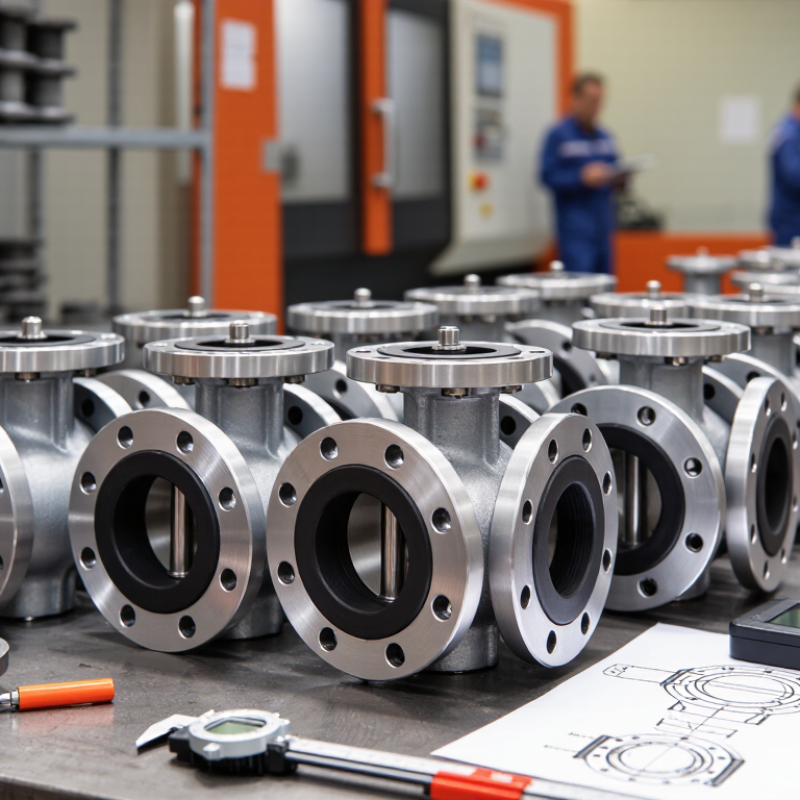
Resilient Butterfly Valve Basics: Design, Materials, and PN10–PN16 Ratings
A resilient butterfly valve uses an elastomer seat to create a tight seal around the disc. Its compact body suits water lines, cooling systems, and general industrial service. The disc usually uses ductile iron, stainless steel, or coated metal. The stem may be stainless steel, especially where moisture and repeated operation are expected.
Seat material matters. EPDM performs well with clean water and many mild fluids. NBR can suit oil-related service, but temperature and chemical compatibility must be checked carefully. PN10 and PN16 describe nominal pressure classes, not guaranteed working pressure in every condition. Temperature, medium, flange standard, and valve size can reduce the allowable pressure. A PN16 valve is not automatically the best choice.
Tips: Confirm the pipeline flange standard before ordering. Check the seat material against the actual fluid. Review pressure ratings at operating temperature. During inspection, test disc movement, shaft alignment, seat sealing, and coating quality. A small flange mismatch can cause installation trouble.
In field work, operators often overlook torque requirements. Excessive tightening can distort the seat. Poor alignment may create leakage after only a few cycles. Selection is rarely perfect from a catalogue alone. Site conditions deserve a second look. This is where reliable technical support and traceable test records become valuable.
PN ratings indicate the nominal pressure class at the reference conditions defined by the applicable piping standard: PN10 corresponds to 10 bar (1.0 MPa), while PN16 corresponds to 16 bar (1.6 MPa). The actual allowable pressure may be lower at elevated temperatures and depends on the valve body, disc, shaft, liner, and applicable design standard.
Resilient butterfly valves typically use ductile iron, cast iron, or stainless steel for the body and disc, with elastomer liners such as EPDM for water service or NBR for many oil and fuel applications. Material compatibility, temperature, media, flange drilling, and pressure-temperature ratings should be verified before selection.
China Best Resilient Butterfly Valve Suppliers?
Reliable resilient butterfly valve suppliers should understand more than price and delivery dates. API 609 defines important design and testing expectations for butterfly valves. EN 593 covers industrial metallic butterfly valves and supports consistent engineering practice. ISO 5752 controls face-to-face dimensions, helping valves fit existing pipelines without costly modifications. MSS SP-67 provides additional guidance for butterfly valve construction and application.
These standards should appear in technical documents, not only marketing claims. Check the valve type, pressure rating, body material, disc finish, and resilient seat compound. Ask for dimensional drawings and pressure-test records. A qualified supplier should explain how each valve matches the pipeline medium, temperature, and operating cycle. Field details matter. A valve installed in a dusty water-treatment area may need different protection than one used indoors. Certificates help, but they do not replace inspection.
Tips: Compare API 609, EN 593, ISO 5752, and MSS SP-67 references line by line. Confirm face-to-face dimensions before ordering. Request seat leakage results and material traceability. Review actuator sizing for real pressure conditions, not ideal calculations. No checklist is perfect. A polished document can still hide weak quality control. Suppliers deserve careful questions, and buyers should recheck assumptions before approval.
Selecting resilient butterfly valve suppliers in China requires more than a polished catalog. In plant audits, I look for documented QA procedures, trained inspectors, and clear acceptance criteria. Ask for material certificates, hardness records, coating reports, and pressure-test results. A serious supplier can explain who checked each item and when. Vague answers deserve a second visit.
For Class 150 service, verify pressure and temperature against the project standard. Do not accept “Class 150” as a complete specification. Review the body, disc, shaft, resilient seat, flange dimensions, and gasket interface. Confirm that EPDM, NBR, or PTFE suits the medium and temperature. Hydrostatic shell testing and seat leakage testing should use calibrated gauges. Record pressure-hold times and test conditions. Witness testing helps, but remote witnessing can miss small details. I once saw a report with correct numbers but no gauge serial number. That gap weakened confidence.
Traceability should connect heat numbers to raw materials, machining records, assembly sheets, inspection reports, and final markings. Sample the chain, not only the paperwork. Check whether valve markings match certificates and packing lists. Request cycle-test evidence, corrosion protection details, spare-seat controls, and corrective-action records. Suppliers that admit a failed test may appear more credible than those claiming perfect production. My assessment is never flawless; sampling can overlook hidden variation. For critical orders, use independent inspection and record every deviation before shipment.
China’s resilient butterfly valve suppliers increasingly serve water, HVAC, fire protection, and process systems. Grand View Research valued the global industrial valves market at about USD 78 billion in 2023. This growth increases demand for reliable, traceable production.
For DN50 to DN300, wafer valves offer compact installation between flanges. They reduce weight and material costs. Lug valves suit dead-end service and sectional maintenance.
DN350 to DN1200 models usually require stronger shafts, reinforced discs, and careful seat design.
Flanged valves provide stable alignment for larger pipelines and frequent dismantling. Experienced suppliers should show pressure-test records, material certificates, and dimensional checks based on standards such as API 609, EN 593, and ISO 5752.
The 2024 UN World Water Development Report states that agriculture uses roughly 70% of global freshwater withdrawals. That figure highlights the need for dependable isolation valves in irrigation and treatment networks. Still, a polished catalogue proves little. I would inspect cycle-test evidence, coating thickness, and actual DN1200 handling experience.
Tips: Match the valve seat with the medium, temperature, and pressure. Confirm face-to-face dimensions before ordering. Request torque data, not only pressure ratings. Ask whether testing covers every production batch.
A perfect datasheet is not enough. Suppliers may overlook field conditions, especially muddy water, vibration, or uneven flange alignment. That weakness deserves direct questioning before approval.
China Best Resilient Butterfly Valve Suppliers?
Selecting a resilient butterfly valve starts with the seat, not the catalog price. EPDM suits chilled water, potable water, and HVAC loops. It handles steam poorly at elevated temperatures and performs badly with oils. NBR is a practical choice for oily water, hydraulic fluids, and some industrial services. However, sunlight, ozone, and high heat can shorten its life. PTFE offers strong chemical resistance and a clean, low-friction surface. It may creep under pressure, especially in larger valves or hot pipelines.
Application details matter. Check fluid concentration, operating temperature, pressure, cycling frequency, and pipe size. A reliable supplier should provide seat material data, pressure-temperature charts, test records, and traceable inspection documents. Ask how the seat is bonded or retained. Also confirm whether the valve has passed leakage testing after repeated operation. In my experience, many selection errors come from trusting the fluid name alone. “Water” can contain chlorine, particles, or treatment chemicals. The details change everything.
Tips: Request a compatibility statement for the exact medium and temperature. Compare EPDM, NBR, and PTFE against your real operating conditions. Inspect sample valves for even seat contact and smooth disc movement. Do not accept vague claims such as “chemical resistant.” They need limits. A supplier may offer a lower price, but poor seat recovery can create leakage later. This is easy to overlook. Recheck the choice with a valve engineer before ordering.
The table below provides a supplier-neutral technical comparison. Temperature ranges and compatibility notes are typical engineering values; the final selection should be confirmed against the valve design, media concentration, pressure, temperature, and applicable certification requirements.
| Selection Dimension | EPDM Seat | NBR Seat | PTFE Seat | Supplier Verification Point |
|---|---|---|---|---|
| Typical service temperature | Approximately −40°C to +150°C, depending on compound and valve construction. | Approximately −20°C to +100°C; some compounds may be rated higher. | Approximately −40°C to +200°C; the actual limit may be lower because of valve design and pressure. | Request the manufacturer’s pressure-temperature chart for the complete valve assembly, not only the seat material. |
| Water service | Very suitable for potable water, chilled water, cooling water, and wastewater when the compound is approved for the intended service. | Suitable for many non-potable water systems, but generally less preferred for hot water and potable-water applications. | Suitable where broad chemical resistance or higher temperature capability is required; verify sealing and torque requirements. | Confirm drinking-water approval when required, such as NSF/ANSI/CAN 61 or the applicable local standard. |
| HVAC suitability | Usually the first choice for chilled-water, condenser-water, and glycol-water systems. | Useful for moderate-temperature water and oil-contaminated systems, subject to temperature limits. | Useful for higher-temperature or chemically demanding HVAC fluids, although operating torque can be higher. | Check compatibility with ethylene glycol, propylene glycol, treatment chemicals, and the specified operating temperature. |
| Oil and hydrocarbon resistance | Generally poor to limited resistance to petroleum oils, fuels, and many hydrocarbon fluids. | Generally good resistance to mineral oils, hydraulic oils, and fuels within the compound’s temperature range. | Generally excellent resistance to many oils, fuels, and hydrocarbons, subject to permeation and mechanical design considerations. | Ask for a compatibility assessment using the exact fluid composition, concentration, and temperature. |
| Acid and alkali resistance | Good resistance to many dilute acids and alkalis; not universally compatible with concentrated or oxidizing chemicals. | Limited to moderate resistance; strong acids, strong alkalis, and oxidizing chemicals can cause degradation. | Very broad chemical resistance, including many acids and alkalis; verify against molten alkali metals, fluorine, and specialized chemicals. | Require written chemical-compatibility data or test evidence for critical chemical service. |
| Steam and hot-water service | Generally not the preferred choice for continuous high-temperature steam service. | Generally unsuitable for continuous high-temperature steam service. | More suitable than EPDM or NBR for many hot-water and steam-related applications, but seat design and pressure must be checked. | Verify steam-cycle testing, maximum saturated-steam temperature, and the valve’s allowable pressure at temperature. |
| Abrasion and mechanical resilience | Good elasticity and sealing recovery; suitable for many water systems with moderate solids. | Good abrasion resistance and resilience, especially in oil-containing environments. | Excellent chemical resistance but lower elasticity; cold flow and deformation should be considered. | Review seat design, shaft arrangement, cycling requirements, and torque margins. |
| Ozone and weathering resistance | Generally excellent resistance to ozone, weathering, and aging. | Generally more vulnerable to ozone and weathering than EPDM unless specially formulated or protected. | Generally excellent resistance to weathering and ozone. | For outdoor installations, verify storage, coating, UV exposure, and elastomer formulation details. |
| Common material selection | Water, wastewater, chilled water, cooling water, dilute chemicals, and many glycol-water mixtures. | Mineral oils, fuels, hydraulic fluids, and selected water systems with moderate temperatures. | Aggressive chemicals, high-purity fluids, oils, solvents, and higher-temperature applications. | Confirm that the proposed seat is available in the required size, pressure class, and actuator configuration. |
| Main limitations | Poor compatibility with many petroleum-based fluids and some concentrated chemicals. | Limited high-temperature, ozone, weathering, and strong-chemical resistance. | Higher operating torque, potential cold flow, and possible sensitivity to seat-support design. | Request documented service-life assumptions and maintenance requirements for the intended duty cycle. |
| Relevant standards to consider | Valve design and testing may be specified to EN 593, API 609, ISO 5752, or equivalent requirements. | Valve design and testing may be specified to EN 593, API 609, ISO 5752, or equivalent requirements. | Valve design and testing may be specified to EN 593, API 609, ISO 5752, or equivalent requirements. | Check the project specification, pressure-test standard, face-to-face dimensions, flange drilling, and material standards. |
| Recommended priority | Best general-purpose option for water and HVAC when petroleum-oil exposure is absent. | Best option when oil or fuel resistance is more important than high-temperature or ozone resistance. | Best option when chemical resistance and temperature capability outweigh cost and torque considerations. | Select by verified application fit rather than price alone; compare test records, traceability, warranty, and after-sales support. |
| Evaluation Factor | Evidence to Request | Why It Matters |
|---|---|---|
| Material traceability | Material certificates, batch records, elastomer compound identification, and production traceability. | Confirms that the supplied seat and body materials match the approved specification. |
| Pressure and leakage testing | Hydrostatic and seat-leakage test procedures, acceptance criteria, and test certificates. | Helps verify shutoff performance and manufacturing consistency. |
| Application data | Pressure-temperature curves, torque data, flow coefficients, and chemical-compatibility guidance. | Ensures correct sizing and prevents seat damage, excessive torque, or premature failure. |
| Quality management | Current quality-management certification and documented inspection procedures. | Provides evidence of controlled manufacturing and inspection processes. |
| Certification suitability | Applicable potable-water, fire-safe, emissions, or regional conformity certificates. | Avoids approval problems during project review, commissioning, or regulatory inspection. |
| Service and spare parts | Seat-replacement instructions, spare-part availability, warranty terms, and technical support response. | Reduces downtime and supports long-term maintenance planning. |
We use cookies on our website to give you an improved browser experience. View our Privacy Policy for more information. Please make your selection to opt in or out of ALL cookies here: Accept or Decline
Do you consent to the use of ALL cookies?
901 2nd Court West
Birmingham, AL 35204
Sales: 866.481.4036
Logistics/Ops: 866.481.4036
2101 Dralle Road
University Park, IL 60466
Sales: 708.813.9070
Logistics/Ops: 708.235.4200
400 E. 13th Street
Little Rock, AR 72114
Sales: 866.760.5344
Logistics/Ops: 866.760.5344
225 Collins Road
Elkhart, IN 46515
Sales: 574.295.0214
Logistics/Ops: 574.607.4611
601 Berryman Pike
Tipton, IN 46072
Sales: 800.897.7591
Logistics/Ops: 800.897.7591
3900 Uvalda Street
Denver, CO 80239
Sales: 303.706.8000
Ops/Logistics: 303.576.8398
510 3rd Street E
Milan, IL 61264
Sales: 800.322.1052
Logistics/Ops: 800.322.1052
1660 E. Aurora
Des Moines, IA 50313
Sales: 800.671.1660
Logistics: 800.671.1660
86554 Gene Lasserre Blvd.
Yulee, FL 32097
Sales: 904.253.3060
Logistics/Ops: 904.225.3000
694 S.E. County Road 245
Lake City, FL 32025
Sales: 800.727.6706
Logistics/Ops: 386.752.7412
210 Neptune Road
Auburndale, FL 33823
Sales: 863.967.1131
Logistics/Ops: 863.777.9814
4601 McCoy Drive
Pensacola, FL 32503
Sales: 850.308.7030
Logistics/Ops: 850.434.5502
815 South 56th Street
Tampa, FL 33619
Sales: 813.302.1940
Logistics/Ops: 813.621.1352
200 Hosea Road
Lawrenceville, GA 30046
Sales: 770.953.7575
Logistics/Ops: 770.513.6000
Branch Product Guide
Branch Line Card
Moulding Offering
Cedar Offering
Column Offering
8173 Hwy. 165 North
Monroe, LA 71211
Sales: 800.256.4165
Logistics/Ops: 800.256.4165
508 Warren Avenue
Portland, ME 04103
Sales: 207.888.2331
Logistics/Ops: 207.797.6565
4300 Georgia Pacific Blvd.
Frederick, MD 21704
Sales: 301.798.7474
Logistics/Ops: 301.874.8000
419 Maple Street
Bellingham, MA 02019
Sales: 508.449.0535
Logistics/Ops: 508.966.5500
825 Buchanan Ave SW
Grand Rapids, MI 49507
Sales: 877.800.1180
Logistics/Ops: 616.278.0909
995 Pacific St. NW
Aitkin, MN 56431
Sales: 800.432.3727
Logistics/Ops: 218.212.7770
1102 Port Terminal Drive
Duluth, MN 55802
Sales: 800.951.9899
Logistics/Ops: 800.851.9899
9110 83rd Ave. North
Brooklyn Park, MN 55445
Sales: 763.425.0204
Logistics/Ops: 763.425.0204
910 E. Railroad Street
Long Beach, MS 39560
Sales: 866.535.4135
Logistics/Ops: 228.205.2400
1727 Warren Street
North Kansas City, MO 64116
Sales: 800.621.2611
Logistics/Ops: 800.621.2611
2123 North Golden
Springfield, MO 65803
Sales: 800.375.7891
Logistics/Ops: 800.375.7891
13860 Corp. Woods Trail
Bridgeton, MO 63044
Sales: 314.209.0800
Logistics/Ops: 314.209.0800
1109 South 19th Street
Omaha, NE 68108
Sales: 800.489.6637
Logistics/Ops: 800.489.6637
1 Luger Road
Denville, NJ 07834
Sales: 973-339-3539
Logistics/Ops: 973.625.1461
3720 Jeffrey Blvd.
Blasdell, NY 14219
Sales: 716.235.5989
Logistics/Ops: 716.825.6557
319 Yaphank Ave.
Yaphank, NY 11980
Sales: 631.358.5714
Logistics/Ops: 631.924.7401
3300 Parkside Drive
Charlotte, NC 28208
Sales: 800.839.2588
Logistics/Ops: 704.394.3172
1712 East D Street
Butner, NC 27509
Sales: 984.389.8200
Logistics/Ops: 919.575.3700
128 Foothills Drive
Statesville, NC 28687
Sales: 800.222.1414
Logistics/Ops: 704.394.3172
550 Munroe Falls Rd.
Tallmadge, OH 44278
Sales: 330.357.4506
Logistics/Ops: 330.794.1141
10347 Toebben Dr.
Independence, KY 41051
Sales: 859.298.3926
Logistics/Ops: 859.746.2250
450 N. MacArthur
Oklahoma City, OK 73127
Sales: 800.375.6025
Logistics/Ops: 800.375.6025
1680 North Aspen
Broken Arrow, OK 74012
Sales: 918.272.2212
Logistics/Ops: 918.272.2212
522 Bridge Street
Hunker, PA 15639
Sales: 878.217.2001
Logistics/Ops: 724.925.7285
4290 Atlanta Street
Charleston, SC 29418
Sales: 843.371.1420
Logistics/Ops: 843.554.8192
1040 S. Industrial Dr.
Erwin, TN 37650
Sales: 423.641.1005
Logistics/Ops: 423.742.5911
4287 Pilot Drive
Memphis, TN 38118
Sales: 901.365.2101
Logistics/Ops: 901.365.2101
700 Myatt Drive
Madison, TN 37115
Sales: 615.327.9547
Logistics/Ops: 629.777.4949
4747 Mark IV Parkway
Fort Worth, TX 76106
Sales: 866.323.5117
Logistics/Ops: 817.625.9091
6990 Market Avenue
El Paso, TX 79915
Sales: 915.778.6356
Logistics/Ops: 915.265.7200
2502 Wilson Road
Harlingen, TX 78552
Sales: 800.580.6711
Logistics/Ops: 800.580.6711
10,000 North Loop East
Houston, TX 77029
Sales: 713.921.1977
Logistics/Ops: 713.675.3544
702 East 44th St.
Lubbock, TX 79404
Sales: 866.454.6010
Logistics/Ops: 866.454.6010
535 N. WW White Road
San Antonio, TX 78219
Sales: 800.284.0488
Logistics/Ops: 210.333.8112
142 Pine Haven Shores Rd.
Shelburne, VT 05482
Sales: 802.800.2540
Logistics/Ops: 802.985.2512
4700 Bethlehem Road,
Richmond, VA 23230
Sales: 804.201.2400
Logistics/Ops: 804.342.1161
4516 N Barker Road
Spokane Valley, WA 99027
Phone: 509.892.9420
Toll free: 800.728.6157
8365 N. 76th Street
Milwaukee, WI 53223
Sales: 800.356.9245
Logistics/Ops: 800.356.9245
312 S. Chester Street
Sparta, WI 54656
Sales: 800.362.5864
Logistics/Ops: 800.362.5864
899 Grossman Drive
Schofield, WI 54476
Sales: 800.472.0017
Logistics/Ops: 800.472.0017
