
We use cookies on our website to give you an improved browser experience. View our Privacy Policy for more information. Please make your selection to opt in or out of ALL cookies here: Accept or Decline
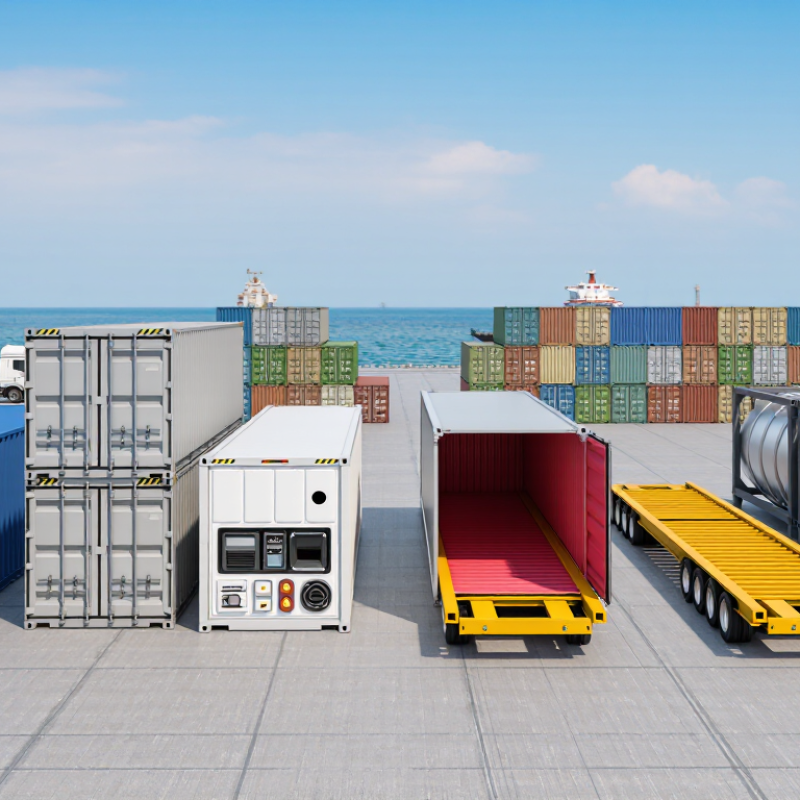
Choosing a Shipping Container in 2026 is less about finding one “best” box and more about matching its design to the cargo, route, and handling equipment. A Dry Container remains the familiar workhorse for boxed goods and palletized freight. High-cube models add extra vertical space. Reefer containers carry temperature-sensitive products, while open-top and flat-rack units accommodate tall or unusually shaped loads. Tank containers serve liquid cargo.
Maritime historian Marc Levinson’s work on containerization offers a useful perspective: standardization matters as much as the container itself. That is a paraphrase of his documented analysis, not a direct quotation. It helps explain why common dimensions and handling compatibility remain practical selection factors. Yet the details matter. A reefer needs dependable power and temperature monitoring; a flat rack needs suitable cargo support and securing arrangements. Small choices count.
This guide compares the main container types buyers are likely to encounter in 2026, including their uses, strengths, and trade-offs. It also considers less common options, such as side-opening and insulated containers. No single type fits every shipment. A high-cube unit may offer useful volume, but extra space alone does not guarantee a better fit. Specifications, condition, and the cargo’s actual dimensions deserve a careful check. That part is easy to overlook. It can be.
ISO 668:2020 defines the classification, external dimensions, and ratings of Series 1 freight containers. A nominal 20-foot unit measures 6.058 metres long; a 40-foot unit measures 12.192 metres. Both are 2.438 metres wide. Standard height is 2.591 metres, while high-cube units are typically 2.896 metres tall. A 40-foot container counts as two TEUs, or twenty-foot equivalent units. These shared dimensions help cranes, ship cells, and chassis handle containers across different routes.
On a busy quay, those measurements matter: a few centimetres can affect clearance or fit. Still, ISO dimensions do not guarantee identical internal space. Wall thickness, doors, and construction details vary, so shippers should check each unit’s actual specifications. Easy to overlook. UNCTAD’s Review of Maritime Transport 2024 reports that global container-port throughput reached 858.9 million TEUs in 2023. That scale makes consistent sizing essential, but it also shows why capacity planning cannot rely on nominal length alone.
ISO 668 sets the common frame; operational checks fill in the practical details.
Dry containers remain the most common Shipping Container type because they handle ordinary, non-temperature-controlled cargo. Their enclosed steel structure protects goods from rain, wind, and handling debris. For many shipments, that straightforward protection is enough. No special equipment is needed.
A standard 20-foot dry container offers about 33 cubic meters of internal volume. That figure describes space, not the weight it can carry. Actual usable room depends on the container’s dimensions, condition, and the shape of the cargo. A stack of uniform cartons may fit efficiently; bulky machinery can leave awkward gaps. Measure carefully.
The practical details matter. Check door clearance, cargo dimensions, and how goods will be secured before loading. A few centimeters can change whether an item passes through the doorway. Pallets also reduce usable space, even when the published volume looks generous. The number is helpful, but not a loading plan. Dry containers dominate because they are versatile, widely available, and simple to handle. Still, choosing one by volume alone is an easy mistake.
| Container type | Typical size | Approx. internal dimensions (L × W × H) | Approx. capacity | Common cargo and practical use |
|---|---|---|---|---|
| Dry (general purpose) | 20-foot | 5.90 × 2.35 × 2.39 m | About 33 m³ | Packaged goods, machinery, and palletized freight. A widely used general-purpose size for dry cargo. |
| Dry (general purpose) | 40-foot | 12.03 × 2.35 × 2.39 m | About 67–68 m³ | High-volume dry freight; offers roughly twice the length of a 20-foot container. |
| Dry high-cube | 40-foot | 12.03 × 2.35 × 2.69 m | About 76 m³ | Bulky, lightweight freight that benefits from extra interior height. |
| Refrigerated (reefer) | 20-foot | About 5.4 × 2.29 × 2.27 m | About 28 m³ | Temperature-controlled food, pharmaceuticals, and other perishables. Insulation and refrigeration equipment reduce usable space. |
| Refrigerated high-cube | 40-foot | About 11.6 × 2.29 × 2.54 m | About 67 m³ | Larger temperature-controlled shipments; requires an appropriate power connection during operation. |
| Open-top | 20-foot | About 5.9 × 2.35 × 2.35 m | About 32–33 m³ | Tall or top-loaded cargo, such as equipment; a removable roof cover allows loading from above. |
| Flat rack | 40-foot | Platform about 12.2 m long; no enclosed interior | Not applicable | Oversized or heavy cargo, including vehicles and industrial equipment; cargo dimensions and securing requirements determine fit. |
| Tank container | 20-foot frame | Tank held in a standard-length frame; vessel dimensions vary | Typically about 24,000–26,000 L | Bulk liquids and suitable gases; tank specification and cargo compatibility are essential. |
Dimensions and capacities are indicative industry ranges. Actual internal measurements, usable capacity, and permitted payload vary by container design, operator, and unit condition; verify the specific unit before loading.
A 40-foot high-cube container gains space through extra height. Its interior is typically about 12.03 metres long, 2.35 metres wide, and 2.69 metres high. A standard 40-foot unit is about 2.39 metres high. The Container Handbook, an industry technical reference, gives approximate capacities of 76.3 and 67.7 cubic metres. That is roughly 12.7% more volume. A small height difference can make a real packing difference.
The extra volume helps when cargo is bulky but relatively light, such as boxed household goods or furniture. The container’s permitted payload does not increase. Check the unit’s data plate, cargo weight, and stacking limits before loading. Weight still matters. UNCTAD’s Review of Maritime Transport 2024 reports that more than 80% of global trade by volume moves by sea, underscoring why efficient use of cargo space matters across supply chains.
The headline percentage is not a guaranteed gain for every shipment. Pallet dimensions, door clearance, packaging, and safe stacking can leave some space unusable. I would compare a real loading plan with the container’s internal measurements, rather than rely on cubic capacity alone. A few centimetres can change the final row. That detail is easy to miss.
What Are the Top Shipping Container Types in 2026?
Reefer, open-top, and flat-rack containers solve different cargo problems. A reefer suits goods that need a controlled temperature during transit, such as chilled produce or frozen ingredients. Before loading, check the required temperature, airflow needs, and cargo condition. A set temperature alone cannot protect poorly packed or warm cargo. Keep vents clear, too.
An open-top container works for tall machinery or bulky items loaded from above. A crane can lower a machine through the removable roof area, while a secure cover helps shield the load from weather. Flat racks suit oversized equipment, steel sections, or other cargo that extends beyond standard container dimensions. Their exposed sides make careful lashing and weather planning essential. Measure twice. A tight fit on paper may still leave too little room for lifting gear.
Tips: Confirm cargo dimensions, weight, lifting points, and route requirements before booking. Photograph the load and its restraints before departure. For reefers, record temperature settings and pre-cool cargo when appropriate. For open-top and flat-rack loads, ask a qualified shipping professional to review securing plans. Small details matter. Conditions vary, and even experienced teams sometimes need to revise a loading plan.
Reefer containers are designed for temperature-controlled cargo, open-top containers suit cargo loaded from above or exceeding standard door height, and flat-rack containers accommodate oversized or heavy cargo. Scores are an illustrative cargo-fit guide, not standardized capacity ratings; verify dimensions, payload limits, and route requirements before booking.
ISO tank containers move liquid cargo inside a pressure-rated vessel held within a standard transport frame. Many common models carry roughly 21,000–26,000 liters, though exact capacity varies by design. The familiar 20-foot frame fits established intermodal handling systems. But capacity figures can mislead. They describe the tank, not necessarily the safe amount for every liquid.
Cargo properties shape loading decisions. Density affects total weight, while temperature changes can make liquids expand. Operators therefore consider the tank’s design limits, the liquid’s behavior, and the planned route before loading. A tank filled too close to its limit may leave too little room for expansion. Too much empty space can also increase liquid movement during transport. It is a practical balance, not a simple volume calculation.
Look closely at the equipment, too. A tank may have insulation or heating features for cargo that needs temperature control. Valves and fittings require inspection, and connection points must be clean and secure. Small details matter. A damaged seal or unclear cargo information can delay handling and create avoidable risks. Capacity is useful, but it never tells the whole story. Teams should verify each tank’s specifications and loading plan rather than rely on a general range alone.
We use cookies on our website to give you an improved browser experience. View our Privacy Policy for more information. Please make your selection to opt in or out of ALL cookies here: Accept or Decline
Do you consent to the use of ALL cookies?
901 2nd Court West
Birmingham, AL 35204
Sales: 866.481.4036
Logistics/Ops: 866.481.4036
2101 Dralle Road
University Park, IL 60466
Sales: 708.813.9070
Logistics/Ops: 708.235.4200
400 E. 13th Street
Little Rock, AR 72114
Sales: 866.760.5344
Logistics/Ops: 866.760.5344
225 Collins Road
Elkhart, IN 46515
Sales: 574.295.0214
Logistics/Ops: 574.607.4611
601 Berryman Pike
Tipton, IN 46072
Sales: 800.897.7591
Logistics/Ops: 800.897.7591
3900 Uvalda Street
Denver, CO 80239
Sales: 303.706.8000
Ops/Logistics: 303.576.8398
510 3rd Street E
Milan, IL 61264
Sales: 800.322.1052
Logistics/Ops: 800.322.1052
1660 E. Aurora
Des Moines, IA 50313
Sales: 800.671.1660
Logistics: 800.671.1660
86554 Gene Lasserre Blvd.
Yulee, FL 32097
Sales: 904.253.3060
Logistics/Ops: 904.225.3000
694 S.E. County Road 245
Lake City, FL 32025
Sales: 800.727.6706
Logistics/Ops: 386.752.7412
210 Neptune Road
Auburndale, FL 33823
Sales: 863.967.1131
Logistics/Ops: 863.777.9814
4601 McCoy Drive
Pensacola, FL 32503
Sales: 850.308.7030
Logistics/Ops: 850.434.5502
815 South 56th Street
Tampa, FL 33619
Sales: 813.302.1940
Logistics/Ops: 813.621.1352
200 Hosea Road
Lawrenceville, GA 30046
Sales: 770.953.7575
Logistics/Ops: 770.513.6000
Branch Product Guide
Branch Line Card
Moulding Offering
Cedar Offering
Column Offering
8173 Hwy. 165 North
Monroe, LA 71211
Sales: 800.256.4165
Logistics/Ops: 800.256.4165
508 Warren Avenue
Portland, ME 04103
Sales: 207.888.2331
Logistics/Ops: 207.797.6565
4300 Georgia Pacific Blvd.
Frederick, MD 21704
Sales: 301.798.7474
Logistics/Ops: 301.874.8000
419 Maple Street
Bellingham, MA 02019
Sales: 508.449.0535
Logistics/Ops: 508.966.5500
825 Buchanan Ave SW
Grand Rapids, MI 49507
Sales: 877.800.1180
Logistics/Ops: 616.278.0909
995 Pacific St. NW
Aitkin, MN 56431
Sales: 800.432.3727
Logistics/Ops: 218.212.7770
1102 Port Terminal Drive
Duluth, MN 55802
Sales: 800.951.9899
Logistics/Ops: 800.851.9899
9110 83rd Ave. North
Brooklyn Park, MN 55445
Sales: 763.425.0204
Logistics/Ops: 763.425.0204
910 E. Railroad Street
Long Beach, MS 39560
Sales: 866.535.4135
Logistics/Ops: 228.205.2400
1727 Warren Street
North Kansas City, MO 64116
Sales: 800.621.2611
Logistics/Ops: 800.621.2611
2123 North Golden
Springfield, MO 65803
Sales: 800.375.7891
Logistics/Ops: 800.375.7891
13860 Corp. Woods Trail
Bridgeton, MO 63044
Sales: 314.209.0800
Logistics/Ops: 314.209.0800
1109 South 19th Street
Omaha, NE 68108
Sales: 800.489.6637
Logistics/Ops: 800.489.6637
1 Luger Road
Denville, NJ 07834
Sales: 973-339-3539
Logistics/Ops: 973.625.1461
3720 Jeffrey Blvd.
Blasdell, NY 14219
Sales: 716.235.5989
Logistics/Ops: 716.825.6557
319 Yaphank Ave.
Yaphank, NY 11980
Sales: 631.358.5714
Logistics/Ops: 631.924.7401
3300 Parkside Drive
Charlotte, NC 28208
Sales: 800.839.2588
Logistics/Ops: 704.394.3172
1712 East D Street
Butner, NC 27509
Sales: 984.389.8200
Logistics/Ops: 919.575.3700
128 Foothills Drive
Statesville, NC 28687
Sales: 800.222.1414
Logistics/Ops: 704.394.3172
550 Munroe Falls Rd.
Tallmadge, OH 44278
Sales: 330.357.4506
Logistics/Ops: 330.794.1141
10347 Toebben Dr.
Independence, KY 41051
Sales: 859.298.3926
Logistics/Ops: 859.746.2250
450 N. MacArthur
Oklahoma City, OK 73127
Sales: 800.375.6025
Logistics/Ops: 800.375.6025
1680 North Aspen
Broken Arrow, OK 74012
Sales: 918.272.2212
Logistics/Ops: 918.272.2212
522 Bridge Street
Hunker, PA 15639
Sales: 878.217.2001
Logistics/Ops: 724.925.7285
4290 Atlanta Street
Charleston, SC 29418
Sales: 843.371.1420
Logistics/Ops: 843.554.8192
1040 S. Industrial Dr.
Erwin, TN 37650
Sales: 423.641.1005
Logistics/Ops: 423.742.5911
4287 Pilot Drive
Memphis, TN 38118
Sales: 901.365.2101
Logistics/Ops: 901.365.2101
700 Myatt Drive
Madison, TN 37115
Sales: 615.327.9547
Logistics/Ops: 629.777.4949
4747 Mark IV Parkway
Fort Worth, TX 76106
Sales: 866.323.5117
Logistics/Ops: 817.625.9091
6990 Market Avenue
El Paso, TX 79915
Sales: 915.778.6356
Logistics/Ops: 915.265.7200
2502 Wilson Road
Harlingen, TX 78552
Sales: 800.580.6711
Logistics/Ops: 800.580.6711
10,000 North Loop East
Houston, TX 77029
Sales: 713.921.1977
Logistics/Ops: 713.675.3544
702 East 44th St.
Lubbock, TX 79404
Sales: 866.454.6010
Logistics/Ops: 866.454.6010
535 N. WW White Road
San Antonio, TX 78219
Sales: 800.284.0488
Logistics/Ops: 210.333.8112
142 Pine Haven Shores Rd.
Shelburne, VT 05482
Sales: 802.800.2540
Logistics/Ops: 802.985.2512
4700 Bethlehem Road,
Richmond, VA 23230
Sales: 804.201.2400
Logistics/Ops: 804.342.1161
4516 N Barker Road
Spokane Valley, WA 99027
Phone: 509.892.9420
Toll free: 800.728.6157
8365 N. 76th Street
Milwaukee, WI 53223
Sales: 800.356.9245
Logistics/Ops: 800.356.9245
312 S. Chester Street
Sparta, WI 54656
Sales: 800.362.5864
Logistics/Ops: 800.362.5864
899 Grossman Drive
Schofield, WI 54476
Sales: 800.472.0017
Logistics/Ops: 800.472.0017
