
We use cookies on our website to give you an improved browser experience. View our Privacy Policy for more information. Please make your selection to opt in or out of ALL cookies here: Accept or Decline
Choosing the right Spunlace Fabric can influence product performance, factory efficiency, and customer trust. Global buyers often compare wood pulp, polyester, viscose, bamboo, and blended fibers. Each option behaves differently during wetting, folding, cutting, and packaging. That difference matters.
This guide examines the top types of Spunlace Fabric through practical purchasing criteria. These include fiber composition, basis weight, absorbency, softness, tensile strength, lint level, and surface uniformity. A medical wipe may need low lint and controlled cleanliness. A facial mask sheet may require softness, drape, and gentle skin contact. Industrial wipes usually demand stronger wet strength and dependable roll consistency. Small details show up quickly on the production line.
Real sourcing experience also teaches an important lesson: no single fiber wins every market. A polyester-rich material may resist tearing, yet feel less natural. Wood pulp can absorb well, but its wet strength may need support. Bamboo sounds attractive, though buyers should verify the actual blend and certification documents. Supplier claims require careful checking. Ask for technical data, sample approval, batch records, and relevant test reports. Standards and buyer requirements differ by destination.
Some choices remain imperfect. Cost targets can conflict with softness, sustainability, or durability. A promising sample may perform differently at full production scale. This article therefore focuses on balanced decisions rather than simple rankings. It helps importers, distributors, and manufacturers connect fabric structure with real application needs. Better questions lead to safer specifications, fewer returns, and more reliable long-term supply.
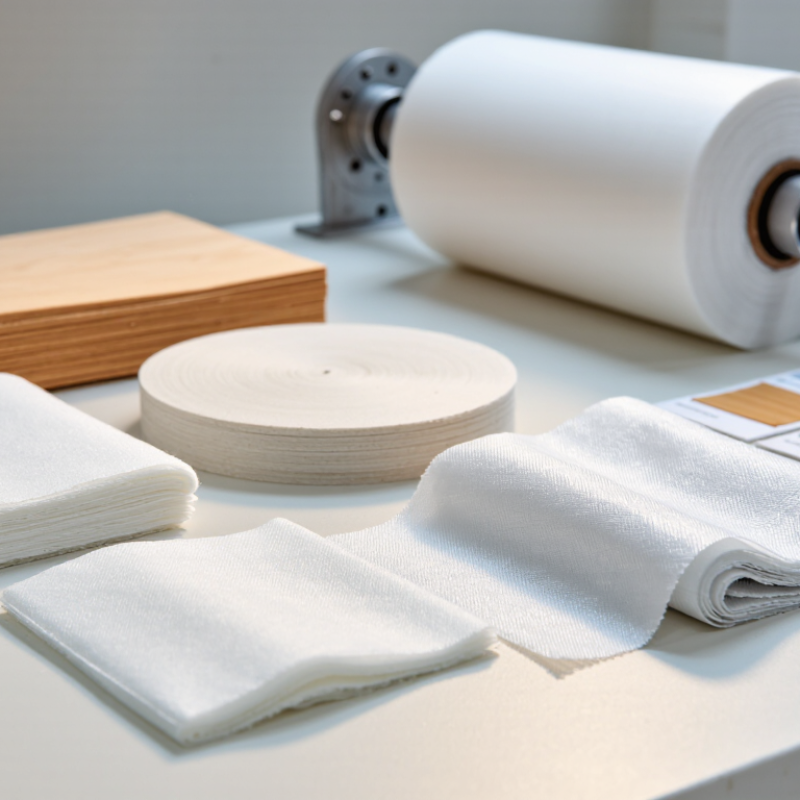
Top Types of Spunlace Fabric for Global Buyers
What Is Spunlace Fabric and How Is It Made?
Spunlace fabric is a nonwoven material made by entangling fibers with high-pressure water jets. It contains no traditional woven or knitted structure. Common fibers include viscose, polyester, cotton, and carefully selected recycled blends. The final fabric can feel soft, strong, smooth, or slightly textured.
Manufacturing starts with opening and blending the fibers. A carding machine then forms them into a loose, even web. Water jets pass through the web repeatedly, twisting and locking the fibers together. The material is dried, inspected, and wound into rolls. Water does the binding. This process can create fabric with low lint, good absorbency, and a comfortable surface.
Global buyers often choose plain spunlace for wipes and cleaning materials. Perforated types tear easily from rolls. Embossed spunlace adds texture and can improve handling. Laminated versions offer extra barrier performance for selected applications. Basis weight, fiber ratio, tensile strength, absorbency, and elongation deserve close inspection. These values influence converting speed and product durability.
From practical quality checks, uneven bonding may appear as thin lines or weak edges. Excessive water pressure can damage delicate fibers. Recycled content may also vary between production lots. That point deserves honest discussion. A reliable supplier should provide test reports, lot records, and clear tolerance ranges. Buyers should request samples under actual use conditions, not only judge softness by hand. It feels soft. Performance needs evidence.
| Spunlace Fabric Type | Typical Fiber Content | Typical Basis Weight | How It Is Made | Main Performance Characteristics | Common Applications | Key Buyer Considerations |
|---|---|---|---|---|---|---|
| 100% Viscose Spunlace | 100% viscose rayon, a regenerated cellulose fiber | 30–120 g/m² | Viscose fibers are carded into a web and bonded with high-pressure water jets, followed by drying and optional finishing. | Very soft hand feel, high absorbency, good drape, and a smooth surface. Wet strength is generally lower than that of synthetic-rich grades. | Facial wipes, baby wipes, cosmetic pads, personal-care wipes, and absorbent hygiene materials. | Check wet tensile strength, linting, fiber origin, biodegradability claims, and compatibility with lotion or cleansing formulations. |
| 100% Polyester Spunlace | 100% polyester, commonly polyethylene terephthalate (PET) | 40–200 g/m² | Polyester staple fibers are formed into a web and mechanically entangled by water jets without conventional adhesive binders. | High dry and wet strength, good abrasion resistance, dimensional stability, and relatively low moisture absorption. | Industrial wiping cloths, filtration support layers, automotive interiors, protective covers, and durable cleaning products. | Evaluate strength retention, thermal resistance, surface lint, electrostatic behavior, and whether a low-lint specification is required. |
| Viscose–Polyester Blend | Common blends include 50/50, 60/40, or 70/30 viscose/polyester | 35–150 g/m² | The two staple-fiber types are blended or layered, formed into a web, and hydroentangled to balance softness, absorbency, and strength. | Balanced absorbency and tensile strength, soft touch, good processing flexibility, and broad finishing options. | Household wipes, general-purpose cleaning cloths, medical wipes, hygiene products, and industrial wipes. | Confirm blend ratio, wet and dry tensile values, absorbency rate, lint level, and disposal or environmental requirements. |
| Lyocell Spunlace | 100% lyocell or lyocell blended with viscose or polyester | 35–100 g/m² | Cellulosic staple fibers are carded and bonded through hydroentanglement; the fabric may then receive aperturing, calendaring, or lotion-compatible finishing. | Soft and smooth surface, strong absorbency, good wet strength for a cellulosic fiber, and a premium textile-like feel. | Premium facial wipes, cosmetic sheets, personal-care wipes, medical dressing components, and specialty hygiene products. | Verify fiber certification, wet strength, dispersibility or flushability claims, and compatibility with the target market’s labeling rules. |
| Polypropylene Spunlace | 100% polypropylene (PP) | 25–120 g/m² | PP staple fibers are formed into a web and mechanically entangled with water jets; finishing can modify softness, hydrophilicity, or antistatic performance. | Low density, low moisture absorption, chemical resistance, and good strength-to-weight ratio. Untreated PP is naturally hydrophobic. | Medical and industrial wipes, filtration media, protective packaging, and technical nonwoven components. | Check hydrophilic treatment, chemical compatibility, odor, static control, thermal limits, and applicable medical or hygiene regulations. |
| Cotton Spunlace | 100% cotton or cotton blended with regenerated or synthetic fibers | 40–150 g/m² | Cotton fibers are cleaned, carded into a web, and bonded by hydroentanglement; bleaching or other wet processing may be applied afterward. | Natural hand feel, good absorbency, breathability, and comfort. It may shrink or lose strength when repeatedly exposed to moisture and processing. | Cosmetic wipes, medical swabs, wound-care materials, personal-care products, and reusable-style cleaning cloths. | Review absorbency, lint, whiteness, sterilization compatibility, shrinkage, cotton sourcing, and required cleanliness level. |
| Bamboo-Cellulose Spunlace | Regenerated cellulose derived from bamboo, often blended with viscose or other fibers | 35–100 g/m² | Regenerated bamboo cellulose fibers are carded and hydroentangled; the fabric may be softened, apertured, or treated for improved wet performance. | Soft, absorbent, and comfortable. Performance depends on the regeneration process and any blended fibers; “bamboo” does not automatically mean mechanically processed bamboo fiber. | Facial wipes, baby-care products, cosmetic masks, personal-care wipes, and soft household cloths. | Confirm whether the material is regenerated cellulose, request fiber-content documentation, and assess biodegradability and certification claims. |
| Apertured Spunlace | Viscose, polyester, lyocell, polypropylene, or blended fibers | 35–100 g/m² | A hydroentangled web is patterned or perforated during bonding or by a subsequent process to create an open, textured surface. | Improved liquid transfer, lotion distribution, cleansing action, texture, and surface coverage compared with a flat construction. | Wet wipes, exfoliating wipes, cosmetic sheets, medical cleaning materials, and specialty cleaning cloths. | Specify aperture pattern, open area, thickness, softness, liquid-holding capacity, and resistance to tearing during use. |
| Quilted or Laminated Spunlace | Spunlace combined with film, tissue, foam, or another nonwoven layer | 80–250 g/m² | One or more spunlace layers are combined by thermal, adhesive, ultrasonic, or mechanical methods, depending on the required barrier and bonding performance. | Higher thickness, cushioning, barrier performance, tear resistance, and structural stability than a single-layer spunlace sheet. | Absorbent pads, medical underpads, protective covers, automotive components, and technical packaging. | Check layer construction, bonding method, delamination resistance, moisture barrier, breathability, and recycling compatibility. |
Spunlace fabric is classified most usefully by its fiber composition. That choice affects softness, strength, absorbency, lint, and disposal options. Polyester spunlace offers strong wet durability and clean edges. It suits industrial wipes, filtration layers, and heavy-duty cleaning cloths. Viscose spunlace feels softer and absorbs liquids quickly. It is widely used in personal-care wipes and medical applications. The touch is noticeably smoother.
Blended spunlace combines polyester and viscose to balance strength with absorbency. Common ratios include 50/50 and 70/30, although actual performance depends on fiber length and web structure. Wood-pulp and polyester composites add bulk and liquid-holding capacity. They are useful for kitchen wipes and spill-control materials. Cotton, lyocell, and PLA fibers serve buyers seeking renewable or biodegradable content, but cost and processing stability can change significantly. The categories are not perfectly clean.
Grand View Research valued the global nonwoven fabric market at USD 53.5 billion in 2023. Its analysis indicates continued demand from hygiene, healthcare, and industrial applications. Smithers’ nonwovens outlook also highlights wipes and medical materials as important growth areas through 2029. Buyers should request fiber percentages, basis weight, tensile strength, absorbency, lint testing, and wet integrity. A “natural” label alone proves little. Even small composition changes can alter converting speed, skin feel, and end-of-life performance.
Spunlace fabric grades differ mainly in web structure, fiber blend, and bonding intensity. Parallel-laid webs usually offer smooth surfaces and consistent machine-direction strength. Cross-laid webs distribute fibers more evenly, improving widthwise stability and tear resistance. Random-laid structures can provide balanced performance, though their appearance may vary slightly.
Performance grades require closer examination. Light fabrics, often below 40 gsm, suit facial wipes and delicate covers. Medium grades balance softness, absorbency, and handling strength for cleaning wipes. Heavy grades provide better durability for industrial towels and protective applications.
Cotton-rich blends absorb quickly. Polyester-rich blends resist tearing and dry faster. Viscose can improve softness, but excessive moisture may weaken the sheet.
A high tensile score alone can mislead.
Basis weight, elongation, wet strength, and lint level should be reviewed together. Check both machine and cross directions. The difference can be surprisingly large. In practical quality checks, a fabric may feel soft but fail after repeated wiping. That weakness often appears only when wet.
Apertured surfaces can improve liquid pickup, yet they may reduce smoothness. Buyers should request sample rolls, not only small swatches.
Production results depend on fiber length, entanglement energy, and finishing conditions. Some grades need adjustment after testing. That is normal, and worth recording.
Top Types of Spunlace Fabric for Global Buyers
Spunlace fabric performs differently across healthcare, hygiene, cleaning, and industrial applications. Polyester-rich grades offer strength and dimensional stability. They suit medical gowns, protective drapes, and durable cleaning wipes. Viscose-rich grades feel softer and absorb liquids quickly. They work well for facial wipes, baby care, and personal hygiene products. Wood pulp blends can improve absorbency and provide a more natural hand feel. However, fiber content alone does not determine performance.
Weight matters.
A lightweight fabric supports gentle facial wipes and delicate cleaning tasks. Medium-weight grades fit household wipes and general medical use. Heavyweight spunlace offers better tear resistance for industrial cloths and reusable-feel applications. Embossed surfaces can increase texture and liquid pickup. Needling patterns also influence softness, lint release, and appearance. In practice, a fabric may look suitable but fail during wet handling. That mistake is easy to miss during a quick sample review.
Tips: Match the fabric to its final use, not its appearance. Check basis weight, absorbency, wet tensile strength, elongation, lint level, and roll consistency. Ask for samples in both dry and wet conditions. Test with the actual lotion, disinfectant, or cleaning solution. A wipe that feels soft may leave residue. A strong fabric may feel too rough for skin contact. Confirm packaging, storage, and converting conditions before approving bulk production. Small differences between batches can affect cutting, folding, and sealing.
Key Applications of Different Spunlace Fabric Types
The chart compares the typical application suitability of common spunlace fiber compositions on a 1–10 scale. Viscose-rich fabrics are widely selected for softness and absorbency, polyester-rich fabrics for strength and durability, and wood-pulp blends for high absorbency in demanding wipe applications. Scores indicate technical suitability rather than market share.
Fit matters more. Buyers should check basis weight, fiber ratio, width, roll length, and surface texture. A 50 gsm sheet may feel light, while a 70 gsm sheet can provide better handling strength. Test it wet. Some materials lose structure after saturation, especially when converting pressure is high. For cleaning products, compare absorbency speed, liquid retention, and lint release. For personal-care uses, evaluate softness, skin contact, and odor after storage.
Laboratory data helps, but it does not replace production trials. This happens. Ask for wet and dry tensile results in both machine and cross directions. Confirm test methods and sampling conditions. Buyers should also review packaging, moisture protection, and storage limits before shipment. Specifications can mislead when they omit finishing treatments or blend tolerances. A practical decision leaves room for adjustment, because the cheapest fabric is rarely the most efficient choice.
We use cookies on our website to give you an improved browser experience. View our Privacy Policy for more information. Please make your selection to opt in or out of ALL cookies here: Accept or Decline
Do you consent to the use of ALL cookies?
901 2nd Court West
Birmingham, AL 35204
Sales: 866.481.4036
Logistics/Ops: 866.481.4036
2101 Dralle Road
University Park, IL 60466
Sales: 708.813.9070
Logistics/Ops: 708.235.4200
400 E. 13th Street
Little Rock, AR 72114
Sales: 866.760.5344
Logistics/Ops: 866.760.5344
225 Collins Road
Elkhart, IN 46515
Sales: 574.295.0214
Logistics/Ops: 574.607.4611
601 Berryman Pike
Tipton, IN 46072
Sales: 800.897.7591
Logistics/Ops: 800.897.7591
3900 Uvalda Street
Denver, CO 80239
Sales: 303.706.8000
Ops/Logistics: 303.576.8398
510 3rd Street E
Milan, IL 61264
Sales: 800.322.1052
Logistics/Ops: 800.322.1052
1660 E. Aurora
Des Moines, IA 50313
Sales: 800.671.1660
Logistics: 800.671.1660
86554 Gene Lasserre Blvd.
Yulee, FL 32097
Sales: 904.253.3060
Logistics/Ops: 904.225.3000
694 S.E. County Road 245
Lake City, FL 32025
Sales: 800.727.6706
Logistics/Ops: 386.752.7412
210 Neptune Road
Auburndale, FL 33823
Sales: 863.967.1131
Logistics/Ops: 863.777.9814
4601 McCoy Drive
Pensacola, FL 32503
Sales: 850.308.7030
Logistics/Ops: 850.434.5502
815 South 56th Street
Tampa, FL 33619
Sales: 813.302.1940
Logistics/Ops: 813.621.1352
200 Hosea Road
Lawrenceville, GA 30046
Sales: 770.953.7575
Logistics/Ops: 770.513.6000
Branch Product Guide
Branch Line Card
Moulding Offering
Cedar Offering
Column Offering
8173 Hwy. 165 North
Monroe, LA 71211
Sales: 800.256.4165
Logistics/Ops: 800.256.4165
508 Warren Avenue
Portland, ME 04103
Sales: 207.888.2331
Logistics/Ops: 207.797.6565
4300 Georgia Pacific Blvd.
Frederick, MD 21704
Sales: 301.798.7474
Logistics/Ops: 301.874.8000
419 Maple Street
Bellingham, MA 02019
Sales: 508.449.0535
Logistics/Ops: 508.966.5500
825 Buchanan Ave SW
Grand Rapids, MI 49507
Sales: 877.800.1180
Logistics/Ops: 616.278.0909
995 Pacific St. NW
Aitkin, MN 56431
Sales: 800.432.3727
Logistics/Ops: 218.212.7770
1102 Port Terminal Drive
Duluth, MN 55802
Sales: 800.951.9899
Logistics/Ops: 800.851.9899
9110 83rd Ave. North
Brooklyn Park, MN 55445
Sales: 763.425.0204
Logistics/Ops: 763.425.0204
910 E. Railroad Street
Long Beach, MS 39560
Sales: 866.535.4135
Logistics/Ops: 228.205.2400
1727 Warren Street
North Kansas City, MO 64116
Sales: 800.621.2611
Logistics/Ops: 800.621.2611
2123 North Golden
Springfield, MO 65803
Sales: 800.375.7891
Logistics/Ops: 800.375.7891
13860 Corp. Woods Trail
Bridgeton, MO 63044
Sales: 314.209.0800
Logistics/Ops: 314.209.0800
1109 South 19th Street
Omaha, NE 68108
Sales: 800.489.6637
Logistics/Ops: 800.489.6637
1 Luger Road
Denville, NJ 07834
Sales: 973-339-3539
Logistics/Ops: 973.625.1461
3720 Jeffrey Blvd.
Blasdell, NY 14219
Sales: 716.235.5989
Logistics/Ops: 716.825.6557
319 Yaphank Ave.
Yaphank, NY 11980
Sales: 631.358.5714
Logistics/Ops: 631.924.7401
3300 Parkside Drive
Charlotte, NC 28208
Sales: 800.839.2588
Logistics/Ops: 704.394.3172
1712 East D Street
Butner, NC 27509
Sales: 984.389.8200
Logistics/Ops: 919.575.3700
128 Foothills Drive
Statesville, NC 28687
Sales: 800.222.1414
Logistics/Ops: 704.394.3172
550 Munroe Falls Rd.
Tallmadge, OH 44278
Sales: 330.357.4506
Logistics/Ops: 330.794.1141
10347 Toebben Dr.
Independence, KY 41051
Sales: 859.298.3926
Logistics/Ops: 859.746.2250
450 N. MacArthur
Oklahoma City, OK 73127
Sales: 800.375.6025
Logistics/Ops: 800.375.6025
1680 North Aspen
Broken Arrow, OK 74012
Sales: 918.272.2212
Logistics/Ops: 918.272.2212
522 Bridge Street
Hunker, PA 15639
Sales: 878.217.2001
Logistics/Ops: 724.925.7285
4290 Atlanta Street
Charleston, SC 29418
Sales: 843.371.1420
Logistics/Ops: 843.554.8192
1040 S. Industrial Dr.
Erwin, TN 37650
Sales: 423.641.1005
Logistics/Ops: 423.742.5911
4287 Pilot Drive
Memphis, TN 38118
Sales: 901.365.2101
Logistics/Ops: 901.365.2101
700 Myatt Drive
Madison, TN 37115
Sales: 615.327.9547
Logistics/Ops: 629.777.4949
4747 Mark IV Parkway
Fort Worth, TX 76106
Sales: 866.323.5117
Logistics/Ops: 817.625.9091
6990 Market Avenue
El Paso, TX 79915
Sales: 915.778.6356
Logistics/Ops: 915.265.7200
2502 Wilson Road
Harlingen, TX 78552
Sales: 800.580.6711
Logistics/Ops: 800.580.6711
10,000 North Loop East
Houston, TX 77029
Sales: 713.921.1977
Logistics/Ops: 713.675.3544
702 East 44th St.
Lubbock, TX 79404
Sales: 866.454.6010
Logistics/Ops: 866.454.6010
535 N. WW White Road
San Antonio, TX 78219
Sales: 800.284.0488
Logistics/Ops: 210.333.8112
142 Pine Haven Shores Rd.
Shelburne, VT 05482
Sales: 802.800.2540
Logistics/Ops: 802.985.2512
4700 Bethlehem Road,
Richmond, VA 23230
Sales: 804.201.2400
Logistics/Ops: 804.342.1161
4516 N Barker Road
Spokane Valley, WA 99027
Phone: 509.892.9420
Toll free: 800.728.6157
8365 N. 76th Street
Milwaukee, WI 53223
Sales: 800.356.9245
Logistics/Ops: 800.356.9245
312 S. Chester Street
Sparta, WI 54656
Sales: 800.362.5864
Logistics/Ops: 800.362.5864
899 Grossman Drive
Schofield, WI 54476
Sales: 800.472.0017
Logistics/Ops: 800.472.0017
