
We use cookies on our website to give you an improved browser experience. View our Privacy Policy for more information. Please make your selection to opt in or out of ALL cookies here: Accept or Decline
A Capscrew Hex Head is more than a simple threaded fastener. Its six-sided head accepts a wrench or socket, while its cylindrical body provides a dependable clamping connection. In machinery, the head may sit against a steel bracket, a painted frame, or a precisely machined flange. That contact area matters.
John H. Bickford, a recognized fastener engineering author, stated, “The strength of a bolted joint depends on more than the strength of the bolt.” This principle explains why material grade, thread engagement, tightening torque, and joint design must be considered together. A high-strength capscrew can still fail when the joint is poorly aligned or the threads are damaged.
Not just the head.
This guide examines what defines a Capscrew Hex Head and how it differs from related bolts. It will discuss common standards, including ASME B18.2.1 and ISO specifications, along with grades such as Grade 8 and Class 10.9. Dimensions also deserve attention. Head height, across-flats size, thread pitch, and under-head length affect tool access and installation accuracy.
In practical use, the correct fastener is rarely chosen by appearance alone. A zinc-plated carbon steel screw may suit indoor equipment, but it can perform poorly in salt spray. Stainless steel resists corrosion, yet it may gall during installation. These details are easy to overlook.
The terminology is not always perfectly consistent across suppliers. That is worth remembering. This article therefore treats the Capscrew Hex Head as both a product category and an engineering subject, using measurable specifications rather than assumptions.
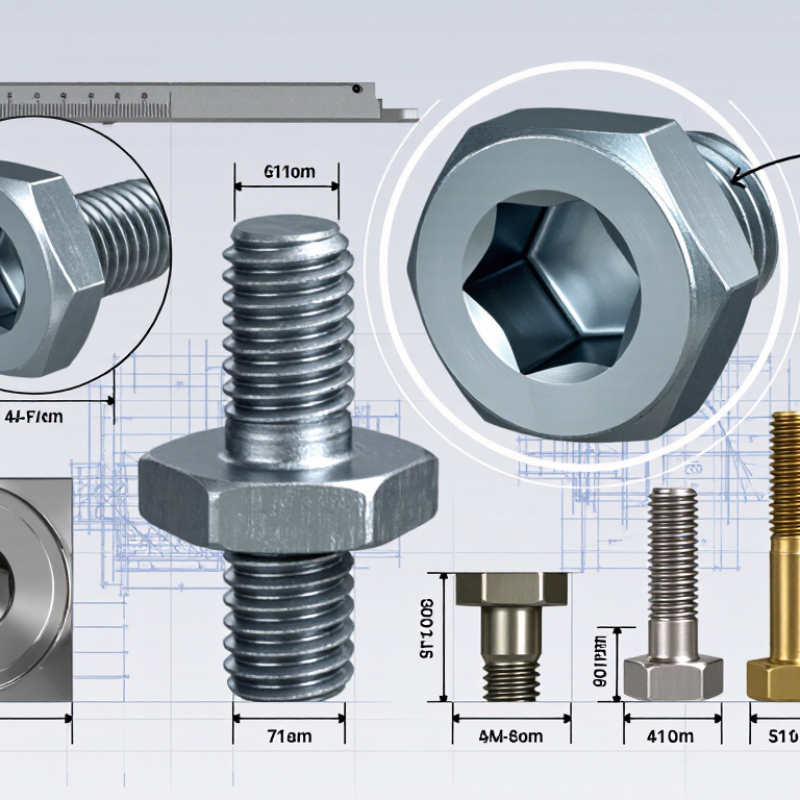
What Is a Hex Head Capscrew?
Hex Head Capscrew Geometry Under ASME B18.2.1 Dimensions
A hex head capscrew has a six-sided head and a threaded or partially threaded shank. Its geometry is more controlled than its simple appearance suggests. ASME B18.2.1 defines inch-series dimensions for head width, head height, bearing surface, shank diameter, thread length, and overall length. These values help engineers select compatible sockets, washers, and tapped holes.
The dimensional tables use minimum and maximum limits, not one perfect measurement. For example, a 1/2-inch capscrew commonly uses a 3/4-inch nominal across-flats head. Its head height is approximately 5/16 inch, subject to the specified tolerance range. These limits matter during assembly. A slightly oversized head can block socket access. A reduced bearing surface can increase local pressure under load.
ASME B18.2.1 should be read with the applicable thread specification and material requirements. ASTM F606/F606M provides recognized methods for checking tensile, proof-load, and hardness performance. Those tests do not replace dimensional inspection. They support it. In production, inspectors often verify across-flats size with a calibrated micrometer or gauge, then check head height separately.
A practical caution: drawings sometimes copy nominal values without tolerances. That is risky. The standard controls geometry, but plating, forming variation, and measurement technique still influence fit. Field experience shows that a socket may fit visually yet fail under torque. The mistake is easy to miss.
This chart compares common inch-series nominal shank diameters with their corresponding nominal across-flats dimensions for hex head cap screws. Across-flats size represents the nominal wrench size used to engage the hexagonal head. Values are shown in inches and follow the standard size series referenced by ASME B18.2.1; production inspection limits may vary by the applicable dimensional table and revision.
What Is a Hex Head Capscrew?
Six-Flank Torque Transfer Through 60° Wrench-Face Spacing
A hex head capscrew has six wrench faces spaced at 60° intervals. This geometry gives a socket or wrench six contact zones around the head. Torque transfers through the flats, while the threaded shank develops clamping force.
In practical assembly work, tool fit matters more than head appearance. A worn socket can load one corner and round the head. That failure is easy to miss during a quick inspection. NASA’s Fastener Design Manual, NASA-RP-1228, explains that friction consumes most tightening torque, often about 90 percent. Only a small portion creates useful bolt tension. Therefore, face contact and lubrication can change the final preload.
The same caution applies to material strength. ISO 898-1 lists property class 8.8 bolts with a nominal tensile strength of 800 MPa and a minimum yield strength of 640 MPa. Those figures describe the fastener material, not the installed joint. Joint stiffness, surface finish, thread condition, and tightening speed still influence performance. The assumption that “more torque means more safety” is incomplete.
Tips: Use a six-point socket when possible. Keep the tool square to the head. Check thread cleanliness before tightening. Follow the specified torque method, and verify calibration records. A torque wrench reading is not preload. That distinction deserves more attention.
A hex head capscrew has a six-sided head and a threaded shank designed for wrench installation. For a 1/4-inch diameter, thread selection usually means comparing 1/4-20 UNC with 1/4-28 UNF. ASME B1.1-2019 identifies UNC as the coarse series and UNF as the fine series. The 1/4-20 thread has 20 threads per inch, or a 1.27 mm pitch. The 1/4-28 thread has 28 threads per inch, or a 0.907 mm pitch.
The difference is practical. A 1/4-28 UNF screw offers finer adjustment and slightly greater tensile stress area, according to thread geometry used in ASME B1.1 tables. It can suit thin joints or applications needing careful clamping control. A 1/4-20 UNC screw engages faster and usually tolerates dirt or minor damage better. It is often the safer workshop choice. NASA’s Fastener Design Manual, NASA RP-1228, warns that torque alone does not predict preload reliably because friction changes sharply with surface condition, lubrication, and coating. That detail is easy to overlook.
Tips: Match the nut or tapped hole exactly. Never force 1/4-28 into a 1/4-20 hole. Check pitch with a thread gauge, then inspect at least three clean threads. I would also record lubrication conditions during testing; otherwise, the torque result may look precise but remain misleading.
What Is a Hex Head Capscrew?
A hex head capscrew has a six-sided head and a threaded shank. A wrench or socket tightens it against a tapped hole or nut. Its head provides practical access in machinery, frames, equipment guards, and structural assemblies. The thread length and body diameter must match the joint design. Small details matter.
Grade 5 fasteners are commonly rated at 120 ksi minimum tensile strength. Grade 8 fasteners reach approximately 150 ksi minimum tensile strength. Here, ksi means kips per square inch. Grade 8 therefore carries a higher tensile load before failure, but higher strength does not automatically make it the best choice. Joint stiffness, clamp length, thread engagement, and service temperature also influence performance.
In the field, I would check the head marking, diameter, thread pitch, and applicable specification before installation. A torque value from a generic chart can mislead when lubrication changes friction. Dry threads and coated threads may require different tightening practices. Uneven tightening can leave one side of a flange loose, even when the wrench shows the correct reading. That mistake is easy to miss.
Grade 5 often suits general mechanical fastening. Grade 8 may fit heavily loaded joints requiring greater preload. However, the surrounding material can fail before the capscrew reaches its rated strength. Corrosion, vibration, and repeated loading deserve careful review. Strength data alone is not enough.
| Attribute | Grade 5 | Grade 8 | Practical Significance |
|---|---|---|---|
| Component type | Hex head capscrew | Hex head capscrew | A threaded fastener with a six-sided head designed for installation with a wrench or socket. |
| Common mechanical-property specification | SAE J429 Grade 5 | SAE J429 Grade 8 | “Grade” identifies required mechanical performance; it does not define the screw’s dimensions. |
| Nominal minimum tensile strength | 120 ksi (approximately 827 MPa) | 150 ksi (approximately 1,034 MPa) | The maximum tensile load depends on the fastener’s tensile-stress area, not only on the listed ksi value. |
| Minimum yield strength | 92 ksi (approximately 634 MPa) | 130 ksi (approximately 896 MPa) | Yield strength indicates the approximate stress at which permanent deformation begins. |
| Typical head marking | Three radial lines, spaced 120° apart | Six radial lines, spaced 60° apart | Head markings help identify the strength grade on compatible inch-series fasteners. |
| Typical material condition | Medium-carbon steel, commonly heat treated | Medium-carbon alloy steel, heat treated | The exact chemistry and heat treatment must be confirmed from the applicable specification and certification. |
| Dimensional reference | ASME B18.2.1 for inch-series square and hex bolts and screws | ASME B18.2.1 for inch-series square and hex bolts and screws | Head width, head height, thread length, and body dimensions are controlled separately from strength grade. |
| Thread system | Unified inch threads such as UNC or UNF | Unified inch threads such as UNC or UNF | Thread diameter, pitch, fit, and tolerance should match the mating nut or tapped hole. |
| Recommended application range | General structural, equipment, automotive, and maintenance applications | Higher-load joints where greater tensile and proof strength are required | The selected grade must suit the joint design, service temperature, loading, environment, and installation method. |
| Installation note | Use the specified tightening method and torque value for the joint. | Use the specified tightening method and torque value for the joint. | Torque is affected by thread condition, lubrication, coatings, nut type, and friction; a generic torque value may be unsuitable. |
Note: Grade 5 and Grade 8 are commonly used SAE J429 classifications for inch-series fasteners. ASTM specifications such as ASTM A449 may apply to particular product types or applications; always verify the purchase and engineering specification before substitution.
A hex head capscrew has a six-sided head for a wrench and a threaded shank. It clamps parts by creating controlled preload. The 75% proof-load installation rule sets that preload near 75% of the fastener’s proof load. Proof load is the stress a fastener should withstand without permanent deformation. The target preload can be estimated by multiplying proof strength, tensile stress area, and 0.75. Always confirm these values from the fastener specification and engineering drawing.
Torque only estimates tension. A common relationship is T = KFD, where torque depends on preload, diameter, and the nut factor. Surface finish, thread condition, plating, and lubrication can change that factor sharply. A dry thread and an oiled thread may produce different clamping forces at the same wrench setting. That detail is easy to overlook. In my experience, torque is useful, but it is not a direct tension measurement. Calibrated tools and sample checks improve confidence.
Tips: Clean the threads before assembly. Record the lubricant condition. Use a calibrated torque wrench and tighten gradually in a suitable pattern. Do not reuse a damaged capscrew. Check for joint separation, washer embedment, and unusual resistance during tightening. The 75% rule is a strong starting point, not a universal answer. Temperature, vibration, joint stiffness, and repeated loading may require a separate engineering review. Small inconsistencies can matter.
We use cookies on our website to give you an improved browser experience. View our Privacy Policy for more information. Please make your selection to opt in or out of ALL cookies here: Accept or Decline
Do you consent to the use of ALL cookies?
901 2nd Court West
Birmingham, AL 35204
Sales: 866.481.4036
Logistics/Ops: 866.481.4036
2101 Dralle Road
University Park, IL 60466
Sales: 708.813.9070
Logistics/Ops: 708.235.4200
400 E. 13th Street
Little Rock, AR 72114
Sales: 866.760.5344
Logistics/Ops: 866.760.5344
225 Collins Road
Elkhart, IN 46515
Sales: 574.295.0214
Logistics/Ops: 574.607.4611
601 Berryman Pike
Tipton, IN 46072
Sales: 800.897.7591
Logistics/Ops: 800.897.7591
3900 Uvalda Street
Denver, CO 80239
Sales: 303.706.8000
Ops/Logistics: 303.576.8398
510 3rd Street E
Milan, IL 61264
Sales: 800.322.1052
Logistics/Ops: 800.322.1052
1660 E. Aurora
Des Moines, IA 50313
Sales: 800.671.1660
Logistics: 800.671.1660
86554 Gene Lasserre Blvd.
Yulee, FL 32097
Sales: 904.253.3060
Logistics/Ops: 904.225.3000
694 S.E. County Road 245
Lake City, FL 32025
Sales: 800.727.6706
Logistics/Ops: 386.752.7412
210 Neptune Road
Auburndale, FL 33823
Sales: 863.967.1131
Logistics/Ops: 863.777.9814
4601 McCoy Drive
Pensacola, FL 32503
Sales: 850.308.7030
Logistics/Ops: 850.434.5502
815 South 56th Street
Tampa, FL 33619
Sales: 813.302.1940
Logistics/Ops: 813.621.1352
200 Hosea Road
Lawrenceville, GA 30046
Sales: 770.953.7575
Logistics/Ops: 770.513.6000
Branch Product Guide
Branch Line Card
Moulding Offering
Cedar Offering
Column Offering
8173 Hwy. 165 North
Monroe, LA 71211
Sales: 800.256.4165
Logistics/Ops: 800.256.4165
508 Warren Avenue
Portland, ME 04103
Sales: 207.888.2331
Logistics/Ops: 207.797.6565
4300 Georgia Pacific Blvd.
Frederick, MD 21704
Sales: 301.798.7474
Logistics/Ops: 301.874.8000
419 Maple Street
Bellingham, MA 02019
Sales: 508.449.0535
Logistics/Ops: 508.966.5500
825 Buchanan Ave SW
Grand Rapids, MI 49507
Sales: 877.800.1180
Logistics/Ops: 616.278.0909
995 Pacific St. NW
Aitkin, MN 56431
Sales: 800.432.3727
Logistics/Ops: 218.212.7770
1102 Port Terminal Drive
Duluth, MN 55802
Sales: 800.951.9899
Logistics/Ops: 800.851.9899
9110 83rd Ave. North
Brooklyn Park, MN 55445
Sales: 763.425.0204
Logistics/Ops: 763.425.0204
910 E. Railroad Street
Long Beach, MS 39560
Sales: 866.535.4135
Logistics/Ops: 228.205.2400
1727 Warren Street
North Kansas City, MO 64116
Sales: 800.621.2611
Logistics/Ops: 800.621.2611
2123 North Golden
Springfield, MO 65803
Sales: 800.375.7891
Logistics/Ops: 800.375.7891
13860 Corp. Woods Trail
Bridgeton, MO 63044
Sales: 314.209.0800
Logistics/Ops: 314.209.0800
1109 South 19th Street
Omaha, NE 68108
Sales: 800.489.6637
Logistics/Ops: 800.489.6637
1 Luger Road
Denville, NJ 07834
Sales: 973-339-3539
Logistics/Ops: 973.625.1461
3720 Jeffrey Blvd.
Blasdell, NY 14219
Sales: 716.235.5989
Logistics/Ops: 716.825.6557
319 Yaphank Ave.
Yaphank, NY 11980
Sales: 631.358.5714
Logistics/Ops: 631.924.7401
3300 Parkside Drive
Charlotte, NC 28208
Sales: 800.839.2588
Logistics/Ops: 704.394.3172
1712 East D Street
Butner, NC 27509
Sales: 984.389.8200
Logistics/Ops: 919.575.3700
128 Foothills Drive
Statesville, NC 28687
Sales: 800.222.1414
Logistics/Ops: 704.394.3172
550 Munroe Falls Rd.
Tallmadge, OH 44278
Sales: 330.357.4506
Logistics/Ops: 330.794.1141
10347 Toebben Dr.
Independence, KY 41051
Sales: 859.298.3926
Logistics/Ops: 859.746.2250
450 N. MacArthur
Oklahoma City, OK 73127
Sales: 800.375.6025
Logistics/Ops: 800.375.6025
1680 North Aspen
Broken Arrow, OK 74012
Sales: 918.272.2212
Logistics/Ops: 918.272.2212
522 Bridge Street
Hunker, PA 15639
Sales: 878.217.2001
Logistics/Ops: 724.925.7285
4290 Atlanta Street
Charleston, SC 29418
Sales: 843.371.1420
Logistics/Ops: 843.554.8192
1040 S. Industrial Dr.
Erwin, TN 37650
Sales: 423.641.1005
Logistics/Ops: 423.742.5911
4287 Pilot Drive
Memphis, TN 38118
Sales: 901.365.2101
Logistics/Ops: 901.365.2101
700 Myatt Drive
Madison, TN 37115
Sales: 615.327.9547
Logistics/Ops: 629.777.4949
4747 Mark IV Parkway
Fort Worth, TX 76106
Sales: 866.323.5117
Logistics/Ops: 817.625.9091
6990 Market Avenue
El Paso, TX 79915
Sales: 915.778.6356
Logistics/Ops: 915.265.7200
2502 Wilson Road
Harlingen, TX 78552
Sales: 800.580.6711
Logistics/Ops: 800.580.6711
10,000 North Loop East
Houston, TX 77029
Sales: 713.921.1977
Logistics/Ops: 713.675.3544
702 East 44th St.
Lubbock, TX 79404
Sales: 866.454.6010
Logistics/Ops: 866.454.6010
535 N. WW White Road
San Antonio, TX 78219
Sales: 800.284.0488
Logistics/Ops: 210.333.8112
142 Pine Haven Shores Rd.
Shelburne, VT 05482
Sales: 802.800.2540
Logistics/Ops: 802.985.2512
4700 Bethlehem Road,
Richmond, VA 23230
Sales: 804.201.2400
Logistics/Ops: 804.342.1161
4516 N Barker Road
Spokane Valley, WA 99027
Phone: 509.892.9420
Toll free: 800.728.6157
8365 N. 76th Street
Milwaukee, WI 53223
Sales: 800.356.9245
Logistics/Ops: 800.356.9245
312 S. Chester Street
Sparta, WI 54656
Sales: 800.362.5864
Logistics/Ops: 800.362.5864
899 Grossman Drive
Schofield, WI 54476
Sales: 800.472.0017
Logistics/Ops: 800.472.0017
