
We use cookies on our website to give you an improved browser experience. View our Privacy Policy for more information. Please make your selection to opt in or out of ALL cookies here: Accept or Decline
An Arched Front Door is an entrance with a rounded or curved top, rather than a standard rectangular head. Its shape may form a gentle half-circle, a pointed arch, or a subtle elliptical curve. This architectural detail can soften a modern façade and strengthen the character of a traditional home. Brick, stone, stucco, and timber can all frame the opening effectively.
The design is attractive, but its construction needs careful planning. The arch radius must match the wall opening, door slab, frame, and hardware. A small measurement error can create uneven gaps or difficult operation. Weatherstripping also needs to follow the curved profile closely. Otherwise, drafts and moisture may enter around the upper edge. This is where professional installation becomes valuable.
Details matter.
Homeowners should consider sightlines, security, glazing, maintenance, and accessibility before choosing this style. A solid wood door may offer warmth, while fiberglass or steel can provide consistent performance with less upkeep. Decorative glass can brighten a dark hallway, but privacy and thermal efficiency still deserve attention. The romantic image can mislead; an elaborate arch may feel oversized on a narrow porch. In practice, the best result usually balances the door’s proportions with the surrounding windows, roofline, and entry steps. Reviewing full-size drawings or a physical sample can expose problems early. Even experienced teams should recheck measurements, because a beautiful curve cannot compensate for poor sealing or awkward clearance. This guide explains the defining features, common materials, installation concerns, and practical advantages of an Arched Front Door.
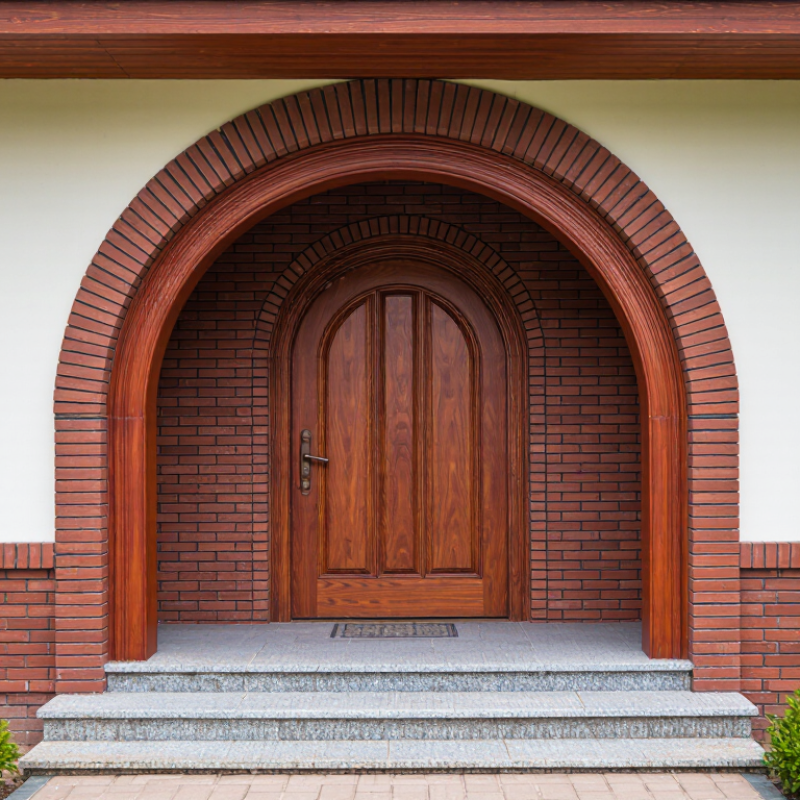
An arched front door has a curved top instead of a straight horizontal head. Its shape may be semicircular, elliptical, or gently pointed. This profile changes the entrance’s character immediately. It can make a narrow porch feel taller and draw attention toward the doorway.
Key features include the arch geometry, structural framing, weather sealing, and door material. A curved opening needs accurate measurements and a properly supported header. Small errors can cause uneven gaps or sticking after seasonal movement. Glass is another major feature. The U.S. Department of Energy reports that windows can account for 25% to 30% of residential heating and cooling energy use. An arched door with large glazing therefore needs careful thermal planning. Check the NFRC label for U-factor and solar heat gain coefficient values. JLC’s 2024 Cost vs. Value report also found a 188.1% cost recoup for a standard steel entry-door replacement, but custom arches may require different budgets and labor.
Tips: Measure the opening at several points, not just once. Ask the installer how the arch transfers weight above the door. Choose low-maintenance finishes for exposed entrances. A perfect arch is not always the best arch. If the curve reduces headroom or complicates emergency access, a simpler design may work better. Inspect the threshold, hinges, and weatherstrip in person. These small details often decide whether the door feels premium or merely decorative.
An arched front door has a curved top instead of a straight horizontal head. The arch can be semicircular, elliptical, or segmental, while the door frame must follow the same geometry for proper installation and weather sealing.
Planning reference: Common nominal widths for single residential entry doors are 30, 32, and 36 inches. An arched design changes the upper shape of the opening, but the selected width still affects accessibility, furniture clearance, hardware placement, and frame construction.
An arched front door has a curved top instead of a standard horizontal frame. Its shape can soften a rigid exterior and create a stronger entrance focal point. In practice, the arch must match the surrounding wall, not only the homeowner’s taste. A narrow doorway may look taller with a simple semicircular arch. A wide entrance can support an elliptical arch with a gentler curve.
Different arch shapes create distinct impressions. A round arch feels traditional and balanced. A pointed arch adds vertical drama and suits taller façades. A segmental arch uses a shallow curve, making it practical for compact spaces. An eyebrow arch has a slight rise above the door and often works well with contemporary detailing. The proportions matter greatly. Even a beautiful curve can feel awkward when the spring points sit too low.
Door designs vary beyond the opening shape. A solid timber door gives visual weight and improves privacy. Glass panels bring daylight into a dim hallway, but they need careful privacy planning. Divided glass, sidelights, and decorative ironwork can reinforce the arch without copying it too heavily. I have found that matching the trim curve to the door curve usually produces a cleaner result.
Measure twice. Custom framing is often necessary. Weather seals must follow the curved head accurately, or drafts may appear during windy weather. I once saw an elegant arched entrance lose its charm because the door swung into a tight corridor. The design looked right, but daily movement did not.
An arched front door has a curved top instead of a straight, square head. Its shape can soften a masonry façade and create a strong entry focal point. The arch may be formed in the door slab, the frame, or both. In practice, the curve changes more than appearance. It affects measurements, weather sealing, hardware placement, and load transfer.
Common materials include solid wood, engineered wood, fiberglass, steel, and aluminum. Wood offers warmth, but it needs stable joinery and careful moisture protection. Steel provides stiffness, although thermal bridging can make the interior surface cold. Fiberglass resists swelling and suits exposed entrances.
A custom opening often begins with a full-size template. The frame is built to match the radius, spring points, and jamb depth. Craftspeople may laminate curved members, bend metal profiles, or use segmented sections. Segments can work well, but visible joints may reveal rushed fabrication. An experienced installer checks the sill, threshold, hinges, and perimeter gasket before final fastening.
Tips: Confirm whether the arch is structural or decorative. A decorative arch still needs a properly supported rectangular opening behind it. Never remove masonry above an opening without a qualified structural assessment. Steel lintels, reinforced concrete, or concealed framing may carry the load. Support should account for local wind, snow, seismic movement, and the wall’s actual materials. Ask for shop drawings and water-management details. Small gaps are not harmless; they invite drafts and concealed rot. I have seen beautiful arches fail because drainage was treated as an afterthought.
An arched front door has a curved top instead of a standard rectangular frame. It can soften a boxy exterior and create a stronger arrival point. In practice, the curve often suits masonry, Mediterranean, traditional, and contemporary homes. It does not suit every facade. A mismatched arch can look decorative rather than intentional.
The main benefit is visual impact.
84%
The National Association of Realtors’ 2022 Remodeling Impact Report found that 84% of homeowners wanted to be home more after remodeling.
188.1%
The 2024 Cost vs. Value Report recorded a 188.1% cost recovery for a standard steel entry-door replacement.
An inviting entrance may support that emotional value, although the report does not measure arched doors specifically. That figure is useful, but it should not be applied directly to a custom arched door.
A curved frame usually requires precise site measurements and custom manufacturing. Ask the installer to verify the rough opening, threshold height, swing clearance, drainage, and weather seals. The U.S. Department of Energy recommends careful weatherstripping and threshold sealing to reduce air leakage.
Insulated glass can improve comfort, but decorative glass may increase heat gain and maintenance.
I would request a full-size cardboard template before ordering. It feels excessive, yet small proportion errors become obvious at the entrance. A beautiful arch can still be drafty, difficult to operate, or inconvenient for deliveries.
What Is an Arched Front Door?
How to Choose an Arched Front Door for Your Home
An arched front door has a curved top instead of a straight horizontal edge. This shape can soften a boxy exterior and create a stronger entrance focal point. Before choosing one, study your home’s architecture, wall height, and existing window lines. A tall arch may suit a Mediterranean or traditional façade, while a simple shallow curve can complement a modern home. Measure carefully. Even a small error can affect the frame, trim, and weather seal.
Material matters as much as appearance. Solid wood offers warmth and can be repaired, but it needs regular protection from moisture and sunlight. Fiberglass usually requires less maintenance and can resist swelling. Steel provides strength, although exposed edges may need careful inspection for corrosion. Ask about the door’s insulation value, glazing safety, hinges, threshold, and locking system. These practical details affect comfort and security every day.
Consider how the door will feel in use. A narrow arch can look elegant but may restrict furniture movement. A dark finish may add contrast, yet it can absorb heat in direct sun. Glass panels bring daylight inside, but privacy should not be ignored. I would avoid choosing from a photograph alone. Colors, shadows, and surrounding stone can look different in person. Bring home samples, check the opening during rainy weather, and review installation requirements with a qualified professional. Personally, I think a slightly simpler arch often ages better than an overly decorative design.
| Decision Dimension | What It Means | Typical Options or Values | Selection Guidance |
|---|---|---|---|
| Definition | Arched front door | A residential entry door with a curved or rounded top rather than a straight horizontal head. | Choose an arched design when you want the entrance to become a strong architectural feature. |
| Arch Shape | Curve profile | Semicircular, elliptical, segmental, pointed, or eyebrow-style arches. | Match the arch profile to the home’s architecture. Softer curves suit traditional homes, while simple elliptical arches can work well with transitional designs. |
| Door Configuration | Number of door leaves | Single door, double door, or a door paired with sidelights. | Single doors suit compact entrances. Double doors and sidelights provide a wider opening and more visual presence but require additional wall space. |
| Common Door Width | Single-door opening | Approximately 30–36 inches wide for many residential applications. | Confirm the existing rough opening before ordering. The required frame size is larger than the nominal door slab size. |
| Common Door Height | Overall entry height | Approximately 80 inches for a standard rectangular door, with additional height often required for the arch. | Measure from the finished threshold to the highest point of the opening, including the curved section. |
| Material | Wood | Warm appearance, natural variation, and broad design flexibility. | Use a properly finished exterior-grade door and maintain exposed wood according to the finish manufacturer’s instructions. |
| Material | Fiberglass | Resists moisture-related movement and can be manufactured with wood-look textures. | Consider fiberglass for exposed entrances or locations where lower routine maintenance is important. |
| Material | Steel | Strong, generally cost-effective, and often available with insulated cores. | Check the protective coating and repair scratches or chips promptly to help reduce corrosion risk. |
| Glazing | Glass area and style | Clear, frosted, textured, decorative, or divided-light glass. | Select glazing based on privacy, daylight, security, and the amount of visual detail already present on the façade. |
| Energy Performance | Insulation and air sealing | Affected by the door core, weatherstripping, threshold, frame, and installation quality. | Look for documented U-factor and air-leakage information where available, and ensure the curved frame is sealed continuously. |
| Weather Protection | Exposure to rain and sun | Varies according to orientation, overhang, local climate, and exterior finish. | Use suitable exterior finishes, durable weatherstripping, and a properly sloped threshold. An overhang can reduce direct exposure. |
| Security | Locking and frame strength | Deadbolt or multi-point locking, reinforced strike areas, and a securely anchored frame. | Verify that the complete door system—not only the slab—supports the desired security level. |
| Installation | Custom-fit requirements | Arched openings are less standardized than rectangular openings and may require custom framing or a replacement unit. | Have the opening measured by an experienced installer, especially when the existing opening has a masonry arch or uneven framing. |
| Structural Planning | Header and wall support | The curved opening must be properly supported within the surrounding wall structure. | Do not remove or modify structural framing without professional assessment and compliance with local building requirements. |
| Maintenance | Routine care | Clean surfaces, inspect seals, lubricate hardware, and check the threshold periodically. | Inspect more often when the door is exposed to heavy rain, strong sunlight, coastal air, or frequent use. |
| Design Compatibility | Relationship to the façade | Should coordinate with windows, rooflines, columns, masonry, trim, and exterior colors. | Repeat at least one architectural detail—such as a curve, material, or trim color—to create a cohesive entrance. |
| Budget Planning | Main cost factors | Door material, custom arch geometry, glazing, hardware, framing changes, delivery, and installation. | Request a complete system quotation that includes the slab, frame, sill, hardware, finishing, removal, and installation where applicable. |
We use cookies on our website to give you an improved browser experience. View our Privacy Policy for more information. Please make your selection to opt in or out of ALL cookies here: Accept or Decline
Do you consent to the use of ALL cookies?
901 2nd Court West
Birmingham, AL 35204
Sales: 866.481.4036
Logistics/Ops: 866.481.4036
2101 Dralle Road
University Park, IL 60466
Sales: 708.813.9070
Logistics/Ops: 708.235.4200
400 E. 13th Street
Little Rock, AR 72114
Sales: 866.760.5344
Logistics/Ops: 866.760.5344
225 Collins Road
Elkhart, IN 46515
Sales: 574.295.0214
Logistics/Ops: 574.607.4611
601 Berryman Pike
Tipton, IN 46072
Sales: 800.897.7591
Logistics/Ops: 800.897.7591
3900 Uvalda Street
Denver, CO 80239
Sales: 303.706.8000
Ops/Logistics: 303.576.8398
510 3rd Street E
Milan, IL 61264
Sales: 800.322.1052
Logistics/Ops: 800.322.1052
1660 E. Aurora
Des Moines, IA 50313
Sales: 800.671.1660
Logistics: 800.671.1660
86554 Gene Lasserre Blvd.
Yulee, FL 32097
Sales: 904.253.3060
Logistics/Ops: 904.225.3000
694 S.E. County Road 245
Lake City, FL 32025
Sales: 800.727.6706
Logistics/Ops: 386.752.7412
210 Neptune Road
Auburndale, FL 33823
Sales: 863.967.1131
Logistics/Ops: 863.777.9814
4601 McCoy Drive
Pensacola, FL 32503
Sales: 850.308.7030
Logistics/Ops: 850.434.5502
815 South 56th Street
Tampa, FL 33619
Sales: 813.302.1940
Logistics/Ops: 813.621.1352
200 Hosea Road
Lawrenceville, GA 30046
Sales: 770.953.7575
Logistics/Ops: 770.513.6000
Branch Product Guide
Branch Line Card
Moulding Offering
Cedar Offering
Column Offering
8173 Hwy. 165 North
Monroe, LA 71211
Sales: 800.256.4165
Logistics/Ops: 800.256.4165
508 Warren Avenue
Portland, ME 04103
Sales: 207.888.2331
Logistics/Ops: 207.797.6565
4300 Georgia Pacific Blvd.
Frederick, MD 21704
Sales: 301.798.7474
Logistics/Ops: 301.874.8000
419 Maple Street
Bellingham, MA 02019
Sales: 508.449.0535
Logistics/Ops: 508.966.5500
825 Buchanan Ave SW
Grand Rapids, MI 49507
Sales: 877.800.1180
Logistics/Ops: 616.278.0909
995 Pacific St. NW
Aitkin, MN 56431
Sales: 800.432.3727
Logistics/Ops: 218.212.7770
1102 Port Terminal Drive
Duluth, MN 55802
Sales: 800.951.9899
Logistics/Ops: 800.851.9899
9110 83rd Ave. North
Brooklyn Park, MN 55445
Sales: 763.425.0204
Logistics/Ops: 763.425.0204
910 E. Railroad Street
Long Beach, MS 39560
Sales: 866.535.4135
Logistics/Ops: 228.205.2400
1727 Warren Street
North Kansas City, MO 64116
Sales: 800.621.2611
Logistics/Ops: 800.621.2611
2123 North Golden
Springfield, MO 65803
Sales: 800.375.7891
Logistics/Ops: 800.375.7891
13860 Corp. Woods Trail
Bridgeton, MO 63044
Sales: 314.209.0800
Logistics/Ops: 314.209.0800
1109 South 19th Street
Omaha, NE 68108
Sales: 800.489.6637
Logistics/Ops: 800.489.6637
1 Luger Road
Denville, NJ 07834
Sales: 973-339-3539
Logistics/Ops: 973.625.1461
3720 Jeffrey Blvd.
Blasdell, NY 14219
Sales: 716.235.5989
Logistics/Ops: 716.825.6557
319 Yaphank Ave.
Yaphank, NY 11980
Sales: 631.358.5714
Logistics/Ops: 631.924.7401
3300 Parkside Drive
Charlotte, NC 28208
Sales: 800.839.2588
Logistics/Ops: 704.394.3172
1712 East D Street
Butner, NC 27509
Sales: 984.389.8200
Logistics/Ops: 919.575.3700
128 Foothills Drive
Statesville, NC 28687
Sales: 800.222.1414
Logistics/Ops: 704.394.3172
550 Munroe Falls Rd.
Tallmadge, OH 44278
Sales: 330.357.4506
Logistics/Ops: 330.794.1141
10347 Toebben Dr.
Independence, KY 41051
Sales: 859.298.3926
Logistics/Ops: 859.746.2250
450 N. MacArthur
Oklahoma City, OK 73127
Sales: 800.375.6025
Logistics/Ops: 800.375.6025
1680 North Aspen
Broken Arrow, OK 74012
Sales: 918.272.2212
Logistics/Ops: 918.272.2212
522 Bridge Street
Hunker, PA 15639
Sales: 878.217.2001
Logistics/Ops: 724.925.7285
4290 Atlanta Street
Charleston, SC 29418
Sales: 843.371.1420
Logistics/Ops: 843.554.8192
1040 S. Industrial Dr.
Erwin, TN 37650
Sales: 423.641.1005
Logistics/Ops: 423.742.5911
4287 Pilot Drive
Memphis, TN 38118
Sales: 901.365.2101
Logistics/Ops: 901.365.2101
700 Myatt Drive
Madison, TN 37115
Sales: 615.327.9547
Logistics/Ops: 629.777.4949
4747 Mark IV Parkway
Fort Worth, TX 76106
Sales: 866.323.5117
Logistics/Ops: 817.625.9091
6990 Market Avenue
El Paso, TX 79915
Sales: 915.778.6356
Logistics/Ops: 915.265.7200
2502 Wilson Road
Harlingen, TX 78552
Sales: 800.580.6711
Logistics/Ops: 800.580.6711
10,000 North Loop East
Houston, TX 77029
Sales: 713.921.1977
Logistics/Ops: 713.675.3544
702 East 44th St.
Lubbock, TX 79404
Sales: 866.454.6010
Logistics/Ops: 866.454.6010
535 N. WW White Road
San Antonio, TX 78219
Sales: 800.284.0488
Logistics/Ops: 210.333.8112
142 Pine Haven Shores Rd.
Shelburne, VT 05482
Sales: 802.800.2540
Logistics/Ops: 802.985.2512
4700 Bethlehem Road,
Richmond, VA 23230
Sales: 804.201.2400
Logistics/Ops: 804.342.1161
4516 N Barker Road
Spokane Valley, WA 99027
Phone: 509.892.9420
Toll free: 800.728.6157
8365 N. 76th Street
Milwaukee, WI 53223
Sales: 800.356.9245
Logistics/Ops: 800.356.9245
312 S. Chester Street
Sparta, WI 54656
Sales: 800.362.5864
Logistics/Ops: 800.362.5864
899 Grossman Drive
Schofield, WI 54476
Sales: 800.472.0017
Logistics/Ops: 800.472.0017
