
We use cookies on our website to give you an improved browser experience. View our Privacy Policy for more information. Please make your selection to opt in or out of ALL cookies here: Accept or Decline
Choosing the best type of Metal Balusters depends on more than appearance. A staircase must feel secure, support daily use, and suit the surrounding architecture. Steel, aluminum, and wrought iron each offer different strengths, maintenance needs, and visual effects. The right choice may change between a busy family staircase and a covered outdoor balcony.
Steel balusters provide a strong, precise look, especially with powder-coated finishes. They can create clean lines beside wood handrails and darker flooring. Aluminum is lighter and often resists corrosion well, making it practical for damp locations. Wrought iron offers texture and traditional character, but its finish may require closer attention over time. Stainless steel can look excellent in modern interiors, although fingerprints may appear quickly.
Details matter.
A reliable comparison should examine material thickness, surface treatment, joint quality, and installation requirements. Manufacturer specifications can reveal more than attractive product photographs. Local building requirements should also guide spacing, height, load resistance, and stair design. These rules vary by location, so professional verification remains sensible.
There is no universal winner. A premium material can still perform poorly when installed carelessly. Likewise, a modest design may work beautifully with accurate measurements and proper anchoring. Cost should include finishing, hardware, labor, and future maintenance. That part is easy to underestimate.
This guide compares common Metal Balusters through practical performance, appearance, durability, and value. It also considers a less comfortable question: are you choosing the strongest option, or simply the most attractive one?
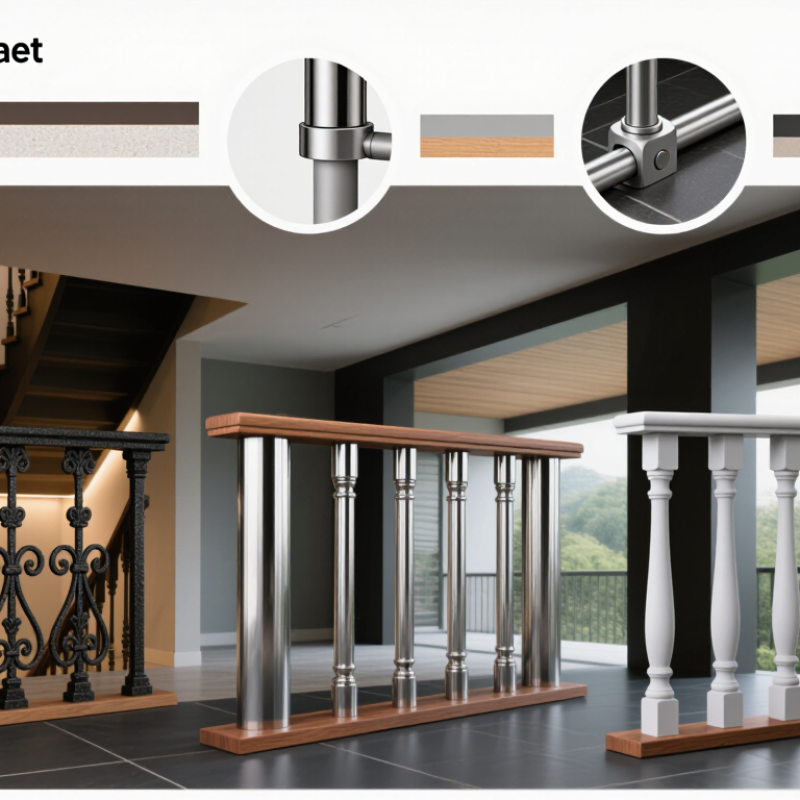
What Is the Best Type of Metal Balusters?
Metal balusters differ in strength, weight, maintenance, and visual character. Wrought iron offers substantial weight and traditional detail, but its porous finish may require closer inspection for rust. Powder-coated steel provides crisp lines and strong impact resistance. It suits busy staircases, especially when children or pets use them daily. Aluminum is lighter and naturally resistant to corrosion. However, it can feel less substantial under hand pressure. Cable systems create an open view, yet they require accurate tensioning and regular checks.
According to the 2024 Houzz & Home Study, 54% of homeowners completed renovation projects in 2023. That demand makes practical material selection more important. Grand View Research forecasts steady growth in the global metal stairs market through 2030, reflecting continued interest in durable metal components. These figures do not prove that one baluster type is universally better. They show a wider renovation trend.
On site, spacing often matters more than appearance. Many residential codes use a four-inch sphere test for baluster openings, but local requirements can differ. Always confirm the current rules with a qualified professional. Finish quality also matters. A glossy surface reveals fingerprints quickly. A textured coating can hide them, but cleaning may take longer. I would not choose cable only for its modern look. Tension, anchoring, and maintenance deserve equal attention. Small installation errors become noticeable when a handrail flexes. That is easy to underestimate.
Understanding Metal Baluster Types and Their Key Differences
This qualitative comparison uses a 1–5 scale, where 5 represents the strongest typical performance. Aluminum balusters are lightweight and highly resistant to corrosion, while steel offers excellent strength and a wide range of shapes. Wrought iron provides strong visual detail but usually requires more maintenance to protect its finish. Actual performance depends on coating quality, installation, climate, and exposure.
Choosing metal balusters depends on climate, stair design, and maintenance expectations. Steel offers strong support and a firm, substantial feel under the hand. It feels solid. However, ordinary steel can develop rust when moisture reaches damaged paint or exposed joints. A durable protective coating matters, especially near exterior stairs. From renovation work, I have found that poorly sealed cut ends often fail before the main surface.
Aluminum is lightweight, naturally resistant to corrosion, and easier to carry during installation. That matters on long staircases. Its lighter structure may feel less substantial than steel, although proper sizing improves stability. Wrought iron creates a traditional, hand-forged appearance with visual weight and distinctive texture. It suits period homes and decorative interiors. The trade-off is maintenance. Scratches and chipped coatings require prompt attention. I once underestimated this upkeep on an outdoor project.
Stainless steel provides a clean appearance and strong corrosion resistance. It works well in modern interiors, humid rooms, and many coastal settings. Still, stainless steel is not maintenance-free; salt deposits can stain the surface and should be washed away. For indoor stairs, I often favor stainless steel or powder-coated steel. Aluminum becomes more practical when weight and moisture are major concerns. Local building requirements should guide spacing, height, and fixing methods. One detail matters. Baluster spacing affects both safety and visual balance. A beautiful railing can still feel wrong when the handrail height or spacing is inconsistent.
What Is the Best Type of Metal Balusters?
Metal balusters are judged less by appearance than by performance over time. The 2024 International Residential Code, Section R301.5, lists a 200-pound concentrated load and a 50-pound-per-foot uniform load for guards and handrails. It also limits openings so a 4-inch sphere cannot pass through. These figures apply to the complete railing system, not one baluster alone. Posts, fasteners, welds, and stair supports all matter. A strong-looking tube can still feel loose.
For indoor stairs, powder-coated steel often provides high rigidity and predictable maintenance. Outdoor installations require a corrosion strategy. ASTM A123/A123M covers zinc coatings on iron and steel products, while ASTM B117 defines salt-spray testing. However, ASTM B117 is not a direct service-life prediction. That distinction matters near beaches, pools, and roads treated with deicing salts. Stainless steel may reduce repainting, but it still needs compatible fasteners and regular cleaning. Small rust stains around a screw deserve early attention.
Maintenance is simple, not absent. Wipe balusters with mild soap, dry trapped water, and inspect joints twice yearly. Avoid abrasive pads. I have seen finishes fail first where wet shoes and grit repeatedly touch the lower rail. I would question any “maintenance-free” claim. Installation quality, drainage, coating thickness, and local exposure can outweigh the metal label. Check the adopted local code and tested assembly details before selecting a profile.
What Is the Best Type of Metal Balusters?
Matching Baluster Materials to Indoor and Outdoor Stair Designs
Metal balusters should match the stair’s environment, not only its visual style. For indoor stairs, steel offers clean lines and strong daily performance. It suits modern homes, painted handrails, and narrow stairwells. Aluminum is lighter and resists corrosion, but it can feel less substantial in some interiors. Wrought iron creates a warmer, traditional appearance, especially with wood treads and curved handrails.
Outdoor stairs need different priorities. Aluminum performs well near rain, humidity, and coastal air because it does not rust like ordinary steel. Powder-coated steel can also work outside when its finish remains intact. Inspect scratches, cut ends, and fasteners regularly. Small damage can become a larger maintenance problem. I have seen attractive railings age poorly because drainage was ignored.
Tips: Match the finish to local exposure. Use corrosion-resistant fasteners outdoors. Check whether the baluster profile leaves enough grip and cleaning space. For indoor designs, compare samples beside the actual flooring, not under showroom lighting. Dark finishes hide dust, but they can show fingerprints. That trade-off is easy to miss. Also, avoid choosing a heavy iron look for a delicate staircase; the proportions may feel wrong after installation. A qualified installer should verify spacing, attachment points, and local safety requirements before work begins.
| Baluster Material | Best Environment | Corrosion Resistance | Maintenance Needs | Appearance and Design Compatibility | Relative Weight | Key Considerations |
|---|---|---|---|---|---|---|
| 304 Stainless Steel | Indoor stairs and covered outdoor areas | High in ordinary indoor and low-salt environments | Wipe clean periodically; remove fingerprints and surface contaminants | Clean, reflective or brushed finish; suits contemporary, transitional, and minimalist interiors | Heavy | A strong general-purpose stainless option, but prolonged exposure to coastal salt or chlorides can cause staining or corrosion. |
| 316 Stainless Steel | Coastal, marine, humid, and exposed outdoor stairs | Very high because molybdenum improves resistance to chlorides | Regular rinsing and cleaning are recommended in salt-air locations | Premium architectural appearance; works well with glass, stone, wood, and modern railings | Heavy | Often the most suitable stainless grade for outdoor and coastal applications, although correct fabrication and cleaning remain important. |
| Powder-Coated Carbon Steel | Indoor stairs and sheltered outdoor installations | Moderate to high when the coating is continuous and undamaged | Inspect for chips, scratches, and rust; repair damaged coating promptly | Available in many colors and profiles; complements traditional, industrial, farmhouse, and contemporary designs | Heavy | Strong and versatile, but exposed cut edges, fastener areas, and damaged finishes can become corrosion points. |
| Aluminum | Outdoor stairs, decks, balconies, and projects where low weight matters | High due to its naturally protective oxide layer | Low routine maintenance; clean periodically and check for galvanic contact with dissimilar metals | Smooth, painted, anodized, or textured finishes; suitable for modern and practical outdoor designs | Light | Easy to handle and resistant to weathering, but it is less stiff than steel and may require appropriate profiles for long spans. |
| Wrought Iron | Protected indoor areas and heritage-style outdoor projects | Moderate; requires a durable protective finish | Regular inspection, repainting, and rust treatment may be necessary outdoors | Decorative, substantial, and traditional; ideal for ornate, Mediterranean, Victorian, and classic stair designs | Very heavy | Provides a distinctive handcrafted look, but its iron content makes surface protection especially important in damp conditions. |
| Brass | Interior staircases and decorative feature installations | Moderate; appearance changes with oxidation and handling | Polish to maintain brightness, or allow a natural patina to develop | Warm gold tone; pairs well with wood stairs, classic interiors, art-deco details, and luxury accents | Heavy | Usually selected for visual character rather than maximum outdoor durability; finish requirements should be established before installation. |
| Galvanized Steel | Utility stairs and exposed outdoor applications | High because the zinc coating provides sacrificial protection | Periodic cleaning and inspection; protect cut or drilled areas as needed | Distinctive matte or spangled industrial finish; best for utilitarian, modern, and industrial settings | Heavy | Durable for exterior use, although the visible zinc finish may not suit refined residential interiors without additional finishing. |
Choosing the best metal baluster starts with the project, not the catalog. Steel usually offers strong rigidity at a modest material cost. Aluminum weighs less and resists rust, making it useful for damp entries or outdoor stairs. Yet aluminum can dent more easily. It matters.
For a tight budget, standard square steel balusters often provide the best value. A simple profile also reduces cutting and installation time. Choose a durable powder-coated finish, but inspect coverage around welds and corners. Those small areas can expose metal first. Ask for material thickness, finish preparation, and tested spacing details. Do not judge quality from color alone. A low price may hide extra labor, weak fittings, or difficult site measurements.
Project conditions should guide the final choice. Measure the stair opening, landing height, and fixing points before ordering. Measure carefully. Confirm local safety requirements with a qualified installer or building professional. For coastal homes, specify corrosion-resistant material and rinse exposed surfaces regularly. For busy family stairs, rounded edges and firmly secured connections deserve priority. Decorative designs can look attractive, but they may collect dust and cost more to repair. I once thought an elaborate pattern looked more refined; in practice, a cleaner layout was easier to maintain. There is no perfect baluster. The sensible choice balances strength, appearance, installation effort, and long-term care.
We use cookies on our website to give you an improved browser experience. View our Privacy Policy for more information. Please make your selection to opt in or out of ALL cookies here: Accept or Decline
Do you consent to the use of ALL cookies?
901 2nd Court West
Birmingham, AL 35204
Sales: 866.481.4036
Logistics/Ops: 866.481.4036
2101 Dralle Road
University Park, IL 60466
Sales: 708.813.9070
Logistics/Ops: 708.235.4200
400 E. 13th Street
Little Rock, AR 72114
Sales: 866.760.5344
Logistics/Ops: 866.760.5344
225 Collins Road
Elkhart, IN 46515
Sales: 574.295.0214
Logistics/Ops: 574.607.4611
601 Berryman Pike
Tipton, IN 46072
Sales: 800.897.7591
Logistics/Ops: 800.897.7591
3900 Uvalda Street
Denver, CO 80239
Sales: 303.706.8000
Ops/Logistics: 303.576.8398
510 3rd Street E
Milan, IL 61264
Sales: 800.322.1052
Logistics/Ops: 800.322.1052
1660 E. Aurora
Des Moines, IA 50313
Sales: 800.671.1660
Logistics: 800.671.1660
86554 Gene Lasserre Blvd.
Yulee, FL 32097
Sales: 904.253.3060
Logistics/Ops: 904.225.3000
694 S.E. County Road 245
Lake City, FL 32025
Sales: 800.727.6706
Logistics/Ops: 386.752.7412
210 Neptune Road
Auburndale, FL 33823
Sales: 863.967.1131
Logistics/Ops: 863.777.9814
4601 McCoy Drive
Pensacola, FL 32503
Sales: 850.308.7030
Logistics/Ops: 850.434.5502
815 South 56th Street
Tampa, FL 33619
Sales: 813.302.1940
Logistics/Ops: 813.621.1352
200 Hosea Road
Lawrenceville, GA 30046
Sales: 770.953.7575
Logistics/Ops: 770.513.6000
Branch Product Guide
Branch Line Card
Moulding Offering
Cedar Offering
Column Offering
8173 Hwy. 165 North
Monroe, LA 71211
Sales: 800.256.4165
Logistics/Ops: 800.256.4165
508 Warren Avenue
Portland, ME 04103
Sales: 207.888.2331
Logistics/Ops: 207.797.6565
4300 Georgia Pacific Blvd.
Frederick, MD 21704
Sales: 301.798.7474
Logistics/Ops: 301.874.8000
419 Maple Street
Bellingham, MA 02019
Sales: 508.449.0535
Logistics/Ops: 508.966.5500
825 Buchanan Ave SW
Grand Rapids, MI 49507
Sales: 877.800.1180
Logistics/Ops: 616.278.0909
995 Pacific St. NW
Aitkin, MN 56431
Sales: 800.432.3727
Logistics/Ops: 218.212.7770
1102 Port Terminal Drive
Duluth, MN 55802
Sales: 800.951.9899
Logistics/Ops: 800.851.9899
9110 83rd Ave. North
Brooklyn Park, MN 55445
Sales: 763.425.0204
Logistics/Ops: 763.425.0204
910 E. Railroad Street
Long Beach, MS 39560
Sales: 866.535.4135
Logistics/Ops: 228.205.2400
1727 Warren Street
North Kansas City, MO 64116
Sales: 800.621.2611
Logistics/Ops: 800.621.2611
2123 North Golden
Springfield, MO 65803
Sales: 800.375.7891
Logistics/Ops: 800.375.7891
13860 Corp. Woods Trail
Bridgeton, MO 63044
Sales: 314.209.0800
Logistics/Ops: 314.209.0800
1109 South 19th Street
Omaha, NE 68108
Sales: 800.489.6637
Logistics/Ops: 800.489.6637
1 Luger Road
Denville, NJ 07834
Sales: 973-339-3539
Logistics/Ops: 973.625.1461
3720 Jeffrey Blvd.
Blasdell, NY 14219
Sales: 716.235.5989
Logistics/Ops: 716.825.6557
319 Yaphank Ave.
Yaphank, NY 11980
Sales: 631.358.5714
Logistics/Ops: 631.924.7401
3300 Parkside Drive
Charlotte, NC 28208
Sales: 800.839.2588
Logistics/Ops: 704.394.3172
1712 East D Street
Butner, NC 27509
Sales: 984.389.8200
Logistics/Ops: 919.575.3700
128 Foothills Drive
Statesville, NC 28687
Sales: 800.222.1414
Logistics/Ops: 704.394.3172
550 Munroe Falls Rd.
Tallmadge, OH 44278
Sales: 330.357.4506
Logistics/Ops: 330.794.1141
10347 Toebben Dr.
Independence, KY 41051
Sales: 859.298.3926
Logistics/Ops: 859.746.2250
450 N. MacArthur
Oklahoma City, OK 73127
Sales: 800.375.6025
Logistics/Ops: 800.375.6025
1680 North Aspen
Broken Arrow, OK 74012
Sales: 918.272.2212
Logistics/Ops: 918.272.2212
522 Bridge Street
Hunker, PA 15639
Sales: 878.217.2001
Logistics/Ops: 724.925.7285
4290 Atlanta Street
Charleston, SC 29418
Sales: 843.371.1420
Logistics/Ops: 843.554.8192
1040 S. Industrial Dr.
Erwin, TN 37650
Sales: 423.641.1005
Logistics/Ops: 423.742.5911
4287 Pilot Drive
Memphis, TN 38118
Sales: 901.365.2101
Logistics/Ops: 901.365.2101
700 Myatt Drive
Madison, TN 37115
Sales: 615.327.9547
Logistics/Ops: 629.777.4949
4747 Mark IV Parkway
Fort Worth, TX 76106
Sales: 866.323.5117
Logistics/Ops: 817.625.9091
6990 Market Avenue
El Paso, TX 79915
Sales: 915.778.6356
Logistics/Ops: 915.265.7200
2502 Wilson Road
Harlingen, TX 78552
Sales: 800.580.6711
Logistics/Ops: 800.580.6711
10,000 North Loop East
Houston, TX 77029
Sales: 713.921.1977
Logistics/Ops: 713.675.3544
702 East 44th St.
Lubbock, TX 79404
Sales: 866.454.6010
Logistics/Ops: 866.454.6010
535 N. WW White Road
San Antonio, TX 78219
Sales: 800.284.0488
Logistics/Ops: 210.333.8112
142 Pine Haven Shores Rd.
Shelburne, VT 05482
Sales: 802.800.2540
Logistics/Ops: 802.985.2512
4700 Bethlehem Road,
Richmond, VA 23230
Sales: 804.201.2400
Logistics/Ops: 804.342.1161
4516 N Barker Road
Spokane Valley, WA 99027
Phone: 509.892.9420
Toll free: 800.728.6157
8365 N. 76th Street
Milwaukee, WI 53223
Sales: 800.356.9245
Logistics/Ops: 800.356.9245
312 S. Chester Street
Sparta, WI 54656
Sales: 800.362.5864
Logistics/Ops: 800.362.5864
899 Grossman Drive
Schofield, WI 54476
Sales: 800.472.0017
Logistics/Ops: 800.472.0017
