
We use cookies on our website to give you an improved browser experience. View our Privacy Policy for more information. Please make your selection to opt in or out of ALL cookies here: Accept or Decline
Choosing the right Tungsten Alloy Manufacturer is more than comparing prices. It means examining technical experience, process control, and evidence of consistent performance. A dependable supplier should explain powder selection, pressing methods, sintering temperatures, machining limits, and inspection procedures clearly. Those details matter when a component must withstand radiation, vibration, heat, or repeated impact.
Materials engineer Dr. John D. Verhoeven once wrote, “Good materials performance begins with controlled processing, not with a promising specification sheet.” This principle fits tungsten alloys closely. A capable manufacturer can provide measured density, hardness, tensile strength, dimensional tolerances, and batch traceability. Ask for inspection records. Request sample parts. Look closely at the surface finish and edge quality.
The strongest partnerships develop through practical communication. Your manufacturer should understand whether the part is a counterweight, shielding block, heat-resistant fixture, or precision insert. It should also identify design weaknesses before production begins. That support can reduce waste and prevent costly rework.
Not every supplier will meet every application. Some may offer impressive equipment but limited machining experience. Others may provide excellent alloy grades but weak documentation. That distinction is easy to miss.
A careful evaluation should include facility capability, quality certifications, lead times, packaging, and technical support. Independent testing may still be worthwhile for critical components. No supplier is perfect. Even a proven Tungsten Alloy Manufacturer can face variation between batches, especially when specifications are unclear. The better choice is the manufacturer that acknowledges those risks and manages them with transparent, repeatable controls.
What Is a Tungsten Alloy Manufacturer?
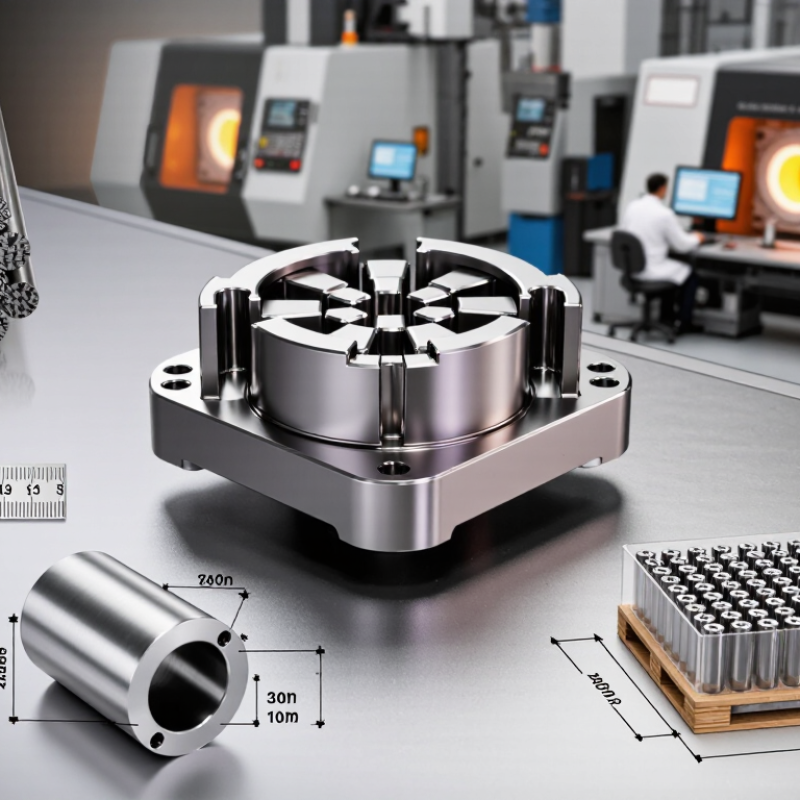
A tungsten alloy manufacturer develops, produces, and tests metal materials containing tungsten and other carefully selected elements. These alloys combine high density, strong wear resistance, and reliable performance under demanding conditions. A qualified manufacturer controls the entire process, from powder selection to sintering, machining, and inspection. This experience matters because small changes in composition can affect hardness, balance, and dimensional stability.
In practical work, manufacturers may produce counterweights, radiation-shielding components, vibration-control parts, and precision tooling. They usually study the customer’s drawings, operating temperature, load, and surface requirements before recommending a material. Reliable production also includes density checks, hardness testing, dimensional measurement, and traceable quality records. I have found that clear communication prevents more problems than impressive technical language. However, no alloy is perfect. A material chosen for density may need extra machining care. That trade-off deserves honest discussion.
Tips: Ask how the alloy is made, tested, and documented. Confirm the tungsten percentage and acceptable tolerances. Request a sample when the component has strict balance or fit requirements. Check whether the manufacturer can support machining, surface finishing, and repeat orders. Cheap pricing can hide inconsistent density or weak inspection practices. That is not always true, but it is worth examining. A dependable manufacturer explains limitations, provides practical data, and adjusts production when real testing reveals an unexpected issue.
| Data Dimension | Typical Fact or Range | Why It Matters When Choosing a Manufacturer |
|---|---|---|
| Material Definition | A tungsten alloy combines tungsten with elements such as nickel, iron, copper, or other controlled additions. | A specialized manufacturer can select the alloy system according to density, strength, machinability, thermal, and radiation-shielding requirements. |
| Tungsten Content | Many tungsten heavy alloys contain approximately 90–97% tungsten by weight. | Controlled composition helps maintain consistent density, mechanical performance, and dimensional stability. |
| Density | Pure tungsten has a density of about 19.25 g/cm³; common heavy-alloy grades are generally about 17.0–18.5 g/cm³. | High density is useful where compact mass, inertia, vibration control, or radiation attenuation is required. |
| Melting Point Reference | Pure tungsten melts at approximately 3,422°C, the highest melting point among metallic elements. | A manufacturer with high-temperature material expertise can better manage processing, joining, and service-temperature requirements. |
| Mechanical Strength | Heavy tungsten alloys provide high strength and hardness compared with many conventional high-density metals; values depend on grade and heat treatment. | Material selection and process control influence resistance to wear, impact, deformation, and repeated loading. |
| Machinability | Tungsten alloys are generally more difficult to machine than aluminum or ordinary steel because of their high density, hardness, and abrasive nature. | A capable manufacturer can recommend suitable machining, grinding, EDM, tooling, and surface-finishing methods. |
| Radiation Attenuation | The high density of tungsten makes tungsten-containing materials effective for compact X-ray and gamma-ray shielding designs. | A manufacturer can optimize geometry, density, joints, and tolerances for shielding performance without unnecessary bulk. |
| Common Alloy Families | W-Ni-Fe alloys are commonly selected for high strength; W-Ni-Cu alloys are often selected where non-magnetic behavior or improved corrosion resistance is desired. | A manufacturer can match alloy chemistry to application-specific magnetic, mechanical, corrosion, and processing needs. |
| Manufacturing Methods | Typical routes include powder preparation, pressing, liquid-phase sintering, machining, grinding, and inspection. | Integrated process control can reduce variation between batches and improve repeatability for complex parts. |
| Dimensional Requirements | Final achievable tolerances depend on part size, geometry, alloy grade, sintering shrinkage, and the selected finishing process. | Early engineering review helps establish realistic tolerances, machining allowances, and inspection methods before production. |
| Quality Verification | Relevant checks may include chemical composition, density, hardness, dimensions, surface condition, and internal integrity. | Documented inspection and traceability improve confidence in material consistency and application performance. |
| Application Fit | Typical uses include counterweights, balancing components, radiation shields, collimators, wear parts, and high-density tooling. | A manufacturer with application engineering support can help balance performance, cost, lead time, and manufacturability. |
| Selection Principle | The best supplier is selected by verified material data, process capability, quality controls, technical support, and ability to meet the required specification. | Evaluating measurable capabilities rather than relying only on price helps reduce technical risk and long-term production issues. |
Note: Values shown are representative technical ranges. Exact properties depend on alloy composition, powder quality, processing route, heat treatment, dimensions, and test method.
Why Choose a Tungsten Alloy Manufacturer?
A specialized tungsten alloy manufacturer controls composition from powder selection to final inspection. Tungsten content, nickel, iron, copper, and other binders must match the required grade. Even small variations can change density, hardness, and machining behavior. Experienced technicians record each powder lot before blending. They also check particle size and moisture, which are easy to overlook. This practical discipline supports stable performance in radiation shielding, balancing weights, and precision components.
During production, controlled mixing creates a more uniform material. Samples may undergo chemical analysis, density testing, and microscopic examination. Reliable facilities compare results with technical specifications and keep traceable batch records. They also inspect sintering conditions, because temperature changes can influence porosity and strength. No process is perfect. A rushed inspection can miss segregation near an edge. That is why independent checks and documented corrective actions matter. Customers should ask how deviations are handled, not only request a certificate.
Tips: Ask for the alloy composition range, test methods, and batch traceability. Confirm whether testing covers the finished part. Review dimensional data, surface condition, and density results together. A clear report is useful, but direct communication with technical staff reveals more. Be cautious when a supplier promises identical results without explaining process controls.
Tungsten heavy alloys are commonly identified by their approximate tungsten content, such as 90W, 93W, 95W, and 97W. The balance is typically a metallic binder system, often based on nickel-iron or nickel-copper. Manufacturers control composition by weighing and blending powders accurately, monitoring batch chemistry, and verifying the finished material through laboratory analysis.
Values shown are nominal weight percentages used for representative tungsten heavy-alloy grades; actual specifications may vary by material standard and customer requirement.
Why Choose a Tungsten Alloy Manufacturer?
Different applications demand different production capabilities, not just a high-density material. Aerospace counterweights may require tight balance control, while radiation shielding needs consistent thickness and stable composition. According to the U.S. Geological Survey’s Mineral Commodity Summaries 2025, global tungsten mine production reached approximately 81,000 metric tons in 2024. This supply pressure makes powder control and material traceability increasingly important.
A capable manufacturer should manage powder blending, pressing, sintering, and controlled cooling in-house. These steps influence density, hardness, and dimensional stability. Hot isostatic pressing can reduce internal voids, although it may increase cost and lead time. Precision grinding, CNC machining, and electrical discharge machining support complex geometries. ASTM B777 also provides useful guidance for tungsten-base heavy alloys. Yet, a standard alone cannot replace process testing. Real production data still matters.
Tips: Ask for density results, batch records, dimensional inspection reports, and mechanical test methods. Confirm whether the supplier can produce small trial lots before full production. A perfect drawing is not enough. Design feedback often reveals weak corners, difficult tolerances, or unnecessary machining. Some manufacturers overlook these details. That mistake can create cracks, waste, and delayed assembly. Reliable partners explain limitations clearly and connect each capability with the application’s actual operating conditions.
Choosing a tungsten alloy manufacturer should begin with its testing discipline. Quality testing shows whether the material can perform under pressure, heat, and repeated use. Experienced manufacturers inspect chemical composition before production begins. This helps confirm the correct balance of tungsten and supporting elements. Small variations matter.
Reliable testing covers density, hardness, tensile strength, and dimensional accuracy. Inspectors may also examine grain structure through metallographic analysis. Non-destructive methods can reveal internal flaws without damaging finished parts. Each batch should have traceable records, calibrated equipment, and clear acceptance criteria. These details support consistent engineering decisions.
No test is perfect. A rushed inspection can miss a surface defect or measurement drift. Good manufacturers review unusual results instead of hiding them. That habit builds trust and improves future production.
Tips: Ask how samples are selected. Request inspection reports with batch numbers. Check whether test equipment receives regular calibration. Compare results with your actual service conditions, not only catalogue values. A component that passes a basic test may still fail after vibration, thermal cycling, or poor installation.
Choosing a tungsten alloy manufacturer affects more than the purchase price. It influences density, strength, machinability, and product consistency. Experienced engineers understand how powder selection, pressing pressure, and sintering temperature interact. They inspect each stage instead of relying only on final testing. Small errors matter. A slight density variation can change balance, wear resistance, or dimensional stability.
Manufacturing expertise also controls hidden costs. A low quotation may exclude tooling adjustments, extra machining, or rejected parts. Skilled manufacturers reduce waste by controlling powder flow and furnace conditions. They can recommend a practical alloy grade for the required performance. That reduces unnecessary material and processing expenses. Still, experience does not eliminate every problem. Process improvement requires honest review of failed or inconsistent batches.
Reliability depends on evidence, not confident promises. Ask about dimensional inspection, density testing, traceability, and production records. A credible manufacturer should explain its tolerances in clear technical language. It should also identify risks before production begins. Samples should be checked under realistic conditions, including machining and repeated handling. The best technical discussions include limitations, not just advantages. This transparency helps buyers compare suppliers fairly and avoid costly surprises.
We use cookies on our website to give you an improved browser experience. View our Privacy Policy for more information. Please make your selection to opt in or out of ALL cookies here: Accept or Decline
Do you consent to the use of ALL cookies?
901 2nd Court West
Birmingham, AL 35204
Sales: 866.481.4036
Logistics/Ops: 866.481.4036
2101 Dralle Road
University Park, IL 60466
Sales: 708.813.9070
Logistics/Ops: 708.235.4200
400 E. 13th Street
Little Rock, AR 72114
Sales: 866.760.5344
Logistics/Ops: 866.760.5344
225 Collins Road
Elkhart, IN 46515
Sales: 574.295.0214
Logistics/Ops: 574.607.4611
601 Berryman Pike
Tipton, IN 46072
Sales: 800.897.7591
Logistics/Ops: 800.897.7591
3900 Uvalda Street
Denver, CO 80239
Sales: 303.706.8000
Ops/Logistics: 303.576.8398
510 3rd Street E
Milan, IL 61264
Sales: 800.322.1052
Logistics/Ops: 800.322.1052
1660 E. Aurora
Des Moines, IA 50313
Sales: 800.671.1660
Logistics: 800.671.1660
86554 Gene Lasserre Blvd.
Yulee, FL 32097
Sales: 904.253.3060
Logistics/Ops: 904.225.3000
694 S.E. County Road 245
Lake City, FL 32025
Sales: 800.727.6706
Logistics/Ops: 386.752.7412
210 Neptune Road
Auburndale, FL 33823
Sales: 863.967.1131
Logistics/Ops: 863.777.9814
4601 McCoy Drive
Pensacola, FL 32503
Sales: 850.308.7030
Logistics/Ops: 850.434.5502
815 South 56th Street
Tampa, FL 33619
Sales: 813.302.1940
Logistics/Ops: 813.621.1352
200 Hosea Road
Lawrenceville, GA 30046
Sales: 770.953.7575
Logistics/Ops: 770.513.6000
Branch Product Guide
Branch Line Card
Moulding Offering
Cedar Offering
Column Offering
8173 Hwy. 165 North
Monroe, LA 71211
Sales: 800.256.4165
Logistics/Ops: 800.256.4165
508 Warren Avenue
Portland, ME 04103
Sales: 207.888.2331
Logistics/Ops: 207.797.6565
4300 Georgia Pacific Blvd.
Frederick, MD 21704
Sales: 301.798.7474
Logistics/Ops: 301.874.8000
419 Maple Street
Bellingham, MA 02019
Sales: 508.449.0535
Logistics/Ops: 508.966.5500
825 Buchanan Ave SW
Grand Rapids, MI 49507
Sales: 877.800.1180
Logistics/Ops: 616.278.0909
995 Pacific St. NW
Aitkin, MN 56431
Sales: 800.432.3727
Logistics/Ops: 218.212.7770
1102 Port Terminal Drive
Duluth, MN 55802
Sales: 800.951.9899
Logistics/Ops: 800.851.9899
9110 83rd Ave. North
Brooklyn Park, MN 55445
Sales: 763.425.0204
Logistics/Ops: 763.425.0204
910 E. Railroad Street
Long Beach, MS 39560
Sales: 866.535.4135
Logistics/Ops: 228.205.2400
1727 Warren Street
North Kansas City, MO 64116
Sales: 800.621.2611
Logistics/Ops: 800.621.2611
2123 North Golden
Springfield, MO 65803
Sales: 800.375.7891
Logistics/Ops: 800.375.7891
13860 Corp. Woods Trail
Bridgeton, MO 63044
Sales: 314.209.0800
Logistics/Ops: 314.209.0800
1109 South 19th Street
Omaha, NE 68108
Sales: 800.489.6637
Logistics/Ops: 800.489.6637
1 Luger Road
Denville, NJ 07834
Sales: 973-339-3539
Logistics/Ops: 973.625.1461
3720 Jeffrey Blvd.
Blasdell, NY 14219
Sales: 716.235.5989
Logistics/Ops: 716.825.6557
319 Yaphank Ave.
Yaphank, NY 11980
Sales: 631.358.5714
Logistics/Ops: 631.924.7401
3300 Parkside Drive
Charlotte, NC 28208
Sales: 800.839.2588
Logistics/Ops: 704.394.3172
1712 East D Street
Butner, NC 27509
Sales: 984.389.8200
Logistics/Ops: 919.575.3700
128 Foothills Drive
Statesville, NC 28687
Sales: 800.222.1414
Logistics/Ops: 704.394.3172
550 Munroe Falls Rd.
Tallmadge, OH 44278
Sales: 330.357.4506
Logistics/Ops: 330.794.1141
10347 Toebben Dr.
Independence, KY 41051
Sales: 859.298.3926
Logistics/Ops: 859.746.2250
450 N. MacArthur
Oklahoma City, OK 73127
Sales: 800.375.6025
Logistics/Ops: 800.375.6025
1680 North Aspen
Broken Arrow, OK 74012
Sales: 918.272.2212
Logistics/Ops: 918.272.2212
522 Bridge Street
Hunker, PA 15639
Sales: 878.217.2001
Logistics/Ops: 724.925.7285
4290 Atlanta Street
Charleston, SC 29418
Sales: 843.371.1420
Logistics/Ops: 843.554.8192
1040 S. Industrial Dr.
Erwin, TN 37650
Sales: 423.641.1005
Logistics/Ops: 423.742.5911
4287 Pilot Drive
Memphis, TN 38118
Sales: 901.365.2101
Logistics/Ops: 901.365.2101
700 Myatt Drive
Madison, TN 37115
Sales: 615.327.9547
Logistics/Ops: 629.777.4949
4747 Mark IV Parkway
Fort Worth, TX 76106
Sales: 866.323.5117
Logistics/Ops: 817.625.9091
6990 Market Avenue
El Paso, TX 79915
Sales: 915.778.6356
Logistics/Ops: 915.265.7200
2502 Wilson Road
Harlingen, TX 78552
Sales: 800.580.6711
Logistics/Ops: 800.580.6711
10,000 North Loop East
Houston, TX 77029
Sales: 713.921.1977
Logistics/Ops: 713.675.3544
702 East 44th St.
Lubbock, TX 79404
Sales: 866.454.6010
Logistics/Ops: 866.454.6010
535 N. WW White Road
San Antonio, TX 78219
Sales: 800.284.0488
Logistics/Ops: 210.333.8112
142 Pine Haven Shores Rd.
Shelburne, VT 05482
Sales: 802.800.2540
Logistics/Ops: 802.985.2512
4700 Bethlehem Road,
Richmond, VA 23230
Sales: 804.201.2400
Logistics/Ops: 804.342.1161
4516 N Barker Road
Spokane Valley, WA 99027
Phone: 509.892.9420
Toll free: 800.728.6157
8365 N. 76th Street
Milwaukee, WI 53223
Sales: 800.356.9245
Logistics/Ops: 800.356.9245
312 S. Chester Street
Sparta, WI 54656
Sales: 800.362.5864
Logistics/Ops: 800.362.5864
899 Grossman Drive
Schofield, WI 54476
Sales: 800.472.0017
Logistics/Ops: 800.472.0017
