
We use cookies on our website to give you an improved browser experience. View our Privacy Policy for more information. Please make your selection to opt in or out of ALL cookies here: Accept or Decline
Choosing the right enclosure material affects comfort, energy use, maintenance, and long-term operating costs. A Non-Aging Foam Sandwich Panel offers a practical combination of insulation, structural stability, and clean installation. Its foam core helps reduce heat transfer through walls, roofs, and temperature-controlled rooms. The outer skins protect the core from everyday moisture, impact, and handling damage.
In real projects, these panels are valued for their consistent dimensions and fast assembly. A properly joined panel can reduce thermal bridges around seams and corners. This matters in warehouses, workshops, cold rooms, and modular buildings. The smooth surface also simplifies cleaning, especially where dust or condensation may collect. However, performance depends on core density, facing material, joint design, and installation quality. It is not a magic solution.
One detail is easy to overlook. Even a high-quality panel can underperform when fasteners are poorly placed or seals are incomplete. Experienced contractors should inspect panel alignment, edge protection, and vapor-control details before handover. Product data, fire classifications, thermal values, and test reports should come from recognized manufacturers or independent laboratories. Local building requirements must also guide material selection.
A Non-Aging Foam Sandwich Panel can support durable construction when its specifications match the application. “Non-aging” should not be treated as unlimited service life. Weather exposure, chemicals, impact, and maintenance still influence results. This article examines the material’s benefits, limitations, selection criteria, and installation considerations. The goal is a balanced decision, not a sales promise.
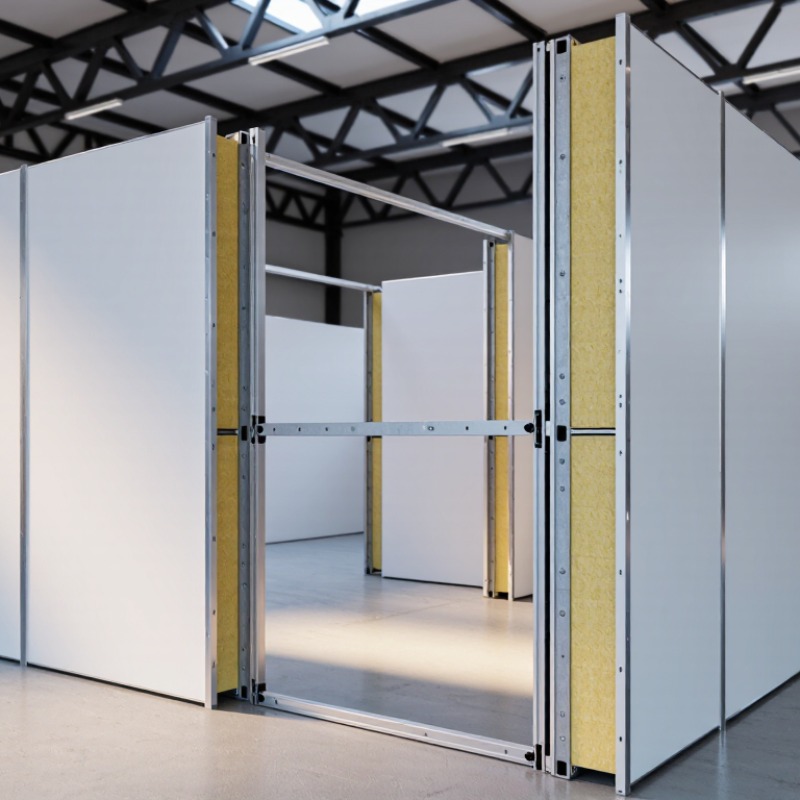
A non-aging foam sandwich panel is an insulated building component designed to retain its thermal and structural performance over time. It usually contains a rigid foam core, such as PIR, PUR, EPS, or XPS, between two protective metal skins. The phrase “non-aging” does not mean permanent. It means the panel resists serious loss of insulation, shape, and bonding under normal service conditions.
EN 14509 testing evaluates key properties, including thermal resistance, dimensional stability, and fire behavior.
This matters because buildings consume roughly 30% of global final energy, according to the International Energy Agency’s Buildings report. The 2023 UNEP Global Status Report also links buildings and construction with about 37% of global energy-related emissions.
A stable foam core can reduce heat transfer through walls and roofs. In practical inspections, however, damaged joints often cause more trouble than the panel itself. Water entry, poor cutting, and exposed edges can weaken long-term performance. Small mistakes matter.
A foam sandwich panel combines a low-conductivity core with protective surface layers. The core usually uses closed-cell polyurethane or polyisocyanurate foam. Its small cells slow heat transfer and limit moisture movement.
This matters because buildings accounted for about 30% of global final energy use in 2022, according to the International Energy Agency.
The surface layers do more than provide appearance. Coated steel or aluminum skins resist impact, vapor entry, and daily temperature changes. Adhesive bonding must remain continuous, especially around panel edges and fasteners. Poor joints can waste the core’s thermal performance. They can also create cold bridges and hidden condensation.
Small details matter.
A “non-aging” claim needs careful interpretation. Foam performance can remain stable when density, cell structure, and moisture resistance are properly controlled. However, ultraviolet exposure, fire, chemicals, and repeated thermal movement still affect the outer layers.
The 2023 Global Status Report for Buildings and Construction links buildings to roughly 34% of global energy demand, reinforcing the value of durable insulation design.
Yet laboratory results do not perfectly represent a dusty roof or a careless installation. That is the uncomfortable part. Designers should review tested thermal aging, fire classification, water absorption, and joint performance before selection.
Why Choose Non-Aging Foam Sandwich Panel?
Why Non-Aging Foam Preserves Long-Term Performance
Non-aging foam is not a promise of immortality. It describes a core designed to resist structural change over time. Its closed-cell structure limits moisture absorption and helps maintain insulation performance. Stable density also reduces the risk of uneven movement between the panel skins.
On active building sites, this stability matters. Panels face daily temperature swings, transport vibration, humidity, and repeated heating. A well-made foam core can reduce shrinkage, warping, and thermal bridging. Rooms stay more comfortable, while cooling and heating systems work with less strain. The surface remains firm under normal handling.
Details matter.
However, “non-aging” should never replace proper verification. Performance depends on foam chemistry, production quality, joint design, and installation conditions. Poor sealing can allow water into panel connections, even when the core resists moisture. Direct sunlight can also damage exposed surfaces if protective layers are missing.
Reliable selection requires more than a product label. Check independent test data for thermal conductivity, dimensional stability, water absorption, and fire behavior. Review results after accelerated aging, not only fresh samples. In practice, installers should protect cut edges, keep panels dry, and follow the specified fastening pattern. Small mistakes can weaken long-term results. That part is often underestimated.
Why Non-Aging Foam Preserves Long-Term Thermal Performance
Lower thermal conductivity means better insulation efficiency at the same thickness. Closed-cell polyurethane and polyisocyanurate foams typically provide lower thermal conductivity than many conventional insulation materials. Their low moisture uptake and stable cell structure can help reduce long-term performance loss, although actual results depend on formulation, installation quality, temperature, and service conditions.
Representative, non-branded thermal conductivity values at approximately 10°C, expressed in W/m·K. Actual declared values vary by product and applicable standard.
A non-aging foam sandwich panel can help maintain insulation performance over many service years. Its rigid foam core limits heat transfer, while sealed panel joints reduce unwanted air leakage. The International Energy Agency reports that buildings consume about 30% of global final energy. Better envelope insulation remains a practical efficiency measure. Still, “non-aging” should not mean maintenance-free. Moisture, ultraviolet exposure, and poor installation can reduce real-world performance.
Strength matters beyond the laboratory. A bonded foam core transfers loads between the outer metal skins, creating a lightweight composite panel. Under EN 14509 assessment, manufacturers evaluate thermal, mechanical, fire, and durability performance. Actual capacity depends on core density, skin thickness, span, fasteners, and wind conditions. Small design errors can become expensive.
Durability is visible at the jobsite. Properly protected edges resist water entry, and stable joints help prevent drafts around cold rooms or industrial walls. In practice, installers should inspect screw tension, sealant continuity, and panel alignment. The U.S. Department of Energy notes that air sealing and insulation work together to improve building efficiency. That relationship is easy to overlook. Selecting a panel only by its advertised thermal value can be misleading; verified test data, installation records, and periodic inspections provide stronger evidence of long-term reliability.
Non-aging foam sandwich panels are widely used where stable insulation matters over many years. Cold rooms, freezer warehouses, and food processing areas often use them for walls and ceilings. Their rigid foam core helps reduce heat transfer. This supports more consistent indoor temperatures and can lower refrigeration demand.
In practice, installers value the panels’ clean surfaces and quick assembly. Fewer joints can also simplify routine cleaning.
These panels are common in logistics centers, industrial workshops, agricultural buildings, and temperature-controlled storage rooms. They suit wall and roof systems that need lightweight construction with reliable thermal performance. Some facilities use them in clean production spaces because sealed panel surfaces can limit dust collection. Portable buildings and site offices may also benefit from their fast installation. The fit matters.
Project conditions still require careful review. Humidity, fire requirements, impact risks, and panel joint design can affect service life. A panel described as non-aging is not maintenance-free. Damaged coatings, open seams, or poor drainage may reduce performance. I have seen small installation details create large comfort problems later. That lesson is easy to overlook.
For refrigerated spaces, designers should check the required temperature range and vapor control. For workshops, they should consider noise, loading, and wall protection.
Choosing the right core, thickness, and fastening method depends on the building’s location and use. Practical inspection remains important, even with durable materials.
We use cookies on our website to give you an improved browser experience. View our Privacy Policy for more information. Please make your selection to opt in or out of ALL cookies here: Accept or Decline
Do you consent to the use of ALL cookies?
901 2nd Court West
Birmingham, AL 35204
Sales: 866.481.4036
Logistics/Ops: 866.481.4036
2101 Dralle Road
University Park, IL 60466
Sales: 708.813.9070
Logistics/Ops: 708.235.4200
400 E. 13th Street
Little Rock, AR 72114
Sales: 866.760.5344
Logistics/Ops: 866.760.5344
225 Collins Road
Elkhart, IN 46515
Sales: 574.295.0214
Logistics/Ops: 574.607.4611
601 Berryman Pike
Tipton, IN 46072
Sales: 800.897.7591
Logistics/Ops: 800.897.7591
3900 Uvalda Street
Denver, CO 80239
Sales: 303.706.8000
Ops/Logistics: 303.576.8398
510 3rd Street E
Milan, IL 61264
Sales: 800.322.1052
Logistics/Ops: 800.322.1052
1660 E. Aurora
Des Moines, IA 50313
Sales: 800.671.1660
Logistics: 800.671.1660
86554 Gene Lasserre Blvd.
Yulee, FL 32097
Sales: 904.253.3060
Logistics/Ops: 904.225.3000
694 S.E. County Road 245
Lake City, FL 32025
Sales: 800.727.6706
Logistics/Ops: 386.752.7412
210 Neptune Road
Auburndale, FL 33823
Sales: 863.967.1131
Logistics/Ops: 863.777.9814
4601 McCoy Drive
Pensacola, FL 32503
Sales: 850.308.7030
Logistics/Ops: 850.434.5502
815 South 56th Street
Tampa, FL 33619
Sales: 813.302.1940
Logistics/Ops: 813.621.1352
200 Hosea Road
Lawrenceville, GA 30046
Sales: 770.953.7575
Logistics/Ops: 770.513.6000
Branch Product Guide
Branch Line Card
Moulding Offering
Cedar Offering
Column Offering
8173 Hwy. 165 North
Monroe, LA 71211
Sales: 800.256.4165
Logistics/Ops: 800.256.4165
508 Warren Avenue
Portland, ME 04103
Sales: 207.888.2331
Logistics/Ops: 207.797.6565
4300 Georgia Pacific Blvd.
Frederick, MD 21704
Sales: 301.798.7474
Logistics/Ops: 301.874.8000
419 Maple Street
Bellingham, MA 02019
Sales: 508.449.0535
Logistics/Ops: 508.966.5500
825 Buchanan Ave SW
Grand Rapids, MI 49507
Sales: 877.800.1180
Logistics/Ops: 616.278.0909
995 Pacific St. NW
Aitkin, MN 56431
Sales: 800.432.3727
Logistics/Ops: 218.212.7770
1102 Port Terminal Drive
Duluth, MN 55802
Sales: 800.951.9899
Logistics/Ops: 800.851.9899
9110 83rd Ave. North
Brooklyn Park, MN 55445
Sales: 763.425.0204
Logistics/Ops: 763.425.0204
910 E. Railroad Street
Long Beach, MS 39560
Sales: 866.535.4135
Logistics/Ops: 228.205.2400
1727 Warren Street
North Kansas City, MO 64116
Sales: 800.621.2611
Logistics/Ops: 800.621.2611
2123 North Golden
Springfield, MO 65803
Sales: 800.375.7891
Logistics/Ops: 800.375.7891
13860 Corp. Woods Trail
Bridgeton, MO 63044
Sales: 314.209.0800
Logistics/Ops: 314.209.0800
1109 South 19th Street
Omaha, NE 68108
Sales: 800.489.6637
Logistics/Ops: 800.489.6637
1 Luger Road
Denville, NJ 07834
Sales: 973-339-3539
Logistics/Ops: 973.625.1461
3720 Jeffrey Blvd.
Blasdell, NY 14219
Sales: 716.235.5989
Logistics/Ops: 716.825.6557
319 Yaphank Ave.
Yaphank, NY 11980
Sales: 631.358.5714
Logistics/Ops: 631.924.7401
3300 Parkside Drive
Charlotte, NC 28208
Sales: 800.839.2588
Logistics/Ops: 704.394.3172
1712 East D Street
Butner, NC 27509
Sales: 984.389.8200
Logistics/Ops: 919.575.3700
128 Foothills Drive
Statesville, NC 28687
Sales: 800.222.1414
Logistics/Ops: 704.394.3172
550 Munroe Falls Rd.
Tallmadge, OH 44278
Sales: 330.357.4506
Logistics/Ops: 330.794.1141
10347 Toebben Dr.
Independence, KY 41051
Sales: 859.298.3926
Logistics/Ops: 859.746.2250
450 N. MacArthur
Oklahoma City, OK 73127
Sales: 800.375.6025
Logistics/Ops: 800.375.6025
1680 North Aspen
Broken Arrow, OK 74012
Sales: 918.272.2212
Logistics/Ops: 918.272.2212
522 Bridge Street
Hunker, PA 15639
Sales: 878.217.2001
Logistics/Ops: 724.925.7285
4290 Atlanta Street
Charleston, SC 29418
Sales: 843.371.1420
Logistics/Ops: 843.554.8192
1040 S. Industrial Dr.
Erwin, TN 37650
Sales: 423.641.1005
Logistics/Ops: 423.742.5911
4287 Pilot Drive
Memphis, TN 38118
Sales: 901.365.2101
Logistics/Ops: 901.365.2101
700 Myatt Drive
Madison, TN 37115
Sales: 615.327.9547
Logistics/Ops: 629.777.4949
4747 Mark IV Parkway
Fort Worth, TX 76106
Sales: 866.323.5117
Logistics/Ops: 817.625.9091
6990 Market Avenue
El Paso, TX 79915
Sales: 915.778.6356
Logistics/Ops: 915.265.7200
2502 Wilson Road
Harlingen, TX 78552
Sales: 800.580.6711
Logistics/Ops: 800.580.6711
10,000 North Loop East
Houston, TX 77029
Sales: 713.921.1977
Logistics/Ops: 713.675.3544
702 East 44th St.
Lubbock, TX 79404
Sales: 866.454.6010
Logistics/Ops: 866.454.6010
535 N. WW White Road
San Antonio, TX 78219
Sales: 800.284.0488
Logistics/Ops: 210.333.8112
142 Pine Haven Shores Rd.
Shelburne, VT 05482
Sales: 802.800.2540
Logistics/Ops: 802.985.2512
4700 Bethlehem Road,
Richmond, VA 23230
Sales: 804.201.2400
Logistics/Ops: 804.342.1161
4516 N Barker Road
Spokane Valley, WA 99027
Phone: 509.892.9420
Toll free: 800.728.6157
8365 N. 76th Street
Milwaukee, WI 53223
Sales: 800.356.9245
Logistics/Ops: 800.356.9245
312 S. Chester Street
Sparta, WI 54656
Sales: 800.362.5864
Logistics/Ops: 800.362.5864
899 Grossman Drive
Schofield, WI 54476
Sales: 800.472.0017
Logistics/Ops: 800.472.0017
