We use cookies on our website to give you an improved browser experience. View our Privacy Policy for more information. Please make your selection to opt in or out of ALL cookies here: Accept or Decline
Building materials shape nearly every street, bridge, home, and industrial facility worldwide. Their importance is practical, economic, and environmental. Concrete carries foundations. Steel spans airports. Glass controls daylight, while timber adds warmth and structural flexibility.
The scale is enormous. The U.S. Geological Survey estimated global cement production at about 4.1 billion metric tons in 2023. World Steel Association data reported approximately 1.89 billion tonnes of crude steel production during the same year. These figures reveal why material selection affects supply chains, project costs, and carbon emissions. The 2023 UNEP Global Status Report for Buildings and Construction found that buildings and construction generated about 37% of global energy-related and process carbon dioxide emissions in 2022. The number is difficult to ignore.
This guide explores ten widely used building materials, including concrete, steel, timber, brick, glass, aluminum, gypsum, asphalt, natural stone, and engineered composites. It considers availability, performance, durability, cost, recyclability, and common applications. However, no universal ranking is completely objective. A material abundant in Asia may be expensive in a remote island market. A low-carbon product may still travel thousands of kilometers. Data also varies between countries and reporting systems. That is a weakness worth admitting.
Reliable comparisons require more than production volume. They require engineering evidence, lifecycle assessments, manufacturer disclosures, and on-site experience. Readers should treat this list as a practical global overview, not a final specification. Building decisions still depend on climate, codes, design loads, skilled labor, and maintenance realities. Sometimes, the simplest material performs best.
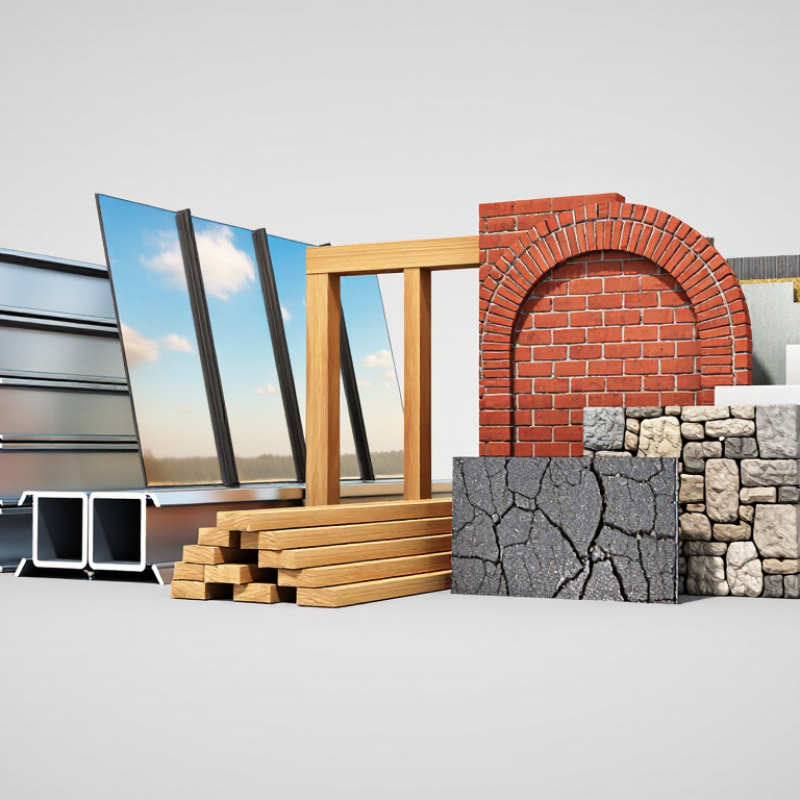
Defining the World’s Most Important Building Materials requires more than counting sales. A material matters when it supports homes, bridges, factories, and daily infrastructure.
Concrete remains the leading candidate. The Global Cement and Concrete Association estimates that around 30 billion tonnes of concrete are produced annually. Cement production also creates roughly 7% of global carbon dioxide emissions, according to the International Energy Agency.
Steel follows closely. World Steel Association data records about 1.9 billion tonnes of crude steel production in 2023. It provides strength for frames, reinforcement, pipes, and transport structures.
The wider list includes timber, fired brick, aluminum, glass, gypsum, insulation, asphalt, and natural stone.
Timber remains important because it stores carbon during use, although responsible forestry is essential. The FAO’s Global Forest Resources Assessment 2020 reported approximately 4 billion cubic metres of annual wood removals worldwide.
Glass brings daylight into buildings, while insulation reduces heating and cooling demand. Asphalt shapes roads and roofs. Gypsum supports fast interior construction, but moisture can damage it.
Brick is durable, though firing requires substantial energy. Aluminum is lightweight and recyclable, yet primary production remains electricity-intensive. Natural stone offers long service life, but quarrying can disturb landscapes.
This ranking is imperfect. Regional climate, labor skills, transport costs, and building codes change the order. A material can be globally important and locally unsuitable.
The UNEP Global Status Report for Buildings and Construction links the sector to about 37% of global energy and process-related emissions, reminding designers to judge materials across their full life cycle, not only at purchase.
Concrete sits at the center of the global building-materials story. It supports roads, bridges, homes, ports, and water systems. The Global Cement and Concrete Association estimates that around 14 billion cubic metres of concrete are used worldwide each year. That volume makes concrete one of the most widely consumed materials on Earth, alongside water. Its strength comes from a simple combination: cement binds sand and stone into a moldable mass. Engineers can shape it around steel reinforcement, creating beams that resist heavy loads and harsh weather.
The record is not entirely comfortable. The International Energy Agency reports that cement production creates roughly 7% of global energy-related and process carbon dioxide emissions. The United Nations Environment Programme also identifies buildings and construction as major sources of global emissions. Concrete lasts for decades, but its raw materials require quarrying, transport, and high-temperature processing. That trade-off deserves more attention. In practical site work, small design choices matter. Accurate batching reduces waste. Longer service life reduces replacement demand. Reusing crushed concrete can limit new aggregate extraction, although quality control remains essential. I may be too quick to call concrete the perfect foundation. It is reliable, familiar, and remarkably adaptable, yet its future depends on lower-carbon production and more disciplined construction.eriwa
What Are the Top 10 Building Materials Worldwide?
Across global construction, concrete, steel, timber, brick, stone, glass, aluminum, gypsum, bamboo, and composite materials remain widely used. Each serves a different purpose. Yet steel and timber continue to shape reliable structural systems.
Steel offers high strength with relatively slender sections. It supports long spans in bridges, warehouses, towers, and public buildings. Its predictable properties help engineers calculate loads with confidence. Steel frames can also be prefabricated, reducing site work and improving dimensional accuracy. However, corrosion protection requires regular inspection, especially in humid or coastal environments. Fire protection adds cost and planning.
Timber brings a different advantage. It is lightweight, renewable when responsibly sourced, and easier to handle on site. Engineered timber products can form beams, floors, and entire structural frames. Their warm surface also improves interior character. Still, timber is not automatically sustainable. Poor sourcing, moisture, insects, and weak detailing can shorten its service life. I have seen small water leaks become expensive structural problems. Material selection must follow local climate, building codes, fire requirements, and expected maintenance.
Tips: Check moisture levels before enclosing timber. Protect exposed steel edges. Request verified material documentation. Review connections, not only the main members. A strong design can fail through a careless joint. That point deserves more attention.
This chart compares representative material densities for ten widely used building materials. Actual values vary according to composition, moisture content, manufacturing method, and grade.
Why steel and timber remain essential: Steel provides exceptional strength, durability, and long-span performance, while timber offers low weight, renewable sourcing potential, and efficient structural performance.
Reference basis: representative engineering values commonly used in building-material specifications; density is measured in kilograms per cubic metre.
What Are the Top 10 Building Materials Worldwide?
The Roles of Brick, Stone, Glass, and Aluminum in Buildings
Across the world, ten materials appear repeatedly: concrete, steel, brick, stone, timber, glass, aluminum, earth, gypsum, and asphalt. Each solves a different building problem. In practice, engineers consider climate, structure, labor, maintenance, and local supply. A coastal wall needs stronger moisture protection than one in a dry inland region. Brick remains dependable because fired clay resists rain, stores heat, and allows small-area repairs. Its mortar joints still require careful detailing. Poor drainage can damage a well-built brick facade.
Stone offers high durability and a strong visual presence. Granite may suit heavy exterior use, while limestone often needs greater weather protection. Stone can also carry a high transport impact. Local sourcing matters. Glass brings daylight into offices, homes, and public buildings. Modern insulated units reduce heat transfer, but large panes can increase cooling loads. Shading is essential. A bright room is not always an efficient room.
Aluminum provides lightweight frames, corrosion resistance, and design flexibility. It supports large glass openings without massive structural sections. Yet production can require substantial energy, so recycled content and responsible sourcing deserve attention. These materials work best as a system, not as isolated choices. Brick may protect the wall, stone may anchor the entrance, glass may serve the interior, and aluminum may hold the edges together. The details decide performance. Designers sometimes chase appearance first. That choice deserves more scrutiny.
Across global construction, ten materials remain widely used: concrete, steel, timber, brick, glass, aluminum, gypsum, asphalt, stone, and earth. Their order changes by region, climate, and building type. Sustainability now measures more than recycled content. It examines extraction, transport, service life, repair, and end-of-life recovery.
Concrete still provides strong foundations, but cement production creates significant emissions. Lower-carbon mixtures can replace part of the cement with industrial mineral additives. Steel can perform better when recycled content and efficient electric production are available. Timber stores carbon during growth, though responsible forestry and moisture control are essential. Small design choices matter.
Brick, stone, and earth can last for decades when local conditions suit them. Glass improves daylight but may increase cooling demand. Aluminum is light and highly recyclable, yet primary production requires substantial energy. Gypsum can support material recovery when buildings are carefully dismantled. Asphalt roads increasingly include reclaimed pavement, while improved insulation reduces heating and cooling loads.
Real project experience reveals uncomfortable limits. A recycled material is not automatically sustainable if it travels thousands of kilometers. A durable product may still perform poorly when repairs are impossible. Designers must compare whole-life impacts, not isolated claims. Data can also be incomplete. This makes transparent environmental declarations, local sourcing records, and independent assessments increasingly important. Better buildings may come from fewer materials, used longer, and maintained properly.
| Rank | Building Material | Typical Global Applications | Key Performance Strength | Typical Recycled or Renewable Content | Indicative Embodied Carbon Range | Sustainability Direction |
|---|---|---|---|---|---|---|
| 1 | Concrete | Foundations, structural frames, floors, bridges, roads and dams | High compressive strength, fire resistance and broad availability | Usually 0–30% supplementary cementitious materials; recycled aggregate can partially replace virgin aggregate | 約 100–300 kg CO₂e/m³ | Lower-clinker cement, supplementary cementitious materials, optimized mix designs, recycled aggregates and carbon capture |
| 2 | Steel | Structural frames, reinforcement, roofing, façades and infrastructure | Very high strength-to-weight ratio, ductility and reliable prefabrication | Typically 10–100%, depending on production route and scrap availability | 約 0.6–2.3 t CO₂e/t | Electric-arc-furnace production, higher scrap use, renewable electricity and hydrogen-based primary steelmaking |
| 3 | Fired Brick and Masonry | Load-bearing walls, partitions, façades, pavements and landscaping | Durability, fire resistance, thermal mass and modular construction | Usually 0–15% recycled mineral content; some products incorporate industrial or agricultural residues | 約 150–400 kg CO₂e/t | Efficient kilns, alternative fuels, lower-temperature production, lightweight units and design for reuse |
| 4 | Timber | Residential structures, roofs, floors, interiors and engineered wood systems | Low density, renewable feedstock, easy machining and strong prefabrication potential | Renewable by origin when sourced from responsibly managed forests; recycled content varies by product | 约 50–500 kg CO₂e/t before biogenic-carbon accounting | Certified responsible forestry, longer service life, reuse, engineered wood and design for disassembly |
| 5 | Glass | Windows, curtain walls, skylights, façades, doors and interior partitions | Transparency, weather resistance, recyclability and strong daylighting potential | Commonly 10–60% recycled glass cullet, depending on product and region | 約 800–1,200 kg CO₂e/t | Higher cullet use, lighter glazing, electric or hydrogen-ready furnaces and improved building energy performance |
| 6 | Aluminum | Window frames, façades, roofing, doors and lightweight structural components | Low weight, corrosion resistance, formability and excellent recyclability | Recycled content often ranges from 20–80%; remelting requires far less energy than primary production | 约 0.5–16 t CO₂e/t | More recycled aluminum, renewable electricity, inert-anode technology and product reuse |
| 7 | Gypsum Board and Plaster | Interior partitions, ceilings, wall linings and fire-protection systems | Lightweight, fire resistant, fast to install and suitable for interior finishing | Often 5–30% recycled gypsum or paper; closed-loop recovery is growing in some markets | 约 200–400 kg CO₂e/t | Recycled gypsum, lower-energy manufacturing, reduced waste and take-back systems for clean offcuts |
| 8 | Asphalt and Bituminous Pavement | Roads, parking areas, waterproofing membranes and roof systems | Water resistance, flexible performance, rapid installation and high reusability | Reclaimed asphalt pavement can commonly replace 10–50% of new mix, with higher rates possible | 约 30–100 kg CO₂e/t | Warm-mix technologies, higher reclaimed asphalt content, bio-based binders and longer pavement life |
| 9 | Thermal Insulation Materials | Walls, roofs, floors, HVAC systems and industrial building envelopes | Reduces operational energy demand and improves indoor thermal comfort | Varies widely: mineral wool may include recycled mineral feedstock, while cellulose can exceed 80% recycled paper | 约 1–8 kg CO₂e/m² for a 100 mm layer | Bio-based fibers, recycled feedstocks, lower-impact blowing agents and design for recovery and reuse |
| 10 | Bamboo | Flooring, screens, panels, scaffolding, furniture and selected structural systems | Fast growth, low density, good tensile performance and renewable availability | Renewable feedstock; recycled content is generally limited, while responsible cultivation is essential | 约 100–400 kg CO₂e/t before biogenic-carbon accounting | Engineered bamboo, responsible harvesting, formal durability testing, low-emission adhesives and local sourcing |
We use cookies on our website to give you an improved browser experience. View our Privacy Policy for more information. Please make your selection to opt in or out of ALL cookies here: Accept or Decline
Do you consent to the use of ALL cookies?
901 2nd Court West
Birmingham, AL 35204
Sales: 866.481.4036
Logistics/Ops: 866.481.4036
2101 Dralle Road
University Park, IL 60466
Sales: 708.813.9070
Logistics/Ops: 708.235.4200
400 E. 13th Street
Little Rock, AR 72114
Sales: 866.760.5344
Logistics/Ops: 866.760.5344
225 Collins Road
Elkhart, IN 46515
Sales: 574.295.0214
Logistics/Ops: 574.607.4611
601 Berryman Pike
Tipton, IN 46072
Sales: 800.897.7591
Logistics/Ops: 800.897.7591
3900 Uvalda Street
Denver, CO 80239
Sales: 303.706.8000
Ops/Logistics: 303.576.8398
510 3rd Street E
Milan, IL 61264
Sales: 800.322.1052
Logistics/Ops: 800.322.1052
1660 E. Aurora
Des Moines, IA 50313
Sales: 800.671.1660
Logistics: 800.671.1660
86554 Gene Lasserre Blvd.
Yulee, FL 32097
Sales: 904.253.3060
Logistics/Ops: 904.225.3000
694 S.E. County Road 245
Lake City, FL 32025
Sales: 800.727.6706
Logistics/Ops: 386.752.7412
210 Neptune Road
Auburndale, FL 33823
Sales: 863.967.1131
Logistics/Ops: 863.777.9814
4601 McCoy Drive
Pensacola, FL 32503
Sales: 850.308.7030
Logistics/Ops: 850.434.5502
815 South 56th Street
Tampa, FL 33619
Sales: 813.302.1940
Logistics/Ops: 813.621.1352
200 Hosea Road
Lawrenceville, GA 30046
Sales: 770.953.7575
Logistics/Ops: 770.513.6000
Branch Product Guide
Branch Line Card
Moulding Offering
Cedar Offering
Column Offering
8173 Hwy. 165 North
Monroe, LA 71211
Sales: 800.256.4165
Logistics/Ops: 800.256.4165
508 Warren Avenue
Portland, ME 04103
Sales: 207.888.2331
Logistics/Ops: 207.797.6565
4300 Georgia Pacific Blvd.
Frederick, MD 21704
Sales: 301.798.7474
Logistics/Ops: 301.874.8000
419 Maple Street
Bellingham, MA 02019
Sales: 508.449.0535
Logistics/Ops: 508.966.5500
825 Buchanan Ave SW
Grand Rapids, MI 49507
Sales: 877.800.1180
Logistics/Ops: 616.278.0909
995 Pacific St. NW
Aitkin, MN 56431
Sales: 800.432.3727
Logistics/Ops: 218.212.7770
1102 Port Terminal Drive
Duluth, MN 55802
Sales: 800.951.9899
Logistics/Ops: 800.851.9899
9110 83rd Ave. North
Brooklyn Park, MN 55445
Sales: 763.425.0204
Logistics/Ops: 763.425.0204
910 E. Railroad Street
Long Beach, MS 39560
Sales: 866.535.4135
Logistics/Ops: 228.205.2400
1727 Warren Street
North Kansas City, MO 64116
Sales: 800.621.2611
Logistics/Ops: 800.621.2611
2123 North Golden
Springfield, MO 65803
Sales: 800.375.7891
Logistics/Ops: 800.375.7891
13860 Corp. Woods Trail
Bridgeton, MO 63044
Sales: 314.209.0800
Logistics/Ops: 314.209.0800
1109 South 19th Street
Omaha, NE 68108
Sales: 800.489.6637
Logistics/Ops: 800.489.6637
1 Luger Road
Denville, NJ 07834
Sales: 973-339-3539
Logistics/Ops: 973.625.1461
3720 Jeffrey Blvd.
Blasdell, NY 14219
Sales: 716.235.5989
Logistics/Ops: 716.825.6557
319 Yaphank Ave.
Yaphank, NY 11980
Sales: 631.358.5714
Logistics/Ops: 631.924.7401
3300 Parkside Drive
Charlotte, NC 28208
Sales: 800.839.2588
Logistics/Ops: 704.394.3172
1712 East D Street
Butner, NC 27509
Sales: 984.389.8200
Logistics/Ops: 919.575.3700
128 Foothills Drive
Statesville, NC 28687
Sales: 800.222.1414
Logistics/Ops: 704.394.3172
550 Munroe Falls Rd.
Tallmadge, OH 44278
Sales: 330.357.4506
Logistics/Ops: 330.794.1141
10347 Toebben Dr.
Independence, KY 41051
Sales: 859.298.3926
Logistics/Ops: 859.746.2250
450 N. MacArthur
Oklahoma City, OK 73127
Sales: 800.375.6025
Logistics/Ops: 800.375.6025
1680 North Aspen
Broken Arrow, OK 74012
Sales: 918.272.2212
Logistics/Ops: 918.272.2212
522 Bridge Street
Hunker, PA 15639
Sales: 878.217.2001
Logistics/Ops: 724.925.7285
4290 Atlanta Street
Charleston, SC 29418
Sales: 843.371.1420
Logistics/Ops: 843.554.8192
1040 S. Industrial Dr.
Erwin, TN 37650
Sales: 423.641.1005
Logistics/Ops: 423.742.5911
4287 Pilot Drive
Memphis, TN 38118
Sales: 901.365.2101
Logistics/Ops: 901.365.2101
700 Myatt Drive
Madison, TN 37115
Sales: 615.327.9547
Logistics/Ops: 629.777.4949
4747 Mark IV Parkway
Fort Worth, TX 76106
Sales: 866.323.5117
Logistics/Ops: 817.625.9091
6990 Market Avenue
El Paso, TX 79915
Sales: 915.778.6356
Logistics/Ops: 915.265.7200
2502 Wilson Road
Harlingen, TX 78552
Sales: 800.580.6711
Logistics/Ops: 800.580.6711
10,000 North Loop East
Houston, TX 77029
Sales: 713.921.1977
Logistics/Ops: 713.675.3544
702 East 44th St.
Lubbock, TX 79404
Sales: 866.454.6010
Logistics/Ops: 866.454.6010
535 N. WW White Road
San Antonio, TX 78219
Sales: 800.284.0488
Logistics/Ops: 210.333.8112
142 Pine Haven Shores Rd.
Shelburne, VT 05482
Sales: 802.800.2540
Logistics/Ops: 802.985.2512
4700 Bethlehem Road,
Richmond, VA 23230
Sales: 804.201.2400
Logistics/Ops: 804.342.1161
4516 N Barker Road
Spokane Valley, WA 99027
Phone: 509.892.9420
Toll free: 800.728.6157
8365 N. 76th Street
Milwaukee, WI 53223
Sales: 800.356.9245
Logistics/Ops: 800.356.9245
312 S. Chester Street
Sparta, WI 54656
Sales: 800.362.5864
Logistics/Ops: 800.362.5864
899 Grossman Drive
Schofield, WI 54476
Sales: 800.472.0017
Logistics/Ops: 800.472.0017