We use cookies on our website to give you an improved browser experience. View our Privacy Policy for more information. Please make your selection to opt in or out of ALL cookies here: Accept or Decline
Choosing the best lumber store in China requires more than comparing online prices. Global buyers need consistent grades, accurate moisture data, secure packaging, and dependable export communication. A professional supplier should explain species, dimensions, tolerances, treatment options, and inspection procedures clearly. Photos are useful, but they are not proof.
Russ Taylor, president of Russ Taylor Global, has said, “Reliable supply is built on relationships, not price alone.” This principle fits the lumber store market well. A serious supplier should provide recent project references, product samples, mill information, and transparent shipping documents. Buyers should also confirm whether the store can handle container loading, labeling, fumigation requirements, and destination-specific paperwork.
The strongest candidates usually answer technical questions without hesitation. They show actual boards, not only polished catalog images. Look for straight grain, limited warping, clean edges, and moisture readings taken before shipment. Ask how rejected pieces are replaced. Ask who checks the order before loading.
There is no single best lumber store for every country. Construction timber, furniture stock, and outdoor decking require different standards. A supplier that excels at pine may not handle hardwood well. Our first shortlist may still be wrong. One low quotation can hide weak packaging or inconsistent grading.
This guide compares Chinese lumber stores through product quality, factory capability, communication, documentation, and after-sales support. The goal is practical confidence, not a perfect promise. Global buyers can then choose a supplier that fits their project, budget, and risk tolerance.
China’s lumber industry plays a practical role in global trade, linking imported timber with large-scale processing and export networks. Its manufacturers supply structural boards, furniture components, packaging wood, and customized panels to many markets. For global buyers, the best lumber store in China is rarely the one offering the lowest price. It is the supplier that combines clear specifications, stable production, and careful communication. Documents matter.
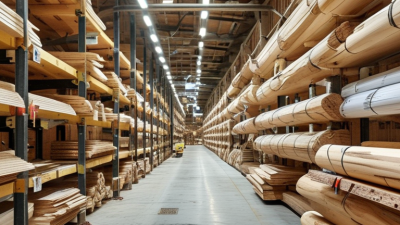
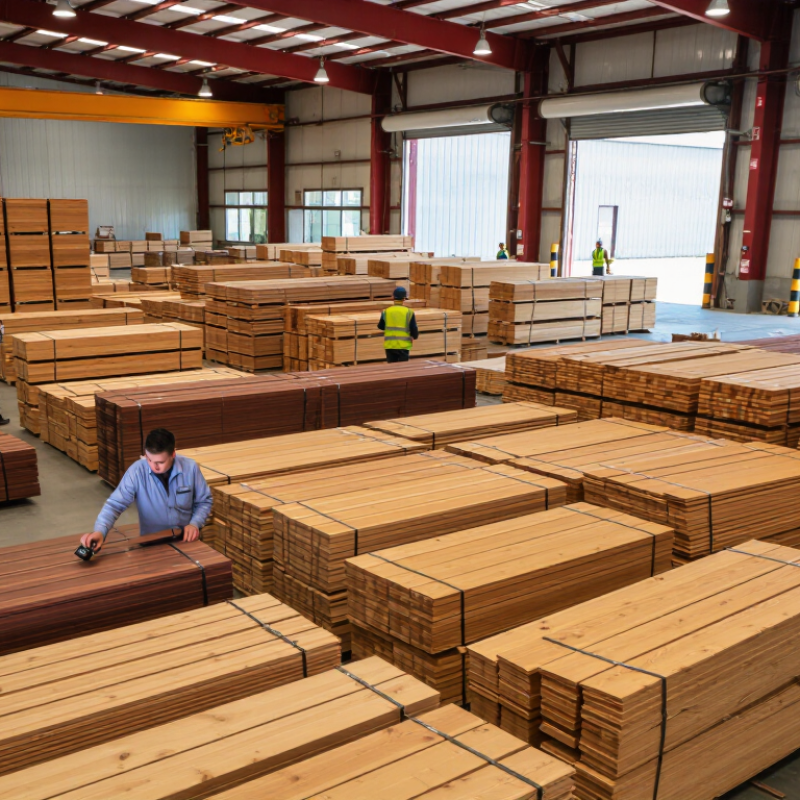
A reliable supplier should identify wood species, grade, moisture content, dimensions, and treatment status. Buyers should request kiln-drying records, inspection photos, and packing details before placing large orders. In a warehouse, boards should be stacked evenly, protected from rain, and separated by size. A moisture meter reading near the agreed range can prevent warping during shipping. The process sounds simple, but small gaps often create expensive problems. Some sellers present attractive samples, while later shipments vary slightly. Buyers should question that difference. That caution saves money.
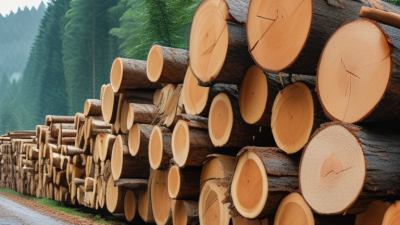
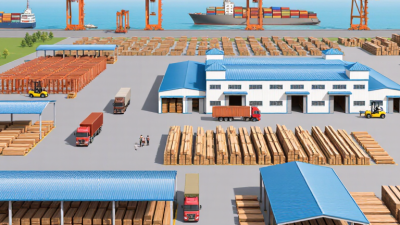
China also depends heavily on imported logs and international shipping conditions. Manufacturers convert these materials into products suited to regional building standards and customer designs. This industrial network supports competitive pricing, but it also faces changing freight costs, currency movements, and environmental requirements. A low quote may look efficient, yet it can hide weaker grading or thinner packaging. A strong supplier admits uncertainty. That honesty matters. My view remains imperfect because price, service, and material quality do not always align neatly. A thoughtful buyer should compare inspection evidence, not promises alone.
| Evaluation Dimension | Verified Industry Data or Buyer Requirement | Why It Matters to Global Buyers | Reference |
|---|---|---|---|
| China’s forest coverage | 24.02% in 2023 | Shows the scale of China’s forest resources while also highlighting the importance of responsible sourcing and verified origins. | National Forestry and Grassland Administration, China |
| Forest stock volume | Approximately 20.9 billion cubic metres in 2023 | Provides context for China’s domestic forestry capacity, although imported timber remains important for many industrial applications. | National Forestry and Grassland Administration, China |
| Primary international product code for sawn lumber | HS 4407: wood sawn or chipped lengthwise, sliced or peeled, generally exceeding 6 mm in thickness | A consistent HS classification helps buyers compare customs records, quotations, duties, and import documentation. | World Customs Organization Harmonized System |
| Primary international product code for logs | HS 4403: wood in the rough, whether or not stripped of bark or sapwood | Separates raw-log transactions from processed lumber and prevents inaccurate product comparisons. | World Customs Organization Harmonized System |
| Standard measurement system | China primarily quotes lumber dimensions in millimetres and volume in cubic metres. | Buyers should confirm actual finished dimensions rather than relying only on nominal sizes used in other markets. | International metric measurement practice |
| Volume conversion | 1 cubic metre equals approximately 423.776 board feet. | Supports accurate comparison between metric quotations and board-foot pricing used in North American markets. | Mathematical conversion: 1 m³ = 35.3147 ft³; 1 board foot = 1/12 ft³ |
| Moisture-content specification | Must be stated in the contract; kiln-dried lumber commonly falls within an application-specific range, often about 8%–19%. | Moisture affects weight, dimensional stability, mould risk, machining, and the suitability of lumber for construction or furniture. | Product specifications vary by species, grade, end use, and destination standard. |
| Common commercial species categories | Softwoods include pine, spruce, fir, larch, and cedar; hardwoods include oak, beech, ash, birch, and poplar. | Species determine density, strength, appearance, workability, durability, and final application. | FAO forestry product classifications and international timber trade practice |
| Grading information | A quotation should identify species, grade, knot limits, allowable defects, edge condition, and whether the grade is appearance or structural. | A grade name without a written defect standard is not sufficient for reliable international purchasing. | International lumber purchasing practice |
| Quality-control documents | Recommended documents include a commercial invoice, packing list, moisture report, dimensional inspection report, certificate of origin, and product photographs. | Documented inspection reduces disputes concerning quantity, dimensions, moisture, and visible defects. | International trade documentation practice |
| Plant-health compliance | Unprocessed wood may require a phytosanitary certificate, depending on the destination country and product condition. | Failure to meet quarantine requirements can cause inspection delays, treatment costs, re-export, or rejection. | International Plant Protection Convention and destination-country regulations |
| Wood packaging compliance | Wood pallets, crates, and dunnage used in international trade generally need to comply with ISPM 15 treatment and marking requirements. | Compliant packaging helps prevent border delays caused by insect or pathogen-control rules. | International Plant Protection Convention, ISPM 15 |
| Responsible-sourcing evidence | Buyers should request legal-origin records, harvesting information, chain-of-custody evidence where required, and species documentation. | Traceability supports import compliance, sustainability policies, and protection against illegally harvested timber. | FAO, national timber-legality systems, and destination-market regulations |
| Recommended supplier-selection score | Product consistency 30%; documentation 25%; quality control 20%; logistics capability 15%; price transparency 10%. | A weighted score prevents buyers from selecting a supplier based only on the lowest quoted price. | Practical procurement framework for international lumber sourcing |
| Best-store benchmark for global buyers | The strongest option is a supplier that provides stable grades, accurate dimensions, verified moisture content, traceable origin, export documentation, compliant packaging, and repeatable inspection results. | These measurable factors are more reliable than store size, advertising claims, or a single low-price quotation. | Buyer-oriented conclusion based on the criteria above |
A reliable lumber store should prove wood origin, grading, moisture control, and export experience. The FAO Global Forest Resources Assessment 2020 states that forests cover about 31% of global land. It also records 420 million hectares of forest loss between 1990 and 2020. These figures make traceability more than paperwork. Ask for harvest documents, chain-of-custody records, and clear species identification.
Request independent quality checks before placing a large order. A practical inspection includes moisture readings, board dimensions, knots, end cracks, and surface defects. For indoor applications, stable moisture levels matter greatly. The store should provide kiln-drying records and explain its grading rules in writing. Small details matter. Vague descriptions should slow your decision.
Logistics also deserve close attention. The World Bank’s Logistics Performance Index 2023 evaluates customs, infrastructure, shipment quality, and delivery reliability. Ask how the supplier protects bundles during container loading and handles damaged boards. Photos are useful, but they cannot replace random inspection. I would not trust unusually low prices without testing samples first. My own preference is a smaller trial shipment, even when the buyer feels confident. That choice costs more initially, yet it can expose inconsistent grading, weak packaging, or confusing export documents before a full purchase.
The best lumber store should prove quality, not merely display attractive boards. Ask for moisture readings, grading rules, thickness tolerance, and defect photos. For interior furniture, kiln-dried timber often needs roughly 8–12% moisture, depending on the destination climate. That range is useful, but not universal. Local humidity can change the result.
Species selection also matters. Radiata pine suits light construction and packaging. Oak and ash offer stronger visual appeal for furniture. Eucalyptus can provide useful hardness, but drying control is critical.
The FAO Global Forest Resources Assessment 2020 reports that forests cover about 31% of global land. This figure highlights the need for responsible sourcing, not unlimited harvesting. The ITTO’s market reports also show China remains a major tropical timber processing and trading hub. Buyers should examine origin documents carefully.
Tips: Request a small batch first. Check end splits, warping, odor, and actual moisture readings. Confirm FSC or PEFC chain-of-custody documentation when sustainability claims matter. These certificates support traceability, but they do not replace independent inspection. Ask whether packaging follows ISPM 15 requirements for international shipping. A professional store should provide consistent batch records and clear claims. One weakness remains: samples may look perfect while bulk stock varies. Third-party inspection is sometimes worth the extra cost.
Choosing the best lumber store in China for global buyers requires more than comparing prices. The right supplier should offer stable quality, clear export services, and responsive international support. Experienced exporters can explain wood species, grades, moisture levels, and available dimensions. Ask for recent product photos, inspection records, and physical samples before confirming a large order. Photos help, but samples remain more reliable. That matters.
Pricing should be transparent from the beginning. Request a written quotation showing product costs, packaging, inland transport, and shipping terms. Confirm whether the price changes with volume, timber grade, or seasonal supply. A low unit price may hide weak packaging or extra handling fees. Good suppliers also prepare commercial invoices, packing lists, and other standard export documents accurately. However, no supplier gets every shipment perfect. Small specification changes can still create delays or misunderstandings.
Tips: Compare three quotations, not just one. Check response times before placing an order. Ask how the supplier handles damage claims, production updates, and shipment tracking. Confirm pallet materials and container loading methods. Keep every measurement, tolerance, and finish requirement in writing. For international orders, discuss payment schedules and inspection arrangements early. A dependable support team should communicate clearly across time zones. It should also explain realistic lead times instead of promising impossible delivery dates. Mistakes happen, but honest updates make them easier to manage.
For global buyers, the best lumber store in China is not simply the one with the lowest quotation. It is the supplier that can prove consistent quality, legal sourcing, and export experience. The FAO Forestry Production and Trade database shows that global sawnwood production approaches 500 million cubic metres annually. That scale makes supplier verification essential. Request recent mill photos, production records, and references from similar overseas orders. A serious facility should show clear bundle labels, covered storage, and calibrated moisture meters. Visit the yard if possible. Wood can look excellent in photographs, unfortunately.
Product evaluation should begin with species, grade, dimensions, moisture content, and allowable defects. Ask for independent inspection reports and a sample batch before signing a large contract. ITTO market reviews consistently identify China as a major timber-importing and processing market, but market size does not guarantee every supplier’s reliability. Confirm the supplier’s legal-origin documents, traceability procedures, and phytosanitary readiness. For wooden packaging, verify compliance with ISPM 15 requirements. Certification can strengthen confidence, yet paperwork still needs checking against the actual shipment.
Commercial discipline matters as much as technical quality. Compare payment terms, replacement policies, loading methods, and container photos. Use a written tolerance for warping, cracks, stains, and moisture variation. A third-party inspection before shipment is usually cheaper than resolving damaged cargo overseas. Check whether the supplier can explain delays without vague promises. I would also test communication during a small trial order. My own evaluation would remain imperfect; one successful shipment proves little. Repeated performance, transparent records, and measurable acceptance criteria provide stronger evidence.
How Global Buyers Can Evaluate and Select a Supplier
This buyer evaluation framework assigns the greatest importance to lumber quality and consistency, followed by compliance, export capability, logistics, and communication. Buyers can use these criteria to compare suppliers objectively without relying only on price.
We use cookies on our website to give you an improved browser experience. View our Privacy Policy for more information. Please make your selection to opt in or out of ALL cookies here: Accept or Decline
Do you consent to the use of ALL cookies?
901 2nd Court West
Birmingham, AL 35204
Sales: 866.481.4036
Logistics/Ops: 866.481.4036
2101 Dralle Road
University Park, IL 60466
Sales: 708.813.9070
Logistics/Ops: 708.235.4200
400 E. 13th Street
Little Rock, AR 72114
Sales: 866.760.5344
Logistics/Ops: 866.760.5344
225 Collins Road
Elkhart, IN 46515
Sales: 574.295.0214
Logistics/Ops: 574.607.4611
601 Berryman Pike
Tipton, IN 46072
Sales: 800.897.7591
Logistics/Ops: 800.897.7591
3900 Uvalda Street
Denver, CO 80239
Sales: 303.706.8000
Ops/Logistics: 303.576.8398
510 3rd Street E
Milan, IL 61264
Sales: 800.322.1052
Logistics/Ops: 800.322.1052
1660 E. Aurora
Des Moines, IA 50313
Sales: 800.671.1660
Logistics: 800.671.1660
86554 Gene Lasserre Blvd.
Yulee, FL 32097
Sales: 904.253.3060
Logistics/Ops: 904.225.3000
694 S.E. County Road 245
Lake City, FL 32025
Sales: 800.727.6706
Logistics/Ops: 386.752.7412
210 Neptune Road
Auburndale, FL 33823
Sales: 863.967.1131
Logistics/Ops: 863.777.9814
4601 McCoy Drive
Pensacola, FL 32503
Sales: 850.308.7030
Logistics/Ops: 850.434.5502
815 South 56th Street
Tampa, FL 33619
Sales: 813.302.1940
Logistics/Ops: 813.621.1352
200 Hosea Road
Lawrenceville, GA 30046
Sales: 770.953.7575
Logistics/Ops: 770.513.6000
Branch Product Guide
Branch Line Card
Moulding Offering
Cedar Offering
Column Offering
8173 Hwy. 165 North
Monroe, LA 71211
Sales: 800.256.4165
Logistics/Ops: 800.256.4165
508 Warren Avenue
Portland, ME 04103
Sales: 207.888.2331
Logistics/Ops: 207.797.6565
4300 Georgia Pacific Blvd.
Frederick, MD 21704
Sales: 301.798.7474
Logistics/Ops: 301.874.8000
419 Maple Street
Bellingham, MA 02019
Sales: 508.449.0535
Logistics/Ops: 508.966.5500
825 Buchanan Ave SW
Grand Rapids, MI 49507
Sales: 877.800.1180
Logistics/Ops: 616.278.0909
995 Pacific St. NW
Aitkin, MN 56431
Sales: 800.432.3727
Logistics/Ops: 218.212.7770
1102 Port Terminal Drive
Duluth, MN 55802
Sales: 800.951.9899
Logistics/Ops: 800.851.9899
9110 83rd Ave. North
Brooklyn Park, MN 55445
Sales: 763.425.0204
Logistics/Ops: 763.425.0204
910 E. Railroad Street
Long Beach, MS 39560
Sales: 866.535.4135
Logistics/Ops: 228.205.2400
1727 Warren Street
North Kansas City, MO 64116
Sales: 800.621.2611
Logistics/Ops: 800.621.2611
2123 North Golden
Springfield, MO 65803
Sales: 800.375.7891
Logistics/Ops: 800.375.7891
13860 Corp. Woods Trail
Bridgeton, MO 63044
Sales: 314.209.0800
Logistics/Ops: 314.209.0800
1109 South 19th Street
Omaha, NE 68108
Sales: 800.489.6637
Logistics/Ops: 800.489.6637
1 Luger Road
Denville, NJ 07834
Sales: 973-339-3539
Logistics/Ops: 973.625.1461
3720 Jeffrey Blvd.
Blasdell, NY 14219
Sales: 716.235.5989
Logistics/Ops: 716.825.6557
319 Yaphank Ave.
Yaphank, NY 11980
Sales: 631.358.5714
Logistics/Ops: 631.924.7401
3300 Parkside Drive
Charlotte, NC 28208
Sales: 800.839.2588
Logistics/Ops: 704.394.3172
1712 East D Street
Butner, NC 27509
Sales: 984.389.8200
Logistics/Ops: 919.575.3700
128 Foothills Drive
Statesville, NC 28687
Sales: 800.222.1414
Logistics/Ops: 704.394.3172
550 Munroe Falls Rd.
Tallmadge, OH 44278
Sales: 330.357.4506
Logistics/Ops: 330.794.1141
10347 Toebben Dr.
Independence, KY 41051
Sales: 859.298.3926
Logistics/Ops: 859.746.2250
450 N. MacArthur
Oklahoma City, OK 73127
Sales: 800.375.6025
Logistics/Ops: 800.375.6025
1680 North Aspen
Broken Arrow, OK 74012
Sales: 918.272.2212
Logistics/Ops: 918.272.2212
522 Bridge Street
Hunker, PA 15639
Sales: 878.217.2001
Logistics/Ops: 724.925.7285
4290 Atlanta Street
Charleston, SC 29418
Sales: 843.371.1420
Logistics/Ops: 843.554.8192
1040 S. Industrial Dr.
Erwin, TN 37650
Sales: 423.641.1005
Logistics/Ops: 423.742.5911
4287 Pilot Drive
Memphis, TN 38118
Sales: 901.365.2101
Logistics/Ops: 901.365.2101
700 Myatt Drive
Madison, TN 37115
Sales: 615.327.9547
Logistics/Ops: 629.777.4949
4747 Mark IV Parkway
Fort Worth, TX 76106
Sales: 866.323.5117
Logistics/Ops: 817.625.9091
6990 Market Avenue
El Paso, TX 79915
Sales: 915.778.6356
Logistics/Ops: 915.265.7200
2502 Wilson Road
Harlingen, TX 78552
Sales: 800.580.6711
Logistics/Ops: 800.580.6711
10,000 North Loop East
Houston, TX 77029
Sales: 713.921.1977
Logistics/Ops: 713.675.3544
702 East 44th St.
Lubbock, TX 79404
Sales: 866.454.6010
Logistics/Ops: 866.454.6010
535 N. WW White Road
San Antonio, TX 78219
Sales: 800.284.0488
Logistics/Ops: 210.333.8112
142 Pine Haven Shores Rd.
Shelburne, VT 05482
Sales: 802.800.2540
Logistics/Ops: 802.985.2512
4700 Bethlehem Road,
Richmond, VA 23230
Sales: 804.201.2400
Logistics/Ops: 804.342.1161
4516 N Barker Road
Spokane Valley, WA 99027
Phone: 509.892.9420
Toll free: 800.728.6157
8365 N. 76th Street
Milwaukee, WI 53223
Sales: 800.356.9245
Logistics/Ops: 800.356.9245
312 S. Chester Street
Sparta, WI 54656
Sales: 800.362.5864
Logistics/Ops: 800.362.5864
899 Grossman Drive
Schofield, WI 54476
Sales: 800.472.0017
Logistics/Ops: 800.472.0017